
具体描述
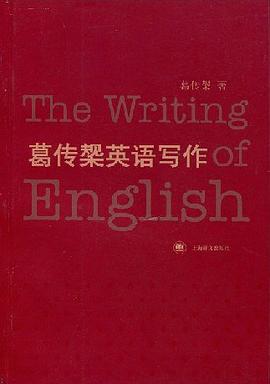
本书是葛传椝先生为我国读者撰写的英语写作专著,可作高校教材,亦可作自学课本。除对写作基本知识、写作技巧和文体修辞分章介绍之外,还特别对惯用法、习语和遣词造句等有关问题进行了详实阐述。同时配以大量取自现代英美书刊原著中的实例,以及各种切合实际的练习题。本书用简明地道的英文写成,是英语写作教材之经典。
作者简介
葛传椝(1906—1992),我国英语学界泰斗,著有《英汉四用词典》、《新英汉词典》(主要编纂者之一)及《英语惯用法词典》等,影响深远,恩泽几代学人。
目录信息
1. Composition and Compositions
2. Purpose of This Book
3. Your Advantage
4. Your Special Difficulties
5. Rhetoric
CHAPTER II MECHANICS OF COMPOSITION
6. Materials
7. One Side or Two Sides?
8. Margins
9. Spacing
10. Titles
11. Paging
12. Folding
13. Endorsing
14. Spelling
15. Syllabication
16. Underlining
17. Italics
18. Omissions, Corrections, and Insertions
19. A Warning
CHAPTER III LEARNING TO WRITE
20. Something to Say
21. How to Say It
22. A Consolation
23. Others May Have Said It before You
24. What to Read
25. How to Read
26. Some Dictionaries Recommended
27. Self-cultivation
28. Writing from Memory
29. Imitation, Conscious and Unconscious
30. Reading Dictionaries
31. Expressing Another Person’s Thoughts
32. Paraphrasing Sentences
33. Suggestions for Paraphrasing
34. Paraphrasing Paragraphs
35. Paraphrasing Verse
36. Condensing
37. Various Degrees of Condensation
38. Suggestions for Condensing
39. Using Materia1 in Han
40. Expressing Your Own Thoughts
41. Keeping a Diary
42. Choosing a Subject
43. Choosing a Title
44. Taking Notes
45. Making an Outline
46. Note-taking and Outline-making in the Head
47. Making Outlines of What You Read
48. Expanding an Outline
49. Practice in Composition
CHAPTER IV WRITING CORRECTLY
50. What is Correct English?
51. Usage
52. Present-day Usage
53. Neologisms
54. English and American Usage
55. Good Usage
56. Expressions Outside of Good Usage
57. Colloquialisms Etc in Written English
58. You are Quite Safe
59. How You Violate Usage
CHAPTER V WRITING CORRECTLY (Continued)
60. Grammar
61. Idiom
62. Grammar and Idiom
63. About the Study of Grammar
64. About the Study of Idiom
65. Some Books Recommended
66. Make Your Own Dictionary of Usage
67. Exercises in Grammar
68. Proper Nouns Used as Common Nouns
69. Nouns Used as Adjectives
70. Singulars and Plurals
71. Nouns Singular Only
72. Nouns Plural Usually or Plural Only
73. Nouns Plural in a Special Usage
74. Nouns of Multitude
75. Abstract Nouns in Plural
76. Material Nouns in Plural
77. Nouns Ending in “-ics”
78. Some Miscellaneous Nouns
79. Numerals in Plural
80. Number in Nouns Used as Adjectives
81. Number and Articles
82. Plural Subject with Singular Verb
83. Some Knotty Points of Number
84. Gender and Sex
85. Male or Female Beings Considered Neuter
86. Animals Considered Masculine or Feminine Without Reference to Sex
87. Sexless Things Considered Masculine or Feminine
88. Masculine and Feminine Nouns Used as Nouns of Common Gender
89. Feminine Nouns Ending in “-ess”
90. Nouns Ending in “-man”
91. Words of Common Gender Made Masculine or Feminine
92. Gender and Number
93. Possessive Case and Of-phrase
94. Subjective and Objective Meanings
95. Possessive Plurals
96. Noun Phrases and Possessive Case
97. “’S” Repeated and “Of” Repeated
98. Possessive Case and Lifeless Things
99. Idiomatic Uses of Possessive Case
100. Noun Omitted after Possessive
101. “Of” before Possessive
102. One Noun in Two Cases
103. Pronoun and its Antecedent
104. Lack of a Common-gender Third-person-singular Pronoun
105. A Question of Person
106. Case in Pronouns
107. Objective Used as Predicate Nominative
108. Interrogative “Who” Used as Objective
109. Relative “Whom” Used as Nominative
110. “Whom” Used after “Than”
111. Nominative or Objective after “But”?
112. A Curious Case of Agreement
113. National, Editorial, and Generic Uses of “We”
114. Generic Use of “You” and “Your”
115. Indefinite Use of “They”
116. Generic Use of “One” and “One’s”
117. Idiomatic Uses of “It”
118. Two Distinct Constructions of “It ... That”
119. Defining and Non-defining Relative Clauses
120. The Relative Pronouns “Who”, “Which”, and “That”
121. Three Points of Choice between “Who(m)” and “Which”
122. Two Relative Clauses Linked by “And” or “But”
123. Omission of Relative Pronouns
124. “Which” without Definite Antecedent
125. “As” as Relative Pronoun
126. “Who” as Indefinite Relative Pronoun
127. “What” Preceding Statement
128. “One Another” and “Each Other”
129. Adjectives Used as Nouns
130. Exact Senses of Adjectives
131. A Curious Point about Comparatives
132. Two Curious Uses of Superlatives
133. “A Most” Followed by Adjective
134. “Worth” Taking an Object
135. “The Matter”
136. “Nothing Much”
137. Articles
138. “A” and Abstract Nouns
139. Some Words Often Mistaken for Abstract Nouns
140. Generic Use of Articles
141. Position of “A” (or “An”)
142. “The” Giving Common Noun Abstract Sense
143. Articles and Proper Nouns
144. Omission of Articles
145. Repetition of Articles
143. Final Remarks on Articles
147. Transitive and Intransitive Verbs
148. Absolute Use of Transitive Verbs
149. Copulative Verbs
150. Factitive Verbs
151. Verbs Taking Double Object
152. Tense and Time
153. Present Tense Referring to Future
154. Present Tense Referring to Past
155. Past Tense Referring to Future
156. Present Perfect Tense vs Past Tense
157. Past Perfect Tense
158. Perfect Tense vs Factitive “Have” with Past Participle as Complement
159. Continuous Tenses
160. “Always” with Continuous Tenses
161. “Be” in Continuous Tenses
162. “Used” Followed by Infinitive
163. “Be” Followed by Infinitive
164. “Have” Followed by Infinitive
165. Infinitive without “to”
166. Split Infinitives
167. “To” Standing for Infinitive
168. “To” Followed by Gerund
169. Infinitive or Gerund?
170. “Enough” Qualified by Infinitive
171. “Too” Qualified by Infinitive
172. Active and Passive Infinitives
173. Active and Passive Gerunds
174. Gerunds Used as Adjectives
175. Gerund and Possessive
176. Fused Participles
177. Present Participle Separated from Subject by Predicate Verb
178. Unattached Participles
179. Intransitive Past Participles Used as Adjectives
180. “Shall” and “Will”, “Should” and “Would”
181. Subjunctive Mood
182. Sequence of Tenses
183. “The” as Adverb
184. Double Adverbial “The”
185. Quasi-adverbs
186. Prepositions
187. Idiomatic Uses of Prepositions
188. Prepositions before Particular Nouns
189. Prepositions after Particular Words
190. Omission of Prepositions
191. Prepositions Governing Words Other than Nouns and Pronouns
192. That-clause in Apposition to Nouns
193. That-clause Qualifying Adjectives and Past Participles
194. That-clause Used after Verbs
195. That-clause Qualifying “So” and “Such”
196. Idiomatic Uses of “That”
197. Omission of “That”
198. “And” Expressing Result
199. “Or” Meaning Otherwise
200. Idiomatic Uses of “If”
201. “Than” with Ellipsis
202. “When” as Relative Conjunction
203. “As Well As”
204. “Though ... Yet ...”
205. Indirect Questions
206. Negative Inversion
CHAPTER VI WRITING WELL
207. What is Good Writing?
208. Superstitions
209. Diction and Sentence Structure
210. The Exact word
211. Specific and General Words
212. Plain and Pretentious Words
213. Idiomatic Phrases and Idiomatic Uses of Plain Words
214. “Fine Writing”
215. Hackneyed Phrases
216. Words Used Too Often
217. Economy of Words
218. Periodic and Loose Sentences
219. Qualities of a Good Sentence
220. Unity
221. Coherence
222. Emphasis
223. Euphony
CHAPTER VII PARAGRAPHS
224. What is a Paragraph?
225. Length of Paragraphs
226. Paragraphs and Outline
227. Topic Sentence
228. Paragraph Development
229. Qualities of a Good Paragraph
230. Transition between Paragraphs
Chapter VIII FORMS OF COMPOSITION
231. Narrations, Description, Exposition and Argument
232. Point of View in Narration
233. What Tense to Use?
234. “Story Style” and “News Style”
235. Plain Account of Events
236. Artistic, Practical, and Scientific Description
237. Avoid “Fine Writing”
238. What is Beautiful Language?
239. Examples of Artistic Description
240. Practical Description
241. Exposition is Explanation
242. Definition
243. What to Avoid in Exposition
244. Examples of Exposition
245. Argument and Exposition
246. Question and Answer
247. What to Avoid in Argument
248. Formal and Informal Argument
· · · · · · (收起)
读后感
用户评价
我尝试了市面上几乎所有主流的写作指导书籍,它们大多聚焦于模板的堆砌,教你如何“套用”出看起来像样的文章,但一旦遇到需要真正创新思维或复杂论证的场合,便立刻黔驴技穷。然而,这本教材给我带来的震撼在于,它似乎更侧重于“内功心法”的修炼。它没有急于给你一堆万能句式,反而花了大篇幅去解构西方修辞学的精髓,探讨如何构建一个严密且富有说服力的论点。书中对逻辑链条的分析尤其深刻,它教你如何识别常见的逻辑谬误,并提供了一套严谨的“反驳与支撑”的结构训练方法。我记得有一次我尝试用书中的方法去撰写一篇关于社会文化变迁的议论文,以往我会依赖大量引用来支撑观点,但这次我根据书中的指引,着重于内部论证的有效性,结果成稿的深度和力度完全上了一个台阶,连我的导师都惊讶于逻辑的清晰度。这种由内而外的提升,远比死记硬背几个高级词汇要来得实在和长久,它真正培养的是读者的批判性思考和表达能力,而非仅仅是语言的熟练度。
从一个纯粹实用主义者的角度来看,这本书的价值回报率是惊人的。许多工具书,读完后束之高阁,形同虚设。但这本书的独到之处在于,它内置了一套“即时反馈与内化”的机制。书中的练习题设计得非常巧妙,它们很少是那种标准化的填空或选择,而是要求你对给定的、略显平庸的段落进行“重塑”和“优化”。这种设计迫使读者必须立刻运用书中学到的原则去进行实际操作,而不是被动接受信息。更棒的是,它提供了大量的“自测清单”和“修改检查表”,这些工具可以直接被抽取出来,作为我以后写作的辅助工具。现在,每当我完成初稿,我都会习惯性地对照书里的“清晰度检查表”进行自我审阅,很多自己先前没察觉到的冗余和模糊之处,都能迎刃而解。这不再是一本让你“读完”的书,而是一套可以陪伴你长期写作生涯的“工具箱”,它的实用性和可操作性,使其在众多理论书籍中脱颖而出。
作为一名长期与英文非母语写作抗争的学者,我最痛恨的就是那种只关注“正确”而不关注“有效”的指南。很多教材把语言的准确性看得比天还高,却忽略了在实际交流中,清晰、简洁和力量感才是王道。这本书在这方面做出了极佳的平衡。它在讲解语法时,并不纠结于那些在日常高级写作中很少出现的冷僻规则,而是将重点放在了对句子节奏和句式多样性的掌控上。比如,书中有一节专门讨论了如何通过主语的变化来控制文章的叙事焦点,这是一个非常微妙但极其有效的技巧。它通过大量的对比范例,展示了不同句式在传达情感倾向上的细微差别,让我意识到,选择哪个词、哪个结构,不仅仅是一个对错的选择,更是一种策略。我开始有意识地运用长短句的交错、主动语态和被动语态的灵活切换,这使得我的文章读起来不再是平铺直叙的流水账,而是充满了变化和张力,极大地增强了读者的代入感。
我曾订阅过好几个国外的写作课程邮件,它们通常是周期性地发送一些素材和练习,但往往虎头蛇尾,难以形成系统的知识体系。这本学习资料的优势在于其体系的完整性和连贯性。它似乎是按照一个学习者从“感知语言基础”到“构建复杂论述”的完整认知路径精心设计的。例如,在基础的词汇和搭配部分,它并非简单地罗列同义词,而是将其置于特定的语境和功能中去讲解,让你理解同一个意思在正式报告、新闻评论和学术论文中应如何选择最恰当的表达。更令人称道的是,它对不同文体的区分讲解得极其透彻,无论是准备申请文书、撰写研究摘要还是进行跨文化商务沟通,书里都有对应的、深入到细节的指导。这种全方位的覆盖,意味着一旦掌握了这本书的方法论,读者在面对未来任何一种书面表达挑战时,都能找到可以遵循的原则和参照点,极大地降低了学习新文体的门槛和试错成本。
这本语言学习资料的排版设计着实让人眼前一亮,那种墨香与现代设计的巧妙融合,在书店里众多黑白灰的同类产品中显得尤为独特。初次翻阅时,我立刻被它那细腻的纸张触感所吸引,这种对物理接触的重视,对于需要长时间阅读和做笔记的读者来说,无疑是一种极大的加分项。封面设计上,那种沉稳又不失内涵的色调搭配,隐隐透露出内容会是扎实且经过深思熟虑的学术探索,而不是浮于表面的速成技巧。内页的字体选择也十分考究,字号适中,行间距处理得当,即便是长时间盯着屏幕或纸张阅读,眼睛的疲劳感也明显减轻了许多。更值得称赞的是,全书的结构逻辑被视觉化处理得非常清晰,每一章节的开始都有一个引人入胜的引言,并配有清晰的图表来概述本章的知识框架,这对于快速把握学习重点至关重要。例如,它在介绍复杂语法点时,并非采用堆砌规则的枯燥方式,而是通过精美的流程图,将抽象的语言结构具象化,使得原本望而生畏的理论变得触手可及,这种对用户体验的极致追求,让学习过程本身也成为了一种享受,而非负担。可以说,光是这份对细节的执着,就体现了出版方对高质量学习工具的承诺。