
具体描述
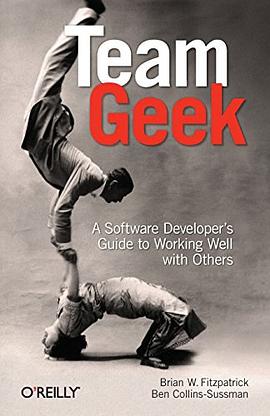
As a software engineer, you're great with computer languages, compilers, debuggers, and algorithms. And in a perfect world, those who produce the best code are the most successful. But in our perfectly messy world, success also depends on how you work with people to get your job done. In this highly entertaining book, Brian Fitzpatrick and Ben Collins-Sussman cover basic patterns and anti-patterns for working with other people, teams, and users while trying to develop software. It's valuable information from two respected software engineers whose popular video series, "Working with Poisonous People", has attracted hundreds of thousands of viewers. You'll learn how to deal with imperfect people - those irrational and unpredictable beings - in the course of your work. And you'll discover why playing well with others is at least as important as having great technical skills. By internalizing the techniques in this book, you'll get more software written, be more influential, be happier in your career.
作者简介
Brian Fitzpatrick co-founded Google's Chicago engineering office in 2005, and currently leads several of Google's Chicago engineering efforts, including the Google Affiliate Network. He also started and leads Google's Data Liberation Front, a team that systematically works to make it easy for users to move their data both to and from Google. Lastly, he serves as internal advisor for Google's open source efforts. Prior to joining Google, Brian was a senior software engineer on the version control team at CollabNet, working on Subversion, cvs2svn, and CVS. He has also worked at Apple Computer as a senior engineer in their professional services division, developing both client and web applications for Apple's largest corporate customers. Brian has been an active open source contributor for over twelve years. After years of writing small open source programs and bugfixes, he became a core Subversion developer in 2000, and then the lead developer of the cvs2svn utility. He was nominated as a member of the Apache Software Foundation in 2002 and spent two years as the ASF's VP of Public Relations. He is also a member of the Open Web Foundation. Brian has written numerous articles and given many presentations on a wide variety of subjects from version control to software development, including co-writing "Version Control with Subversion" (now in its second edition) as well as chapters for "Unix in a Nutshell" and "Linux in a Nutshell." Brian has an A.B. in Classics from Loyola University Chicago with a major in Latin, a minor in Greek, and a concentration in Fine Arts and Ceramics. Despite growing up in New Orleans and working for Silicon Valley companies for most of his career, he decided years ago that Chicago was his home and stubbornly refuses to move to California. Ben Collins-Sussman is one of the founding developers of the Subversion version control system, co-authored O'Reilly's "Version Control with Subversion" book as well as chapters for "Unix in a Nutshell" and "Linux in a Nutshell." Ben co-founded Google's engineering office in Chicago, ported Subversion to Google's Bigtable platform, and now leads Google's Project Hosting team. Prior to joining Google, Ben was a senior software engineer on the version control team at CollabNet. He has been an active open source contributor for over twelve years, contributing to numerous open source projects, mostly revolving around version control and online gaming. Ben collects hobbies which tend to explore the tension between art and science. He has given numerous talks about the social challenges of software development and Subversion. He writes interactive fiction games and tools, and was the co-winner of the 15th Annual Interactive Fiction Competition. He has co-authored at least five original musicals and received multiple Jeff Awards for musical theater composition. He has an Extra class FCC license for amateur radio, and also spends time learning DSLR photography and playing bluegrass banjo. Ben is a proud native of Chicago, and holds Bachelor of Science degree from the University of Chicago with a major in Mathematics and minor in Linguistics. He still lives in Chicago with his wife, kids, and cats.
目录信息
读后感
全书围绕HRT(谦虚,尊重,信任)这一原则在讲述如何构建开发团队,打造产品,维护客户,读来想必是非常的受教,也激发了我另一个层面的思考,那就是我们软件开发人员拿工资就仅仅是在出卖自己的劳动力吗? 想必如果你真是这么觉得,即使你读完本书也很难有什么大的改变,那这...
全书围绕HRT(谦虚,尊重,信任)这一原则在讲述如何构建开发团队,打造产品,维护客户,读来想必是非常的受教,也激发了我另一个层面的思考,那就是我们软件开发人员拿工资就仅仅是在出卖自己的劳动力吗? 想必如果你真是这么觉得,即使你读完本书也很难有什么大的改变,那这...
In the course of their 20+-year engineering careers, authors Brian Fitzpatrick and Ben Collins-Sussman have picked up a treasure trove of wisdom and anecdotes about how successful teams work together. Their conclusion? Even among people who have spent decad...
第一章:天才程序员的传说 现今的代码工作再也不是早年个人英雄主义的工作,没有一项伟大的产品不是团队的结晶,没有一位IT天才不是身后站着一个伟大的团队。所以成功的程序员必须是一个依赖团队、帮助团队、成为团队重要分子的人。 而在团队合作中我们却经常会犯致命的错误,...
用户评价
这本书真让我大开眼界,完全颠覆了我过去对团队协作的刻板印象。我一直以为,所谓的“Geek”们,就是那种埋头钻研技术,不善言辞,甚至是有些孤僻的群体。但《Team Geek》却以一种非常人性化、充满智慧的方式,描绘了一个又一个生动的人物群像,让我看到了他们的闪光点,也理解了他们的独特之处。书里并没有枯燥的技术讲解,而是通过一个个引人入胜的故事,深入浅出地探讨了“Geek”文化的核心价值。我尤其喜欢书中对于“集体智慧”的阐述,它不仅仅是简单地把一群聪明人凑在一起,而是要如何激发他们的潜能,让他们彼此信任,协同作战,最终创造出超乎想象的成果。我常常在想,很多时候,我们过于强调个人的能力,而忽略了团队的力量。这本书恰恰弥补了我的认知盲区。读完之后,我感觉自己像是经历了一次深刻的洗礼,对如何与人合作,如何融入团队,都有了全新的认识。它教会我,即使是最“Geek”的成员,也需要被理解、被尊重,他们的独特视角和思维方式,恰恰是团队最宝贵的财富。这本书不仅仅适合技术从业者,我觉得任何需要与人打交道、需要团队协作的读者,都能从中获益匪浅。它让我更加珍惜与同事们相处的时光,也更加懂得如何去欣赏每一个人的长处。
我必须说,《Team Geek》是一本令人耳目一新的读物。我一直以来对“Geek”群体的认知,很大程度上是通过一些刻板印象和荧幕形象来构建的,总觉得他们是那种不食人间烟火、只沉迷于代码和二进制的生物。然而,这本书以一种极其接地气、充满人情味的方式,向我展现了“Geek”们真实的生活和工作状态。它不仅仅是讲述了技术本身,更深入地探讨了技术背后的人文因素。书中对“归属感”的强调,让我深有体会。它告诉我们,无论一个人的技术有多么出众,如果不能在团队中感受到被认可、被接纳,那么他的潜力将难以完全释放。我尤其喜欢书中对于“导师制度”的描述。它不仅仅是知识的传递,更是一种精神的传承,是一种对新人的关怀和培养。读完这本书,我感觉自己对团队合作有了更深层次的理解,也更加懂得如何去发掘和发挥团队中每一个成员的价值。它让我明白,一个成功的团队,一定是建立在相互理解、相互支持、共同成长基础之上的。
太棒了!这本书完全超出了我的预期,它不仅仅是一本关于技术团队的书,更是一本关于如何与人相处的“宝典”。我一直以为“Geek”就是那些只懂代码、不懂人情世故的人,这本书却用一个个生动的故事,打破了我的这种偏见。它让我看到了“Geek”们身上那些闪闪发光的品质,比如对技术的纯粹热爱,对细节的极致追求,以及那种在看似沉闷的工作中,所蕴含的巨大创造力。我特别喜欢书中对于“反馈机制”的探讨,它教会我如何以一种建设性的方式,去给予和接收反馈,从而不断改进和提升。这不仅仅适用于技术领域,更可以应用到生活的方方面面。它让我明白,每一次的沟通,每一次的协作,都是一次学习和成长的机会。这本书就像一位经验丰富的向导,带领我穿越技术世界的迷宫,让我看到,在冰冷的机器背后,跳动着的是一颗颗充满智慧和情感的心。读完之后,我感觉自己对团队的理解更加深刻,也更加懂得如何去欣赏和尊重身边的每一个“Geek”。
这本书简直是为我们这种“不走寻常路”的技术人量身定做的!我之前一直觉得,在技术领域,好像只有“硬实力”才能决定一切,情商、沟通这些东西似乎是可有可无的。但《Team Geek》彻底打破了我的这种观念。它就像一面镜子,照出了我们这些“Geek”在团队合作中可能存在的一些盲点和误区。我印象最深刻的是书中关于“冲突管理”的部分。很多时候,我们程序员之间可能因为一些技术上的分歧而产生摩擦,但往往因为不知道如何处理,导致问题升级,影响整个团队的士气。这本书提供了一种全新的视角,它不是回避冲突,而是鼓励我们以建设性的方式去面对,去化解。它教我们如何从对方的角度出发,理解他们的想法,找到共同点,最终达成共识。此外,书中对“领导力”的探讨也让我受益匪浅。它告诉我们,真正的领导力并非是发号施令,而是通过自己的行为去影响和激励团队,营造一个积极、开放的工作环境。这本书就像一位睿智的长者,循循善诱地引导我,让我看到在技术的光芒之外,人与人之间的连接是多么重要。
太惊喜了!我原本以为《Team Geek》会是一本非常“硬核”的技术书籍,讲一些关于软件开发、项目管理之类的专业知识,但完全不是!它更像是一部引人入胜的社群观察报告,充满了人文关怀和生活气息。作者用非常细腻的笔触,描绘了那些在技术世界里默默耕耘的“Geek”们,他们的工作状态,他们的沟通方式,甚至他们内心深处的想法,都展现得淋漓尽致。我特别欣赏书中对“沟通”这一主题的深入剖析。它告诉我们,即使是最优秀的技术,也需要通过有效的沟通才能转化为实际的价值。书里分享了许多实用的沟通技巧,比如如何倾听,如何表达,如何在团队中建立起信任的桥梁。这些技巧并非是空泛的理论,而是通过一个个真实案例,让我看到了它们在实践中的巨大力量。我感觉自己像是参与了一场场精彩绝伦的团队对话,学习着如何让不同背景、不同性格的人们,能够心平气和地交流,共同解决问题。这本书让我明白,一个成功的技术团队,不仅仅需要高超的技术,更需要一种积极向上、互相支持的团队文化。读完后,我迫不及待地想把这些理念应用到自己的工作中,相信它一定能带来积极的改变。
没人喜欢办公室政治,但是人在江湖飘,人情世故还是要懂的
非常好的一本书,就像一面镜子 照射出自己的不足。 会发现很多自己和书中很多的反例都很相似.. 整本书都是围绕着HRT 展开 humidity, respect, trust 还是蛮有道理。里面对linux open source team的黑也是无处不在.. 闲暇时间很推荐这本书
Google 辦公室政治
Has valuable insights. Does not hide its despise toward Linus, so it may be a little biased.
工程师团队协作101