
具体描述
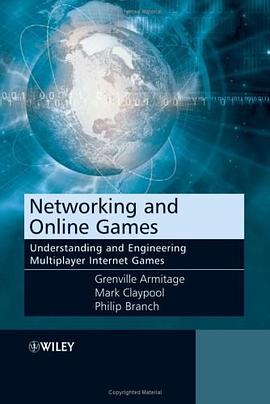
The computer game industry is clearly growing in the direction of multiplayer, online games. Understanding the demands of games on IP (Internet Protocol) networks is essential for ISP (Internet Service Provider) engineers to develop appropriate IP services. Correspondingly, knowledge of the underlying network's capabilities is vital for game developers.
Networking and Online Games concisely draws together and illustrates the overlapping and interacting technical concerns of these sectors. The text explains the principles behind modern multiplayer communication systems and the techniques underlying contemporary networked games. The traffic patterns that modern games impose on networks, and how network performance and service level limitations impact on game designers and player experiences, are covered in-depth, giving the reader the knowledge necessary to develop better gaming products and network services. Examples of real-world multiplayer online games illustrate the theory throughout.
Networking and Online Games:
Provides a comprehensive, cutting-edge guide to the development and service provision needs of online, networked games.
Contrasts the considerations of ISPs (e.g. predicting traffic loads) with those of game developers (e.g. sources of lag/jitter), clarifying coinciding requirements.
Explains how different technologies such as cable, ADSL (Asymmetric Digital Subscriber Line) and wireless, etc., affect online game-play experience, and how different game styles impose varying traffic dynamics and requirements on the network.
Discusses future directions brought by emerging technologies such as UMTS (Universal Mobile Telephone Service), GPRS (General Packet Radio Service), Wireless LANs, IP service Quality, and NAPT/NAT (Network Address Port Translation/Network Address Translation)
Illustrates the concepts using high-level examples of existing multiplayer online games (such as Quake III Arena, Wolfenstein Enemy Territory, and Half-Life 2).
Networking and Online Games will be an invaluable resource for games developers, engineers and technicians at Internet Service Providers, as well as advanced undergraduate and graduate students in Electrical Engineering, Computer Science and Multimedia Engineering.
From the Back Cover
The computer game industry is clearly growing in the direction of multiplayer, online games. Understanding the demands of games on IP (Internet Protocol) networks is essential for ISP (Internet Service Provider) engineers to develop appropriate IP services. Correspondingly, knowledge of the underlying network’s capabilities is vital for game developers.
Networking and Online Games concisely draws together and illustrates the overlapping and interacting technical concerns of these sectors. The text explains the principles behind modern multiplayer communication systems and the techniques underlying contemporary networked games. The traffic patterns that modern games impose on networks, and how network performance and service level limitations impact on game designers and player experiences, are covered in-depth, giving the reader the knowledge necessary to develop better gaming products and network services. Examples of real-world multiplayer online games illustrate the theory throughout.
Networking and Online Games:
Provides a comprehensive, cutting-edge guide to the development and service provision needs of online, networked games.
Contrasts the considerations of ISPs (e.g. predicting traffic loads) with those of game developers (e.g. sources of lag/jitter), clarifying coinciding requirements.
Explains how different technologies such as cable, ADSL (Asymmetric Digital Subscriber Line) and wireless, etc., affect online game-play experience, and how different game styles impose varying traffic dynamics and requirements on the network.
Discusses future directions brought by emerging technologies such as UMTS (Universal Mobile Telephone Service), GPRS (General Packet Radio Service), Wireless LANs, IP service Quality, and NAPT/NAT (Network Address Port Translation/Network Address Translation)
Illustrates the concepts using high-level examples of existing multiplayer online games (such as Quake III Arena, Wolfenstein Enemy Territory, and Half-Life 2).
Networking and Online Games will be an invaluable resource for games developers, engineers and technicians at Internet Service Providers, as well as advanced undergraduate and graduate students in Electrical Engineering, Computer Science and Multimedia Engineering.
作者简介
目录信息
读后感
用户评价
与其他技术书籍不同,这本书的叙事节奏感极强,读起来有一种沉浸式的体验。它不像教科书那样平铺直叙,而是更像一位资深工程师在分享他职业生涯中的高光时刻与踩过的深坑。比如,在讨论无线网络(Wi-Fi)在多人游戏环境中的性能瓶颈时,作者并没有停留在802.11标准的介绍上,而是立刻转入实际场景:如何在复杂的家庭网络环境下,通过调整信道宽度和功率来优化多人会议和游戏流的并发性能。这种“理论落地”的叙事方式,极大地提升了阅读的趣味性。书中对网络协议栈中不同层次的“权衡”(Trade-offs)进行了深入的探讨,比如UDP的无连接优势与TCP的可靠性保障在不同游戏模式下的取舍。每一章的结尾都像是为接下来的内容埋下了伏笔,让人迫不及待地想知道,面对更极端的网络条件(比如卫星网络延迟),这些成熟的协议又将如何演化。
这本书给我带来的震撼,更多是源于它对“在线游戏”这个特定应用场景的精妙剖析。坦白讲,我一开始对书名的后半部分持保留态度,觉得它可能只是在肤浅地聊聊什么是MMORPG或者电竞的直播延迟。但事实是,作者构建了一个极富洞察力的分析框架,来解构支撑现代复杂在线互动体验背后的网络挑战。它不是在教你怎么写游戏代码,而是深入探讨了游戏服务器架构、状态同步机制(State Synchronization)以及如何巧妙地绕过地理限制,实现全球玩家的低延迟交互。书中关于“预测性客户端输入”和“权威服务器模型”的对比分析,尤其引人深思,它清晰地展示了网络带宽、处理能力与用户体验之间的动态平衡。我特别喜欢其中关于反作弊机制和网络安全的部分,那些针对DDoS攻击和数据篡改的防御策略,写得非常扎实,体现了作者对网络攻防前沿的深刻理解。这本书让你明白,那些流畅的在线对战背后,是无数次精妙的网络设计与博弈。
这本书的结构安排极其清晰,它成功地在宏观的网络架构与微观的数据包处理之间找到了完美的平衡点。读完后,我最大的感受是,我对“网络”这个词的理解被极大地拓宽了。它不再只是连接设备那么简单,而是渗透到用户体验、商业模式乃至社会互动的底层逻辑之中。书中对网络测量和性能分析工具的介绍,也十分实用,它不仅告诉我们“哪里出了问题”,更重要的是教我们如何“科学地定位”问题——那些关于数据包捕获、时间戳分析和延迟热力图的讲解,简直就是一份实战手册。这种深度挖掘和实用指导的结合,让这本书避免了许多技术书籍的通病:光说不练。它真正做到了理论指导实践,实践反哺理论的良性循环。对于任何渴望深入理解如何构建一个可靠、高效且面向未来的互联系统的读者来说,这本书是值得反复研读的珍藏。
从纯粹的技术实现角度来看,《网络与在线游戏》的价值在于其对新兴网络技术的紧密跟进。我原以为这本书会停留在对现有成熟技术的复述上,但令我惊喜的是,其中穿插了大量关于边缘计算(Edge Computing)和内容分发网络(CDN)优化游戏资产加载的最新实践。特别是关于QUIC协议在实时数据传输中的潜力分析,作者的观点既大胆又审慎,既指出了其超越TCP的优越性,也点明了其在防火墙穿透和网络适配性方面仍需克服的挑战。这种前瞻性的视野,让这本书的价值超越了当下的应用,具有长期的参考意义。它不仅仅是告诉你“现在怎么做”,更是在引导你思考“未来网络会往哪里去”。对于希望在网络技术领域保持竞争力的专业人士而言,这是一本绝佳的“风向标”。
《网络与在线游戏》这本书的深度和广度实在令人惊叹,它不仅仅是一本关于技术实现的指南,更是一场对数字世界基础设施的精彩探索。我原以为它会专注于讲解TCP/IP协议栈的枯燥细节,或者仅仅停留在如何配置路由器的表面功夫。然而,作者显然站在一个更高的维度来审视整个网络生态。书中对数据包如何在物理层、链路层、网络层和应用层之间“跳跃”的描述,简直像是一幅精密的航海图,将那些原本抽象的概念具象化了。尤其是在讲解拥塞控制算法时,那种深入浅出,将复杂的数学模型转化为实际网络行为的笔法,让人拍案叫绝。它没有回避那些令人头疼的延迟(Latency)和抖动(Jitter)问题,反而用大量的实际案例——比如虚拟专用网络(VPN)穿越防火墙的场景,或者大规模分布式系统中的负载均衡策略——来佐证理论的有效性。读完这部分内容,我感觉自己不再是一个被动的使用者,而是能够理解数据流如何被塑造和优化的“网络建筑师”。对于任何希望从“会用”到“精通”网络技术的人来说,这无疑是一本不可多得的入门与进阶的桥梁。