
具体描述
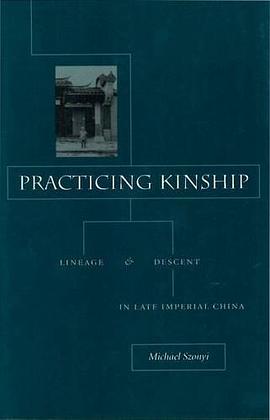
Presenting a new approach to the history of Chinese kinship, this book attempts to bridge the gap between anthropological and historical scholarship on the Chinese lineage by considering its development in terms of individual and collective strategies. Based on a wide range of newly available sources such as lineage genealogies and stone inscriptions, as well as oral history and extensive observation of contemporary ritual practice in the field, this work explores the historical development of kinship in villages of the Fuzhou region of southeastern Fujian province.
In the late imperial period (1368-1911), the people of Fuzhou compiled lengthy genealogies, constructed splendid ancestral halls, and performed elaborate collective rituals of ancestral sacrifice, testimony to the importance they attached to organized patrilineal kinship. In their writings on the lineage, members of late imperial elites presented such local behavior as the straightforward expression of universal and eternal principles. In this book, the author shows that kinship in the Fuzhou region was a form of strategic practice that was always flexible and negotiable. In using the concepts and institutions of kinship, individuals and groups redefined them to serve their own purposes, which included dealing with ethnic differentiation, competing for power and status, and formulating effective responses to state policies. Official efforts to promote a neo-Confucian agenda, to register land and population, and to control popular religion drove people to organize themselves on kinship principles and to institutionalize their kinship relationships. Local efforts to turn compliance with official policies, or at least claims of compliance, to local advantage meant that policymakers were continually frustrated.
Because kinship was constituted in a complex of representations, it was never stable or fixed, but fluid and multiple. In offering this new perspective on this history of Chinese lineage practices, the author also provides new insights into the nature of cultural integration and state control in traditional Chinese society.
作者简介
Michael Szonyi received his BA from the University of Toronto and his D.Phil from Oxford University, where he was a Rhodes Scholar. He has also studied at National Taiwan University and Xiamen University. Prior to coming to Harvard in 2005, Prof. Szonyi taught at McGill University and University of Toronto. His main research interests are the local history of southeast China, especially in the Ming dynasty; the history of Chinese popular religion, and Overseas Chinese history. His most recent book is Cold War Island: Quemoy on the Front Line, published in 2008.
目录信息
读后感
Similar to Faure, this study focuses on a local area in southern China to trace the development of kinship/lineage from early Ming to 20 century. Szonyi’s site is Nantai, a Fuzhou area comprising 100-200 villages. The author draws from 4 types of materials...
Similar to Faure, this study focuses on a local area in southern China to trace the development of kinship/lineage from early Ming to 20 century. Szonyi’s site is Nantai, a Fuzhou area comprising 100-200 villages. The author draws from 4 types of materials...
Similar to Faure, this study focuses on a local area in southern China to trace the development of kinship/lineage from early Ming to 20 century. Szonyi’s site is Nantai, a Fuzhou area comprising 100-200 villages. The author draws from 4 types of materials...
Similar to Faure, this study focuses on a local area in southern China to trace the development of kinship/lineage from early Ming to 20 century. Szonyi’s site is Nantai, a Fuzhou area comprising 100-200 villages. The author draws from 4 types of materials...
Similar to Faure, this study focuses on a local area in southern China to trace the development of kinship/lineage from early Ming to 20 century. Szonyi’s site is Nantai, a Fuzhou area comprising 100-200 villages. The author draws from 4 types of materials...
用户评价
这本书的叙事视角实在太迷人了,作者仿佛拥有一种魔力,能将那些日常生活中稍纵即逝的情感波动捕捉下来,然后用一种近乎透明的笔触铺陈开来。我尤其欣赏它对于“关系”这个核心主题的处理,它没有试图去定义或框定“亲缘”的传统含义,而是将其扩展到了一个更广阔、更流动的场域。读起来,你会感觉自己像是置身于一个巨大的、不断变换形态的镜像迷宫中,你看到的不仅仅是镜中的自己,还有无数个与你生命轨迹有过交集的影子。那些关于陪伴、疏离、以及重新连接的细微之处,被描绘得入木三分。例如,书中关于一次意外重逢的场景,对话寥寥数语,但字里行间那种未言明的历史重量感和当下的不确定性,却能让人反复咀嚼。它不是那种提供明确答案的指南,更像是一面棱镜,折射出我们每个人内心深处对归属感的复杂渴望和恐惧。读完之后,我久久不能平静,仿佛被邀请去重新审视自己生命中那些看似理所当然的纽带,思考它们是如何在时间和空间中悄然演变、又如何塑造了今天的我。这种体验是深刻而私密的,它要求读者投入极大的共情和反思,回报的却是对人际互动本质更深一层的理解。
这本书给我的最直接感受是“呼吸感”。它拥有极强的空间感和氛围营造能力。无论是对一个老旧公寓内部光线变化的捕捉,还是对某个特定城市背景下特有的环境噪音的刻画,都显得无比真实可信。这种对环境的精细描摹,并非只是为了增加背景的厚度,而是作为角色情感状态的隐喻和投射。例如,当角色陷入某种僵局时,窗外的雨声或墙壁上的霉斑,就成为了他们内心焦虑的具象化。我欣赏作者在处理“沉默”时的技巧。在许多场景中,最重要的交流恰恰发生在没有言语的时刻,这些沉默被赋予了重量、温度和历史。它们不像文学作品中常见的空白,而是充满了未说出口的张力,像是水面下涌动的暗流。阅读时,我常常需要放慢速度,去感受那些文字间隙中弥漫的氛围,仿佛能闻到书中描绘的那个世界独有的气味。它成功地将情感的内核从语言的束缚中解放出来,让读者用更原始、更直观的方式去体验人物的内在世界。
从纯粹的文本策略来看,这本书极大地拓展了我对叙事可能性的理解。它糅合了回忆录的私密性、哲学思辨的深度以及近乎人类学观察的精确度,创造出一种独一无二的阅读体验。我尤其对作者如何处理“时间”这一维度感到惊叹。时间在这里并非匀速流动的河流,而是可以被拉伸、折叠、甚至反向运行的复杂结构。有些段落的节奏极慢,仿佛时间被凝固在某个微小的瞬间,让读者得以仔细审视其内部的每一个裂纹;而另一些段落则迅疾如电,用极少的文字概括了多年的变迁。这种节奏上的变化,完美地契合了主体经验中情感密度与时间感知失调的现象。它不是一本容易读完的书,因为它需要的不仅仅是时间,更是一种心境的投入和智力的配合。但正是这种挑战性,使得最终的收获更为丰厚。它让你意识到,我们看待生命的方式本身,就可以成为文学表达的最高形式。每一次重读,我都能发现之前因为心猿意马而错过的微妙的层次和结构上的精妙呼应。
这部作品的结构安排简直是一场精妙的声学实验,它不依循传统的线性叙事,而是采用了碎片化的、交响乐式的多声部织体。你永远不知道下一页会把你带到哪个时间点,或者哪个人物的内心独白中去,这种不确定性非但没有造成阅读的困惑,反而形成了一种强大的引力,迫使读者主动去填补那些留白的缝隙,构建属于自己的意义网络。文字的质地非常特别,时而像粗粝的沙砾,描摹现实的尖锐与不易;时而又像融化的琥珀,将某些瞬间凝固成永恒的光晕。我特别喜欢作者在处理内心冲突时所采用的语言张力,那种在克制与爆发之间游走的边缘感,读起来让人心弦紧绷。它成功地避开了所有陈词滥调,用一种近乎诗意的、却又极其精准的词汇,来触碰那些我们通常用模糊不清的词语带过的情感领域。阅读过程像是在攀登一座由情绪和记忆构成的山峰,每一次转角都有新的风景,但山顶似乎永远在迷雾之中,这正是它的魅力所在——它承认生命经验的复杂性和不可穷尽性。
坦白说,初读时我有些不适应这种略显疏离的叙事口吻,它不热情、不煽情,仿佛一个冷眼旁观的记录者,用最冷静的笔调记录着最炽热或最冰冷的人间戏剧。然而,正是这种克制,最终营造出一种强大的情感冲击力。它不直接告诉你“爱”或“痛苦”是什么,而是通过细致入微地描摹角色们在特定情境下的生理反应——比如呼吸的停顿、指尖不自觉的颤抖、目光的闪躲——让读者自己去解码这些身体语言背后的情感重量。这本书的文学野心是显而易见的,它似乎在探讨“我们如何被我们未能表达之事所定义”的命题。其中几段关于“记忆的不可靠性”的思考,尤其让我深有感触,作者质疑了我们对自己过往经历的叙事权,提出我们所珍视的“连接”,有多少是真实发生,又有多少是后来为了自我慰藉而精心编织的幻象。它挑战了读者对“真实”的固有认知,迫使我们质疑自己记忆库中最坚固的基石。
only briefly read the book
这年头,还是人类学好吃饭啊,看看,被peter Bol弄去harvard了不是?
关注动态的变化。
史料扎实,但是论点很intuitive
看完DAVID FAURE来看这本不能更NEAT,结构很清楚语言也不错,使用史料很用心,不断地以商量的语气反驳之前的学术观念,做人类学的底子使全文优势明显,FLUIDITY AND CONSTANT ADAPTATION, TAKE THE POINT.