
具体描述
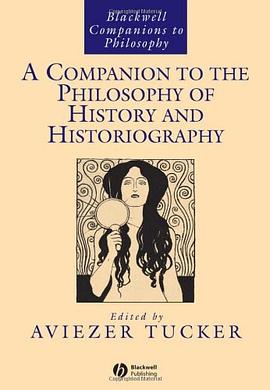
Table of Contents
List of Contributors.
Acknowledgments.
Glossary of Terms.
1. Introduction: Aviezer Tucker (Prague).
Part I Major Fields:.
2. Philosophy of Historiography: Peter Kosso (Northern Arizona University).
3. Philosophy of History: Zdeněk Vašíček (Institute for Contemporary History, Prague).
4. Philosophical Issues in Natural History and Its Historiography: Carol E. Cleland (University of Colorado, Boulder).
5. Historians and Philosophy of Historiography: John Zammito (Rice University).
Part II: Basic Problems:.
6. Historiographic Evidence and Confirmation: Mark Day (Nottingham–Trent University) and Gregory Radick (University of Leeds).
7. Causation in Historiography: Aviezer Tucker (Prague).
8. Historiographic Counterfactuals: Elazar Weinryb (Open University of Israel).
9. Historical Necessity and Contingency: Yemima Ben–Menahem (Hebrew University).
10. Explanation in Historiography: Graham Macdonald (University of Canterbury, New Zealand) and Cynthia Macdonald (Queen’s University, Belfast).
11. Historiographic Understanding: Guiseppina D’Oro (Keele University).
12. Colligation: C. Behan McCullagh (La Trobe University).
13. The Laws of History: Stephan Berry (Berlin).
14. Historiographic Objectivity: Paul Newall (British Royal Navy).
15. Realism about the Past: Murray Murphey (University of Pennsylvania).
16. Anti–realism about the Past: Fabrice Pataut (Institut de l’Histoire et de Philosophie des Sciences et des Techniques, Paris).
17. Narrative and Interpretation: F. R. Ankersmit (University of Groningen).
18. The Ontology of the Objects of Historiography: Lars Udehn (Stockholm University).
19. Origins: Common Causes in Historiographic Reasoning: Aviezer Tucker (Prague).
20. Phylogenetic Inference: Matt Haber (University of Utah).
21. Historicism: Robert D’Amico (University of Florida).
22. Ethics and the Writing of Historiography: Jonathan Gorman (Queen’s University, Belfast).
23. Logical Fallacies of Historians: Paul Newall (British Royal Navy).
24. Historical Fallacies of Historians: Carlos Spoerhase (Humboldt University of Berlin) and Colin G. King (Humboldt University of Berlin).
Part III: Philosophy and Sub–fields of Historiography:.
25. Philosophy of History of Science: Nicholas Jardine (University of Cambridge).
26. Philosophies of Historiography and the Social Sciences: Harold Kincaid (University of Alabama, Birmingham).
27. The Philosophy of Evolutionary Theory: Michael Ruse (Florida State University).
28. The Philosophy of Geology: Rob Inkpen (University of Portsmouth).
29. Philosophy of Archaeology: Ben Jeffares (Australia National University).
30. Reductionism: Historiography and Psychology: Cynthia Macdonald (Queen’s University, Belfast) and Graham Macdonald (University of Canterbury, New Zealand).
31. Historiography and Myth: Mary Lefkowitz (Wellesley College).
32. Historiography and Memory: Marie–Claire Lavabre (CNRS, France).
33. Historiographic Schools: Christopher Lloyd (University of New England).
Part IV: Classical Schools and Philosophers of Historiography and History:.
34. Leopold Ranke: Thomas Gil (Technical University of Berlin).
35. Scientific Historiography: Chris Lorenz (VU University of Amsterdam).
36. Darwin: John S. Wilkins (University of Queensland).
37. Logical Empiricism and Logical Positivism: Krzysztof Brzechczyn (Adam Mickiewitz University/Institute of National Remembrance, Poland).
38. Jewish and Christian Philosophy of History: Samuel Moyn (Columbia University).
39. Muslim Philosophy of History: Zaid Ahmad (Universiti Putra, Malaysia).
40. Vico: Joseph Mali (Tel Aviv University).
41. Kant and Herder: Sharon Anderson–Gold (Rensselaer Polytechnic Institute).
42. Hegel: Tom Rockmore (Duquesne University).
43. Neo–Kantianism: Charles Bambach (University of Dallas).
44. Marx: Tom Rockmore (Duquesne University).
45. Collingwood and Croce: Stein Helgeby (Melbourne).
46. Phenomenology: David Weberman (Central European University, Hungary).
47. Jan Patočka: Ivan Chvatik (Czech Academy of Science).
48. Hermeneutics: Rudolf A. Makkreel (Emory University).
49. Postmodernism: Beverley Southgate (University of Hertfordshire).
50. Philosophy of History at the End of the Cold War: Krishnan Kumar (University of Virginia).
Index
作者简介
目录信息
读后感
用户评价
初次捧读此书时,我最大的感受就是它在结构上的宏大叙事能力。编者显然下了一番苦功,将一个本应是零散、晦涩的哲学分支,编织成了一个逻辑清晰、层层递进的知识体系。它不像某些教科书那样冰冷地罗列观点,而是采用了更具引导性的方式,仿佛一位经验丰富的导师,牵引着我们一步步深入到历史哲学最为核心的争论之中。我特别欣赏其中对“目的论”(Teleology)的批判性审视。在当下许多流行的历史论述中,总不自觉地带有强烈的目的导向性,仿佛一切历史都朝着某个必然的终点滑行。这本书通过梳理自启蒙运动以来对这一概念的争论,特别是对各种“宏大叙事”的瓦解过程,让我们警惕地意识到,我们所构建的历史,往往是我们当下需要的投射,而非过去本身的忠实映像。阅读过程中,我常常需要停下来,结合自己正在阅读的其他历史著作进行对照,这种即时的反思和纠错能力,是这本书带给我的最大价值——它训练的不是记忆力,而是质疑力和思辨力。
我必须承认,阅读此书需要投入极大的心智能量,但回报是巨大的。它迫使我彻底重构了自己对于“时间”和“叙事”的理解。最让我印象深刻的是其中对于“历史的不可重复性”这一命题的哲学辩护。许多人将历史视为可以被科学方法所模拟或预测的领域,但这本书通过严密的逻辑推演,有力地论证了历史学作为一门学科的独特地位,即它本质上是一种对“他者之在场”的追溯,而非对自然规律的发现。这种对学科边界的清晰界定,对于任何希望提升自己研究水准的学者都是至关重要的“基础教育”。它帮助我们摆脱了仅仅做“史料搬运工”的困境,真正上升到哲学层面思考我们工作的意义和局限。这本书的编辑排版也值得称赞,尽管内容深奥,但清晰的章节划分和富有逻辑性的论证过渡,使得即使在最复杂的论点中,读者也能找到清晰的路径,避免了迷失在理论的丛林之中。
这本关于历史哲学与史学理论的权威著作,无疑是哲学史学领域的一部里程碑式的作品。我花了相当长的时间才啃完,其广度和深度都令人叹为观止。它不仅仅是对既有理论的梳理和总结,更是在关键议题上提供了独到的见解和深入的剖析。例如,在探讨历史叙事的本质时,作者并没有停留在简单的“事实与解释”的二元对立上,而是细致入微地剖析了“时间性”本身如何被建构,以及不同文化背景下的历史观是如何塑造了我们对过去的理解框架。书中对康德、黑格尔、尼采乃至后现代思想家关于历史的论述进行了极其审慎的对话,使得即便是对这些经典理论烂熟于心的读者,也能从中发掘出新的层次感。尤其是关于“客观性”这一史学研究的永恒难题,作者没有给出简单的答案,而是将不同学派的论据并置,引导读者进行批判性反思,这种开放的学术态度,是真正优秀的哲学著作所应有的风范。对于任何严肃对待历史研究方法论的人来说,这本书都是案头必备的工具书,其索引和注释的详尽程度也极大地提升了研究的便捷性,值得反复研读。
老实说,起初我对这样一本厚重的哲学导论抱有一定的抵触情绪,担心它会过于抽象和学究气。然而,这本书的出色之处在于其鲜活的例子和对当代史学流派的紧密跟进。它并未沉溺于对古典哲学的故纸堆中徘徊不前,而是紧密地将历史本体论的探讨与当下流行的“微观历史”、“全球史”等新范式联系起来。例如,书中对后殖民理论如何冲击西方中心主义的历史书写模式的分析,就极为精妙。它没有简单地宣布“西方历史观已死”,而是揭示了这种冲击是如何在方法论层面迫使我们重新审视“普遍性”这一概念的合法性。这种与时俱进的姿态,让这本书即便对于近十年才进入该领域的研究生来说,也依然具有极强的实战指导意义。它不是历史哲学的“终结之书”,而更像是一份“进行时”的学术地图,指引着未来的方向,令人振奋。
这本书的学术重量感,从第一页就能扑面而来,但它的魅力在于其极强的包容性。我以为它会是一本只针对学院派哲学家的小众读物,但实际内容却远超我的预想。它成功地搭建了哲学思辨与实际历史工作之间的桥梁。对于那些试图超越简单年代学叙事、渴望理解“我们如何知道我们所知道的历史”的实践型史学家来说,书中关于“证据可靠性”、“诠释学循环”以及“语境化”的讨论,提供了坚实的理论基础。我记得其中关于“历史的道德判断”那章节,讨论得尤为精彩。如何在一个后现代的、去中心化的历史观中,仍然保有对重大历史事件进行伦理评价的权利与责任?书中引用的案例和理论辩证,提供了远超简单对错判断的复杂视角。这使得我们不再满足于“历史人物是他们那个时代的产物”这种敷衍了事的辩护,而是深入到更深层的结构性责任与个人能动性的交织之中。总而言之,它为历史研究的伦理维度提供了极为丰厚的养料。