
具体描述
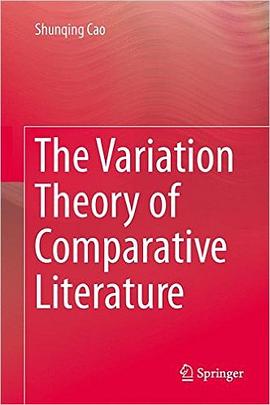
Seeing the restrictions of former studies in Comparative Literature and aiming to amend these deficiencies, the author of this book mainly discusses the major theoretical significance and academic value of the Variation Theory in the whole process of the development of Comparative Literature in the world. In China the seminal comparative study of literature among different cultures can be dated back to ancient China, while the founding of comparative literature as a distinct academic discipline has to be largely owing to the influence of the West. The modern Chinese study of comparative literature formed its uniqueness under Western influence. The direct influence of the translation of western theories into China is remarkable. However, in the course of translation and reception of Western theories, Chinese comparatists and intellectuals have been encountering various problems, and solving them with an alternative method accordingly different from the traditional methods proposed by the French School and the American School. Therefore, in this book, modern Chinese study of comparative literature is put in a historical context with regard to the theoretical issue of the discipline in China through the entire 20th century. At present, many scholars in China and in other countries agree that, with the influence study proposed by the French School and the study of analogy advocated by the American School, the entire theoretical system of Comparative Literature is well built. However, when the comparative study of literature between East and West is concerned, the theory of Comparative Literature is far from perfect. It is not only because many problems still exist, but there are significant defects in their theoretical bases respectively. Many researches have proven that even with the influence study and the study of analogy, we still can not solve many problems in the practice of studies in comparative literature. This does not mean that we have no respect for the contributions of the French School and the American School; we just want to attach importance to literary variations, which is a phenomenon that has long been neglected. The purpose of putting forward the Variation Theory in Comparative Literature is to provide new perspectives, new methods and new theory to the study of comparative literature, which may be a major breakthrough in the international arena of Comparative Literature. The neglect of literary variation is mainly because all the previous theories about comparative literature start off in search of similarities but not differences. Accordingly, in 1990s heterogeneity as a premise of comparability was put forward. And later, the variation theory was further advanced. It is not only the important phenomenon in literary communication, but also the most valuable research object in Comparative Literature. Still, it will be an important path to cultural innovation. The Variation Theory may make up the major flaws of theories by both French school and the American School since it focus on heterogeneity and variability in cross-cultural literary events, especially the ones of inter-civilization which will be a new course for comparative literature. Throughout the history of literature and the history of literary communication, collisions between different civilizations have always been producing new literary events which make the heterogeneity of different civilizations and variability traceable. The higher stage of literary communication may mean dialogue and blend between different cultures. The overarching concerns of this book include different levels of variation in literary communication and the studies of different objects. The introduction begins with a literature review of major achievements made by the French School and the American School with pointing out what they have neglected. The body of the book is divided into three parts. In the first part, Chapter 1 deals with the major contributions of influence study and its weaknesses. The origination of comparative literature in most of European countries is reviewed first, and then the major contributions of the French School are listed to point out its merits and weaknesses. The author discusses the relation between Influence Study and the Variation Theory and the importance of the French school in theoretical development of comparative literature is stressed too. Chapter 2 offers a critical introduction and reflection on the study of analogy . Both its major contributions and weaknesses are made clear to further illustrate the relationship between interpretation and the Variation Theory. And the discursive variation is discussed. Part II is a transitional part with only one chapter that gives a clear account of phenomenon of variation from international perspective. Part III consists of four chapters. Chapter 4 offers a detailed description of The Variation Theory in cross-languages context. Chapter 5 deals with cross-cultural variation in homogeneous circle of civilization. Chapter 6 discusses the variation among heterogeneous civilization. For a long period of time the theoretical study of comparative literature in China has largely been confined to the Chinese academic arena, thus has long been neglected. On one hand western comparatists have gradually realized the importance of a non-western perspective in the study of the discipline; on the other hand, few books are available to introduce the recent development of comparative literature study in China. Compared with the enthusiastic reception of the theories of the French School and the American School, the theories of Chinese comparatists receives relatively little attention in western countries. In this sense, the proposed book attempts to challenge the myth of monolithic theories of comparative literature, trying to construct an alternative theory of the discipline.
作者简介
Dr. Shunqing Cao, who was born in 1954 and graduated in Fudan University in
1980 and was awarded his Ph.D. degree in Sichuan University in 1987, is a visiting
scholar of Harvard University and Cornell University in the United States (1992–
1994); he was also invited to be guest professor at Nanhua University, Tamkang
University, and Fo Guang University (1999, 2001) in Taiwan; now he is a professor
and Ph.D. candidate supervisor at Beijing Normal University. He is also an eminence professor (enjoying the treatment of Research Fellow of Chinese Academy of Social Science) of Sichuan University and the dean of the college of literature and journalism at Sichuan University. In addition, he is the winner of Huo Yingdong Education Funds, the specially invited professor of Changjiang Scholar Awarding Program for Comparative Literature by the Ministry of Education of China, and anational distinguished teacher. Additionally, he has been distinguished as one of the remarkable scholars with a Ph.D. degree who has made a special contribution and therefore is the expert enjoying the special government allowance. Meanwhile, he is a counselor of the Academic Degree Commission under the State Council, the evaluation committee of The National Social Science Foundation. At the same time, he is also vice-president of the Chinese Comparative Literature Association, vicepresident of the Chinese Ancient Literary Theory Association, and vice-president of the Chinese-Foreign Literary Theory Association.
He has published several books and articles including The Comparison of Chinese and Western Poetics , Anthology of East Literary Theories , Discourse of Literary Theories of Ancient Chinese , A Comparative History of World Literature: An Evolution , Theories on Comparative Literature, The Course of Comparative Literature , and The History of Chinese-Foreign Literary Theories: A Comparative Study and academic papers such as “The Discourse of Chinese Literary Theory and the Dialogue Between Western and Chinese Literary Theories” Journal of Multicultural Discourse, UK, 2008(3:1); “Reconstructing Chinese Literary Discourse” Wild Peony Press, Australia, 1997(6); and “Chinese School: 30 Years of Development 1978–2008” Comparative Literature: East and West, China, 2009(11).
目录信息
Acknowledgments
A Brief Introducti on of Shunqing Cao
1 Major Contributions of Influence Study and Its Weaknesses .............. 1
1.1 The Origins of Comparative Literature
in Europe and Its Dead Ends .............................................................. 1
1.1.1 The Beginning of Comparative Literature in Europe ............ 1
1.1.2 Comparative Literature in Britain .......................................... 3
1.1.3 Comparative Literature in Germany ...................................... 4
1.1.4 Comparative Literature in Italy .............................................. 5
1.1.5 Comparative Literature in Russia .......................................... 6
1.1.6 Comparative Literature in France .......................................... 7
1.2 The Major Contribution of the French School: Founding
of the First Phase of the Disciplinary Theory
of Comparative Literature .................................................................. 8
1.2.1 The Shaping of the French School ......................................... 9
1.2.2 The Birth of Comparative Literature as an Independent
Discipline and the Formation of Theories
of Comparative Literature ...................................................... 10
1.2.3 Three Cornerstones of Theories
of Comparative Literature ...................................................... 11
1.3 “History of Literary Relations”: The Merits
of Positivism and Its Weakness .......................................................... 23
1.3.1 The Characteristics of Theories of the French
School: Positivism of International Literary Relations .......... 23
1.3.2 Criticism from the American School:
Ambivalence of Positivism Versus Aesthetics ....................... 25
1.3.3 Internal Puzzles of the French School:
Ambivalence of Positivism Versus Imagology ...................... 27
1.3.4 Challenges in Cross-Cultural Contexts:
Variation Everywhere ............................................................. 30
Contents xiv
1.4 Essence of Infl uence Studies: Coexistence
of Positivism and Variation ................................................................ 32
1.4.1 Essence of Infl uence Studies: The Method
of Positivism and the Phenomenon of Variation .................... 32
1.4.2 Case Study on Coexistence of Positivism and Variation:
Exploration of Variation in Literary Communication
Between China and Japan ...................................................... 35
1.4.3 Chinese Orphan: The European Variation
of “Orphan of the Zhao Family” ............................................ 39
1.5 Important Breakthrough in Comparative Literature:
The Shaping of Variation Theory ....................................................... 43
1.5.1 The Shaping of Variation Theory ........................................... 43
1.5.2 The Scope of Infl uence Studies of Variation.......................... 47
1.6 Two Sustainable Points of International Literary
Relations: That of Positivism and That of Variation .......................... 52
1.6.1 “International Literary Relations”
from the Positivistic Perspective ............................................ 52
1.6.2 Limitations of Positivistic Study of “International
Literary Relations” and Its Challenges .................................. 53
1.6.3 The Other Pillar of “International Literary
Relations”: Relations of Variation ......................................... 55
References ................................................................................................... 59
2 Major Contributions of Analogy Study and Its Deficiencies ................ 63
2.1 Major Contribution of Analogy Study ............................................... 63
2.1.1 Contribution of Analogy Study and Its Characteristics ......... 64
2.1.2 Problems of Analogy Study in Practice ................................. 66
2.1.3 Contents of Analogy Study .................................................... 68
2.1.4 Analogy Study in the Perspective of Variation Theory .......... 69
2.2 Defi ciencies of Analogy Study .......................................................... 73
2.2.1 Western-Centrism and Orientalism ........................................ 73
2.2.2 Universal Truth and Heterogeneous Civilization ................... 75
2.2.3 Defi ciencies of Analogical Comparison:
Ignorance of Heterogeneity.................................................... 77
2.3 Elucidation and Variation in Analogy Study ..................................... 81
2.3.1 Interpretation and Variation ................................................... 81
2.3.2 Variation in Analogy Study .................................................... 85
2.3.3 Evaluation of Variation in Analogy Study ............................. 88
2.4 Discourse Variation in Analogy Study ............................................... 91
2.4.1 Spatial Variation: Origin of Discourse
Variation in Analogy Study .................................................... 91
2.4.2 Illustrative Approach and Spatial Variation ........................... 93
2.4.3 Aphasia and Variation Theory ............................................... 94
References ................................................................................................... 97
Contentsxv
3 The Variation Theory in Cross-Language Context ................................ 101
3.1 Literary Translation: From Faithfulness, Expressiveness,
and Elegance to Creative Treason ...................................................... 101
3.1.1 Original Intention: The Seeking of Equivalence
in Patterns of Faithfulness, Expressiveness,
and Elegance .......................................................................... 101
3.1.2 Bewildering: Phenomena of “Intention
Beyond Language” and Utopia of Equivalence ..................... 104
3.1.3 The Way Out: Harmony Without Being
Identical and Emphasis of Heterogeneity .............................. 106
3.2 Non-translatability and the Inevitability
of Variations in Literary Translation .................................................. 109
3.2.1 Literature Review: Debate and Research
on Non-translatability ............................................................ 110
3.2.2 Non-translatability in Two Philosophical Paradigms ............. 111
3.2.3 Non-translatability and the Inevitability
of Variations in Literary Translation ...................................... 117
3.3 The Cross-Language Variation Between Western
Languages and Chinese...................................................................... 119
3.3.1 Heterogeneity Between Western Languages
and Chinese and Their Equal Status ...................................... 119
3.3.2 Shift Between Western Languages
and Chinese in Translation ..................................................... 125
3.4 The Variation Theory in Translation: Medio-translatology ............... 130
3.4.1 Translation Study and Variation
in Cross-Language Context .................................................... 130
3.4.2 Birth of Medio-translatology ................................................. 132
3.4.3 Difference Between Medio-translatological
Study and the Traditional Study of Translation ..................... 133
3.4.4 The Core of Medio-translatological Study:
Creative Treason .................................................................... 134
3.4.5 Transmission of Cultural Images and Mistranslation ............ 136
3.4.6 Medio-translatology and Literary Variation Theory .............. 137
3.5 Case Study on Cross-Language Variation
Among European Languages ............................................................. 138
3.5.1 “Translation Is Interpretation” ............................................... 140
3.5.2 Signifi cance of Cross-Language Variation............................. 143
3.6 Case Study on Cross-Language Variation
Between European Languages and Chinese ...................................... 145
3.6.1 Domestication ........................................................................ 145
3.6.2 The Variation of the Second Time ......................................... 149
3.6.3 Variation in Images ................................................................ 151
3.6.4 Variation in Translation of Idioms ......................................... 153
References ................................................................................................... 155
Contentsxvi
4 Cross-Cultural Variation Theory ............................................................. 159
4.1 Cultural Filtering and Literary Variation ........................................... 160
4.1.1 Social Context ........................................................................ 162
4.1.2 Linguistic Translation ............................................................ 164
4.1.3 Traditional Culture ................................................................. 167
4.1.4 Recipient’s Individual Acceptance Screen ............................. 170
4.2 Literary Misreading and Literary Variation ....................................... 173
4.2.1 Conceptual Generation and Research Diversion
of Literary Misreading and Literary Variation ....................... 173
4.2.2 The Reason for Literary Misreading
and Literary Variation ............................................................ 176
4.2.3 The Value and Dynamic Formation of Studies
on Literary Misreading and Literary Variation ...................... 177
4.3 The First Establishment of Cross-Cultural Variation
Theory: The Theory of Imagology of Comparative Literature .......... 179
4.3.1 Defi nition and Characteristics ................................................ 180
4.3.2 Past and Present ..................................................................... 183
4.3.3 Theories and Methods ............................................................ 188
4.3.4 Issues and Refl ections ............................................................ 192
References ................................................................................................... 193
5 Cross-Civilization Variation Theory ........................................................ 195
5.1 The Emergence of the Clash of Civilizations
and Cross- Civilization Variation ........................................................ 195
5.1.1 Samuel Huntington: The Clash of Civilization
and Cross-Civilization Studies ............................................... 197
5.1.2 Edward Said: The West and East in the Field
of Postcolonial Literary Theory ............................................. 199
5.1.3 Tu Weiming: The Discourse Between
Neo-Confucianism and Civilizations ..................................... 201
5.2 Cross-Civilization: From Blind Spot to Focal Point .......................... 206
5.2.1 The Neglect and Contempt of the Early
Western Civilization to the Oriental Civilization ................... 206
5.2.2 Ulrich Weisstein’s Hesitation of Exceeding
the Limits of Civilization ....................................................... 209
5.2.3 From Bias to Dialogue Between Civilizations ....................... 213
5.3 The Rise of Cross-Civilization Studies
in Comparative Literature .................................................................. 214
5.3.1 The Product of the Clash of Civilizations:
Early Comparative Literature of China .................................. 214
5.3.2 The Variation and Distortion
of the Clash of Civilizations................................................... 216
5.3.3 From “Illustrative Study” to “X + Y”: The Diffi cult
Development of Chinese Comparative Literature .................. 220
5.3.4 The Emergence of “Aphasia” and the Rise
of Cross- Civilization Studies ................................................. 223
Contentsxvii
5.4 The Heterogeneity of Civilization and the Variability
of Comparative Literature .................................................................. 225
5.4.1 The Universality and the Uniqueness of Civilization
(Commensurability and Incommensurability) ....................... 225
5.4.2 The Theoretical Transformation of Comparative
Literature: The Transformation from the Sameness
(of Homogeneity, of the Same Kind) to Variability
(the Heterogeneity and Complementarity
of Civilization) ....................................................................... 229
5.4.3 Mutual Elucidations and Variations
Among the Literatures of Heterogeneous Civilizations ......... 233
5.5 The Heterogeneity of Cross-Civilization Literary
Theories and the Studies of Variation ................................................ 238
5.5.1 The Principles of Foreignization of Literary Theories .......... 239
5.5.2 The Study of Chinization of Western Literary Theories ........ 242
5.5.3 The Dialogue and Activation
Among Heterogeneous Literary Theories .............................. 246
References ................................................................................................... 250
· · · · · · (收起)
读后感
用户评价
这本书的名字听起来就引人入胜,"The Variation Theory of Comparative Literature" – “文学变异理论”。这立刻勾起了我对文学作品之间复杂联系的好奇心。我一直觉得,当我们阅读不同国家、不同时代的作品时,总能捕捉到一些微妙的、跨越文化的共鸣,或者截然不同的表达方式。这本书似乎就是要深入探讨这些“变异”是如何产生的,又是如何影响我们对文学的理解的。我设想,它可能会从一个宏观的视角出发,审视文学在历史长河中的演变,探讨不同文化背景下的作者如何受到既有文学传统的影响,又如何通过创新和颠覆来创造新的“变异”。也许书中会分析具体的文学作品,比如某一种叙事技巧在不同语言文学中是如何被采纳、改造甚至完全改变的。我很期待它能提供一套理论框架,帮助我更清晰地认识到,那些看似独立的文学作品,实际上是彼此呼应、相互影响的巨大网络中的一部分。这本书的出现,对于我这样一个热爱文学、对文学的跨文化交流充满兴趣的读者来说,无疑是一个宝贵的学习机会,希望能借此提升我对文学研究的深度和广度。
读到《文学变异理论》这个书名,我脑海里immediately涌现出无数关于文学发展与传播的画面。我想象这本书大概会拆解文学作品是如何从一个母体中“变异”出来的,就像生物进化一样,但发生在文本和思想的领域。它会不会详细阐述,当一个文学概念、一个叙事模式、一个意象,从一种语言、一种文化传播到另一种时,究竟发生了什么?是纯粹的“直译”,还是伴随着深刻的文化适应和创新?我猜想,作者可能会运用一些比较文学的经典案例,比如“俄狄浦斯情结”在东西方不同文学中的呈现差异,或者某种浪漫主义思潮在不同国家文学中的本土化过程。书名中的“变异”二字,让我觉得它不仅仅是简单地比较,更是要挖掘那些“不一样”的根本原因,以及这些“不一样”如何丰富了文学的多样性。我渴望了解,是什么样的社会、历史、哲学背景,塑造了文学作品的独特“变异”。这不仅仅是理论层面的探讨,更是一种对人类思想史和文化史的深刻洞察。这本书,我预感会是一场智力上的盛宴,带领我穿梭于文学的 DNA 之中。
《文学变异理论》这个题目,让我立刻联想到文学研究中一个非常核心且有趣的问题:为什么同一个文学母题,会在不同的语境下产生如此多样的“变体”?这本书,我猜想,就是对这一现象的深度挖掘和理论化。它也许会从语言学的角度出发,分析翻译过程中文本的“变异”;也可能从文化研究的视角,探讨社会思潮如何影响文学作品的“变形”。我尤其期待,书中能够提供一些具体的分析范例,展示“变异”是如何在具体的文学作品中体现出来的,比如某个神话原型在不同文化中的演变,或者某种小说体裁在不同国家的发展路径。我希望它能解释清楚,“变异”是积极的创新,还是必然的失真,或者两者兼而有之?这本书的出现,对于我这样渴望理解文学全球化和跨文化交流复杂性的读者来说,无疑是一份重要的学术礼物。它可能会改变我阅读和思考文学的方式,让我更加敏锐地捕捉到作品之间那些微妙而深刻的联系与差异。
《文学变异理论》——仅仅是这个书名,就足以让我对它充满期待。作为一名对文学抱有浓厚兴趣的读者,我总是在思考,为什么同样的主题,在不同的文化背景下,会呈现出如此迥异的艺术魅力?这本书,似乎正是要为我解答这些疑问。我猜测,它会提供一套系统性的方法,来分析文学作品中的“变异”现象。这种“变异”可能体现在结构上,比如叙事视角的转换;可能体现在风格上,比如语言的韵律和修辞的运用;也可能体现在主题的解读上,同样的道德困境,在不同文化中却有着截然不同的评判标准。我特别好奇,书中是否会探讨“变异”与“创新”之间的关系?是说,每一次“变异”都伴随着新的创造,还是说,有些“变异”仅仅是对原有元素的重复或微调?这本书的理论视角,可能会帮助我打破固有的文学观念,从一个全新的角度去审视我所阅读过的每一部作品,去发现那些隐藏在表象之下的深层联系和差异。我希望它能够给我带来一种“顿悟”的感觉,让我对文学的理解上升到一个新的维度。
"The Variation Theory of Comparative Literature" ——这个名字自带一种学术的严谨和探索的意味。我一直在想,文学作品之间,究竟存在着怎样一种动态的、不断变化的关系?这本书,或许就是为我们揭示这种动态关系的钥匙。我预设,它会超越简单的文本比对,深入到文学的基因层面,去探究那些促使文学“变异”的内在机制。这可能涉及到文化交流中的误读与重塑,历史进程中的选择与遗忘,甚至是作者个人创造力在特定语境下的激活与释放。我期待,书中能有对不同文学传统之间相互渗透、相互转化的详细分析,比如东方文学对西方现代主义的影响,或者后殖民文学如何在全球化语境下发展出独特的“变异”形式。书名中的“理论”二字,让我相信它会提供一套严密的逻辑框架,帮助我们系统地理解和分析文学的“变异”现象,从而更深刻地认识到文学在不同文化、不同时代中的丰富性和生命力。这本书,对我来说,可能是一次深入文学内在世界的学术探险。
完全赞同柱子君的评论。我觉得这本比国内的教材好。 (不知道为什么,脑子里忽然冒出一句话:“出口转内销”。x)
也许是曹顺庆写的书里面系统性最强的一本(? 全书的结构应该也经过重新组织了,至少已经超越了国内一般教材的编撰框架(也包括曹自己之前瞎编的书),从影响-平行研究到跨语言-跨文化-跨文明研究,层次变得逐渐宏大起来,这条线索还是清楚明白的…… 顺便一开始还想吐槽一下曹的中式英语来着,不过读完以后发现这种英语对中国人来说理解起来还挺方便的……(摊手
也许是曹顺庆写的书里面系统性最强的一本(? 全书的结构应该也经过重新组织了,至少已经超越了国内一般教材的编撰框架(也包括曹自己之前瞎编的书),从影响-平行研究到跨语言-跨文化-跨文明研究,层次变得逐渐宏大起来,这条线索还是清楚明白的…… 顺便一开始还想吐槽一下曹的中式英语来着,不过读完以后发现这种英语对中国人来说理解起来还挺方便的……(摊手
也许是曹顺庆写的书里面系统性最强的一本(? 全书的结构应该也经过重新组织了,至少已经超越了国内一般教材的编撰框架(也包括曹自己之前瞎编的书),从影响-平行研究到跨语言-跨文化-跨文明研究,层次变得逐渐宏大起来,这条线索还是清楚明白的…… 顺便一开始还想吐槽一下曹的中式英语来着,不过读完以后发现这种英语对中国人来说理解起来还挺方便的……(摊手
也许是曹顺庆写的书里面系统性最强的一本(? 全书的结构应该也经过重新组织了,至少已经超越了国内一般教材的编撰框架(也包括曹自己之前瞎编的书),从影响-平行研究到跨语言-跨文化-跨文明研究,层次变得逐渐宏大起来,这条线索还是清楚明白的…… 顺便一开始还想吐槽一下曹的中式英语来着,不过读完以后发现这种英语对中国人来说理解起来还挺方便的……(摊手