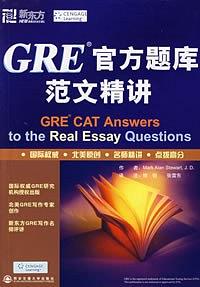
前言第一章 GRE写作应试指导 一、GRE写作概要 二、Issue写作详解 三、Argument写作详解 四、GRE写作中的建议和禁忌 五、GRE写作考试的计算机界面 六、GRE写作评分、成绩通知和成绩评估 七、GRE写作备考方略第二章 Issue范文精讲 Issue 写作要领 Issue 31 Investing in research which may have controversial results Issue 191 The proper use of public resources Issue 121 Our responsibility to save endangered species Issue 186 Is practicality our idol in today’s world? Issue 4 Advancements in a field of study and outside experts Issue 10 Government’s duty to preserve cultural traditions Issue 8 Should political leaders withhold information from the public? Issue 113 Defining ourselves by identifying with social groups Issue 136 Is the absence of choice a rare circumstance? Issue 161 Media scrutiny of society’s heroes Issue 212 Do worthy ends justify any means? Issue 7 The growing significance of the video camera Issue 114 Has technology failed to help humanity progress? Issue 159 Will humans always be superior to machines? Issue 183 The impact of acquiring more knowledge Issue 196 Does technology threaten our quality of life? Issue 33 Is image more important than the truth behind it? Issue 112 Should schools teach students to explore their own emotions? Issue 127 Are facts “stubborn things,” or can we alter them? Issue 184 Is it mistake to theorize without data? Issue 41 The role of non-mainstream areas of inquiry Issue 131 Do the arts reveal society’s hidden ideas and impulses? Issue 138 Are mistakes necessary for discovery or progress? Issue 174 Should laws be rigid or flexible? Issue 176 The value and function of science and art Issue 221 The chief benefit of the study of history Issue 1 Do we learn the most from people whose views we share? Issue 17 Our duty to disobey unjust laws Issue 46 Preparing young people for leadership Issue 144 The value of art vs. that of art critic Issue 201 Should educators provide students with a set of ideas or with job preparation? Issue 228 Praising positive actions and ignoring negative ones Issue 239 Should all so-called facts be mistrusted? Issue 49 Imaginative works vs. factual accounts Issue 99 Pragmatic vs. idealistic behavior Issue 164 Imagination vs. experience Issue 210 Are people free to choose a career? Issue 26 Historic buildings—preservation vs. practicality Issue 36 Can only history determine an individual’s greatness? Issue 103 Is history relevant to our daily lives? Issue 120 Studying the past to help us live in the present Issue 173 To what extent is originality truly original? Issue 207 Rituals and ceremonies and cultural identity Issue 226 Are we facing increasingly complex and challenging problems?第三章 Issue 范文精选 Issue 5 The merits of a national curriculum for schools Issue 11 The benefits of a global university Issue 13 Government’s duty to preserve lesser-known languages Issue 16 Do luxuries prevent our becoming strong and independent? Issue 25 Does it require effort and courage to make things simple Issue 28 Should students learn concepts before they memorize facts? Issue 29 Should public figures expect to lose their privacy? Issue 30 The primary goal of technological advancement Issue 38 Does television render books obsolete? Issue 40 Scholars and academic inquiry and research Issue 43 Ethical and moral standards and successful leadership Issue 47 Should society place more emphasis on the intellect? Issue 48 Does the study of history overemphasize “the famous few”? Issue 50 Should college faculty also work outside the academic world? Issue 92 Recognizing the limits of our knowledge Issue 93 The concept of individual responsibility Issue 94 What is required to become “truly educated”? Issue 95 Teamwork as the key to productivity Issue 98 Should colleges emphasize courses in popular culture? Issue 104 How does a culture perpetuate its prevailing ideas? Issue 108 The benefits of televising government proceedings Issue 109 Ads portraying people we want to “be like” Issue 110 Historians as storytellers Issue 115 Monitoring our progress with the use of logic and measurement Issue 116 The beneficiaries of global networks Issue 119 Setting research priorities Issue 124 The impact of technology on our leisure time Issue 130 Have we learned how to raise children who can better society? Issue 140 Do great achievements often lead to the greatest discontent? Issue 141 Does personal economic success require conformity? Issue 142 Is society better off when many people question authority? Issue 146 Can a person be committed to an idea yet be critical of it? Issue 147 Must we choose between tradition and modernization? Issue 150 Will computer connections make tourism obsolete? Issue 151 The effects of high-speed communications media Issue 152 The limits of the responsibility of corporate executives Issue 153 Should students be skeptical about what they are taught? Issue 154 Should parents and communities participate in education? Issue 157 Are all observations subjective? Issue 160 Effective leadership and commitment to particular principles Issue 165 From whom do our leading voices come? Issue 167 Is complete honesty a useful virtue in politics? Issue 168 Can only inside experts judge work in any given field? Issue 169 Are politics and morality mutually exclusive? Issue 170 The surest indicator of a great nation Issue 171 What avenues of intellectual inquiry best serve the public good? Issue 175 The impetus for innovation: individual enterprise or teamwork? Issue 177 Does our education change how we perceive the world? Issue 180 Can moral behavior be legislated? Issue 181 What influences how students and scholars interpret materials? Issue 185 Are scandals useful? Issue 187 Accepting innovations and new ideas Issue 188 Success: the ability to survive in and adapt and alter one’s environment Issue 191 Should education devote itself to enriching our personal lives? Issue 195 Politics—pursuing ideals vs. pursuing a reasonable consensus Issue 197 Are nations necessarily connected when it comes to their well-being? Issue 203 Do a society’s heroes or its heroines reflect its character? Issue 208 Do people’s appearance and behavior reveal society’s ideas and values? Issue 209 Progress through discourse among people Issue 214 Society’s duty to identify children with special talents Issue 216 Are most important discoveries and creations accidental? Issue 218 Must art be widely understood to have merit? Issue 225 Our tendency to look for similarities between different things Issue 230 Should colleges allow students to make their own decisions? Issue 231 Is moderation in all things poor advice? Issue 233 Do technologies interfere with “real” learning? Issue 234 Do people prefer constraints on absolute freedom? Issue 235 Is loyalty always a positive force? Issue 238 Does conformity stifle creativity and energy? Issue 243 The comparative value of artistic and scientific accomplishments第四章 Argument范文精讲 Argument中的逻辑错误及应对策略 Argument 1 Should Nature’s Way open a store in Plainesville? Argument 3 Hiring new law school graduates Argument 6 A jazz club for Monroe Argument 7 Clearview’s city-council election Argument 8 Mesa foods: a profitable investment? Argument 9 Grade inflation at Omega University Argument 10 The price of milk Argument 11 The recycling habits of West Egg’s residents Argument 14 Green Thumb Gardening Center Argument 18 Speed limits in Prunty County Argument 19 Promoting the rock band Double Rice Argument 23 A seafood restaurant for Bay City Argument 26 Improving a school district’s music education programs Argument 28 Breakfast for students in the Mylar school district Argument 141 The environmental impact of copper mining Argument 142 The link between iron in the diet and heart disease Argument 144 Rates of charitable donations Argument 148 Monroetown’s election between Brown and Greene Argument 150 Yosemite’s amphibian decline Argument 152 Saving Tria’s beach sand and its tourist industry Argument 155 Learning to read by listening to books on tape Argument 156 Dickens Academ’s interpersonal-skills seminars Argument 158 Garbage sites and the health of nearby residents Argument 160 Improving learning and memory Argument 161 The reading habits of Leeville citizens Argument 162 Eating soy to prevent fatigue and depression Argument 166 Comparing cold medications Argument 167 Lavender as a cure for insomnia Argument 168 Vitamin D, calcium, and bone mass in older people Argument 172 The Mozart School of Music Argument 173 International cover stories and magazine sales Argument 174 Should Grove College adopt a coeducational policy? Argument 176 The health benefits of Venadial Argument 178 Employee compensation at National Brush Company Argument 181 Sleep and academic performance Argument 186 Automobile factory workers age and productivity Argument 188 The effectiveness of pain medication Argument 192 The benefits of merging two townships Argument 194 Left-handed people and success in business Argument 201 Have Forsythe citizens adopted healthier lifestyles? Argument 202 Extinction of mammals in the Kaliko islands Argument 203 Small nonprofit hospitals vs. large for-profit hospitals Argument 208 The need for more electric generating plants Argument 210 Increasing factory efficiency by using robots Argument 214 Funding public schools in Blue City and Parson City Argument 217 A fitness-gym franchise opportunity Argument 220 The rewards for book writers vs. television writers Argument 221 Jobs for Hooper’s social science majors Argument 224 Governor Riedeburg’s candidacy Argument 236 Will business incentives help Beauville’s economy?第五章 Argument范文精选 Argument 2 Enhancing property values at Deerhaven Acres Argument 4 Which real estate firm is better? Argument 12 Worker safety at Alta Manufacturing Argument 15 Investing in Old Dairy stock Argument 16 A lottery for Impecunia Argument 17 Walnut Grove’s trash collection service Argument 20 Restricting moped rentals on Balmer Island Argument 21 The demand for alpaca overcoats Argument 22 The market for new houses in Steel City Argument 24 The best location for Viva-Tech’s new plant Argument 25 A new golf course and resort hotel for Hopewell Argument 27 How Automate can retain its best workers Argument 140 A salary raise and promotion for Professor Thomas Argument 143 The effects of corporate downsizing Argument 145 The relationship between snoring and weight gain Argument 146 Encouraging students to use school libraries Argument 147 The prospects for Whirlwind video-game sales Argument 149 Aircraft maintenance and airline profits Argument 151 Blaming the mayor for problems with River Bridge Argument 153 Violent teenage crime and television programming Argument 154 Exercise and longevity Argument 157 Local merchants and a new ski resort Argument 159 How to save money on electricity Argument 163 Replacing an old town hall Argument 164 New housing for Claitown University students Argument 165 Promofoods’ recall of its cans of tuna Argument 169 Attracting new faculty to Pierce University Argument 170 The price of oysters Argument 171 Bargain Brand Cereal profits Argument 175 Driver’s education at Centerville High Argument 177 Membership in Oak City’s Civic Club Argument 179 Selecting a food service provider for an employee cafeteria Argument 180 The benefits of the Easy Read Speed-Reading Course Argument 182 Should Happy Pancake House serve margarine or butter? Argument 183 Outlook for new hires and layoffs Argument 184 Replacing Bayhead Public Library’s books Argument 185 Saving water at the Sunnyside Towers Argument 187 Preventing depression by eating more fish Argument 189 How to increase enrollment at Foley College Argument 190 Advance ticket sales for Glenville’s concerts Argument 191 Distance-learning courses at Xanadu College Argument 193 Homework assignments and academic performance Argument 195 Liber Publishing Company’s waning profits Argument 200 Dentists who advertise Argument 204 Peanuts as a replacement for sugar crops Argument 205 Reducing crime in the city of Amburg Argument 206 Organized sports for Parkville’s children Argument 207 The ozone layer and the salamander population Argument 209 A new president for the Fancy Toy Company Argument 211 A job-opportunity program for Waymarsh University Argument 212 Patriot car company’s marketing strategy Argument 213 Boosting Armchair Video’s profits Argument 215 Water rationing and economic growth Argument 216 The benefits of retiring to Clearview Argument 218 Maintaining profits at Hyper-Go Toy Company Argument 223 How to increase profitability ay ABC Cereal Company Argument 225 Meeting consumer demand for automobiles Argument 226 Improving Central Plaza’s attractiveness Argument 227 The benefits of a new expressway Argument 229 Transopolis’ urban renewal plan Argument 230 Should the school board’s members be reelected Argument 231 Advertising Eco-Power tools and appliances Argument 232 Choosing a paving contractor Argument 233 Does small-town life promote better health and greater longevity? Argument 234 A change in programming format for KNOW radio station Argument 235 Solano’s music education programs Argument 237 Mira Vista College’s job-placement record Argument 239 A new dormitory for Buckingham College Argument 240 Finding new jobs for laid-off XYZ company employees Argument 241 Cheating at Groveton College
· · · · · · (
收起)