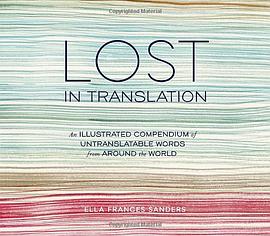

具体描述
Introduction
How you do introduce the untranslatable?
In our highly connected and communicative world, we have more ways than ever to express ourselves, to tell others how we feel, and to explain the importance or insignificance of our days. The speed and frequency of our exchanges leave just enough room for misunderstandings, though, and now perhaps more than ever before, what we actually mean to say gets lost in translation. The ability to communicate more frequently and faster hasn't eliminated the potential for leaving gaps between meaning and interpretation, and emotions and intentions are misread all too often.
The words in this book may be answers to questions you didn't even know to ask, and perhaps some you did. They might pinpoint emotions and experiences that seemed elusive and indescribable, or they may cause you to remember a person you'd long forgotten. If you take something away from this book other than some brilliant conversation starters, let it be the realization (or affirmation) that you are human, that you are fundamentally, intrinsically bound to every single person on the planet with language and with feelings.
As much as we like to differentiate ourselves, to feel like individuals and rave on about expression and freedom and the experiences that are unique to each one of us, we are all made of the same stuff. We laugh and cry in much the same way, we learn words and then forget them, we meet people from places and cultures different from our own and yet somehow we understand the lives they are living. Language wraps its understanding and punctuation around us all, tempting us to cross boundaries and helping us to comprehend the impossibly difficult questions that life relentlessly throws at us.
Languages aren't unchanging, though they can sometimes hold a false sense of permanence. They do evolve and occasionally die, and whether you speak a few words of one or a thousand words of many, they help to shape us—they give us the ability to voice an opinion, to express love or frustration, to change someone's mind.
For me, making this book has been more than a creative process. It's caused me to look at human nature in an entirely new way, and I find myself recognizing these nouns, adjectives, and verbs in the people I walk by on the street. I see boketto in the eyes of an old man sitting at the ocean's edge, and the resfeber that has taken over the hearts of friends as they prepare to journey across the world to an unknown culture.
I hope this book helps you find a few long-lost parts of yourself, that it brings to mind fond memories, or that it helps put into words thoughts and feelings that you could never clearly express before. Perhaps you'll find the word that perfectly describes your second cousin once removed, the way you felt two summers ago that you were never able to fully describe, or the look in the eyes of the person sitting across from you right now.
Eckhart Tolle wrote, "Words reduce reality to something the human mind can grasp, which isn't very much." I'm hesitant to agree. Words allow us to grasp and hold onto an extraordinary amount. Sure, all languages can be picked apart and reduced to just a few vowels or symbols or sounds, but the ability that language gives us is incredibly complex. There may be some small essential gaps in your mother tongue, but never fear: you can look to other languages to define what you're feeling, and these pages are your starting point.
So go and get lost in translation.
作者简介
ELLA FRANCES SANDERS is a twenty-something writer and illustrator who intentionally lives all over the place, most recently Morocco, the United Kingdom, and Switzerland. She likes to create books with real pages while drawing freelance things for charming people, and she is not afraid of questions or bears. You can find her at ellafrancessanders.com.
目录信息
读后感
mangata(瑞典语)-月光在水面铺出的银色道路; samar(阿拉伯语)-日落后和朋友共享时光至深夜; komorebi(日语)-枝叶间闪现的斑驳阳光; razliubit(俄语)-已出爱河,亦悲亦喜; kummerspeck(德语)-“悲伤培根”,因情绪低落而暴食后增加的体重; boketto(日语)-茫然...
经常会在某些时刻,想把当下的心情或画面装在容器里保存起来,但自己的脑子就像是二手的,完全不能配合,所以格外喜欢一些可爱的词,就像是一个开关,按下去就有画面,BGM,甚至味道。这本书里最爱的词是“KOMOREBI——枝叶间闪现的斑驳阳光”,让人觉得风和日暖,世界都可爱起...
mangata(瑞典语)-月光在水面铺出的银色道路; samar(阿拉伯语)-日落后和朋友共享时光至深夜; komorebi(日语)-枝叶间闪现的斑驳阳光; razliubit(俄语)-已出爱河,亦悲亦喜; kummerspeck(德语)-“悲伤培根”,因情绪低落而暴食后增加的体重; boketto(日语)-茫然...
mangata(瑞典语)-月光在水面铺出的银色道路; samar(阿拉伯语)-日落后和朋友共享时光至深夜; komorebi(日语)-枝叶间闪现的斑驳阳光; razliubit(俄语)-已出爱河,亦悲亦喜; kummerspeck(德语)-“悲伤培根”,因情绪低落而暴食后增加的体重; boketto(日语)-茫然...
经常会在某些时刻,想把当下的心情或画面装在容器里保存起来,但自己的脑子就像是二手的,完全不能配合,所以格外喜欢一些可爱的词,就像是一个开关,按下去就有画面,BGM,甚至味道。这本书里最爱的词是“KOMOREBI——枝叶间闪现的斑驳阳光”,让人觉得风和日暖,世界都可爱起...
用户评价
天呐,我真不知道该如何向我的书友们描述这本书。它给我的感觉,就像是看了一部由三个不同导演,在三个不同国家,用三种完全不兼容的拍摄手法完成的电影,然后强行剪辑在一起。叙事节奏是它最大的问题,或者说,它根本就没有一个“节奏”。有些地方,时间仿佛凝固了,一个简单的动作——比如开门——能被拆解成光线如何折射、门把手的金属如何导热、主角指纹上的残留物分析,足足写了十页。而另一些极其重要的事件,比如某位角色的突然失踪,却只是被轻描淡写地一笔带过,好像只是去便利店买了个酱油。我一直在努力寻找那条贯穿始终的主线,但每一次当我自以为抓住了什么时,作者就立刻用一段关于十九世纪欧洲文学理论的注释把它打散了。我买这本书是为了逃离现实,找点乐子,结果却感觉像是参加了一场强制性的、时长八小时的学术研讨会,而且我还没交会费。我甚至开始怀疑,是不是我理解错了作者的意图,也许这本书的真正含义,就是它根本没有含义?这种解读路线本身,又让我感到一种智力上的压迫。我读完后需要休息几天,才能重新找回对线性叙事的信任感。
这本书的对话部分,简直是灾难性的。如果说它在描摹内心的挣扎上还有可取之处,那么人与人之间的交流,简直就像是两个来自不同星球的外星人在努力学习地球上的礼貌用语,但都学错了腔调。角色们从来不直接回答问题。A问:“你今晚想吃什么?” B的回答可能是:“这个问题触及了我们对时间流逝的集体焦虑,以及记忆如何塑造我们对‘选择’的认知框架。” 拜托,我只是想知道是吃披萨还是吃面条!我花了大量时间试图去“解码”这些对话,试图找出他们话语背后的潜台词,但最终发现,潜台词可能就是他们真正想说的,而他们说的那些宏大叙事,不过是用来掩盖他们不知道该怎么说“我爱你”的笨拙方式。这本书让我深刻体会到,有时“翻译”过程中的损失,远比“保留”信息本身更让人沮丧。它让你感觉自己像个侦探,但最终发现,根本就没有犯罪发生,只是一群过度思考的人在对着空气大喊大叫。
如果用“碎片化”来形容这本书,可能还不够贴切。更像是“结构性崩塌”。我欣赏那些勇于打破常规的作家,但这本书的“反结构”似乎更多是出于一种炫技的冲动,而不是必要的叙事服务。想象一下,你在试图组装一个乐高城堡,但说明书上的步骤是随机打乱的,而且每块积木的颜色和形状都在你看着它的时候偷偷发生了变化。我喜欢人物的塑造,特别是配角们,他们偶尔会闪现出令人惊喜的火花,但他们总是在我开始对他们产生情感联结的时候,就突然被另一个意识流段落给冲走了。我一直在翻找,看看有没有一个脚注,能告诉我“请参阅第42页的上下文”,但很遗憾,这本书的上下文就像流沙一样,你越想抓住它,它就陷得越深。我不得不承认,我跳读了至少四分之一的内容,因为那些关于室内装潢的详细描写,虽然语言优美,但对我理解故事核心毫无帮助。我不是说它不深刻,而是它把“深刻”埋在了太多不相干的泥土下面,挖掘成本太高了。
这家伙简直是把“信息过载”这个概念玩出了新的花样!我翻开这本书的时候,还以为会是一部那种情节紧凑、环环相扣的悬疑小说,毕竟名字听起来就带着点神秘和误会。结果呢?这本书更像是一场无休止的、充满哲学思辨的迷宫漫步。作者似乎对角色的内心独白有着近乎偏执的迷恋,每一章都能给你塞进来好几页关于“存在主义危机”或者“语言的边界性”的长篇大论。说实话,读到一半的时候,我差点把眼镜摔了,不是因为情节跌宕起伏,而是因为我得不断停下来查阅那些晦涩的术语。它最让我抓狂的是,总是在最关键的转折点上戛然而止,然后花上三章篇幅来探讨主角早上喝咖啡时,咖啡因如何影响了他对量子纠缠的理解。我理解艺术需要深度,但这深度简直快把我淹没了。我期待的对话交锋,变成了冗长到令人发指的内心独白,感觉就像在听一个喝醉了的大学教授在深夜酒吧里对着空气滔滔不绝。我得承认,有些片段的文字功底是毋庸置疑的,那种对词语的精准拿捏,仿佛能用文字雕刻出玻璃的质感,但整体阅读体验就像在啃一块极其干燥、却又包裹着昂贵松露油的鹅肝——本质上是干涩的,尽管调味很高档,可我更希望它能多汁一点。这书与其说是小说,不如说是一部实验性的散文集伪装成的故事。
从装帧设计来看,这本书的用心程度是毋庸置疑的,纸张的质感,字体排版的留白,都散发着一种“严肃文学”的气息。然而,这种精致的外表下,却包裹着一颗混乱而跳脱的心脏。我尝试了至少三种不同的阅读环境——安静的图书馆、嘈杂的咖啡馆、甚至是在午夜的床上,希望能找到一个“正确的”进入点,但每一次都是徒劳。这本书有一种令人不安的特质:它让你感觉自己很笨,因为它似乎在暗示,只有那些拥有特定知识背景和思维模式的人才能真正领会它的精髓。我讨厌被这种“精英化”的氛围所裹挟。我渴望的是一个引人入胜的故事,一个能让我忘记手中的书,沉浸其中的世界。而这本书,却不断地提醒我:看啊,我是一本书,我由文字构成,我的结构是故意的,我的跳跃是充满意义的!这种自我意识过剩的写作方式,极大地削弱了情感的穿透力。读完后,我没有感到被震撼,反而有一种莫名的疲惫感,仿佛刚跑完一场没有终点的马拉松,只是为了到达下一个起点。
A book worth translating to languages other than English, even though some words might have corresponding translation in certain language. I always believe that characters (such as Chinese characters) or words are somewhat compendium of the culture. Having a good understanding of them could lead you a better way to know the culture, even the histor
全世界说不同语言的人有着人类共通的情感,那些词一瞬间就唤醒记忆,让人想起过去的某个场景或某个人,也会有一些特别搞笑的桥段。看这类书就会觉得,啊,原来在世界上的不同人都和我一样也有过这样的想法啊,哪怕我周围没有同类,但原来我不是孤单的啊。我觉得是一本值得送给让我觉得szimpatikus的人的书!
Saudade of the lives I would never live hits me when reading the book.
小清新~
治愈极了 一直想买一本各个语言中untranslatable的词典 虽然是这些词untranslatable 但是可以深刻地感同身受