
具体描述
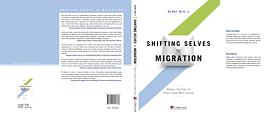
和其他西方国家一样,新西兰的人口在迅速老化。2006年,年龄高于65岁的年长者占全国人口的12.3%,其中亚裔年长者占3.2%,华人长者则是亚裔长者中最大的一个族群。年长者是社会的宝贵财富,为推动他们积极参与社区活动,新西兰政府致力于建设一个积极的老龄社会,以使年长者能居家养老。本书使用叙事的研究方法,通过分析移居新西兰的中国长者移民的住房经历和需求,探讨他们对居家养老的理解和他们的自我在移居新西兰的过程中的变化。
作者简介
利文博士于2011年始在澳大利亚詹姆斯库克大学心理学系任教,是新西兰怀卡托大学心理学系特聘研究员。在华南师范大学心理学系毕业后,她在广东女子职业技术学院任教直至2003年移民新西兰。2004年至2007年利文博士在新西兰赌博问题基金会担任心理咨询师。作为一个社会心理学家,利文博士致力于搭建东西方社会心理学的桥梁,她的研究领域包括老年心理健康研究,,社会政策与社会老龄化,移民和难民心理健康,留学生心理健康以及问题赌博等。利文博士是新西兰顶尖成就博士奖学金和詹姆斯库克大学青年科研之星获得者。利文博士还活跃在澳大利亚和新西兰的社会服务领域,她是新西兰汉密尔顿市华人晚晴活动中心的创办人,是澳大利亚难民委员会委员和汤斯威尔市跨文化中心的青少年咨询小组成员,她还担任汤斯威尔市华侨会的秘书长。
目录信息
TABLE OF CONTENTS
1 INTRODUCTION 1
Book overview: Orientation towards the self 4
International and national population ageing 7
Chinese people and ageing in New Zealand 8
Policy responses to ageing and ethnic issues in New Zealand 13
2 THEORETICAL ORIENTATION: SYMBOLIC INTERACTIONISM AND THE SELF 17
Basic tenets of symbolic interactionism 18
The self and identities 23
The cobweb Chinese self 27
Self and acculturation 30
Social and ethnic identities 36
Tying strands into a richer understanding of the self 38
3 LITERATURE REVIEW: FILIAL PIETY AND AGEING IN PLACE 41
Filial Piety 43
Living arrangements 44
Support to parents 47
Respecting parents 50
Ancestral worship 52
Gender norms 54
Filial piety and the Chinese self 57
Ageing in place 60
Places as sociocultural markers of experience and attachment 60
Place as process reflecting embodiment and identity 63
Immigration: A home away from home 68
Emplaced ageing and Chinese immigrants 70
Putting ideas expressed in this chapter into action 73
4 METHODOLOGY 76
The narrative approach 77
Chinese narratives and the episodic interview 80
Fangtan: A Chinese narrative interview technique 81
Participants 88
Research processes 95
Episodic interviews 96
Integrating a go-along technique into episodic interviews 99
Fangtan interviews 100
Analyses 103
Holistic structural analysis 103
Thematic analysis 105
Visual analysis 106
Quality of narrative data 108
5 HOME MAKING IN A NEW LAND 111
Biographical disruption and status-discrepancy 112
Responding to biographical disruption through gardening 116
Responding to status-discrepancy through art-making 121
Relational dimensions of domestic space attachments 126
Chapter Summary 132
6 MATERIAL-MEDIATED ACCULTURATION 135
Observational acculturation 136
Familial acculturation 139
Participatory acculturation 142
Chinese media acculturation 145
Religious and spiritual acculturation 147
Chapter summary 150
7 CHANGING PRACTICES OF FILIAL PIETY 155
Living arrangements 155
Pre-co-residence: Lack of preparation 156
Parent-child co-residence: Multiple desires, expectations and needs 159
Filial Piety at a distance 163
Support to parents 168
Respecting parents 175
Children’s achievements 179
Ancestral worship 181
Gender norms 186
Chapter Summary 189
8 POSITIVE AGEING IN A NEW PLACE 193
Affordable and stable public housing 194
Building safe neighbourhoods 199
Engaging in local communities 203
Hybridised transnational communities 211
Spaces for care 216
Chapter summary 223
9 DISCUSSION 225
Integrating key findings 226
A culturally patterned narrative approach 234
Policy implications 238
REFERENCES 241
【精彩篇章】
PREFACE
Today, large numbers of older people are on the move; migrating both within and across nation states. Such movement can have consequences for the quality of life and relationships of migrants, and for the enactment of their familial obligations and cultural traditions. Lives can be both disrupted and enhanced along the way. When people migrate, they carry their cultural traditions and expectations with them. Simultaneously, people also face the need to adapt to new social, cultural and political realities. As people settle somewhere new, they often come to engage in new activities and to rethink the practicalities of their pre-existing cultural norms, expectations and practices. Migration in later life also raises a raft of issues regarding identity, belonging, contributions to family and community.
Dr Wendy Li offers a rare scholarly engagement with the issues discussed by drawing on a narrative approach that foregrounds disruption and renewal. Readers are presented with an invaluable study of ageing and aged care practices among older Chinese migrants to New Zealand. Having been educated in both the Chinese and Western university systems, Dr Li is in a unique position to combine ‘Eastern’ and ‘Western’ thought in extending our understanding of the intricacies of migration in later life. The result of her scholarly endeavour is a book that offers a nuanced way to understand the complexities of acculturation, narrative disruption and adjustment as emplaced processes central to experiences of migration and familial care later in life.
This book draws from the experiences of filial piety and biographies of a group of older Chinese migrants to New Zealand. Dr Li informs her interpretation of the participant’s experiences with acumens from diverse literatures relating to the ageing population, social policy, migration in later life and the role of culture in positive ageing in place. Symbolic interactionism proves useful as the theoretical basis for combining insights from across literatures, and for theorising the self and culture as interpenetrating and mutually constituted phenomena. The book conveys the history and significant of the cultural concept of filial piety and associated obligations. The explanation of filial piety and how it manifests in living arrangements, caregiving relationships and ancestor worship is ground breaking. The agentic ways in which the participants negotiated the challenges of relocation, settlement and familial obligations, whilst obtaining continuity in their life narratives, are handled with considered humility.
Dr Li presents a particularly useful discussion that connects the acculturation literature with work on ethnic identity construction, materiality, daily practices and place. She explores the emplaced nature of migration, and the role of material practices such as gardening—which is shown to enable migrants to put down both literal and cultural roots. Noteworthy are the ways in which older Chinese people engage in simple acts that enhance their sense of belonging in new settings, and provide a means to cultivate a sense of contributing to local community life. The picture painted from the exploration of such practices brings into question stereotypes about migrant groups that are often held by host populations. Readers are presented with a humane portrait of migrants grounded in simple acts such as the sharing of vegetables, giving local people free haircuts and the provision of Tai Chi lessons to members of the host community. From the author’s engagements with these practices, readers are offered a sense of how positive ageing in place can be realised and reciprocal relationships with local people can be fostered.
Often scholars are engaged in self-contained disciplinary specific conversations about the same topics in isolation from discussions in other disciplines. Dr Li brings insights from many of these conversations together. As a result, her work is of interest to scholars in a slew of disciplines, including psychology, ageing studies, demography, planning, sociology, history, policy, social work and cultural studies. This engaging book should be required reading for scholars researching migration in later life and for policy makers and community groups offering support to migrant communities.
Ultimately, human ageing is a biological reality. The social reality of people ageing at different rates and with varying levels of support and quality of life is associated with particularities of specific settings, relationships and cultural practices. The importance of books such as this lies in the insights it provides into how positive ageing in place can be realised for all.
By Professor Darrin Hodgetts, The University of Waikato, New Zealand
· · · · · · (收起)
读后感
用户评价
翻开这本书,我原本期待能找到一些关于城市规划和社会资本理论的交叉探讨。我设想,作者可能会用详实的数据和案例,来论证不同移民模式(例如技术移民、家庭团聚移民、难民)对目的地社区结构和公共服务需求的冲击与影响。特别是在涉及到“社区养老”这一具体议题时,我希望能看到对现有照护模式的批判性审视——例如,西方社会中那种强调独立性的养老哲学,与许多移民文化中推崇的家族式互助模式之间的张力。这本书如果能将宏观的政策分析与微观的日常生活经验相结合,那将是非常有价值的。例如,讲述一个移民家庭,如何费尽周折去争取一个符合他们文化习惯的长期护理方案,或者探讨他们如何自发组织起非正式的互助网络来填补政府服务的空白。我希望它不仅仅停留在描述现象,更能提出富有建设性的解决方案,比如如何在多元文化背景下设计更具包容性和人性化的社区支持体系。这种结合了社会政策、城市研究和个体经验的分析框架,才是我真正感兴趣的。
这本书的标题让我联想到一些关于身体政治和社会排斥的理论。我本来是冲着它可能探讨的健康不平等问题来的。我希望作者能够深入挖掘移民身份在医疗接触点上所带来的障碍:语言障碍、文化误解、对不同健康实践的偏见,以及慢性病管理在跨文化语境下的复杂性。一个好的论述,应该能揭示出,当个体失去了原有的社会信任基础后,他们如何更脆弱地暴露在健康风险之下,以及“自我”的感知——我是健康的还是有缺陷的——是如何被外部的医疗机构和主流社会的目光所塑造的。特别是“变化中的自我”这一部分,我期待看到关于移民群体中抑郁症、焦虑症等心理健康问题的专门讨论,以及他们寻求帮助的路径。这本书如果能像一部扎实的民族志那样,潜入到那些被主流叙事忽略的角落,去倾听那些关于病痛、康复和尊严的低语,那才算不负所望。
我本以为这本书会是一部极具前瞻性的关于代际差异的研究。如果标题中的“家、健康和社区养老”指的是跨越代际的照护责任转移,那么我期待看到的是一个关于“逆向文化冲击”的详细分析。即,第一代移民为了生存和工作,可能不得不牺牲了传统的家庭结构,而第二代、第三代在融入主流社会后,他们对父母辈的养老观念又会产生何种冲击?例如,年轻一代可能倾向于将年迈的父母送入专业的养老机构,这在传统观念中可能是极大的不孝,但在新的社会环境下,却成了维持家庭财务和子女教育的最佳选择。这本书如果能捕捉到这种代际之间的观念冲突、情感拉扯,并分析出在资源有限的情况下,哪些“自我”的牺牲是必须的,哪些又是可以避免的,那将是非常有价值的。我关注的是这种在文化张力中诞生的、充满妥协和创新的家庭内部动态博弈。
坦白地说,我对这本书最初的兴趣点在于其哲学层面的思辨潜力。我设想,在“移民”这个剧烈的环境变动中,“自我”的边界必然会模糊不清。这不仅仅是身份认同的危机,更是一种本体论的重塑。一个从A地到B地的旅人,他还是原来的那个“我”吗?这本书是否会探讨语言的异化如何影响自我表达和内在世界的构建?比如,当母语退居二线,新的习得语言在多大程度上限制或拓宽了个体的认知边界?而且,“家”的概念,在时间和空间上都被拉伸,这难道不正是对传统笛卡尔式主体哲学的挑战吗?我希望看到作者能超越简单的社会学描述,触及存在主义层面的追问:在流离失所的状态下,我们如何重新确立“真实性”(authenticity)?这本书如果能以一种更具文学性和内省性的笔触,去描摹这种精神上的漂泊感和对“根”的永恒追寻,那将是一次非常引人入胜的心灵旅程。
这本书的标题倒是挺吸引人的,乍一看,似乎是在探讨一个宏大而又深刻的议题——现代社会中,个体在跨越地理界限后所经历的身份重塑与认同危机。我本以为它会深入剖析全球化背景下,文化冲击如何重塑个体的核心价值观,尤其是在“家”这个概念被不断稀释和重新定义的语境下。比如,作者是否会引用社会学中的“去地域化”理论,来阐述虚拟社区如何部分替代了传统地理社区的功能?或者,它会不会聚焦于老年群体的特殊性,探讨他们在异国他乡面对医疗体系差异和照护资源匮乏时的心理韧性与适应策略?我期待看到的是对真实案例的细致描摹,那些关于失去原有社会支持网络后的无助感,以及为了重建安全感而做出的种种努力。如果能将人类学田野调查的深度与心理学对创伤适应的见解结合起来,这本书无疑将是一部极具洞察力的作品。我尤其关注,当“家”不再是一个固定的物理空间,而成为一种不断被记忆和建构的心理状态时,个体的“自我”是如何在这种流动性中找到锚点的。期待阅读后能获得更具层次感的理解。