
具体描述
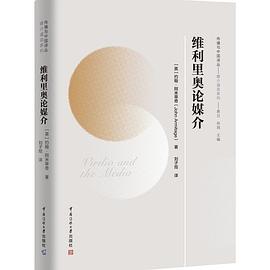
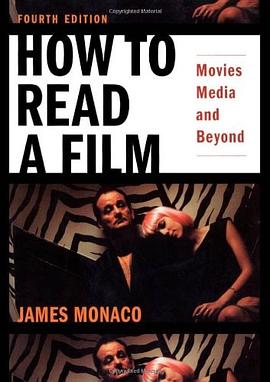
Richard Gilman referred to How to Read a Film as simply "the best single work of its kind." And Janet Maslin in The New York Times Book Review marveled at James Monaco's ability to collect "an enormous amount of useful information and assemble it in an exhilaratingly simple and systematic way." Indeed, since its original publication in 1977, this hugely popular book has become the definitive source on film and media. Now, James Monaco offers a special anniversary edition of his classic work, featuring a new preface and several new sections, including an "Essential Library: One Hundred Books About Film and Media You Should Read" and "One Hundred Films You Should See." As in previous editions, Monaco once again looks at film from many vantage points, as both art and craft, sensibility and science, tradition and technology. After examining film's close relation to other narrative media such as the novel, painting, photography, television, and even music, the book discusses the elements necessary to understand how films convey meaning, and, more importantly, how we can best discern all that a film is attempting to communicate. In addition, Monaco stresses the ever-evolving digital context of film throughout--one of the new sections looks at the untrustworthy nature of digital images and sound--and his chapter on multimedia brings media criticism into the twenty-first century with a thorough discussion of topics like virtual reality, cyberspace, and the proximity of both to film. With hundreds of illustrative black-and-white film stills and diagrams, How to Read a Film is an indispensable addition to the library of everyone who loves the cinema and wants to understand it better.
作者简介
James Monaco is President of UNET 2 Corporation and author or editor of more than a dozen books on film and media, published in more than 40 editions, which have been as successful in translation in Europe and Japan as in English in the UK and North America.
With Baseline, the worldwide information source for the entertainment business which he founded in 1982, he’s responsible for both a film guide and an encyclopedia and is the only American film writer to have products in both of those niches. An experienced TV talk show guest and radio commentator, Monaco is also well-known as a leader of the internet and new media industries.
目录信息
INTRODUCTION
Preface to the Second Edition
1. FILM AS AN ART
The Nature of Art
Ways of Looking at Art
The Spectrum of Abstraction
The Modes of Discourse
The "Rapports de Production"
Film, Recording, and the Other Arts
Film, Photography, and Painting
Film and the Novel
Film and Theater
Film and Music
Film and the Environmental Arts
The Structure of Art
2. TECHNOLOGY: IMAGE AND SOUND
Art and Technology
Image Technology
Sound Technology
The Lens
The Camera
The Filmstock
Negatives, Prints, and Generations
Aspect Ratio
Grain, Gauge, and Speed
Color, Contrast, and Tone
The Soundtrack
Post-Production
Editing
Mixing and Looping
Special Effects
Opticals, the Lab, and the Post House
Video and Film
Projection
3. THE LANGUAGE OF FILM: SIGNS AND SYNTAX
Signs
The Physiology of Perception
Denotative and Connotative Meaning
Syntax
Codes
Mise-en-Scéne
The Framed Image
The Diachronic Shot
Sound
Montage
4. THE SHAPE OF FILM HISTORY
Movies/Film/Cinema
"Movies": Economics
"Film": Politics
"Cinema": Esthetics
Creating an Art: Lumière versus Méliès
The Silent Feature: Realism versus Expressionism
Hollywood: Genre versus Auteur
Neorealism and After: Hollywood versus the World
The New Wave and the Third World: Entertainment versus Communication
The Postmodern Sequel: Democracy, Technology, End of Cinema
5. FILM THEORY: FORM AND FUNCTION
The Critic
The Poet and the Philosopher: Lindsay and Münsterberg
Expressionism and Realism: Arnheim and Kracauer
Montage: Pudovkin, Eisenstein, Balázs, and Formalism
Mise-en-Scéne: Neorealism, Bazin, and Godard
Film Speaks and Acts: Metz and Contemporary Theory
6. MEDIA: IN THE MIDDLE OF THINGS
Community
Print and Electronic Media
The Technology of Mechanical and Electronic Media
Radio and Records
Television and Video
"Broadcasting": The Business
"Television": The Art
"TV": The Virtual Family
7. MULTIMEDIA: THE DIGITAL REVOLUTION
The Digital Revolution
The Myth of Multimedia
The Myth of Virtual Reality
The Myth of Cyberspace
"What Is to be Done?"
I FILM AND MEDIA: A CHRONOLOGY
To 1895: Prehistory
1896 – 1915: The Birth of Film
1916 – 1930: Silent Film, the Births of Radio and Sound Film
1931 – 1945: The Great Age of Hollywood and Radio
1946 – 1960: The Growth of Television
1961 – 1980: The Media World
1981 – Present: The Digital World
II BIBLIOGRAPHY: READING ABOUT FILM AND MEDIA
Part One: A Basic Library
1. Film as an Art
2. The Technology of Film and Media
3. The Language of Film
4A. Film History: The Economics and Politics of Film
4B. Film History: General Historical Studies
4C. Film History: Specific Major Periods
4D. Film History: Genres and Specific Topics
4E. Film History: National Cinemas
4F. Film History: Films and Filmmakers
5. Film Theory and Practical Criticism
6. Media
7. New Media
Part Two: Information
8. Lists and Encyclopedias
9. Book Bibliographies
10. Guides to Periodical Literature
11. Miscellaneous Guides
12. Journals and Magazines
13. Databases
· · · · · · (收起)
读后感
用户评价
这本书的封面设计简直是一场视觉盛宴,那种复古的胶片质感和大胆的字体排版,一下子就把人拉回了那个黄金时代的电影院。我拿到书的时候,首先被它厚实的纸张和精致的装帧所吸引,这显然不是那种可以随手翻阅的快餐读物,它带着一种庄重的仪式感,仿佛在邀请你进行一场严肃的对话。内页的印刷质量也无可挑剔,黑白照片的层次感处理得非常到位,即便是对电影史不太了解的新手,也能从中感受到摄影师和设计师的匠心。我特别喜欢作者在章节过渡部分采用的一些手绘草图或者老海报的局部特写,这些细节处理,让整本书的阅读体验变得非常立体和丰富。它不仅仅是一本关于“如何看”的书,更像是一件精心制作的艺术品,让人忍不住想把它陈列在家中最显眼的位置。光是翻阅这部分,就已经值回票价了,因为它成功地在信息传递之外,营造了一种对电影艺术的敬畏感。拿到书后的第一感受是:这本书的物理形态本身,就是对电影媒介的一种致敬,是对其历史沉淀的一种珍视。
这本书的结构安排,尤其是对不同电影流派和历史时期的梳理,展现出作者深厚的学术功底和清晰的逻辑脉络。它不是简单地按照年代顺序罗列,而是将理论工具和历史背景交织在一起,形成一个相互印证的知识网络。比如,当讨论到新浪潮电影时,作者立刻回溯到古典好莱坞的制片厂体系,对比两者在叙事自由度和美学追求上的分野,这种关联性的讲解,让知识点不再是孤立的碎片,而是构成了宏大的电影发展图景。这种宏观视野的构建,对我这样想系统了解电影发展脉络的人来说,简直是福音。此外,作者在论述过程中展现出的那种克制而审慎的学术态度也令人印象深刻,他很少使用绝对化的语言,而是鼓励读者带着批判性的眼光去审视每一套理论的适用边界。这种开放性的引导,极大地激发了我的独立思考,让这本书成为了一个绝佳的讨论起点,而非终点。
我花了很长时间才真正消化完书中关于“时间与空间”处理的那几个章节,这部分内容着实挑战了我以往对电影的直观认知。作者在探讨如何通过场面调度(Mise-en-scène)来构建一个具有多重解读可能性的银幕空间时,展现了惊人的洞察力。他不仅仅是在描述演员如何站位,而是深入挖掘了每一个道具、每一束光线背后隐藏的心理暗示和权力关系。特别是当他对比了现实主义和表现主义在空间处理上的根本差异时,我不得不停下来反复阅读,甚至对照着一些经典影片的片段去观察。这种分析的深度,迫使读者必须从一个被动的接受者转变为一个主动的解码者。阅读此书的过程,与其说是学习,不如说是一场智力上的攀登,它不断地推高你对电影媒介表达潜能的期望值。读完这部分,我发现自己再看老电影时,眼睛会不自觉地去捕捉那些以前完全忽略的细节,那种“豁然开朗”的感觉,是其他任何入门读物都无法给予的。
阅读的最后阶段,我感到一种强烈的“重构”体验。作者在总结部分,将之前分散讲解的镜头、剪辑、声音、表演等元素,熔铸成一个整体分析框架,用于解构一部完整的长片。这个实战演练般的环节,是整本书的点睛之笔。它不仅仅是理论的复习,更像是一次高强度的训练,教会你如何将分散的观察点汇聚成对影片整体意图的理解。我发现,书中的许多分析范例都选取得恰到好处,既有大众熟知的经典,也有一些容易被忽视的艺术佳作,这拓宽了我对电影可分析对象的认知范围。读完此书,我确信自己不再只是一个“看电影”的人,而是一个能够“阅读电影”的人。它赋予了我一套全新的视觉词汇和思维工具,让观看体验从感性愉悦提升到了理性欣赏的层次。这本书的价值在于,它成功地将一部艺术品分解、重组,最终让我对艺术本身的创作过程有了更深层次的敬意与理解。
这本书的叙事节奏掌握得相当精妙,它没有急于抛出那些晦涩难懂的专业术语,反而像一位经验丰富的向导,带着你缓缓步入电影分析的殿堂。起初,它似乎只是在描绘一些基础的镜头语言——景别、角度、运动,但随着阅读的深入,你会发现作者巧妙地将这些元素与情绪的渲染、叙事焦点的转移联系起来。我记得有一段关于蒙太奇手法的讨论,作者没有采用那种生硬的定义堆砌,而是通过对比几个不同时期导演的作品片段进行细致的剖析,让你真切地感受到“剪辑如何决定意义”。这种“润物细无声”的教学方式,极大地降低了入门的门槛,让原本感觉高深莫测的电影理论变得平易近见。更令人赞叹的是,作者在解释概念时,总能穿插一些令人拍案叫绝的轶事或者幕后花絮,这些小故事不仅佐证了理论的有效性,也极大地丰富了阅读的趣味性,让人在学习知识的同时,也沉浸在了光影背后的故事里,阅读体验非常流畅,毫无滞涩感。
媒介电影史课本。虽说是film studies的教材,但也可作为通识读物。最大优点是77年第一版,几十年下来再版和更新,能看出主流院校课本在理论选片上的进展。但真的入门而已,而且更适合产业了解,不适合导演分析
作为入门很好
普通课本。。而已。。
第三章
媒介电影史课本。虽说是film studies的教材,但也可作为通识读物。最大优点是77年第一版,几十年下来再版和更新,能看出主流院校课本在理论选片上的进展。但真的入门而已,而且更适合产业了解,不适合导演分析