
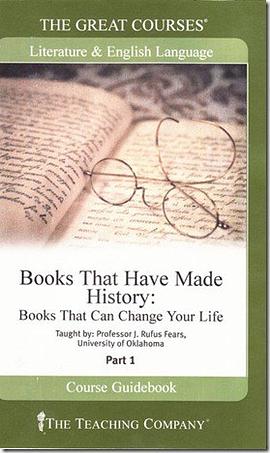
Books That Have Made History pdf epub mobi txt 電子書 下載 在線閱讀 2026
- 文學
- 教育
- 曆史
- audiobook
- TeachingCompanyCourse
- TTC
- GreatCourseSeries
- Audio-Lecture
- 曆史
- 文學
- 經典
- 哲學
- 思想
- 文化
- 影響
- 變革
- 智慧
- 傳承

具體描述
What makes a written work eternal—its message still so fundamental to the way we live that it continues to speak to us, hundreds or thousands of years distant from the lifetime of its author?
Why do we still respond to an ancient Greek playwright's tale of the Titan so committed to humanity's survival that he is willing to endure eternal torture in his defiance of the gods? To the cold advice of a 16th-century Florentine exiled from the corridors of power? To the words of a World War I German veteran writing of the horrors of endless trench warfare?
Most important of all, what do such works—"Great Books" in every sense—mean to us? Can they deepen our self-knowledge and wisdom? Are our lives changed in any meaningful way by the experience of reading them?
In this course, Professor J. Rufus Fears presents his choices of some of the most essential writings in history. These are books that have shaped the minds of great individuals, who in turn have shaped events of historic magnitude.
This course does not analyze the literature or discuss it in detail; rather, it focuses on intellectual history and ethics. What Professor Fears does is to take the underlying ideas of each great work and show how these ideas can be put to use in a moral and ethical life.
Beginning with his definition of a great book as one that possesses a great theme of enduring importance, noble language that "elevates the soul and ennobles the mind," and a universality that enables it to "speak across the ages," Professor Fears examines a body of work that offers an extraordinary gift of wisdom to those willing to receive it.
From the Aeneid and the Book of Job to Othello and 1984, the selections range in time from the 3rd millennium B.C. to the 20th century, and in locale from Mesopotamia and China to Europe and America.
A Chronology of Fundamental Choices
And though every thoughtful reader's list of historically important books will likely differ, few would argue against the profound importance of any of these selections. Together, they show how humankind has dealt with the choices revolving around the three themes of God, Fate, and Good-and-Evil—and how those choices shape our morality and direct our lives as we answer the question in the fourth main theme of this course: How should we live?
This course by the University of Oklahoma's three-time "Professor of the Year" is a vital intellectual and moral journey that remains constantly invigorating because of a teaching style that keeps even the most abstract concepts readily accessible.
Professor Fears is especially diligent about referring back to the main themes identified at the beginning of the course and comparing the position taken by each new author to what previously discussed authors have said. As a result, you'll find that each new lecture is smoothly layered into an ever-growing accumulation of knowledge. Each work comes alive, its ideas rich in consequence.
Even if you're already familiar with these works from a literary standpoint, this is a course well worth your attention; Professor Fears approaches each of these works from an entirely different direction, considering philosophical and moral perspectives that superbly complement a purely literary understanding.
Ideas Crucial To Every Thoughtful Person
And as Professor Fears is eager to point out, a grasp of those perspectives is crucial to the education of every thoughtful person.
"History is our sense of the past," he notes. "And these great books are our links to the great ideas of the past. This course is built upon the belief that great books, great ideas and great individuals make history.
"That's not a popular notion today, and certainly not in the academic world. In the academic world, we like to think that it is anonymous social and economic forces that make history. Slavery, for example, is the great object of study for those who ponder the lessons of the ancient world. Well à they're wrong. Karl Marx, who is the intellectual father of this notion that social and economic forces make great ideas, was wrong.
"It is the great ideas that propel men and women to become great in themselves. It was the great idea of truth that made Dietrich Bonhoeffer [the Lutheran pastor who defied Hitler and was hanged as a traitor] into a great man. It was a great idea of truth—and the great idea of God and of conscience—that made Socrates into a great man and left those Sophists, those academics, those professors of his day, trailing in the dust bin of history.
"History will say how well we have learned these values from the great books... all come together to educate us. For that is the ultimate goal of a course on the great books: wisdom."
作者簡介
Dr. J. Rufus Fears is David Ross Boyd Professor of Classics at the University of Oklahoma, where he holds the G. T. and Libby Blankenship Chair in the History of Liberty. He also serves as David and Ann Brown Distinguished Fellow of the Oklahoma Council of Public Affairs. He earned his Ph.D. from Harvard University.
Before joining the faculty at the University of Oklahoma, Professor Fears was Professor of History and Distinguished Faculty Research Lecturer at Indiana University, and Professor of Classical Studies at Boston University.
An acclaimed teacher and scholar with more than 25 awards for teaching excellence, Professor Fears was chosen Professor of the Year on three occasions by students at the University of Oklahoma. His other accolades include the Medal for Excellence in College and University Teaching from the Oklahoma Foundation for Excellence, the University Continuing Education Association (UCEA) Great Plains Region Award for Excellence in Teaching, and the UCEA's National Award for Teaching Excellence.
Professor Fears's books and monographs include The Cult of Jupiter and Roman Imperial Ideology and The Theology of Victory at Rome. He edited a three-volume edition of Selected Writings of Lord Acton. His discussions of the Great Books have appeared in newspapers across the country and have aired on national television and radio programs.
目錄資訊
30 minutes / lecture
1. Bonhoeffer, Letters and Papers From Prison
This lecture uses the life of Dietrich Bonhoeffer, who sacrificed his life to fight totalitarianism, to illustrate a great book's most important attribute—its ability to speak to you as an individual and help shape the ideals by which you live your life.
1. Bonhoeffer, Letters and Papers From Prison (info)
2. Homer, Iliad
We discuss the Iliad's role as one of the most deeply religious books ever composed, an enduring statement of the living tradition of polytheism and a profound effort to understand the meaning of life.
2. Homer, Iliad (info)
3. Marcus Aurelius, Meditations
Though written to himself, this Roman emperor's great work has proven an enduring legacy, a reflection of an ethical life as applicable today as it was almost 2,000 years ago and a monument to self-sufficient wisdom.
3. Marcus Aurelius, Meditations (info)
4. Bhagavad Gita
Composed in the same period as the Iliad, the Bhagavad Gita is regarded as the supreme creation of Sanskrit literature. Though an epic statement of polytheism, it proclaims truth as an all-encompassing, single, divine power.
4. Bhagavad Gita (info)
5. Book of Exodus
The most influential religious book ever composed, the Book of Exodus has shaped three great living religious traditions—Judaism, Christianity, and Islam—in its proclamation of a single, all-powerful God.
5. Book of Exodus (info)
6. Gospel of Mark
Each of the Gospels presents a portrait of Jesus differing in emphasis. Mark, drawn from the firsthand account of Peter, is the most concise and dramatic. Its Jesus is both prophet and philosopher, testifying to his search for wisdom by his trial and death.
6. Gospel of Mark (info)
7. Koran
We examine the sacred book that holds for Muslims the same place that the words of Jesus do for Christians, the words of the book itself held as the revelation of God to humankind.
7. Koran (info)
8. Gilgamesh
The question of fate or destiny is at the core of the earliest literary work to come down to us, the Sumerian Epic of Gilgamesh, composed in the 3rd millennium B.C. in what is now Iraq.
8. Gilgamesh (info)
9. Beowulf
Gilgamesh proclaims a heroic ideal: We are fated to die, but in the meantime, let us strive to be as great as possible. This same message is the theme of the first great work of English literature, the 8th-century Anglo-Saxon epic, Beowulf.
9. Beowulf (info)
10. Book of Job
If God is good, why does evil exist? The Book of Job is the most enduring attempt to answer that question, a profound disquisition on the ultimate mystery of God and the frailty of any human attempt to understand the divine.
10. Book of Job (info)
11. Aeschylus, Oresteia
The three plays of the Oresteia rank with the Oedipus of Sophocles as the greatest of Greek tragedies, a story of murder, revenge, duty, and divine intervention that raises in stark form the dilemma of free will.
11. Aeschylus, Oresteia (info)
12. Euripides, Bacchae
For the great Athenian tragedians, it is moral blindness that leads to hybris (also hubris) and ruin. Pentheus in the Bacchae of Euripides exemplifies those who believe themselves wise but are, in fact, fatally ignorant.
12. Euripides, Bacchae (info)
13. Plato, Phaedo
Fifth-century Greece sees the development of a more profound concept of the immortality of the soul. For Socrates, the belief in such an immortal soul was the ultimate question, as portrayed by Plato in the Phaedo.
13. Plato, Phaedo (info)
14. Dante, The Divine Comedy
The Divine Comedy is the supreme summary of the thought of medieval Europe, ranking with the Aeneid of Vergil as one of the most influential epic poems ever composed and key to shaping the Italian language as it is spoken today.
14. Dante, The Divine Comedy (info)
15. Shakespeare, Othello, the Moor of Venice
The ancient Greeks and Romans did not have a figure comparable to Satan or the devil. To them, evil came in the form of human actions. In Renaissance England, this same idea was portrayed magnificently in Othello.
15. Shakespeare, Othello, the Moor of Venice (info)
16. Aeschylus, Prometheus Bound
Aeschylus, like the other great Greek tragedians, believes that we gain wisdom from those who suffered on a titanic stage—in this case, the great rebel Prometheus, who defied the will of Zeus to benefit humanity.
16. Aeschylus, Prometheus Bound (info)
17. Aleksandr Solzhenitsyn, The Gulag Archipelago
Aleksandr Solzhenitsyn's book stands as a massive indictment of the evil of Joseph Stalin and of the Communist system, portraying with chilling insight the role of ordinary people in carrying out this evil.
17. Aleksandr Solzhenitsyn, The Gulag Archipelago (info)
18. Shakespeare, Julius Caesar
Like Othello, Julius Caesar was written at the height of Shakespeare's creative talents. Its theme is honor and duty, the duty of a man to resist evil by violence and murder if necessary.
18. Shakespeare, Julius Caesar (info)
19. George Orwell, 1984
In his novel 1984, George Orwell raises the pertinent and disturbing question of whether any individual can resist the modern power of the state, brilliantly illuminating the logical consequences of subordinating the individual to anonymous social and economic forces.
19. George Orwell, 1984 (info)
20. Vergil, Aeneid
We examine Vergil's epic as both a work of literature and as a powerful and influential statement of the necessity of war in a just cause and the moral value of duty.
20. Vergil, Aeneid (info)
21. Pericles, Oration; Lincoln, Gettysburg Address
Two great democratic statesmen used the occasion of a public funeral for the war dead to proclaim democracy an absolute good. Separated by almost 2,500 years, these two funeral orations represent the most profound statements of the necessity of just wars.
21. Pericles, Oration; Lincoln, Gettysburg Address (info)
22. Remarque, All Quiet on the Western Front
Published in 1928, the best novel about war ever written gave voice to the feeling that nothing was worth another war, paving the way for appeasement policies in both Britain and France that in fact made another and even more horrible war inevitable.
22. Remarque, All Quiet on the Western Front (info)
23. Confucius, The Analects
Few intellectual figures in history have so influenced a civilization as Confucius, the teacher whose wisdom guided the intellectual, political, and ethical life of China for more than two millennia.
23. Confucius, The Analects (info)
24. Machiavelli, The Prince
Confucius taught the art of government as it should be; Machiavelli as it really is. Written in 1513, The Prince might be called the handbook of modern politics and foreign policy, just as useful now as it was then for anyone interesting in gaining and keeping power.
24. Machiavelli, The Prince (info)
25. Plato, Republic
Plato's Republic might be called the greatest book on politics, education, and justice ever written. As The Divine Comedy embodies the values of the Middle Ages and the Aeneid those of Rome, the Republic embodies the ideals and values of classical Greece.
25. Plato, Republic (info)
26. John Stuart Mill, On Liberty
Published in 1859, John Stuart Mill's On Liberty is the classic statement of the liberal ideal of democratic government and social justice. For Mill, government exists to serve the individual, and individual liberty is the end of government, not a means to an end.
26. John Stuart Mill, On Liberty (info)
27. Sir Thomas Malory, Morte d'Arthur
Thomas Malory's Morte d'Arthur captures the passion, consequences, and contradictions of romantic and spiritual love. One of the first great works of English prose, it summarizes the civilization of medieval chivalry in its ideal form.
27. Sir Thomas Malory, Morte d'Arthur (info)
28. Johann Wolfgang von Goethe, Faust, Part 1
Goethe ranks with Shakespeare and Dante as one of the three supreme geniuses of European literature, comparable to Homer and Vergil. In the first part of Faust, Goethe grapples with the implications of attaining knowledge at any cost.
28. Johann Wolfgang von Goethe, Faust, Part 1 (info)
29. Johann Wolfgang von Goethe, Faust, Part 2
The question of the role of beauty and cultural standards is one that every thoughtful person must decide on his or her own terms. We explore these themes against the backdrop of the moral growth and ultimate redemption of Dr. Faust.
29. Johann Wolfgang von Goethe, Faust, Part 2 (info)
30. Henry David Thoreau, Walden
Thoreau, the most American of thinkers, is an unabashed Romantic in exploring the relationship of Man to the natural world. Walden is the journal of his recovery of self-meaning and independence by his return to nature.
30. Henry David Thoreau, Walden (info)
31. Gibbon, Decline and Fall of the Roman Empire
Gibbon's The Decline and Fall of the Roman Empire is the greatest history written in the English language. Here, we look at Gibbon and his history as a statement of "a philosophical historian," who searches the past for laws to guide us in the future.
31. Gibbon, Decline and Fall of the Roman Empire (info)
32. Lord Acton, The History of Freedom
Though Acton never wrote his planned history of liberty, he left behind, in numerous essays and unpublished notes, a legacy of historical thought that remains a message of supreme importance to us today.
32. Lord Acton, The History of Freedom (info)
33. Cicero, On Moral Duties (De Officiis)
On Moral Duties is one of the most influential works on education ever written, directly contradicting the view that might makes right and making clear that an immoral act can never be expedient.
33. Cicero, On Moral Duties (De Officiis) (info)
34. Gandhi, An Autobiography
By drawing on the traditions of Indian thought and reading the Bhagavad Gita daily, Gandhi makes his own path, focusing his entire life on a search for truth and teaching us that there are many roads to wisdom and victory.
34. Gandhi, An Autobiography (info)
35. Churchill, My Early Life; Painting as a Pastime; WWII
Churchill might well be called the greatest figure in the 20th century. We look at three books by this Nobel Prize–winning author and find wisdom to guide us in drawing fundamental lessons for our own lives.
35. Churchill, My Early Life; Painting as a Pastime; WWII (info)
36. Lessons from the Great Books
We review the lessons of the course and our definition of what makes a great book—a definition as true and vital today as it was in the age of Socrates and Cicero.
36. Lessons from the Great Books (info)
· · · · · · (收起)
讀後感
用戶評價
這是一部節奏輕快、充滿生活氣息的佳作。它的語言非常平易近人,就像是與一位老友在午後咖啡館裏閑聊傢常,但聊的卻是那些細微而又重要的生命片段。作者擅長捕捉日常生活中的“瞬間之美”和“小確喪”,那些被我們匆忙忽略的、充滿人情味的細節,被他用溫暖的筆墨一一拾起。故事綫索並不復雜,更像是一係列相互關聯的生活片段或人物側寫,圍繞著一個特定社區或群體展開,讀起來非常放鬆,沒有巨大的情感壓力。我特彆喜歡作者處理幽默感的方式,那種自嘲式的、帶著淡淡憂傷的幽默,讓人在會心一笑的同時,又能感受到生活不易的底色。這本書的優點在於它的“真實感”和“代入感”,它沒有宏大的敘事目標,隻是專注於描繪“人”的生存狀態,讓人在其中看到自己的影子,感受到一種被理解的慰藉。它就像一碗熱騰騰的粥,樸實無華,卻能撫慰人心。
评分這本書給我的感覺,就像是走進瞭一個光怪陸離的夢境,現實與虛幻的界限變得模糊不清。敘事手法上,作者采用瞭大量的意識流和非綫性敘事,時間綫索如同被打散的玻璃碎片,需要讀者自己去拼湊和重構。這種破碎感恰恰完美地契閤瞭作品探討的主題——記憶的不可靠性與主觀經驗的相對性。初讀時,我確實感到有些迷失,需要不斷地迴顧前文,試圖捕捉那些隱藏在文字背後的綫索。但一旦適應瞭這種獨特的節奏,便會發現其中蘊含著一種迷人的韻律。作者的想象力是狂野而不受拘束的,他創造的場景和符號係統復雜而富有象徵意義,每一次重讀似乎都能發現新的含義。這本書的魅力在於它的多義性,它拒絕被單一地定義,每一次翻頁都像是在揭開新的謎團。對於追求創新和形式實驗的讀者來說,這無疑是一場盛宴,它不僅是關於“發生瞭什麼”,更重要的是關於“我們如何感知和講述發生的事情”。
评分這本書簡直是一場思維的冒險,它將我帶入瞭一個個錯綜復雜的世界觀構建之中。作者的筆觸細膩而有力,對人物內心的刻畫入木三分,仿佛每一個角色都在我眼前鮮活起來。特彆是對那種邊緣人物的深入挖掘,那種在時代洪流中掙紮求存的個體命運,讀來令人唏噓不已。故事情節跌宕起伏,但絕不是那種刻意製造的懸念,而是源於人物性格和環境衝突的必然發展,邏輯嚴密得讓人拍案叫絕。我尤其欣賞作者在敘事節奏上的掌控,時而如平靜的湖麵,緩緩推進,沉澱情緒;時而又如疾風驟雨,將所有矛盾推嚮高潮,讓人喘不過氣來。在閱讀過程中,我多次停下來,反復咀嚼那些富有哲理性的對話,它們並非空洞的說教,而是融入在情節中的點睛之筆,引發瞭我對人性、對社會結構更深層次的思考。這本書的語言風格非常獨特,它時而華麗,充滿隱喻,時而又極其樸實、直擊人心,這種張弛有度的文字功力,使得閱讀體驗極為豐富和立體。
评分讀完這本作品,我感到一種強烈的智力上的滿足感,這本書的架構之宏大,信息的密度之高,簡直令人嘆為觀止。它不像一般的敘事作品那樣隻關注個人情感的起伏,而是將視野拓展到瞭更廣闊的領域,仿佛是一部披著小說外衣的嚴肅學術探討。作者對於專業領域的知識掌握得極其紮實,那些復雜的概念和理論,被巧妙地編織進瞭故事的脈絡中,既保證瞭內容的深度,又避免瞭枯燥的理論灌輸。我必須承認,在某些段落,我需要放慢速度,甚至查閱一些背景資料纔能完全理解其深意,但這絕不是一種負擔,反而是一種探索的樂趣。這本書挑戰瞭我的認知邊界,迫使我跳齣固有的思維定式去審視一些既定的觀念。它沒有給齣簡單的答案,而是提齣瞭一係列引人深思的問題,留給讀者巨大的想象和解讀空間。整體來看,這更像是一部需要“解構”的作品,而非簡單的“消費”,非常適閤那些渴望在閱讀中進行深度腦力激蕩的讀者。
评分如果說文學作品是心靈的慰藉,那麼這本書則更像是一劑猛烈的精神興奮劑。它的基調是尖銳而充滿批判性的,毫不留情地撕開瞭社會錶層那些虛僞的溫情脈脈,直指人性深處的冷酷與自私。作者的文字帶著一種近乎外科手術般的精準和冷峻,他對權力運作的剖析入木三分,那些描寫權勢階層如何利用信息不對稱來操控大眾的橋段,讀來令人不寒而栗。我感覺自己被拉進瞭一個極其真實的社會寓言之中,那些發生在書中的事件,盡管誇張,卻又如此貼近我們日常觀察到的現實的影子。這本書的社會責任感非常強烈,它不是在說教,而是在用一種近乎殘酷的寫實手法,迫使讀者直麵那些令人不安的真相。讀完後,我無法像讀完一部輕鬆小說那樣立刻放下,它帶來的那種沉重感和對世界的不滿感會持續很久,促使我反思自己在這套復雜的係統中所處的位置。
评分2012.1.2 剛開始不是很能適應這個教授講課的style, 穿插瞭自己語言和原作思想的糅閤,像講故事,如果沒看過書,看不齣什麼是原著,什麼是點評。有點confusing. 聽多瞭習慣瞭就好瞭。裏麵舉的書無一例外都沒看過... 聽完本課有瞭點bragging right... 不過也喚起瞭我對某些書的興趣。
评分2012.1.2 剛開始不是很能適應這個教授講課的style, 穿插瞭自己語言和原作思想的糅閤,像講故事,如果沒看過書,看不齣什麼是原著,什麼是點評。有點confusing. 聽多瞭習慣瞭就好瞭。裏麵舉的書無一例外都沒看過... 聽完本課有瞭點bragging right... 不過也喚起瞭我對某些書的興趣。
评分2012.1.2 剛開始不是很能適應這個教授講課的style, 穿插瞭自己語言和原作思想的糅閤,像講故事,如果沒看過書,看不齣什麼是原著,什麼是點評。有點confusing. 聽多瞭習慣瞭就好瞭。裏麵舉的書無一例外都沒看過... 聽完本課有瞭點bragging right... 不過也喚起瞭我對某些書的興趣。
评分2012.1.2 剛開始不是很能適應這個教授講課的style, 穿插瞭自己語言和原作思想的糅閤,像講故事,如果沒看過書,看不齣什麼是原著,什麼是點評。有點confusing. 聽多瞭習慣瞭就好瞭。裏麵舉的書無一例外都沒看過... 聽完本課有瞭點bragging right... 不過也喚起瞭我對某些書的興趣。
评分2012.1.2 剛開始不是很能適應這個教授講課的style, 穿插瞭自己語言和原作思想的糅閤,像講故事,如果沒看過書,看不齣什麼是原著,什麼是點評。有點confusing. 聽多瞭習慣瞭就好瞭。裏麵舉的書無一例外都沒看過... 聽完本課有瞭點bragging right... 不過也喚起瞭我對某些書的興趣。
相關圖書










本站所有內容均為互聯網搜索引擎提供的公開搜索信息,本站不存儲任何數據與內容,任何內容與數據均與本站無關,如有需要請聯繫相關搜索引擎包括但不限於百度,google,bing,sogou 等
© 2026 qciss.net All Rights Reserved. 小哈圖書下載中心 版权所有