
具体描述
Who can imagine life without novels?
They have served not merely as diversions but as companions for so much of our lives, offering hours of pleasure and, at their best, insights few of us can ever quantify. And if the speed at which they pile up by our bedside often exceeds our ability to read them, there's a security in looking ahead to the next enticing volume.
But the simple joy of reading novels sometimes obscures our awareness of the deeper roles they play in our lives: honing our intellect, quenching our emotional thirsts, and shaping our sense of ourselves and of the world we live in.
Many of our most basic assumptions, as Professor Timothy Spurgin notes, have been shaped by novels. To the extent that we see society as complex and interconnected, or view human personality as the product of early childhood experience, we are—whether we realize it or not—under the influence of novelists like Jane Austen and Charles Dickens, George Eliot and Virginia Woolf.
The impact and significance of the novel form may be especially obvious in the case of the English novel. Through the period that gave rise to the novel, England experienced a convulsive social transformation—one that produced the world's first modern, capitalist economy. Along the way, traditional social values often appeared to be outdated, and so did traditional narrative forms.
It is no surprise, then, that the great English novelists were eager to create something new and different. Breaking from traditions in which stories were usually centered on aristocrats and nobles, they focused on the thoughts and feelings of ordinary people, taking pains to capture the rhythms of everyday life. At the same time, they also reacted to a number of larger developments: industrialization and urbanization, democratization and globalization.
What insights and attitudes do we owe to these writers? How do their lives and works fit into the larger history of the novel form—and what is the meaning of that history for us today?
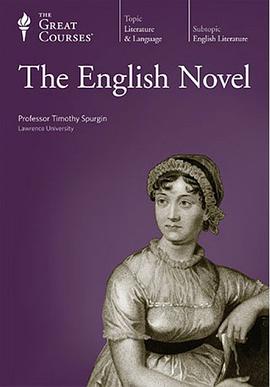
Professor Spurgin answers these questions and many others, tracing the novel from its beginnings in the 18th century, when Samuel Richardson penned Pamela, to its culmination in the work of the 20th century Modernists, including Lawrence, Joyce, and Woolf.
作者简介
Dr. Timothy Spurgin is the Bonnie Glidden Buchanan Professor of English Literature and Associate Professor of English at Lawrence University, where he has taught for more than 15 years. He received his B.A. at Carleton College and his M.A. and Ph.D. in English Literature from the University of Virginia.
A respected and admired lecturer, Professor Spurgin teaches courses on Romanticism, contemporary critical theory, and the English novel, among other topics. He has also served two terms as director of Lawrence University's freshman program—recognized as one of the best in the nation.
Professor Spurgin has received two coveted teaching awards from Lawrence University—the Outstanding Young Teacher Award and the Freshman Studies Teaching Prize—and he is a three-time recipient of the Babcock Award, given by university students to the individual who, "through involvement and interaction with students, has made a positive impact on the campus community." Professor Spurgin's scholarly work has appeared in The Chronicle of Higher Education, Dickens Studies Annual, and Dickens Quarterly.
目录信息
读后感
用户评价
这本书的深度和广度完全超出了我的预期,我本来以为它会集中于维多利亚时期的小说巨匠,但没想到它对18世纪的早期叙事实验给予了空前的重视。作者对菲尔丁和斯威夫特那些看似粗糙、实则充满反叛精神的作品的解读,简直是精妙绝伦。他没有将这些作品视为“不成熟”的过渡阶段,而是将其视为对当时社会道德规范和叙事传统的有力挑战。我尤其喜欢其中关于“游荡者”叙事模式的章节,作者敏锐地指出,这种边缘人物的视角恰恰是观察和解构主流社会的最佳棱镜。他引用了大量的原始文本片段来支撑自己的论点,但绝不是简单堆砌,而是将文本分析与当时的社会经济背景(比如城市化的进程、阶级流动性的停滞)紧密结合起来。读完这部分,我重新审视了自己过去对启蒙运动时期小说的一些刻板印象,发现自己之前看得太浅了。这本书的价值就在于,它能够让你对已经熟悉的作品产生全新的理解和强烈的再阅读欲望。它的论证逻辑严密,但表述方式却充满了激情,能让人真切地感受到作者对这份文学遗产的热爱与尊重。
这本书的理论框架构建得非常扎实,但真正让我震撼的是它对于“边缘声音”的关注和挖掘。通常的文学史叙事常常会将焦点集中在那些被官方认可的、具有里程碑意义的男性作家身上,而这本书却花费了相当大的篇幅来讨论那些被长期忽视的女性作家的贡献。作者对简·奥斯汀的解读不再是仅仅停留在“婚姻与道德”的层面,而是深入到她对财产继承权、女性经济独立性的微妙批判之中,揭示了奥斯汀在看似平淡的日常叙事下所蕴含的巨大颠覆性力量。此外,作者还引入了文化人类学的方法论,去考察当时流行的小报小说、通俗杂志对正统文学形态的反作用力,这为理解整个叙事生态提供了更立体的视角。我欣赏这种拒绝“英雄崇拜”的学术态度,它让整个英国小说史的图景变得更加真实、复杂和充满活力。读完之后,我感觉自己对过去那些“伟大”的作品有了一种更具批判性、也更富有人情味的新认识。这本书无疑是为严肃的文学爱好者准备的,它挑战了太多既有的定论。
这本书的装帧设计实在是太吸引人了,封面那种复古的墨绿色和烫金的字体搭配起来,拿在手里沉甸甸的,就有一种阅读经典文学的仪式感。我通常对文学史类的书籍不太感冒,总觉得它们要么过于学术化,充满了晦涩难懂的术语,要么就是过于泛泛而谈,讲不出什么新意。然而,这本书的引言部分立刻就抓住了我的注意力。它没有急于去罗列那些耳熟能详的大师名字,而是从一个非常独特的角度切入——探讨小说形式的“身体性”与“社会性”是如何相互缠绕,如何塑造了早期英国小说的叙事骨架。作者的文笔流畅自然,丝毫没有学究气,像是在跟一位博学的长者聊天,他能用最生动的比喻将复杂的文学理论阐释清楚。比如,他把狄更斯的小说比喻成一幅结构宏大的城市全景图,每一个细节都充满了生活的肌理和时代的哀愁。我特别欣赏作者在处理不同时期作家之间的联系时所展现出的细腻洞察力,那种不是简单的时间线梳理,而是深层次的思想脉络的追溯,让我对之前模糊不清的文学演变有了豁然开朗的感觉。这本书的排版也很舒服,字体大小适中,行距宽松,即便是长时间阅读也不会感到视觉疲劳,这对于一本内容密集的学术普及读物来说,是非常重要的加分项。
这本书最让人称道的一点,或许是它在处理复杂学术议题时所展现出的那种近乎优雅的清晰度。在讨论从现实主义向现代主义过渡的那些关键节点时,许多学者往往陷入对哲学思潮的纠缠,导致文本分析变得晦涩难懂。然而,这本书的作者有一种非凡的能力,能够将黑格尔、尼采的思想,乃至早期心理学理论,精准地植入到小说家的创作实践中去,而且毫无牵强附会之感。例如,他对乔治·艾略特晚期作品中那种“全知视角”的瓦解过程的分析,简直是教科书级别的示范:他细致地拆解了叙事者如何从一个稳定的道德仲裁者,逐渐退化为一个充满自我怀疑的观察者,这种转变被描绘得既符合小说的内在逻辑,又深刻地反映了19世纪末社会信任危机的缩影。这本书的论述逻辑非常具有“推送性”,你读着读着,就会被作者的思路推着往前走,总想知道下一章他会如何解构下一个难题。对于想要真正理解英国小说如何从“记录社会”进化到“解构自我”这一漫长过程的读者来说,这本书是不可替代的宝藏。
坦白说,我是一个对文学史不太耐烦的读者,总觉得那些“发展脉络”的梳理听起来枯燥乏味。但这本书却成功地将“历史”的厚重感转化成了一种引人入胜的“故事性”。作者很懂得如何设置悬念,他不会一开始就抛出结论,而是通过对特定文本的细致入微的剖析,逐步引导读者去发现隐藏在文字背后的时代精神。比如,在讨论现实主义的兴起时,他没有采取常见的线性论述,而是选择了一组看似不相关的文本——一部哥特式小说、一封私人信件集和一个关于工厂劳工的报告——然后展示了它们是如何在潜意识层面共同塑造了人们对“真实”的认知。这种跳跃式的、非线性的结构处理,非常具有现代性,也极其考验作者的驾驭能力。这本书的论述节奏把握得极佳,时而深入剖析一个句子,时而宏观勾勒一个时代思潮,张弛有度,让我的阅读体验非常流畅,完全没有被信息量压垮的感觉。我甚至觉得,它更像是一部精彩的侦探小说,只不过侦探的是文学作品背后的真相。
推荐!
2007.6 学完
推荐!
2007.6 学完
推荐!