
具体描述
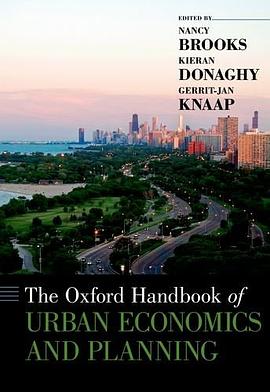
This volume embodies a problem-driven and theoretically informed approach to bridging frontier research in urban economics and urban/regional planning. The authors focus on the interface between these two subdisciplines that have historically had an uneasy relationship.
Although economists were among the early contributors to the literature on urban planning, many economists have been dismissive of a discipline whose leading scholars frequently favor regulations over market institutions, equity over efficiency, and normative prescriptions over positive analysis. Planners, meanwhile, even as they draw upon economic principles, often view the work of economists as abstract, not sensitive to institutional contexts, and communicated in a formal language spoken by few with decision making authority. Not surprisingly, papers in the leading economic journals rarely cite clearly pertinent papers in planning journals, and vice versa.
Despite the historical divergence in perspectives and methods, urban economics and urban planning share an intense interest in many topic areas: the nature of cities, the prosperity of urban economies, the provision of urban services, efficient systems of transportation, and the proper allocation of land between urban and environmental uses. In bridging this gap, this book highlights the best scholarship in planning and economics that addresses the most pressing urban problems of our day and will stimulate further dialog between scholars in urban planning and urban economics.
作者简介
Nancy Brooks is Visiting Associate Professor at Cornell University in the Department of City and Regional Planning, and has also been on the economics department faculty at the University of Vermont. She earned her Ph.D. in economics from the University of Pennsylvania in 1995. Her research interests are in applied urban and environmental economics. She has published in the Journal of Environmental Economics and Management and the Journal of Economic Behavior and Organization.
Kieran Donaghy is Professor and Chair of the Department of City and Regional Planning at Cornell University. He holds a Ph.D. in regional science from Cornell University. He has studied issues in transportation, land use, housing, labor markets, and the environment. Much of his recent research concerns the impacts of globalization and climate change on regions and how resource-rich regions can avoid the "resource curse."
Gerrit-Jan Knaap is Professor of Urban Studies and Planning and Director of the National Center for Smart Growth Research and Education at the University of Maryland. Knaap's research interests include the economics and politics of land use planning, the efficacy of economic development instruments, and the impacts of environmental policy. He serves on the State of Maryland's Smart Growth Subcabinet and Sustainable Growth Commission and the Science and Technical Advisory Committee to the Chesapeake Bay Commission. Knaap earned his B.S. from Willamette University, his M.S. and Ph.D. from the University of Oregon, and received post-doctoral training at the University of Wisconsin-Madison, all in economics.
目录信息
1. Nancy Brooks, "Teaching urban economics to planners and the role of urban planning to economists."
2. Nikhil Kaza and Gerrit-Jan Knaap, "Principles of planning for economists."
3. Richard Arnott, "What planners need to know about the 'new urban economics'."
II. Urban Structure, Growth and the Development Process
4. Kieran Donaghy, "Managing Change in Urban Infrastructure Systems"
5. Peter Gordon and Harry Richardson, "Urban Structure and Economic Growth."
6. Alex Anas, "Discovering the Efficiency of Urban Sprawl."
7. Joseph Persky and Wim Wiewel, "Urban decentralization, suburbanization and sprawl: An Equity Perspective."
8. Philip McCann, "The Role of Industrial Clustering and Increasing Returns to Scale in Economic Development and Urban Growth"
III. Social and Equity Issues
9. Stephen Ross, "Social Interactions within Cities: Neighborhood Environments and Peer Relationships."
10. Hyunsun Choi and David Sloane, "Does Working Together Prevent Crime?: Social Capital, Neighborhoods and Crime."
11. William W. Goldsmith, "The Drug War and Inner-City Neighborhoods."
12. Brendan O'Flaherty, "Homelessness in the United States."
13. Paul A. Jargowsky, "Urban Poverty, Economic Segregation, and Urban Policy"
14. Leah Platt Boustan, "Racial Residential Segregation in American cities."
15. Manuel Pastor, "Spatial Assimilation and Its Discontents: The Changing Geography of Immigrant Integration in Metropolitan America."
16. Ingrid Gould Ellen and Katherine O'Regan, "Gentrification: The perspectives of economists and planners"
IV. Urban Land Use and Transportation Policy
17. Yasuhide Okuyama and Stephanie Chang, "Economic and Planning Approaches to Natural Disasters."
18. Richard Green, "Housing markets, prices, and policies."
19. John F. McDonald and Daniel P. McMillen, "The Economics of Zoning."
20. Casey J. Dawkins, "Exclusionary Land Use Policies: Economic Rationales and Legal Remedies."
21. Virginia McConnell and Keith Wiley, "Infill Development: Perspectives and Evidence from Economics and Planning"
22. Yan Song and Mark Stevens, "The Economics of New Urbanism and Smart Growth: Comparing Price Gains and Costs between New Urbanist and Conventional Developments."
23. Randall Crane and Zhan Guo "Toward a Second Generation of Land Use/Travel Models with an Application to Path Choice."
24. Aisling Reynolds-Feighan and Roger Vickerman, "Transportation Economics for Planners in the 21st century"
25. Genevieve Giuliano, "Transportation Policy: Public Transit, Settlement Patterns, and Equity in the U.S."
V. Economic, Workforce and Human Capital Development
26. Eric A. Hanushek and Kuzey Yilmaz, "Urban Education: Location and Opportunity in the United States."
27. Kevin Hollenbeck, "The Role of the Workforce Development System in the Economic Development of Urban Areas."
28. Timothy J. Bartik and Randall Eberts, "The roles of tax incentives and other business incentives in local economic development."
29. Richard Schramm, "The Interface of Urban Economics and Urban Planning in Local Economic Development Practice."
30. Jae Hong Kim and Geoffrey J.D. Hewings, "Framing Urban Systems and Planning Concerns as a Multi-Level Problem: A Review of the Integrated Urban System Models with an Emphasis on Their Hierarchical Structures."
VI. Urban Public Finance and Governance
31. Lorelei Juntunen, Gerrit-Jan Knaap and Terry Moore "Fiscal Impact Analysis and the Costs of Alternative Development Patterns."
32. Tracy M. Gordon, "Addressing Local Fiscal Disparities."
33. Rachelle Alterman, "Land use regulations and property values: The "Windfalls Capture" Idea Revisited."
VII. International Settings
34. Matias Echanove and Rahul Srivastava, "The High Rise & The Slum: Speculative Urban Development in Mumbai"
35. Martim Smolka and Ciro Biderman, "Housing Informality: An Economist's Perspective on Urban Planning."
36. Margaret Grieco, "Transportation in African Cities: an Institutional Perspective."
37. Amitabh Kundu, "Globalisation and Urban Growth in the Developing World with Special Reference to Asian Countries"
38. Thomas Vietorisz, "Third World Urban Migration as a Global Sustainability Challenge."
39. Chengri Ding and Xingshuo Zhao, "Urbanization and Policy in Japan, South Korea, and China: Policy and Reality."
· · · · · · (收起)
读后感
用户评价
这本书的装帧和纸质绝对是顶级水准,翻开扉页就能感受到出版方在细节上的用心。封面设计简洁大气,那种沉稳的学术气息扑面而来,拿在手里沉甸甸的,很有分量感。我原本以为这会是一本晦涩难懂的理论大全,但实际上,它的排版非常考究,字体大小和行间距都处理得恰到好处,即使是面对大量复杂的图表和公式,阅读体验依然保持在相当高的水准。我特别欣赏它在章节之间的过渡处理,像是精心铺设的阶梯,虽然每一步都包含着严谨的学术论证,但整体的逻辑流线非常顺畅,不会让人感到思维突然被截断或拽入陌生的概念迷宫。这种对物理形态的精益求精,无疑提升了研读过程中的专注度,让人愿意花更多时间沉浸其中,而不是被阅读体验本身分散注意力。当然,对于需要频繁查阅特定章节的学者来说,清晰的目录结构和详尽的索引系统也是不可或缺的加分项,而这本手册在这方面做得非常到位,找寻特定主题或研究人员的贡献快捷高效。
阅读这本巨著的过程,与其说是学习,不如说是一场与全球顶尖头脑的对话。不同章节的作者背景似乎各不相同,有的侧重计量经济学模型的构建,有的则更偏向于社会地理学的视角。这种观点的交织,使得全书呈现出一种动态的张力。我尤其欣赏那些在看似成熟的领域中,仍然敢于提出质疑和挑战的章节。例如,有部分学者深入探讨了传统城市经济学模型在面对气候变化和分布式技术挑战时的局限性,并提出了修正或完全颠覆现有范式的初步构想。这种批判性的精神,是任何一本优秀的学术著作所必须具备的特质。它没有给人一种“终极答案”的错觉,反而更像是一份“待解决问题的清单”,激励着后来者继续投入研究,这对于一个渴望站在学术前沿的人来说,是最大的鼓舞。
从实操性的角度来看,这本书的内容密度确实高得惊人,每一页都承载着扎实的经验证据或理论推导。我发现自己阅读速度明显放缓,因为它要求读者进行深度思考和对照,而不是走马观花地扫视。例如,在讨论城市增长模式的章节中,作者引用的案例分析覆盖了全球不同发展阶段的城市类型,从快速城市化的发展中国家到成熟的后工业化大都市,这种跨尺度的比较分析,极大地拓宽了我的视野。过去我可能习惯于只关注特定区域的政策效应,但这本书迫使我跳出区域限制,去思考普遍性的结构性力量是如何塑造城市未来的。对我这个长期从事城市政策咨询工作的人而言,这种将前沿理论与现实案例紧密结合的叙事方式,远比纯粹的数学推导更有价值,因为它提供了可以直接转化为政策工具的思维框架。
初次接触这类宏大主题的“手册”类著作,最怕的就是内容过于零散,像是东拼西凑的论文集锦,缺乏一个统一的理论框架来统摄全局。然而,这本手册展现出一种惊人的结构组织能力。它并非简单地罗列现有的知识点,而是通过一系列精心编排的章节,构建起了一套从微观个体行为到宏观城市形态演变的完整分析路径。特别是它对不同流派思想的呈现方式,非常具有启发性,作者们并没有简单地偏袒某一种学说,而是并置了那些看似矛盾的观点,并引导读者去思考它们在不同情境下的适用性。我花了相当多的时间去研究其中关于土地利用和交通网络交互影响的部分,那种将经济模型与空间约束条件深度耦合的分析方法,令我茅塞顿开。它不仅仅是知识的汇编,更像是一份思想的“地图”,指引着未来研究者可以探索的方向,哪些领域已经成熟,哪些角落尚待深耕,界限划分得异常清晰。
坦白讲,这本书的体量和深度,决定了它不适合被当作入门读物来对待。我感觉它更像是一部“工具箱”或“参考词典”,适合已经对城市发展有了一定基础认识的研究生或专业人士。它最大的价值在于,当你面对一个具体而复杂的城市问题时,可以快速定位到最权威、最前沿的理论解释和建模方法。我在撰写一个关于城市基础设施投资回报率的报告时,书中关于“溢出效应”和“公共品供给”的论述,为我的论证提供了坚实的理论后盾和量化的参考标准。这本书的复杂性不是故意制造的障碍,而是反映了其研究对象本身的复杂性——城市是一个多层嵌套、相互作用的系统。能够将如此庞大且异构的信息系统地整合在一起,并且保证每个部分的严谨性,这本身就是一项了不起的学术成就。
导师编的书,被迫读了读。planner如果实在起来还是挺可爱的,最讨厌一些空谈的社会学家,如果几种social science的思维结合一下就完美了,然而能做到如此这般的,即使是professor也实在太少。
导师编的书,被迫读了读。planner如果实在起来还是挺可爱的,最讨厌一些空谈的社会学家,如果几种social science的思维结合一下就完美了,然而能做到如此这般的,即使是professor也实在太少。
大部分侧重美国的案例。有两三章讲亚洲/中国。挺容易理解,很科普,很多章都从基本概念开始切入。另,Researcher也会干一些肉麻的事情,比如开篇引用经济学人之类。
大部分侧重美国的案例。有两三章讲亚洲/中国。挺容易理解,很科普,很多章都从基本概念开始切入。另,Researcher也会干一些肉麻的事情,比如开篇引用经济学人之类。
大部分侧重美国的案例。有两三章讲亚洲/中国。挺容易理解,很科普,很多章都从基本概念开始切入。另,Researcher也会干一些肉麻的事情,比如开篇引用经济学人之类。