具体描述
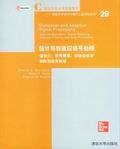
《数字语音处理理论与应用(英文版)》是作者继1978年版经典教材《语音信号数字处理》之后的又一著作,全书除有简练精辟的基础知识介绍外,系统介绍了近30年来语音信号处理的新理论、新方法和在应用上的新进展。全书共14章,分四部分:第一部分介绍语音信号处理基础知识,主要包括数字信号处理基础、语音产生机理、(人的)听觉和听感知机理和声道中的声传播原理;第二部分介绍语音信号的时频域表示和分析;第三部分介绍语音参数估计算法;第四部分介绍语音信号处理的应用,主要包括语音编码、语音和音频信号的频域编码、语音合成、语音识别和自然语言理解。
作者简介
目录信息
chapter 1 introduction to digital speechprocessing
1.1 the speechsignal
1.2 the speechstack
1.3 applicationsof digital speechprocessing
1.4 commentonthe references
1.5 summary
chapter 2 reviewof fundamentalsof digitalsignalprocessing
2.1 introduction
2.2 discrete-time signals and systems
2.3 transform representation of signals and systems
2.4 fundamentalsof digitalfilters
2.5 sampling
2.6 summary
problems
chapter 3 fundamentalsof human speechproduction
3.1 introduction
3.2 the processofspeechproduction
3.3 short-timefourierrepresentationofspeech
.3.4 acousticphonetics
3.5 distinctivefeaturesof thephonemesof american english
3.6 summary
problems
chapter 4 hearing,auditory models,and speechperception
4.1 introduction
4.2 the speechchain
4.3 anatomy andfunctionof theear
4.4 the perception of sound
4.5 auditory models
4.6 human speechperceptionexperiments
4.7 measurementofspeechqualityand intelligibility
4.8 summary
problems
chapter 5 sound propagationinthe humanvocaltract
5.1 the acoustictheoryofspeechproduction
5.2 losslesstube models
5.3 digital models forsampled speechsignals
5.4 summary
problems
chapter 6 time-domainmethods for speechprocessing
6.1 introduction
6.2 short-timeanalysisofspeech
6.3 short-timeenergyand short-timemagnitude
6.4 short-timezero-crossing rate
6.5 the short-timeautocorrelation function
6.6 the modied short-timeautocorrelation function
6.7 the short-timeaverage magnitude differencefunction
6.8 summary
problems
chapter 7 frequency-domainrepresentations
7.1 introduction
7.2 discrete-timefourieranalysis
7.3 short-timefourieranalysis
7.4 spectrographicdisplays
7.5 overlapaddition methodof synthesis
7.6 filter bank summationmethodof synthesis
7.7 time-decimatedfilter banks
7.8 two-channelfilter banks
7.9 implementationof thefbs method usingthe fft
7.10 olarevisited
7.11 modicationsof thestft
7.12 summary
problems
chapter 8 thecepstrumand homomorphic speechprocessing
8.1 introduction
8.2 homomorphicsystems forconvolution
8.3 homomorphicanalysisofthe speechmodel
8.4 computingthe short-timecepstrumand complexcepstrum of speech
8.5 homomorphicfilteringofnatural speech
8.6 cepstrumanalysisofall-pole models
8.7 cepstrumdistancemeasures
8.8 summary
problems
chapter 9 linear predictive analysisof speechsignals
9.1 introduction
9.2 basic principles of linear predictive analysis
9.3 computationofthe gainfor themodel
9.4 frequencydomaininterpretationsof linear predictiveanalysis
9.5 solutionofthe lpcequations
9.6 the prediction errorsignal
9.7 somepropertiesofthe lpcpolynomial a(z)
9.8 relationoflinear predictive analysisto losslesstube models
9.9 alternative representationsof thelpparameters
9.10 summary 560problems
chapter 10 algorithms for estimating speechparameters
10.1 introduction
10.2 mediansmoothing and speechprocessing
10.3 speech-background/silencediscrimination
10.4 abayesianapproach tovoiced/unvoiced/silence detection
10.5 pitch period estimation(pitch detection)
10.6 formant estimation
10.7 summary 645problems
chapter 11 digitalcodingof speechsignals
11.1 introduction
11.2 sampling speechsignals
11.3 astatisticalmodelfor speech
11.4 instantaneous quantization
11.5 adaptivequantization
11.6 quantizingofspeechmodelparameters
11.7 generaltheoryof differentialquantization
11.8 delta modulation
11.9 differentialpcm (dpcm)
11.10 enhancements foradpcm coders
11.11 analysis-by-synthesis speechcoders
11.12 open-loop speechcoders
11.13 applicationsof speechcoders
11.14 summary 819problems
chapter 12 frequency-domaincodingof speechandaudio
12.1 introduction
12.2 historicalperspective
12.3 subband coding
12.4 adaptivetransform coding
12.5 aperception modelforaudiocoding
12.6 mpeg-1audiocoding standard
12.7 otheraudiocoding standards
12.8 summary 894problems
chapter 13 text-to-speechsynthesis methods
13.1 introduction
13.2 text analysis
13.3 evolutionof speechsynthesis methods
13.4 early speechsynthesis approaches
13.5 unitselection methods
13.6 tts future needs
13.7 visual tts
13.8summary 947problems
chapter 14 automatic speechrecognition andnatural language understanding
14.1 introduction
14.2 basic asrformulation
14.3 overall speechrecognition process
14.4 buildinga speechrecognition system
14.5 the decisionprocessesinasr
14.6 step3:the search problem
14.7 simpleasr system: isolateddigit recognition
14.8 performance evaluationof speechrecognizers
14.9 spokenlanguage understanding
14.10 dialog managementand spokenlanguage generation
14.11 user interfaces
14.12 multimodaluserinterfaces
14.13 summary 984problems
appendices
a speechandaudioprocessing demonstrations
b solutionoffrequency-domaindifferentialequations
bibliography
index
· · · · · · (收起)
读后感
用户评价
这本书的纸张质量和印刷质量非常令人满意,这对于需要反复翻阅查阅公式和图表的专业书籍来说至关重要,它能经受住高强度的使用而不会轻易损坏。从整体风格来看,它更像是一本面向研究生或高年级本科生的教材,侧重于奠定坚实的理论基础和数学框架。对于已经有一定数字信号处理基础的读者,这本书无疑是极好的参考资料,可以帮助他们系统化和深化已有的知识体系。然而,对于初学者而言,门槛可能会略高。书中默认读者已经掌握了扎实的线性代数和概率论基础,并且能迅速适应抽象的数学表达。如果书中能加入更多基于实际软件工具包(比如Python中的SciPy或Matlab)的简单数值实验指导,让读者能够立即验证书中的理论,而不是仅仅停留在纸面推演,那么它的实用性和吸引力会大大增加,更能贴近“应用”二字的要求。
作为一名长期从事人机交互界面研究的人员,我更关注的是“听清”之后如何“理解”的问题,也就是自然语言理解(NLU)与前端信号处理的衔接点。这本书在语音前端处理,比如噪声抑制、远场拾音增益优化等方面做得非常扎实,理论模型构建得很完备。但是,当信号经过优化、进入到语义解析阶段时,书籍的视角似乎就有所收窄了。我原本期待看到一些关于特定应用场景下(比如嘈杂的会议室环境、带背景音乐的交互场景)的端到端优化思路,探讨如何将声学特征更有效地映射到意图识别的向量空间中。目前的叙述更偏向于“如何把声音弄干净”,而对于“如何利用干净的声音做更聪明的事情”,着墨不多。如果能增加一两章关于“声学特征与语义关联性”的讨论,将极大地提升这本书在跨学科应用领域的价值。
这本书的内容编排逻辑性极强,每章之间的过渡都处理得非常自然,几乎不需要频繁地回头查找前面的定义。我尤其欣赏作者对于数学推导过程的严谨性,无论是傅里叶变换在时域和频域的对应关系,还是更复杂的卡尔曼滤波在语音增强中的应用,都给出了详尽的公式推导和直观的解释。这对于我这种喜欢深究底层原理的读者来说,简直是福音。不过,我发现它在涉及一些前沿的、非传统的信号处理方法时,篇幅相对较少。比如,近年来兴起的基于生成对抗网络(GAN)的语音合成技术,或者利用自注意力机制(Self-Attention)改进的声学模型,书中似乎只是泛泛地提了一下,缺乏深入的原理剖析和代码层面的伪实现。这让习惯了通过“看代码懂原理”的我,总觉得意犹未尽,像是在一个设计精美的饭店里,主要菜肴都很到位,但甜点却有些单薄了。希望未来的版本能在这方面有所加强,以匹配当前技术迭代的速度。
我发现这本书在处理一些关于“人声”特性的建模方面,显得相对保守。例如,在讨论声纹识别或者说话人分离技术时,作者主要采用了经典的参数模型和早期基于GMM/UBM的方法进行阐述,这无疑是对历史功绩的尊重和对基础的夯实。但我们都知道,近五年来,深度神经网络,特别是循环神经网络(RNN)及其变体,在处理时序依赖性强的语音任务上展现出了革命性的优势。虽然传统方法是理解现代技术基石,但一本聚焦于“理论与应用”的现代著作,理应更侧重于讲解当前业界主流的端到端学习范式是如何打破传统瓶颈的。我希望能看到更多关于特征提取、损失函数设计以及如何利用大规模数据训练声学特征嵌入向量的深度学习架构介绍,那才是我真正需要的那部分“应用”的理论前沿。
这本书的封面设计倒是挺吸引人的,那简洁的排版和略带科技感的字体,让人一眼就能感受到它的专业性。我当初买它,主要是想深入了解一下近年来声学信号处理方面的新进展,尤其是那些能够直接应用到实际产品开发中的技术。毕竟,理论研究和实际落地之间,往往隔着一条技术鸿沟。翻开前几页,我首先注意到的是作者在引言中对该领域发展脉络的梳理,非常清晰地勾勒出了从早期数字滤波到现代深度学习模型介入的演变路径。不过,我个人在阅读过程中,更期待看到一些关于实时性处理和资源受限设备优化策略的深入探讨。例如,在一些移动设备上部署复杂的语音识别算法时,如何在保证识别准确率的前提下,有效控制功耗和延迟,这方面的内容如果能有更详尽的案例分析或者算法对比,我想会更有价值。总体而言,它为构建一个扎实的理论基础提供了坚实的跳板,但对于那些追求“即插即用”解决方案的工程师来说,可能还需要更多的实战经验补充。