
具体描述
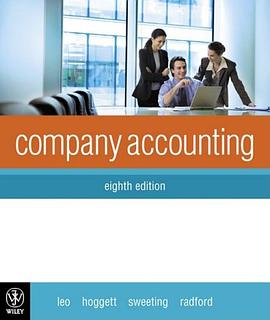
Company Accounting 8th edition has been thoroughly updated to reflect the various and ongoing reforms as a result of Australia′s adoption of international financial reporting standards. This edition provides an authoritative and reliable overview of the various changes required within the Framework and a selection of the key accounting standards governing corporate entities. Standards such as AASB 101 Presentation of Financial Statements (which relates to external disclosure of financial information in a set of general–purpose financial statements), AASB 3 Business Combinations and AASB 127 Consolidated and Separate Financial Statements. The text will provide students with a comprehensive and practical grounding in the practice and principles of company accounting. The 8th edition presents essential ‘must know′ information on accounting for a corporate entity and the requirements for externally disclosing the financial position of the entity. NEW TO THIS EDITION Chapter 8 ‘Business Combinations′ has been updated to reflect changes with AASB 108 ‘Business Combinations′ as a result of the Exposure Draft of Proposed Amendments to IFRS 3. All chapters on consolidation of financial statements (chapters 14 to 18) have been updated in accordance with AASAB 127 Consolidated and Separate Financial Statements New disclosure requirements, a consequence of AASB 101 Presentation of Financial Statements, are fully integrated Discussion of dividends updated as a consequence of changes in reporting and measurement requirements Revised to accord with changes in AASB as a consequence of continuing reforms with IFRS More ‘Learning Check′ summaries in all chapters reiterate and summarise important concepts New ‘Student Activity Section′ in each chapter contains a summary, demonstration problems, discussion questions, case studies, graded exercises and problems Reorganised end–of–chapter sections contain more diverse activity scenarios for students in an attempt to develop a broader skill base. FEATURES ‘Learning Checks′ support chapter learning objectives and summarise key knowledge for students. They appear throughout each chapter and are ideal for self–study purposes Thorough illustrative examples and demonstration problems with various examples supported with step–by–step narrations.
ABOUT THE AUTHORS Ken Leo , B.Com (Hons), MBA (Qld), AAUQ, ACA, FCPA is Professor of Accounting at Curtin University of Technology, Western Australia. In over 30 years as an academic, Ken has taught company accounting to undergraduate and postgraduate students. He was a founding member of the Urgent Issues Group, and has written books and monographs for a variety of organisations including CPA Australia, the Group of 100 and the Australian Accounting Research Foundation. He was a founding member of the Urgent Issues Group, serving on that body from 1995 to 2001. Ken also served on the Australian Accounting Standards Board from 2002 to 2007, both as a member and as deputy chair of the Board. John Hoggett , BCom (Hons), BTh, MFM, AAUQ, FCPA worked in universities in both Western Australia and Queensland for 35 years. During this time, he taught introductory accounting, corporate accounting and accounting theory to undergraduate and postgraduate students. John has written books and monographs for a variety of organisations including CPA Australia and the Group of 100, and has been involved in secondary education with the Curriculum Council of Western Australia. John Sweeting , BEc, MEc, PhD, CPA, CA is a Senior Lecturer in Accountancy at Queensland University of Technology. John′s background includes a mixture of academic and business positions. He has taught at Swinburne University of Technology and the University of Central Queensland, and has spent time with the National Companies and Securities Commission (now the Australian Securities and Investments Commission). John has also held positions with a large international chartered accounting firm and a large manufacturing/retailing company listed on the Australian Securities Exchange. He has written for professional journals, and his main area of research is external reporting and profit forecasts in prospectuses. In addition to running in–house courses for accounting firms, John has also conducted Professional Development courses for CPA Australia and The Institute of Chartered Accountants in Australia. He has also been actively involved in both the CPA Program and the CA Program. Jennie Radford , BCom, DipEd, MCom, ACA, recently retired from the School of Accounting at Curtin University of Technology. She has co–authored two research monographs published by Group of 100 and CPA Australia. She has also co–authored and co–edited several textbooks. Jennie was for many years employed as an auditor with ‘Big 5′ chartered accounting firms. During her academic career, Jennie taught undergraduate and postgraduate courses in financial accounting and corporate accounting. She is a member of the Western Australia Cell of the External Reporting Centre of Excellence (with CPA Australia).
作者简介
目录信息
读后感
用户评价
我购买这本书的初衷是想快速掌握企业财务报表的分析框架,但这本书带给我的远不止于此。它提供了一种看待商业世界的新眼镜。在谈到股利分配和留存收益时,作者巧妙地将会计科目与公司治理结构联系起来,阐述了为什么不同的股权结构会对企业的资本运作产生长远影响,这种跨学科的融合性令人耳目一新。这本书没有止步于“如何记账”,而是深入到“如何运用会计信息进行价值判断”的层面。我特别喜欢它对“公允价值”这类主观性较强的计量属性的探讨,作者并未简单地给出一个定义,而是详细分析了其在不同市场环境下的适用性、局限性以及可能被操纵的空间,引导读者保持批判性思维。总而言之,这本书不是一本可以快速翻阅、读完就忘的工具书,它更像是一份需要时间去消化、去反复研习的深度学习资料,对于任何希望在商业领域深耕的人来说,都是一份不可多得的财富。
坦白讲,我是一个对细节有偏执要求的读者,尤其是在专业领域。这本书在细节处理上展现出的专业性和准确性,令我非常钦佩。当我查阅关于关联方交易披露的章节时,我发现它对国际和国内不同准则下的微妙差异进行了清晰的梳理和对比,这种严谨性保证了信息传递的精确无误。更难得的是,书中还穿插了一些会计丑闻的案例分析,通过剖析这些失败的教训,反向强调了正确遵循会计原则的重要性以及潜在的风险点,这使得学习过程充满了警示意义,让人不敢有丝毫懈怠。这种从正反两方面去论证知识点的做法,极大地增强了内容的可靠性和说服力。这本书的排版也做得非常到位,关键术语都有清晰的定义和脚注,即便是初次接触这些概念的读者,也能迅速定位和理解,整体感觉就是——这是一本“靠谱”的书。
这本书的封面设计非常吸引人,深蓝色的背景上用着醒目的银色字体,给人一种专业而可靠的感觉。我拿到这本书的时候,首先就被它的装帧质量所打动,纸张厚实,印刷清晰,阅读体验很棒。我一直对财务报表的解读感到头疼,很多教材都过于理论化,晦涩难懂,翻开这本书,发现作者在开篇就用了很多贴近实际的案例来解释基础概念,比如如何通过资产负债表判断一家公司的健康状况,这对我这个非财会专业的读者来说简直是雪中送炭。它并没有直接堆砌那些复杂的会计准则条文,而是像一位经验丰富的导师在手把手教你如何“看懂”企业的财务语言。特别是关于现金流量表的分析部分,作者用非常直观的图表和对比,清晰地展示了企业运营、投资和融资活动之间的内在联系,这比我之前看过的任何资料都要透彻。我感觉,这本书不仅仅是一本教科书,更像是一本实战手册,它教会我如何从数字背后洞察企业的真实运营逻辑,让我对“公司”这个概念有了全新的认识。我已经迫不及待想把书里关于盈利能力分析的那几章仔细研读一番了。
说实话,我刚开始有点担心这本书的深度,毕竟很多入门级的会计读物往往流于表面,讲了等于没讲。但是《Company Accounting》这本书彻底颠覆了我的看法。它的内容组织逻辑性极强,章节间的过渡非常自然流畅,仿佛作者早就预料到读者在学习过程中可能产生的困惑,并提前准备好了循序渐进的解释。我特别欣赏它在处理复杂交易时的那种细致入微。比如在谈到固定资产折旧方法选择时,它不仅列举了直线法和加速折旧法的计算差异,还深入探讨了不同方法对报告利润和税务影响的权衡,这种深度分析在同类书籍中非常罕见。阅读过程中,我经常需要停下来,对照书后的习题反复推敲,这些习题设计得极其巧妙,既检验了理论理解,又考察了实际应用能力。书里提到的一些税务处理的小技巧和潜在的会计陷阱,更是让我大开眼界,这绝不是那种只为应付考试而准备的死板教材,它真正致力于培养读者的财务敏锐度。
这本书的阅读体验是那种让人沉浸其中、欲罢不能的类型。它的叙事风格非常具有亲和力,作者的笔触幽默而不失严谨,阅读起来完全没有那种面对枯燥数字时的畏惧感。很多复杂的会计处理,比如收入确认或者存货计价,在其他书里我看了N遍都稀里糊涂,但在这本书里,通过几个生动的商业故事和场景模拟,一下子就清晰明了了。我尤其喜欢它在每一章结尾设置的“高管视角”小栏目,这些地方会跳出标准的会计准则框架,从管理决策的角度去阐述某些会计处理的经济实质和后果,这极大地拓宽了我的视野。我发现,学习会计不仅仅是学习规则,更是学习如何通过规则来影响和反映商业决策。这本书成功地架起了理论与实践之间那座至关重要的桥梁,让我感觉自己不再只是一个被动接受知识的学生,而是一个积极参与商业分析的观察者。
哈哈哈太搞笑了。豆瓣连这种书都有。
哈哈哈太搞笑了。豆瓣连这种书都有。
UNSW ACCT5942教材 还不错 主要学Consolidation部分 2016年已经更新到第十版了
这本书豆瓣也有 好乐
哈哈哈太搞笑了。豆瓣连这种书都有。