
具体描述
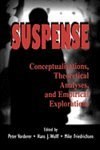
This volume begins with the general assumption that suspense is a major criterion for both an audience's selection and evaluation of entertaining media offerings. This assumption is supported not only by the popularity of suspenseful narratives, but also by the reasons users give for their actual choice of media contents. Despite this, there is no satisfying theory to describe and explain what suspense actually is, how exactly it is caused by films or books, and what kind of effect it has on audiences. This book's main objective is to provide that theory by bringing together scholars from different disciplines who are working on the issue. The editors' goal is to reflect the "state of the art" as much as it is to highlight and encourage further developments in this area.
There are two ways of approaching the problem of describing and explaining suspense: an analysis of suspenseful texts or the reception process. Researchers who follow the more text-oriented approach identify the uncertainty of the narrative outcome, the threat or danger for the protagonist, the play with time delay, or other factors as important and necessary for the production of suspense. The more reception-oriented scholar focuses on the cognitive activities of audiences, readers' expectations, the curiosity of onlookers, their emotions, and their relationships with the protagonists. A correspondence between the two seems to be quite difficult, though necessary to determine.
Both perspectives are important in order to describe and explain suspense. Thus, the editors utilize the thesis that suspense is an activity of the audience (reader, onlooker, etc.) that is related to specific features and characteristics of the text (books, films, etc.). Their question is: What kind of relation? The answer comes from finding out "how, why, " and "which" elements of the text cause effects that are experienced as suspense.
Scholars from semiotics, literary criticism, cultural studies, and film theory assess the problem from a text-oriented point of view, dealing primarily with the "how" and "which." Other scholars present the psychological perspective by focusing on the cognitive and emotional processes that underlie viewers' experience of suspense; that is, the reception theory tries to answer the question of "why" suspenseful texts may be experienced as they are.
作者简介
目录信息
读后感
用户评价
这本书的封面设计真是一绝,那种深沉的暗蓝色调,配上烫金的字体,散发出一种引人入胜的神秘感。我一拿到手,就被这种质感所吸引,仿佛预示着即将展开一场智力上的冒险。书本的装帧也十分考究,拿在手里沉甸甸的,细节之处尽显出版方的用心。我特别喜欢它那种内敛而又充满力量的设计语言,它没有用那种过于直白的恐怖元素来哗众取宠,而是通过一种高级的、概念化的视觉表达,悄悄地在读者的心头埋下悬念的种子。这种克制感恰到好处,让人迫不及待地想翻开扉页,一探究竟。当然,我得承认,我是在书店里被这个外观“绑架”了,但事实证明,这份初始的好感是有道理的,它成功地建立了一种期待,让阅读体验从拿起书的那一刻就开始了。装帧的质量保证了它能经受住反复翻阅的考验,这对于一本我打算深入研读的书来说至关重要。
这本书的内文油墨密度掌握得恰到好处,黑色深沉而不渗墨,即便是对光线比较敏感的人,阅读起来也不会感到刺眼。我观察了一下不同段落的缩进和分段,作者(或编辑)似乎非常注重阅读节奏的把控,常常在关键的转折点会设置一个清晰的空行,这种处理方式在视觉上起到了“换气”的作用,避免了信息过载。而且,书籍的尺寸和我们常见的精装本略有不同,它更偏向于一个“黄金比例”,握持感极佳,无论是单手还是双手持握,都能找到最舒适的姿势。这种对手感和阅读舒适度的极致追求,让每一次阅读都变成了一种享受,而不是一项任务。
这本书的排版简直是一场视觉盛宴,字体选择和行距的拿捏达到了近乎完美的平衡。阅读过程中,眼睛完全被文字流的节奏所引导,没有出现任何因为版式不当而产生的阅读疲劳感。我尤其欣赏作者在引用和注释方面的处理,那些细小的脚注和跨引用,如同迷宫中的微小线索,虽然不喧宾夺主,却在不经意间丰富了阅读的层次感。对于这样一本可能涉及复杂理论梳理的作品,清晰的结构布局是成功的基石。它不像有些学术著作那样,为了追求内容的密度而牺牲了阅读的舒适度,这本书明显在易读性和深度之间找到了一个绝妙的平衡点。翻页的手感也非常顺滑,纸张的微磨砂质感也让指尖每一次触碰都带来愉悦的反馈。这说明编辑团队在纸张选择上也下了不少功夫,确保了长时间沉浸阅读的体验。
我注意到这本书的侧边设计,也就是书脊侧面的颜色处理,非常巧妙地使用了渐变色。当书本堆叠在一起时,这些侧边的颜色会形成一个有趣的视觉序列,而不是一成不变的白色或者灰色。这种微妙的设计感,体现了出版方对“物”本身价值的重视。它不仅仅是内容的载体,更是一件值得展示的艺术品。而且,侧边纸张的厚度适中,既不会因为太薄而显得廉价,也不会因为太厚而笨重。拿在手上,重量分布也感觉非常均匀,即便是大部头,也不会让人觉得手腕吃力。这种对物理形态的关注,无疑提升了整体的拥有感和阅读时的仪式感。
这本书的装订工艺堪称一流,我特意试着将它完全摊平在桌面上,发现它能保持得相当不错,书脊没有丝毫的扭曲或松动迹象。这对于一本可能需要经常查阅参考的书来说,是非常实用的优点。我个人偏爱那种可以完全打开的书籍,这样在做笔记或者对照不同章节时会方便很多,这本书完全满足了我这个小小的“强迫症”需求。而且,书边裁切得异常整齐,边缘的光洁度很高,没有发现任何毛边或者瑕疵,这种精细的手工感,在今天的批量生产时代已经不多见了。它让我想起那些老式的、用料扎实的精装本,有一种经久耐用的承诺感,让人愿意把它珍藏起来,而不是仅仅作为一次性的读物消费掉。