
具体描述
Review
"...Fortunatly, Stephen Freer, a classical scholar, has provided painstaking, exact and very lucid English translation....so that the Philosophia Botnaic, with the addition of an excellent introduction by Paul Allen Cox, is now accessible and meaningful to those with no more then a modest grasp of systematic botany."-- Curtis's Botanical Journal
"This book is beautifully produced and well-illustrated. Stephen Freer is to be congratulated on his translation wich easily brings 18th century Latin to a modern relationship."--Edinburgh Journal of Botany
"The translator's meticulous attention to detail and the publisher's lavish production cannot be praised too highly. A valuable resource for taxonomists and of great interest to botanists in general and historians of science."--The Naturalist
"As translator, Freer is in a sense invisible in this work, and yet his hand is on every page, presenting Linnaeus' ideas and teachings to a new and wider audience... straightforward and very readable. This translation is an important contribution to science and its history..."-- Charlotte Tancin, Hunt Institute for Botanical Documentation
"We must be grateful to Stephen Freer and Oxford University Press for bringing us this excellent translation. I urge yo not only to buy it but also to read it, because you will enjoy it."--Alex S. George, Systematic Biology
"Reading this excellent translation of the Philosophia Botanica, ...historians, botanists and gardeners are among those who will find it fascinating"--Jim Endersby, The Times Literary Supplement
"Freer's translation of Linnaeus's Philosophia Botanica makes a classic work of botany accessible to English language readers. ...will have a lasting impact on historical studies aimed at understanding how Linnaeus worked and how some of his ideas were formulated."--Choice
"All in all this is a delightful and informative translation of a botanical classic... Anyone interested in the history of botany and in teaching botany will enjoy and benefit from reading this book."--Plant Science Bulletin, Fall 2005, Vol.51, No.3
"Reading this excellent translation . . . reviewers of the hard copy edition have already heaped praise on Stephen Freer's skilful and meticulous translation. . . I can only add gratitude for providing easy access to one of Linnaeus's most important texts."-- Dr Pieter Baas, The Linnean Society Journal, October 2006
"All in all this is a delightful and informative translation of a botanical classic...Anyone interested in the history of botany and in teaching botany will enjoy and benefit from reading this book."--Marshall D. Sundberg, Plant Science Bulletin
Philosophia Botanica is certainly a must on the shelves of anyone interested in the history and philosophy of the life sciences."-- Dr. Staffan Mueller-Wille, Journal of the History of Biology
"What a treat to have the whole of this work available in English for the first time. It is hard to over-emphasise its importance."--Dr Crinan Alexander, The Garden
". . . In his translation, Freer remains faithful to the author while choosing language that will convey meaning to modern readers. . ." Dr Melinda Hayes,Quarterly Review of Biology
"For his skilful translation Stephen Freer deserves our unstinted admiration and gratitude."-- Philip Oswald, Archives of Natural History
"Stephen Freer is to be heartily congratulated for providing such a stylish and, for the first time, complete English translation of this most important volume."-- Dr Gren Lucas, Plant Talk
Product Description
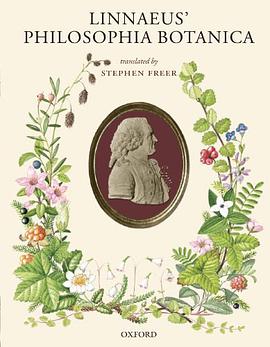
Philosophia Botanica (The Science of Botany), by Carl Linnaeus, was originally published in Latin in Stockholm and Amsterdam in 1751. It is a greatly expanded revision of his Fundamenta Botanica (Foundations of Botany) of 1736, summarizing his work on the classification and taxonomy of plants while adding substantial new material. The book represents a critical stage in the evolution of binomial nomenclature, with a single word to describe the genus and another for the species. Special importance is attached to accurate description of the parts of plants, and to the correct use of technical terms. There are also explanations of the effects of soil and climatic conditions on plant growth. The book includes 9 original engravings, with 167 figures showing the shapes of leaves and other parts of the plant, and 6 short memoranda describing Linnaeus' botanical excursions, detailing his ideas for garden and herbarium construction, and outlining what is required of a botanist and his pupils. There are also indexes of technical terms, genera and subjects. The first full English translation of this classic work since 1775, this beautiful book will be highly attractive to botanists and all those interested in the history of science.
作者简介
目录信息
读后感
用户评价
这本书给我的整体印象是,它是一部充满作者个人烙印的、高度个人化的哲学宣言,披着植物学的“外衣”。它更多地反映了林奈本人在构建一个宇宙秩序模型时的雄心壮志,而不是对植物界进行全面、客观的科学记录。我尤其想知道,如果书中能更侧重于介绍他那著名的双名法系统是如何在其庞大的理论体系中运作的,或许会更有价值。然而,关于这个革命性工具的介绍,却被淹没在一片关于自然界的和谐与设计的哲学讨论之中。书中充满了对“创造者意图”的猜测和对“自然法则”的崇拜,这些内容对于一个现代的、世俗化的科学读者来说,显得过于沉重和累赘。我期待的是一套清晰的操作手册,得到的是一部深奥的思辨录。这本书的价值在于它开启了一个时代,但它本身的内容,却像是一座宏伟的、华丽的、却已经不再通行的古代图书馆,结构精美,历史悠久,但里面存放的知识体系,需要一个专业的历史学家才能完全解读和评估其在当时的确切意义。对于普通的热爱植物的人来说,它更像是一件需要被小心翼翼地对待的文物。
当我合上这本书,脑海中浮现的不是一片生机勃勃的花园,而是一间堆满了古老羊皮卷的密室。这本书的叙事节奏极为缓慢,像是一位年迈的学者在壁炉旁,用一种近乎咏叹调的方式,缓缓讲述他对植物王国整体结构和内在联系的理解。它的结构组织方式,严格遵循着一种古典的逻辑体系,这种体系在今天看来,似乎缺乏足够的灵活性和适应性。每一个章节的推进都极其审慎,作者似乎生怕说错一个字,或下一个断言没有足够的形而上学的支撑。我特别关注了其中关于“自然等级”的论述,试图理解作者是如何构建其分类思想的基石的,但这些论述往往建立在一系列我们现在已经修正或摒弃的早期假设之上。阅读过程中,我必须不断地在“这是他那个时代的真理”和“这与我所知的科学事实相悖”之间进行切换,这种认知上的拉锯战,极大地消耗了阅读的流畅性。这本书对细节的关注点也与现代植物学大相径庭,它似乎更热衷于讨论植物形态的“完美比例”和“神圣的秩序”,而不是基因流、杂交或环境适应性。它更像是一部献给理性本身的颂歌,而不是献给植物本身的详尽研究报告。
这本书的阅读体验,怎么说呢,就像是参加了一场非常冗长但极其优雅的沙龙聚会,主人(作者)学识渊博,谈吐风趣,但话题总是围绕着一些宏大的、形而上的主题打转,很少切入到具体、可操作的层面。我尝试从中寻找一些关于植物生长环境与土壤酸碱度之间关系的直观描述,或者关于不同科属植物间亲缘关系的明确界定,结果却屡屡碰壁。它更像是在探讨“植物之为植物”的终极意义,探讨的是一种哲学上的“植物学观”,而非一门基于实验和观察的实证科学。这种哲学上的深度,对于某些热衷于思辨的读者或许是享受,但对于我这种带着更强烈的应用需求去阅读的读者来说,无疑是一种折磨。我翻阅了大量篇幅,试图捕捉哪怕一丝一毫的现代植物分类学的雏形,或者能指导我如何系统地收集和记录标本的方法论,但收获甚微。它提供的是一套认知框架,一套看待自然的旧有视角,而不是一套解决新问题的具体工具箱。坦白地说,如果你想知道如何培育出更强壮的玫瑰,或者如何识别本地的毒藤,这本书恐怕会让你失望。它的“哲学”色彩太浓厚了,以至于掩盖了其作为一部自然科学著作应有的清晰度和实用性。
说实话,这本书的语言风格让我有一种穿越时空的感觉,但这种穿越感带来的不是惊喜,而是阻碍。它所采用的术语和句式结构,是那个特定历史时期学术写作的典型产物,充满了拉丁化的长难句和大量的从句嵌套,即便是被翻译成现代语言后,其密度和复杂性也远超现代学术著作的阅读标准。我花了大量时间去反刍那些看似充满智慧却难以落地的定义。比如,作者试图定义“属”或“科”的概念时,他所依赖的标准往往是极其主观和基于美学的,而不是基于可量化的生物学特征。对于寻求快速获取知识的现代读者而言,这种阅读体验无疑是低效的。它要求读者不仅要理解内容,还要先掌握一套过时的、复杂的表达工具。我尝试用它来解决一个实际的植物识别问题——分辨两种外观极其相似的草本植物的区别,但书中提供的指南,更多是基于“观察者的心灵感受”而非“可重复的实验观察”。这本书更适合被放在植物学史的展柜里供人膜拜,而不是被带到野外田间去使用。它的力量在于其历史地位,而非其实用价值。
这本书,说实话,初捧起它的时候,内心是充满期待的,毕竟“Philosophia Botanica”这个标题本身就带着一种古典的、严谨的学术光环,让人联想到那个伟大时代的植物学思想的精髓。然而,深入阅读后,我不得不承认,它更像是一部厚重的历史文献,而非一本能指引现代实践的教科书。对于那些期望从中找到清晰的物种分类图谱、详细的解剖图示或者即时的园艺指导的读者来说,这本书可能会带来不小的“惊喜”——那种发现自己站在一座宏伟但结构复杂的迷宫入口,手里却拿着一张过时的地图的无措感。它沉浸在那个时代特有的哲学思辨和对自然秩序的虔诚探究之中,语言的表达方式也充满了巴洛克式的繁复和间接,每一个概念的阐述都需要读者投入极大的耐心去层层剥茧。我特别体会到,理解作者的语境和当时的科学认知水平是阅读的最大门槛。那些关于“生命力”、“形而上学上的植物本质”的论述,虽然在当时或许具有开创性,但在我们今天这个被分子生物学和生态系统动力学武装的时代,显得有些缥缈和难以捉摸。它更像是一块博物馆里的珍贵化石,值得驻足观赏其历史价值,但指望它能帮你识别路边的一株野花,那显然是找错了地方。这本书的价值,更多体现在它作为一座思想的里程碑,而非一本实用的工具书。