
具体描述
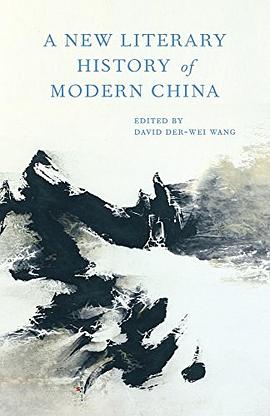
Literature, from the Chinese perspective, makes manifest the cosmic patterns that shape and complete the world—a process of “worlding” that is much more than mere representation. In that spirit, A New Literary History of Modern China looks beyond state-sanctioned works and official narratives to reveal China as it has seldom been seen before, through a rich spectrum of writings covering Chinese literature from the late-seventeenth century to the present.
Featuring over 140 Chinese and non-Chinese contributors from throughout the world, this landmark volume explores unconventional forms as well as traditional genres—pop song lyrics and presidential speeches, political treatises and prison-house jottings, to name just a few. Major figures such as Lu Xun, Shen Congwen, Eileen Chang, and Mo Yan appear in a new light, while lesser-known works illuminate turning points in recent history with unexpected clarity and force. Many essays emphasize Chinese authors’ influence on foreign writers as well as China’s receptivity to outside literary influences. Contemporary works that engage with ethnic minorities and environmental issues take their place in the critical discussion, alongside writers who embraced Chinese traditions and others who resisted. Writers’ assessments of the popularity of translated foreign-language classics and avant-garde subjects refute the notion of China as an insular and inward-looking culture.
A vibrant collection of contrasting voices and points of view, A New Literary History of Modern China is essential reading for anyone seeking a deeper understanding of China’s literary and cultural legacy.
作者简介
David Der-Wei Wang is Edward C. Henderson Professor of Chinese Literature and Comparative Literature, Harvard University, and Director of the CCK Foundation Inter-University Center for Sinological Studies.
目录信息
Map
1. Introduction: Worlding Literary China [David Der-wei Wang]
1635; 1932, 1934: The Multiple Beginnings of Modern Chinese “Literature” [Sher-shiueh Li]
1650, July 22: Dutch Plays, Chinese Novels, and Images of an Open World [Paize Keulemans]
1755: The Revival of Letters in Nineteenth-Century China [Theodore Huters]
1792: Legacies in Clash: Anticipatory Modernity versus Imaginary Nostalgia [Andrew Schonebaum]
1807, September 6: Robert Morrison’s Chinese Literature and Translated Modernity [John T. P. Lai]
1810: Gongyang Imaginary and Looking to the Confucian Past for Reform [Benjamin A. Elman]
1820: Flowers in the Mirror and Chinese Women: “At Home in the World” [Carlos Rojas]
1820, Beijing: Utter Disillusion and Acts of Repentance in Late Classical Poetry [Stephen Owen]
1843, The Second Half of June: In Search of a Chinese Utopia: The Taiping Rebellion as a Literary Event [Huan Jin]
1847, January 4: My Life in China and America and Transpacific Translations [Chih-ming Wang]
1852, 1885: Two Chinese Poets Are Homeless at Home [Xiaofei Tian]
1853: Foreign Devils, Chinese Sorcerers, and the Politics of Literary Anachronism [David Der-wei Wang]
1861: Women Writers in Early Modern China [Ellen Widmer]
1862, October 11: Wang Tao Lands in Hong Kong [Emma J. Teng]
1872, October 14: Media, Literature, and Early Chinese Modernity [Rudolf G. Wagner]
1873, June 29: The Politics of Translation and the Romanization of Chinese into a World Language [Uganda Sze Pui Kwan]
1884, May 8: In Lithographic Journals, Text and Image Flourish on the Same Page [Xia Xiaohong and Chen Pingyuan, translated by Michael Gibbs Hill]
1890, Fall: Lives of Shanghai Flowers, Dialect Fiction, and the Genesis of Vernacular Modernity [Alexander Des Forges]
1895, May 25: The “New Novel” before the Rise of the New Novel [Patrick Dewes Hanan]
1896, April 17: Qiu Fengjia and the Poetics of Tears [Chien-hsin Tsai]
1897: Language Reform and Its Discontents [Theodore Huters]
1899: Oracle Bones, That Dangerous Supplement… [Andrea Bachner]
1900, February 10: Liang Qichao’s Suspended Translation and the Future of Chinese New Fiction [Satoru Hashimoto]
1900, Summer and Fall: Fallen Leaves, Grieving Cicadas, and Poetic Mourning after the Boxer Rebellion [Shengqing Wu]
1901: Eliza Crosses the Ice—and an Ocean—and Uncle Tom’s Cabin Arrives in China [Michael Gibbs Hill]
1903, September: Sherlock Holmes Comes to China [Wei Yan]
1904, August 19: Imaging Modern Utopia by Rethinking Ancient Historiography [N. Göran D. Malmqvist]
1905, January 6: Wen and the “First History(-ies) of Chinese Literature” [Kwok Kou Leonard Chan]
1905: Münchhausen Travels to China [Géraldine Fiss]
1906, July 15: Zhang Taiyan and the Revolutionary Politics of Literary Restoration [Tsuyoshi Ishii]
1907, June 1: Global Theatrical Spectacle in Tokyo and Shanghai [Natascha Gentz]
1907, July 15: The Death of China’s First Feminist [Hu Ying]
1908, February, November: From Mara to Nobel [David Der-wei Wang]
1909, November 13: A Classical Poetry Society through Revolutionary Times [Shengqing Wu]
1911, April 24; 1911: Revolution and Love [Haiyan Lee]
1913; 2011, May: The Book of Datong as a Novel of Utopia [Kai-cheung Dung, translated by Victor Or]
1916, August 23, New York City: Hu Shi and His Experiments [Susan Chan Egan]
1916, September 1: Inventing Youth in Modern China [Mingwei Song]
1918, April 2: Zhou Yucai Writes “A Madman’s Diary” under the Pen Name Lu Xun [Ha Jin]
1918, Summer: Modern Monkhood [Ying Lei]
1919, May 4: The Big Misnomer: “May Fourth Literature” [Michel Hockx]
1921, November 30: Clinical Diagnosis for Taiwan [Pei-yin Lin]
1922, March: Turning Babbitt into Bai Bide [Tze-ki Hon]
1922, Spring: Xiang Kairan’s Monkey [John Christopher Hamm]
1922, December 2: New Culture and the Pedagogy of Writing [Charles A. Laughlin]
1924, April 12: Xu Zhimo and Chinese Romanticism [Michelle Yeh]
1924, May 30: Enchantment with the Voice [Chen Pingyuan, translated by Andy Rodekohr]
1925, June 17: Lu Xun and Tombstones [Wang Hui, translated by Michael Gibbs Hill]
1925, November 9: Mei Lanfang, the Denishawn Dancers, and World Theater [Catherine Vance Yeh]
1927, June 2; 1969, October 7: “This Spirit of Independence and Freedom of Thought…Will Last for Eternity with Heaven and Earth” [Wai-yee Li]
1927, June 4: The Legend of a Modern Woman Writer of Classical Verse [Grace S. Fong]
1927, August 23: Ba Jin Begins to Write Anarchist Novels [Mingwei Song]
1928, January 16: Revolution and Rhine Wine [Pu Wang]
1928: Genealogies of Romantic Disease [Andrew Schonebaum]
1929, September: Gender, Commercialism, and the Literary Market [Amy Dooling]
1929: The Author as Celebrity [Eileen Cheng-yin Chow]
1930, October: Practical Criticism in China [Q. S. Tong]
1930, October 27: Invitation to a Beheading [David Der-wei Wang]
1931, February 7: The Chinese League of Left-Wing Writers, 1930–1936 [Lawrence Wang-chi Wong]
1932: Hei Ying’s “Pagan Love Song” [Andrew F. Jones]
1934, January 1; 1986, March 20: Roots of Peace and War, Beauty and Decay, Are Sought in China’s Good Earth [Jeffrey C. Kinkley]
1934, October–1936, October: Recollections of Women Soldiers on the Long March [Helen Praeger Young]
1935, March 8: On Language, Literature, and the Silent Screen [Kristine Harris]
1935, June 18: The Execution of Qu Qiubai [Andy Rodekohr]
1935, July 28 and August 1: The Child and the Future of China in the Legend of Sanmao [Lanjun Xu]
1935, December 21: Crossing the River and Ding County Experimental Theater [Man He]
1936, May 21: One Day in China [Charles A. Laughlin]
1936, October: Resonances of a Visual Image in the Early Twentieth Century [Xiaobing Tang]
1936, October 19: Lu Xun and the Afterlife of Texts [Eileen J. Cheng]
1937, February 2: Cao Yu and His Drama [Li Ruru and David Jiang]
1937, Spring: A Chinese Poet’s Wartime Dream [John A. Crespi]
1937, November 18; 1938, February 28: William Empson, W. H. Auden, and Modernist Poetry in Wartime China [Q. S. Tong]
1939, October 15: The Lost Novel of the Nanjing Massacre [Michael Berry]
1940, September 3: The Poetics and Politics of Neo-Sensation [Peng Hsiao-yen]
1940, December 19: Between Chineseness and Modernity: The Film Art of Fei Mu [Wong Ain-ling]
1940–1942: Chinese Revolution and Western Literature [Ban Wang]
1941, December 25: Eileen Chang in Hong Kong [Leo Ou-fan Lee]
1942, January 22; 2014, Fall: In War She Writes [Katherine Hui-ling Chou]
1942, March 16: Taiwan’s Genius Lü Heruo [Faye Yuan Kleeman]
1942, May 2–May 23: The Cultural and Political Significance of Mao Zedong’s “Talks at the Yan’an Forum on Literature and Art” [Qian Liqun, translated by Dylan Suher]
1943, April: The Genesis of Peasant Revolutionary Literature [Hui Jiang]
1944, November 14: The North Has Mei Niang [Norman Smith]
1945, August 1: Ideologies of Sound in Chinese Modernist Poetry [Nick Admussen]
1945, August 29: The Enigma of Yu Dafu and Nanyang Literature [E. K. Tan]
1946, July 15: On Literature and Collaboration [Susan Daruvala]
1947, February 28: On Memory and Trauma: From the 228 Incident to the White Terror [Kang-i Sun Chang]
1947: The Socratic Tradition in Modern China [Jingling Chen]
1948, October; 2014, February: The Life of a Chinese Literature Textbook [Joseph R. Allen]
1949, March 28: Shen Congwen’s Journey: From Asylum to Museum [Xiaojue Wang]
1949, 1958: A New Time Consciousness: The Great Leap Forward [Har Ye Kan]
1951, September; 1952, September: The Genesis of Literary History in New China [Yingjin Zhang]
1952, March 18: Transnational Socialist Literature in China [Nicolai Volland]
1952, July: A Provocation to Literary History [Shuang Shen]
1952, October 14: Salvaging Chinese Script and Designing the Mingkwai Typewriter [Jing Tsu]
Late 1953: Lao She and America [Richard Jean So]
1954, September 25–November 2: The Emergence of Regional Opera on the National Stage [Wilt L. Idema]
1955, May: Lu Ling, Hu Feng, and Literary Persecution [Kirk A. Denton]
1955: Hong Kong Modernism and I [Wai-lim Yip]
1956: Zhou Shoujuan’s Romance à la Mandarin Ducks and Butterflies [Jianhua Chen]
1956; 1983, September 20: Orphans of Asia [Chien-hsin Tsai]
1957, June 7: Sino-Muslims and China’s Latin New Script: A Reunion between Diaspora and Nationalism [Jing Tsu]
1958, June 20: A Monumental Model for Future Perfect Theater [Tarryn Li-Min Chun]
1958: Mao Zedong publishes Nineteen Poems and Launches the New Folk Song Movement [Xiaofei Tian]
1959, February 28: On The Song of Youth and Literary Bowdlerization [Yunzhong Shu]
1960, October: Hunger and the Chinese Malaysian Leftist Narrative [Chong Fah Hing and Kyle Shernuk]
1962–1963: The Legacies of Jaroslav Průšek and C. T. Hsia [Leo Ou-fan Lee]
1962, June: Three Ironic Moments in My Mother Ru Zhijuan’s Literary Career [Wang Anyi, translated by Carlos Rojas]
1963, March 17: Fu Lei and Fou Ts’ong: Cultural Cosmopolitanism and Its Price [Guangchen Chen]
1964: The “Red Pageant” and China’s First Atomic Bomb [Xiaomei Chen]
1965, July 14: Red Prison Files [Jie Li]
1966, October 10: Modernism versus Nativism in 1960s Taiwan [Christopher Lupke]
1967: Jin Yong publishes The Smiling, Proud Wanderer in Ming Pao [Petrus Liu]
1967, April 1: The Specter of Liu Shaoqi [Ying Qian]
1967, May 29: The Red Lantern: Model Plays and Model Revolutionaries [Yomi Braester]
1970: The Angel Island Poems: Chinese Verse in the Modern Diaspora [Steven Yao]
1972, 1947: In Search of Qian Zhongshu (1910–1998) [Theodore Huters]
1972–1973, 2: A Subtle Encounter: Tête-bêche and In the Mood for Love [Mary Shuk-han Wong]
1973, July 20: The Mysterious Death of Bruce Lee, Chinese Nationalism, and Cinematic Legacy [Stephen Teo]
1974, June: Yang Mu Negotiates between Classicism and Modernism [Michelle Yeh]
1976, April 4: Poems from Underground [Lucas Klein]
1976: A Modern Taiwanese Innocents Abroad [Clint Capehart]
1978, September 18: Confessions of a State Writer: The Novelist Hao Ran Offers a Self-Criticism [Richard King]
1978, October 3: Chen Yingzhen on the White Terror in Taiwan [Ping-hui Liao]
1979, November 9: Liu Binyan and the Price of Relevance [Perry Link]
1980, June 7; 1996, April, On an Unspecified Day: A Tale of Two Cities [Lingchei Letty Chen]
1981, October 13: Food, Diaspora, and Nostalgia [Weijie Song]
1983, January 17: Discursive Heat: Humanism in 1980s China [Gloria Davies]
1983, Spring: The Advent of Modern Tibetan Free-Verse Poetry in the Tibetan Language [Lauran R. Hartley]
1984, July 21–30: Literary Representation of the White Terror and Rupture in Mid-Twentieth-Century Taiwan [Sung-sheng Yvonne Chang]
1985, April: Searching for Roots in Literature and Film [Michael Berry]
1986: The Writer and the Mad(wo)man [Andrea Bachner]
1987, September: The Birth of China’s Literary Avant-Garde [Yu Hua, translated by Carlos Rojas]
1987, December 24: Gao Xingjian’s Pursuit of Freedom in the Spirit of Zhuangzi [Liu Jianmei]
1988, July 1: “Rewriting Literary History” in the New Era of Liberated Thought [Chen Sihe, translated by Mingwei Song]
1989, March 26: Anything Chinese about This Suicide? [Maghiel van Crevel]
1989, September 8: Trauma and Cinematic Lyricism [Emilie Yueh-yu Yeh]
1990, 1991: From the Margins to the Mainstream: A Tale of Two Wangs [Kyle Shernuk and Dylan Suher]
1994, July 30: Meng Jinghui and Avant-Garde Chinese Theater [Claire Conceison]
1995, May 8: The Death of Teresa Teng [Andy Rodekohr]
1995, June 25: Formal Experiments in Qiu Miaojin’s “Lesbian I Ching” [Ari Larissa Heinrich]
1997, May 1: Modern China as Seen from an Island Perspective [Hsinya Huang]
1997, May 3: “The First Modern Asian Gay Novel” [John B. Weinstein]
1997: Hong Kong’s Literary Retrocession in Three Fantastical Novels [Bonnie S. McDougall]
1997: Representing the Sinophone, Truly: On Tsai Ming-liang’s I Don’t Want to Sleep Alone [Pheng Cheah]
1998, March 22: The Silversmith of Fiction [Chu T’ien-hsin, translated by Kyle Shernuk]
1999, February: The Poet in the Machine: Hsia Yü’s Analog Poetry Enters the Digital Age [Brian Skerratt]
1999, March 28: Sixteen-Year-Old Han Han Roughs Up the Literary Scene [Martin Woesler]
2002, October 25: Resurrecting a Postlapsarian Pagoda in a Postrevolutionary World [Tarryn Li-Min Chun]
2004, April: Wolf Totem and Nature Writing [Karen L. Thornber]
2006, September 30: Chinese Verse Going Viral: “Removing the Shackles of Poetry” [Heather Inwood and Xiaofei Tian]
2007: Suddenly Coming into My Own [Li Juan, translated by Kyle Shernuk]
2008: Writer-Wanderer Li Yongping and Chinese Malaysian Literature [Alison M. Groppe]
2008–2009: Chinese Media Fans Express Patriotism through Parody of Japanese Web Comic [Casey Lee]
2010, January 10: Ang Lee’s Adaptation, Pretense, Transmutation [Darrell William Davis]
2011, June 26: Encountering Shakespeare’s Plays in the Sinophone World [Alexa Huang]
2012: Defending the Dignity of the Novel [Mo Yan, translated by Dylan Suher]
2012, 2014: Minority Heritage in the Age of Multiculturalism [Kyle Shernuk]
2013, January 5: Ye Si and Lyricism [Rey Chow]
2013, May 12, 7:30 P.M.: Lightning Strikes Twice: “ Mother Tongue” Minority Poetry [Mark Bender]
2066: Chinese Science Fiction Presents the Posthuman Future [Mingwei Song]
Credits
Acknowledgments
Index
· · · · · · (收起)
读后感
Literature, from the Chinese perspective, makes manifest the cosmic patterns that shape and complete the world——a process of "worlding" that is much more than mere representation. In that spirit, A New Literary History of Modern China looks beyond state-s...
Literature, from the Chinese perspective, makes manifest the cosmic patterns that shape and complete the world——a process of "worlding" that is much more than mere representation. In that spirit, A New Literary History of Modern China looks beyond state-s...
原载《扬子江评论》2017年第6期,总第67期 王德威教授主编的《新编现代中国文学史》(A New Literary History of Modern China,the Belknap Press of HarvardUniversity Press,2017)出版后,因为该书中文版尚未面世,故国内除一篇采访和几篇对王德威文学 史观念(主要是《“世...
2017年,哈佛大学出版社推出了王德威教授主编的《新编中国现代文学史》,引起学界广泛关注。借着王德威教授来京讲学的机会,李浴洋博士就该书的编撰和出版缘起及相关话题采访了王德威教授。在访谈中,王德威教授详细介绍了该书的编纂和出版经过,并围绕当代文学史研究的理论旨...
2017年,哈佛大学出版社推出了王德威教授主编的《新编中国现代文学史》,引起学界广泛关注。借着王德威教授来京讲学的机会,李浴洋博士就该书的编撰和出版缘起及相关话题采访了王德威教授。在访谈中,王德威教授详细介绍了该书的编纂和出版经过,并围绕当代文学史研究的理论旨...
用户评价
这本书彻底颠覆了我之前对中国现代文学的理解。我过去以为,文学史不过是一系列作家和作品的简单排列,但这本书却告诉我,文学史是一部关于思想、情感和变革的宏大史诗。作者以其独特的叙事方式,将枯燥的史料转化为引人入胜的故事,让我仿佛置身于那个风云变幻的年代,亲身感受着文学创作的艰辛与辉煌。我对书中对于不同地域文学传统如何在中国现代文学中汇聚和发展的分析,尤其感到兴奋。 我欣赏作者在梳理复杂文学现象时的逻辑清晰和条理分明。她/他能够将纷繁复杂的文学流派、创作思潮以及作家之间的联系,梳理得井井有条,让我能够轻松地把握中国现代文学的发展脉络。这本书让我看到了文学作品背后所蕴含的深刻社会意义,它不仅仅是个人情感的表达,更是对社会现实的深刻介入和对未来的大胆想象。我一直在思考,在当下这个信息爆炸的时代,我们该如何重拾文学的意义,而这本书给了我很多启发。
阅读这本书的过程,就像是在解构一段段错综复杂的历史谜团。我从未想过,一本关于文学史的书,能够如此引人入胜,让我如同身临其境一般,去感受那个时代的呼吸和脉搏。作者在处理大量历史信息的同时,又能精准地捕捉到文学作品的精髓,这种功力令人叹服。她/他笔下的每一个作家,每一个故事,都仿佛被赋予了生命,在纸页间鲜活地跳动。我被书中对社会现实的深刻反思所打动,那些作品不仅仅是文字的堆砌,更是那个时代人们心灵的呐喊和记录。 我尤其欣赏作者对于文学与社会变革之间相互作用的细致描绘。她/他并没有将文学视为一个孤立的现象,而是将其置于广阔的社会语境中,考察文学是如何受到时代的影响,又如何反过来影响社会发展。这种宏观的视角,让我对中国现代文学的理解上升到了一个新的高度。这本书不仅仅是一部文学史,更是一部关于中国现代心灵史的生动写照。我常常在阅读时停下来,去思考作者提出的问题,去回味那些触动我心灵的句子。
这本书提供了一种前所未有的视角,让我得以窥探中国现代文学的内在脉络。不同于以往我接触过的任何一本文学史,这本书更像是一场精心策划的对话,作者以一种充满激情和深刻见解的方式,引领我深入探索每一个时期、每一个流派的独特魅力。我被书中那些充满争议和创新的文学思潮所吸引,它们挑战着当时的权威,也为后世留下了宝贵的精神财富。作者对于不同文化元素在中国现代文学中融合的分析,也让我对中国文学的开放性和包容性有了更深的认识。 我特别喜欢作者在处理不同作家和作品时,所展现出的那种细腻的情感和人文关怀。她/她并非以一种冷冰冰的学术态度来叙述,而是用一种充满温度的笔触,去描绘那些在时代洪流中闪耀着人性光辉的灵魂。书中的许多例子,都让我印象深刻,它们不仅仅是文学的符号,更是那个时代无数个体命运的缩影。这本书让我感受到,文学的力量是无穷的,它能够穿越时空,连接过去与现在,激发我们对历史的思考,也对未来充满希望。
这本书以一种意想不到的方式,将我带入了一个从未真正理解过的中国文学的迷人世界。我一直以来都以为自己对中国现代文学有所涉猎,但读完这本书后,我才发现自己之前的认知多么浅显。作者并非简单地罗列作家和作品,而是巧妙地将文学创作置于历史、社会和政治的宏大背景之下,展现了文学在动荡变革年代中所扮演的复杂角色。书中对一些我熟悉的作家,例如鲁迅、巴金的解读,也让我看到了他们作品中更深层次的意涵,他们是如何在时代洪流中挣扎、反思,并以笔为剑,试图唤醒国民的。 更让我惊喜的是,这本书不仅关注了那些耳熟能详的名字,还发掘了许多我之前闻所未闻但同样至关重要的声音。这些被“遗忘”或“边缘化”的作家和作品,在作者的笔下重新焕发了生机,它们共同构建了一个更为丰富和多元的中国现代文学图景。书中对不同文学流派的梳理,以及它们之间错综复杂的关系,也让我对中国现代文学的发展脉络有了更清晰的认识。我特别喜欢作者在分析文学作品时,那种深入骨髓的洞察力,她/他总能从细微之处着眼,揭示出作品背后隐藏的时代精神和人性挣扎。
这本书的阅读体验,是一次深度的心灵洗礼。我被书中对于中国现代文学发展过程中那些曲折和挑战的深刻揭示所震撼。作者以一种毫不回避的态度,展现了文学在不同历史时期所面临的巨大压力和复杂困境,但同时也歌颂了那些坚守创作理想、用笔记录时代的作家们。我被那些在艰难环境下依然坚持创作的作家和作品所打动,它们是那个时代不屈精神的最好证明。 我尤其欣赏作者对于文学作品的解读,她/她总能穿透表象,直达作品的核心,揭示出其背后蕴含的时代精神和深刻的哲学思考。这本书让我认识到,文学不仅仅是文字的游戏,更是思想的碰撞,情感的抒发,以及对人类命运的深刻关照。我常常在阅读时,会陷入沉思,思考那些文学作品如何影响了那个时代,又如何继续影响着我们今天。这本书让我对中国现代文学充满了敬意,也让我更加珍视那些用文字承载历史、传递思想的宝贵财富。
兔叔推荐,很赞的一本文学史。不再是既定的“历史陈述”,而是从特定的文学人物/事件入手进行分析 视觉研究/身份认同/身体书写是国内文学史忽略的部分 很好玩的一件事是我给史航老师发了微博私信,他还回了我一个狗头
喜欢 回家前死活也看不完了想自己买一本.....仔细看了王老斯的导言 Ellen Widmer写的清代女性文学 李欧梵写的普实克夏志清和哈金的写的鲁迅
終於讀到了。是為了李潔寫林昭的那章,再開始看其他部分,每一篇都有收穫。一是把中國文學史和世界史並列,一是每章短篇後附進一步閱讀書目
incredible
極其喜歡這本書,其體量之大、重審現代中國文學的格局之大,以及143位學者合力繪製文學史的嘗試,太驚人了。