
具体描述
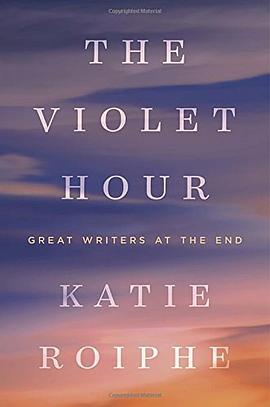
From one of our most perceptive and provocative voices comes a deeply researched account of the last days of Susan Sontag, Sigmund Freud, John Updike, Dylan Thomas, Maurice Sendak, and James Salter—an arresting and wholly original meditation on mortality.
In The Violet Hour, Katie Roiphe takes an unexpected and liberating approach to the most unavoidable of subjects. She investigates the last days of six great thinkers, writers, and artists as they come to terms with the reality of approaching death, or what T. S. Eliot called “the evening hour that strives Homeward, and brings the sailor home from sea.”
Roiphe draws on her own extraordinary research and access to the family, friends, and caretakers of her subjects. Here is Susan Sontag, the consummate public intellectual, who finds her commitment to rational thinking tested during her third bout with cancer. Roiphe takes us to the hospital room where, after receiving the worst possible diagnosis, seventy-six-year-old John Updike begins writing a poem. She vividly re-creates the fortnight of almost suicidal excess that culminated in Dylan Thomas’s fatal collapse at the Chelsea Hotel. She gives us a bracing portrait of Sigmund Freud fleeing Nazi-occupied Vienna only to continue in his London exile the compulsive cigar smoking that he knows will hasten his decline. And she shows us how Maurice Sendak’s beloved books for children are infused with his lifelong obsession with death, if you know where to look.
The Violet Hour is a book filled with intimate and surprising revelations. In the final acts of each of these creative geniuses are examples of courage, passion, self-delusion, pointless suffering, and superb devotion. There are also moments of sublime insight and understanding where the mind creates its own comfort. As the author writes, “If it’s nearly impossible to capture the approach of death in words, who would have the most hope of doing it?” By bringing these great writers’ final days to urgent, unsentimental life, Katie Roiphe helps us to look boldly in the face of death and be less afraid.
Praise for The Violet Hour
“A beautiful book . . . The intensity of these passages—the depth of research, the acute sensitivity for declarative moments—is deeply beguiling.”—The New York Times Book Review
“Profound, poetic and—yes—comforting.”—People
“Unconventional, engaging . . . [The Violet Hour] is at once scholarly, literary, juicy—and unabashedly personal.”—Los Angeles Times
“Enveloping . . . I read it in bed, at the kitchen table, while walking down the street. . . . ‘What normal person wants to blunder into this hushed and sacred space?’ she asks. But the answer is all of us, and Ms. Roiphe does it with grace.”—Jennifer Senior, The New York Times
“A beautiful and provocative meditation on mortality.”—Minneapolis Star Tribune
“A tender yet penetrating look at the final days . . . Roiphe has always seemed to me a writer to envy. No matter what the occasion, she can be counted on to marry ferocity and erudition in ways that nearly always make her interesting.”—The Wall Street Journal
“Here is a critic in supreme control of her gifts, whose gift to us is the observant vigor that refuses to flinch before the Reaper. . . . She knows that true criticism does not bother with the mollification of delicate sensibilities, only with the intellect as it roils and rollicks through language.”—William Giraldi, The New Republic
作者简介
Katie Roiphe is the author of several books, including The Morning After: Sex, Fear, and Feminism; Uncommon Arrangements: Seven Marriages; In Praise of Messy Lives: Essays; and a novel, Still She Haunts Me. Her essays and articles have appeared in The New York Times, The Washington Post, The New Yorker, The Paris Review, The Wall Street Journal, Financial Times, Harper’s, Vogue, Esquire, Slate, and Tin House. She has a Ph.D. in literature from Princeton University and is the director of the Cultural Reporting and Criticism program at New York University. She lives in Brooklyn.
目录信息
读后感
厄普代克大声的回答:“我准备好了” 小学三年级的一个夜晚,爸爸妈妈窸窸窣窣的整理了很多东西去医院找姥爷。那段时间本身他们每天也都会去,但是那天感觉特别不一样,那天晚上,奶奶照看着我,意外的允许我熬夜,我们俩躺在家里客厅的地板上,开着窗户,花了很长的时间看星星...
桑塔格和弗洛伊德在与死亡的战役中都表现了超越芸芸众生的人类的自由意志,以及一股强烈的掌控自我生命进程的欲望和能量,尽管朝着两个截然相反的方向。超越平凡人生的自信扎根于桑塔格旺盛的生命力之中,精神与肉体的深刻矛盾也在她身上爆发。她拒绝隐喻,但却始终未曾直视自...
一本灰色调的书,但并不让人沮丧。 讲的是死亡,大作家的暮色时间, 苏珊·桑塔格、弗洛伊德、厄普代克、狄兰·托马斯和莫里斯·桑达克,面对死亡来时的反应和表现。在死神面前,人与人之间真的没有本质区分。当死神来敲门,有人会拖在门后久久不肯开门,而有人会在提早打开门...
一本灰色调的书,但并不让人沮丧。 讲的是死亡,大作家的暮色时间, 苏珊·桑塔格、弗洛伊德、厄普代克、狄兰·托马斯和莫里斯·桑达克,面对死亡来时的反应和表现。在死神面前,人与人之间真的没有本质区分。当死神来敲门,有人会拖在门后久久不肯开门,而有人会在提早打开门...
用户评价
这本书的封面设计简直是一场视觉盛宴,那种深邃的紫色调混合着一丝若隐若现的金色光芒,立刻就把你拉进一个既古典又带着一丝神秘的氛围里。初读时,我立刻被作者那种老派的、近乎巴洛克式的叙事风格所吸引。她似乎并不急于推进情节,而是耐心地为你描绘每一个场景,就像一位技艺精湛的画家,用细致入微的笔触勾勒出人物的内心世界和他们所处的环境。我尤其欣赏作者对细节的把握,无论是老式打字机上被指尖磨得光滑的键帽,还是在维多利亚时代雾气弥漫的街道上,煤气灯投射出的摇曳光影,都显得那么真实可感,仿佛能从中闻到旧书和湿润石板的气味。这种沉浸式的写作手法,让阅读变成了一种慢节奏的享受,需要你完全放下外界的喧嚣,全身心地投入到那个被精心构建的世界中去。虽然有些读者可能会觉得叙事节奏稍慢,但我恰恰认为这是作者的精妙之处,她是在用文字构建一座迷宫,让你在其中迷失,直到发现那些隐藏在繁复装饰之下的真正线索。书中的人物对白也极具韵味,充满了机锋和未尽之意,每一次对话都像一场小型的智力交锋,充满了潜台词和微妙的情感波动。
这本书的结构处理手法相当大胆且令人耳目一新。它采用了多重视角的叙事策略,但与传统的多线叙事不同,这里的视角切换并非单纯地从A点跳到B点,而更像是通过一系列错综复杂的棱镜来观察同一事件。你会发现,同一个场景,在不同人物的回忆和感知中被赋予了截然不同的色彩和含义。这使得真相本身变成了一个流动的、难以捉摸的概念。我常常读完一个章节,需要停下来,在脑海中重新拼凑刚才所读到的信息碎片,努力分辨哪些是事实,哪些是基于个人创伤或欲望所扭曲的“现实”。作者高超地利用了“不可靠的叙述者”这一技巧,但她并非滥用,而是将其融入到一种近乎哲学探讨的层面——即我们如何真正认识彼此,以及我们所坚持的“个人历史”是否真的是历史本身。这种叙事上的挑战性,反而极大地增强了阅读的乐趣,每一次成功解开一个谜团,都会带来一种智力上的巨大满足感。它不仅仅是一个故事,更像是一场关于记忆、感知与真相本质的智力游戏。
真正让我震撼的是作者对“时间感”的处理。这本书给我的感觉,时间线并不是一条直线,而更像是一个被反复拉伸、扭曲、甚至偶尔会折叠起来的织物。有些段落会以极慢的速度展开,如同琥珀中凝固的昆虫,每一个微小的动作和心理活动都被拉伸到极致,使得读者对某一刻的体验感被无限放大。而另一些至关重要的转折点,却可能在寥寥数语间被一带而过,仿佛被时间洪流无情地冲刷掉了。这种非线性的时间处理,完美地契合了主角们那种被过去阴影所困扰的状态。他们似乎永远无法真正从某一刻抽离出来,历史的幽灵总是在当下回响。我猜想,作者可能是在暗示,对于某些深层的情感创伤而言,“现在”和“过去”的界限是模糊的,甚至是虚无的。这种对时间结构的高明运用,让这部作品在深度和复杂性上远超同类题材的作品。
这本书的语言风格简直可以用“华丽而克制”来形容。它拥有文学小说应有的丰富词汇量和精准的比喻,但作者从未使用那些浮夸堆砌的辞藻来炫技。她的文字像一把被磨得极薄的刀片,每一次挥舞都带着清晰的切割力,精准地切入核心。尤其是在描写那些人物间微妙的权力关系和情感张力时,文字的密度达到了顶峰。你能在一段看似平淡无奇的对话中,读出隐藏的威胁、未宣之于口的爱意,或是刻骨的怨恨。这种“言有尽而意无穷”的写作,要求读者必须保持高度的专注力,去捕捉那些细微的语调变化和停顿。我甚至会忍不住反复阅读某些句子,去品味作者是如何用最经济的字数,搭建起一个复杂的情感建筑。这种精炼的优雅,是许多当代小说所缺乏的,它让阅读体验提升到了欣赏艺术品的层次。
读完最后一页时,我感到一种混合着满足感和挥之不去的失落。这本书最成功的一点,在于它并没有提供一个整洁的、包裹着蝴蝶结的结局。相反,它留下了一片广阔的、充满雾气的余韵。作者似乎并不热衷于给出明确的答案或道德审判,她只是将所有的线索铺陈在你面前,让你自己去感受和判断。这种开放性带来的后劲是惊人的——在接下来的几天里,我发现自己仍然在反复咀嚼书中的某些场景和人物的动机。它迫使你走出书本,去思考故事背后关于人性、选择和命运的更宏大命题。这不像是一次阅读的终结,更像是一次深刻的对话的暂停。它没有给你一个安慰的拥抱,而是递给你一个需要你自己去解开的结。这种毫不妥协的艺术立场,使得这本书在我心中占据了一个非常独特的位置,它不是一本能让你轻松度过下午的书,而是一次需要全身心投入的心灵探索。
看了狄兰托马斯一章 真是难看……决定扔书了……就……作者的强项其实是写评论……而不是叙事性文章……更mean一点,就写成这样,让人怀疑伊如今的声名,性别政治的红利远多于才华的回馈。题目是好题目。
不知道是作者写的太差还是商业气息太重(偏向后者),如果真是这样这本书就没有必要存在
看了狄兰托马斯一章 真是难看……决定扔书了……就……作者的强项其实是写评论……而不是叙事性文章……更mean一点,就写成这样,让人怀疑伊如今的声名,性别政治的红利远多于才华的回馈。题目是好题目。
不知道是作者写的太差还是商业气息太重(偏向后者),如果真是这样这本书就没有必要存在
不知道是作者写的太差还是商业气息太重(偏向后者),如果真是这样这本书就没有必要存在