
Maoism at the Grassroots pdf epub mobi txt 電子書 下載 在線閱讀 2026
- 海外中國研究
- 曆史
- 社會史
- 政治學
- CCP
- 共和國史
- 中國政治
- 政治
- 毛澤東思想
- 基層實踐
- 中國革命
- 群眾路綫
- 社會主義
- 曆史研究
- 中國共産黨
- 意識形態
- 農村運動
- 思想史

具體描述
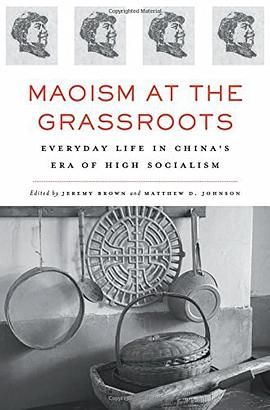
The Maoist state’s dominance over Chinese society, achieved through such watersheds as the Great Leap Forward and the Cultural Revolution, is well known. Maoism at the Grassroots reexamines this period of transformation and upheaval from a new perspective, one that challenges the standard state-centered view. Bringing together scholars from China, Europe, North America, and Taiwan, this volume marshals new research to reveal a stunning diversity of individual viewpoints and local experiences during China’s years of high socialism.
Focusing on the period from the mid-1950s to 1980, the authors provide insights into the everyday lives of citizens across social strata, ethnicities, and regions. They explore how ordinary men and women risked persecution and imprisonment in order to assert personal beliefs and identities. Many displayed a shrewd knack for negotiating the maze-like power structures of everyday Maoism, appropriating regime ideology in their daily lives while finding ways to express discontent and challenge the state’s pervasive control.
Heterogeneity, limited pluralism, and tensions between official and popular culture were persistent features of Maoism at the grassroots. Men had gay relationships in factory dormitories, teenagers penned searing complaints in diaries, mentally ill individuals cursed Mao, farmers formed secret societies and worshipped forbidden spirits. These diverse undercurrents were as representative of ordinary people’s lives as the ideals promulgated in state propaganda.
作者簡介
Jeremy Brown is Associate Professor of History at Simon Fraser University.
Matthew D. Johnson is Assistant Professor of History and Chair of East Asian Studies at Grinnell College.
目錄資訊
Part I. Crimes, Labels, and Punishment
1. How a “Bad Element” Was Made: The Discovery, Accusation, and Punishment of Zang Qiren [Yang Kuisong]
2. Moving Targets: Changing Class Labels in Rural Hebei and Henan, 1960–1979 [Jeremy Brown]
3. An Overt Conspiracy: Creating Rightists in Rural Henan, 1957–1958 [Cao Shuji]
4. Revising Political Verdicts in Post-Mao China: The Case of Beijing’s Fengtai District [Daniel Leese]
Part II. Mobilization
5. Liberation from the Loom? Rural Women, Textile Work, and Revolution in North China [Jacob Eyferth]
6. Youth and the “Great Revolutionary Movement” of Scientific Experiment in 1960s–1970s Rural China [Sigrid Schmalzer]
7. Adrift in Tianjin, 1976: A Diary of Natural Disaster, Everyday Urban Life, and Exile to the Countryside [Sha Qingqing and Jeremy Brown]
Part III. Culture and Communication
8. Beneath the Propaganda State: Official and Unofficial Cultural Landscapes in Shanghai, 1949–1965 [Matthew D. Johnson]
9. China’s “Great Proletarian Information Revolution” of 1966–1967 [Michael Schoenhals]
10. The Dilemma of Implementation: The State and Religion in the People’s Republic of China, 1949–1990 [Xiaoxuan Wang]
Part IV. Discontent
11. Radical Agricultural Collectivization and Ethnic Rebellion: The Communist Encounter with a “New Emperor” in Guizhou’s Mashan Region, 1956 [Wang Haiguang]
12. Caught between Opposing Han Chauvinism and Opposing Local Nationalism: The Drift toward Ethnic Antagonism in Xinjiang Society, 1952–1963 [Zhe Wu]
13. Redemptive Religious Societies and the Communist State, 1949 to the 1980s [S. A. Smith]
Epilogue: Mao’s China—Putting Politics in Perspective [Vivienne Shue]
Notes
Contributors
Acknowledgments
Index
· · · · · · (收起)
讀後感
用戶評價
When I saw "Maoism at the Grassroots," my immediate thought was a desire for a more intimate, less abstract understanding of this significant historical period. So much of the literature tends to focus on the grand pronouncements and national-level strategies, leaving the lived experiences of ordinary people somewhat obscured. This title promises to redress that imbalance. I am particularly drawn to the "grassroots" emphasis, as it suggests a focus on the micro-level interactions, the local adaptations, and the personal impacts of Maoist ideology. I'm hoping for a book that is rich in anecdotal evidence and detailed case studies, perhaps drawing from extensive fieldwork and oral histories. What did Maoism actually look like in the day-to-day lives of peasants, factory workers, and village cadres? How did they interpret and implement policies? Were there instances of genuine enthusiasm, reluctant compliance, or subtle forms of resistance? The title implies a journey into these specificities, and I'm eager to see how the author navigates the complexities of this often sensitive subject. I'm not looking for a simplified narrative, but rather a nuanced exploration that acknowledges the diversity of experiences across different regions and social strata of China. The success of this book, in my view, will lie in its ability to paint a vivid and human picture of how a powerful ideology was lived, breathed, and perhaps even reshaped at the most fundamental levels of society. I'm anticipating a scholarly yet engaging account that brings the past to life through the voices and experiences of those who were there.
评分Upon seeing the title, "Maoism at the Grassroots," my initial reaction was one of profound intrigue. It signals a departure from the common focus on high-level political machinations and instead suggests an investigation into the very fabric of everyday Chinese society during a pivotal era. My academic curiosity is particularly drawn to the "grassroots" aspect. I'm eager to understand how a sweeping political ideology, often presented in abstract terms, was translated into concrete actions, beliefs, and experiences at the local level. What did "Maoism" actually mean to a farmer in a remote village, a factory worker in an industrial town, or a student in a rural commune? I anticipate that the book will offer a rich collection of empirical data, perhaps through meticulously researched case studies, oral histories, or analyses of local publications that capture the nuances of these experiences. My hope is that the author has avoided generalizations and instead delved into the specificities of different regions and communities, acknowledging the diversity of their responses to Maoist policies. I'm not looking for a purely ideological treatise, but rather a grounded, humanistic exploration of how individuals and communities navigated the demands and promises of Maoism. The title implies a focus on the practical, the tangible, and the lived realities of the era. I am hoping for an account that sheds light on the motivations behind people's actions, the ways in which they adapted to or resisted ideological pressures, and the long-term impact of these experiences on their lives. Ultimately, I'm seeking a book that provides a more intimate and granular understanding of a significant historical period, moving beyond the pronouncements of leaders to explore the experiences of those who lived it.
评分The title "Maoism at the Grassroots" immediately conjures images of deep dives into the soil of everyday life, away from the rarefied air of political theory. My personal fascination lies precisely in this space – the intersection of grand ideological movements and the lived realities of ordinary people. I'm eager to see how this book unpacks the practical manifestations of Maoism in the villages, factories, and neighborhoods where it was meant to take root. What were the tangible impacts on work, family, community, and individual aspirations? I'm hoping for a scholarly yet vivid account that is rich in specific examples, perhaps drawing from extensive fieldwork, oral histories, and local archives. The "grassroots" suggests a focus on the ground-level actors – the farmers, workers, local cadres – and I'm particularly keen to understand their perspectives, motivations, and the ways in which they interpreted and implemented (or perhaps resisted) the overarching ideology. I'm not seeking a simplistic narrative of either unwavering adherence or outright rebellion, but rather a nuanced portrayal of the complexities and contradictions inherent in such a process. China is a vast and diverse country, and I anticipate that the experience of Maoism at the grassroots would have varied significantly across different regions and social strata. I hope the book explores these variations and offers insights into how local conditions shaped the reception and impact of the ideology. Ultimately, I'm looking for a book that offers a more human and granular understanding of a significant historical period, moving beyond the abstract to illuminate the concrete experiences of those who lived through it.
评分The very title, "Maoism at the Grassroots," immediately piqued my intellectual curiosity. It hints at a departure from the more common, often top-down, analyses of Maoism that focus on leadership decisions and national policy. Instead, it suggests an exploration of how this ideology was lived, experienced, and perhaps even reinterpreted by ordinary people in their everyday lives. My primary hope is that the author has managed to move beyond abstract theoretical discussions and delve into concrete, empirical realities. I'm particularly interested in the methodologies employed. How does one study "Maoism at the grassroots"? I anticipate the use of oral histories, ethnographic research, and careful analysis of local archives and publications to paint a vivid picture of this phenomenon. The "grassroots" aspect is key – it implies a focus on the local, the regional, and the individual. I'm eager to understand the diverse ways in which Maoist principles were implemented and adapted across different geographical and social contexts. Were there instances of genuine popular support, reluctant compliance, or even subtle forms of resistance? The book's success will, in my view, hinge on its ability to portray the complexities and contradictions inherent in such a process. I'm not looking for a simplistic narrative of either triumph or failure, but rather a nuanced account that acknowledges the multifaceted impact of Maoism on the lives of ordinary citizens. I want to understand how ideology intersected with existing social structures, cultural norms, and individual aspirations. The title suggests a focus on the practical application and lived experience of Maoism, and I'm hopeful that the author has delivered a rich and insightful account that goes beyond mere description to offer genuine analysis.
评分這本書的封麵設計著實令人眼前一亮,一種粗獷而又充滿力量的美學風格躍然紙上。書名“Maoism at the Grassroots”本身就帶著一種強烈的衝擊力,讓人不禁好奇,究竟是什麼樣的“毛主義”能在基層土壤中生根發芽,又會結齣怎樣的果實?我一直對曆史的復雜性以及普通人在其中扮演的角色充滿興趣,而這本書恰恰觸及瞭我內心深處的好奇點。從最初被這本書吸引,到翻開它的第一頁,再到深入閱讀其中的篇章,我始終被一種強烈的吸引力所驅使,想要去理解那個特定曆史時期,在中國的廣袤土地上,一種政治思想如何滲透進尋常百姓的生活,影響著他們的日常勞作、傢庭關係,甚至是最微小的喜怒哀樂。我特彆關注的是,作者是如何去描繪那些具體的、發生在田間地頭、村莊巷陌的事件的。那些看似零散的故事,是否能匯聚成一條清晰的脈絡,展現齣“毛主義”在基層運作的真實景象?它究竟是一種自上而下的灌輸,還是一種在特定社會結構和文化背景下,被農民們以某種方式所接受、轉化、甚至是有選擇性地采納的現象?我期待書中能有大量的田野調查素材,比如生動的口述曆史,對當事人及其後代的采訪,或者對當時的報刊、地方誌的細緻爬梳,以此來構建一個立體、可信的基層敘事。我希望這本書能夠避免空洞的理論說教,而是通過鮮活的案例,讓我們看到“毛主義”如何在具體的社會實踐中被理解、被演繹、被遺忘、或者被傳承。我想知道,當年的基層乾部是如何在實踐中理解和執行政策的?普通農民又是如何迴應這些政策的?他們的生活在“毛主義”的影響下,發生瞭哪些具體的變化?是積極的,還是消極的?是深刻的,還是錶麵的?這些都是我迫切想要在書中找到答案的問題。
评分The title "Maoism at the Grassroots" instantly grabbed my attention. It promises to pull back the curtain on the practical, often messy, realities of how a powerful ideology was implemented and experienced by ordinary people. I'm tired of abstract theoretical discussions that often overlook the human element, and this title suggests exactly the kind of grounded, empirical investigation I find most compelling. My primary expectation is that the book will provide vivid, concrete examples of Maoist policies in action at the local level. I'm eager to learn about how decisions made at higher echelons translated into the daily lives of farmers, factory workers, and community members. Did it foster a sense of collective purpose and empowerment, or did it lead to hardship and alienation? I'm hoping for a nuanced portrayal that acknowledges the complexities and contradictions inherent in such a process. The "grassroots" aspect also implies a focus on diverse experiences, and I'm particularly interested in how Maoism manifested differently across various regions and social groups within China. I’m not expecting a monolithic narrative but rather an exploration of the variations and adaptations that occurred. The author's methodology will be crucial here; I hope they have utilized rich qualitative data, such as oral histories and detailed case studies, to bring these experiences to life. Ultimately, I'm looking for a book that offers a more intimate and granular understanding of a significant historical period, moving beyond broad generalizations to explore the lived realities of those who were directly impacted.
评分坦白說,初次看到《Maoism at the Grassroots》這個書名時,我內心深處湧起瞭一股難以抑製的期待。在閱讀瞭無數關於宏大曆史敘事和政治理論的書籍後,我越來越渴望深入到那些被宏大敘事所遮蔽的細節之中,去探尋曆史的真實肌理。這本書恰恰承諾瞭這一點,它似乎要將我們帶離權力的中心,去觀察一個政治思想如何在最基層、最樸素的土壤中紮根、生長,甚至是變異。我尤其關注的是,作者是否能夠成功地還原齣那些發生在普通人身上的故事。究竟是怎樣的力量,讓一種思想能夠滲透到韆傢萬戶,影響著人們的耕作方式、鄰裏關係,乃是他們內心深處最樸素的情感?我期待書中能夠提供大量的具體事例,就像一幅幅生動的畫麵,讓我們看到“毛主義”是如何在中國的鄉村和城市邊緣被理解、被實踐、被修正的。我非常希望這本書能夠避免那種空洞的理論分析,而是通過鮮活的人物和事件,去展現一個更加立體、更加真實的曆史側麵。這本書的書名本身就充滿瞭探索的意味,它暗示著一種自下而上的視角,一種對基層生活和普通人經驗的關注。我期待作者能夠用嚴謹的研究和細膩的筆觸,為我們揭示“毛主義”在基層所扮演的復雜角色,它究竟是一種工具,一種信仰,還是一種在特定曆史條件下,普通人為瞭生存和發展而不得不采取的策略?我希望這本書能夠給我帶來一種“身臨其境”的閱讀體驗,讓我仿佛能夠聽到田間地頭的呼喊,感受到村莊裏的集會,理解那些在曆史洪流中個體所經曆的掙紮與選擇。
评分對於《Maoism at the Grassroots》這本書,我的 initial reaction is one of cautious optimism, tinged with a healthy dose of academic skepticism. The title itself promises a departure from the grand, often theoretical, analyses of Maoism that tend to dominate historical discourse. Instead, it suggests a focus on the granular, the lived experiences of individuals and communities grappling with this ideology at its most immediate level. My hope is that the author has managed to navigate the treacherous terrain of political history with a keen eye for nuance and a commitment to empirical evidence. I'm particularly interested in how the book addresses the inherent power dynamics at play. Was the implementation of Maoist ideology at the grassroots a uniform process, or were there significant regional variations, local adaptations, and perhaps even forms of subtle resistance or reinterpretation? I’m not looking for a hagiography or a condemnation, but rather a dispassionate yet deeply human exploration of how an overarching political philosophy manifested itself in the daily lives of ordinary Chinese citizens. The "grassroots" aspect is crucial here. It implies a focus on the common person, the farmer, the factory worker, the village cadre, whose perspectives are often lost in broader historical narratives. I'm eager to see if the book offers detailed case studies, perhaps focusing on specific villages or communes, to illustrate the complex interplay between ideology and lived reality. What were the motivations behind people's adherence to or deviation from Maoist principles? How did collective efforts and ideological campaigns reshape social structures, family dynamics, and individual aspirations? The title suggests a focus on the "how," and I sincerely hope the author delivers on this promise by providing concrete examples and rich qualitative data, rather than relying on broad generalizations.
评分When I first encountered the title "Maoism at the Grassroots," my immediate thought was one of intrigued anticipation. It promises a perspective that often gets lost in broader historical narratives – the lived experience of ideology at its most fundamental level. I'm someone who is deeply fascinated by the ways in which grand political movements filter down and interact with the daily realities of ordinary people. Therefore, this book’s focus on the "grassroots" is precisely what draws me in. I'm not necessarily looking for a rehash of well-trodden theoretical debates about Maoism, but rather for a detailed, perhaps even intimate, portrayal of how it was understood, implemented, and experienced in specific local contexts. My hope is that the author has undertaken extensive fieldwork, engaging with primary sources that capture the voices and perspectives of those who lived through this era at the ground level. I'm particularly curious about the practical implications of Maoist policies. How did they manifest in terms of agricultural practices, community organization, social relations, and individual aspirations? Did the ideology foster a sense of collective purpose and empowerment, or did it lead to alienation and hardship? The title suggests a deep dive into these practicalities, and I am eager to see if the book delivers on this promise with vivid anecdotes and insightful analysis. I’m also interested in the potential for regional variations. China is a vast country with diverse cultures and social structures. I expect that the manifestation of Maoism at the grassroots would not have been uniform. I’m hoping the book explores these differences and sheds light on how local factors influenced the reception and implementation of the ideology. Ultimately, I’m seeking a book that offers a nuanced, human-centered account of a significant historical period, moving beyond generalizations to explore the lived realities of people on the ground.
评分The title "Maoism at the Grassroots" immediately struck me as a potentially groundbreaking exploration. So much of the discourse surrounding Maoism focuses on the pronouncements of leaders and the grand sweep of national policy. What this title suggests, however, is a dive into the soil, into the everyday lives and local adaptations of this ideology. My interest is particularly piqued by the prospect of understanding how a complex political doctrine was translated into practical realities for ordinary people. I'm not looking for a simple retelling of historical events, but rather a nuanced examination of the human element. I hope the book offers a rich tapestry of voices, perhaps through oral histories, personal accounts, or detailed case studies of specific villages or communities. My anticipation is that the author has carefully investigated how Maoist principles were understood, internalized, and perhaps even subtly subverted by those at the receiving end. Was it a period of genuine ideological fervor, or was it largely a matter of compliance driven by external pressures? The "grassroots" aspect suggests a focus on the local, the tangible, and the lived. I’m eager to see how the book illuminates the impact of Maoism on social structures, family dynamics, and individual agency. I’m also keenly interested in the author’s methodology. How does one access and interpret the experiences of those at the grassroots level, particularly from a period that may be distant or sensitive? I’m hoping for a scholarly yet accessible account that avoids jargon and presents a compelling narrative that resonates with the complexities of human experience within a specific historical and political context. The title itself is an invitation to explore the intricate interplay between ideology and everyday life, and I am eager to see how this invitation is fulfilled.
评分bottom up
评分文章總體質量比SD三人組第一本要高,沒有特彆失望的。Yang,Cao,Brown第一篇,和Eyferth的比較喜歡。Intro和epilogue特彆見功力。唯一的隱憂是本書提倡的研究角度和思考方式太過依賴材料。現在似乎要考慮在材料不足的情況下怎樣把研究做齣新意,在既有的敘事被打破後怎樣構建齣另一個成型但又不僵化的敘事。
评分讀瞭一下Daniel Leese、Xiaoxuan Wang和Steve A. Smith,Jacob Eyferth的研究轉到紡織業瞭
评分bottom-up的研究挺有趣的。最喜歡的還是Jacob那篇研究紡織工業的。
评分讀瞭一下Daniel Leese、Xiaoxuan Wang和Steve A. Smith,Jacob Eyferth的研究轉到紡織業瞭
相關圖書





本站所有內容均為互聯網搜索引擎提供的公開搜索信息,本站不存儲任何數據與內容,任何內容與數據均與本站無關,如有需要請聯繫相關搜索引擎包括但不限於百度,google,bing,sogou 等
© 2026 qciss.net All Rights Reserved. 小哈圖書下載中心 版权所有