
具体描述
"A brutally real and unrelentingly raw memoir."--Kirkus (starred review)
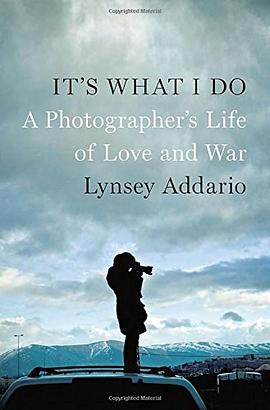
War photographer Lynsey Addario’s memoir It’s What I Do is the story of how the relentless pursuit of truth, in virtually every major theater of war in the twenty-first century, has shaped her life. What she does, with clarity, beauty, and candor, is to document, often in their most extreme moments, the complex lives of others. It’s her work, but it’s much more than that: it’s her singular calling.
Lynsey Addario was just finding her way as a young photographer when September 11 changed the world. One of the few photojournalists with experience in Afghanistan, she gets the call to return and cover the American invasion. She makes a decision she would often find herself making—not to stay home, not to lead a quiet or predictable life, but to set out across the world, face the chaos of crisis, and make a name for herself.
Addario finds a way to travel with a purpose. She photographs the Afghan people before and after the Taliban reign, the civilian casualties and misunderstood insurgents of the Iraq War, as well as the burned villages and countless dead in Darfur. She exposes a culture of violence against women in the Congo and tells the riveting story of her headline-making kidnapping by pro-Qaddafi forces in the Libyan civil war.
Addario takes bravery for granted but she is not fearless. She uses her fear and it creates empathy; it is that feeling, that empathy, that is essential to her work. We see this clearly on display as she interviews rape victims in the Congo, or photographs a fallen soldier with whom she had been embedded in Iraq, or documents the tragic lives of starving Somali children. Lynsey takes us there and we begin to understand how getting to the hard truth trumps fear.
As a woman photojournalist determined to be taken as seriously as her male peers, Addario fights her way into a boys’ club of a profession. Rather than choose between her personal life and her career, Addario learns to strike a necessary balance. In the man who will become her husband, she finds at last a real love to complement her work, not take away from it, and as a new mother, she gains an all the more intensely personal understanding of the fragility of life.
Watching uprisings unfold and people fight to the death for their freedom, Addario understands she is documenting not only news but also the fate of society. It’s What I Do is more than just a snapshot of life on the front lines; it is witness to the human cost of war.
Amazon.com Review
An Amazon Best Book of the Month for February 2015: “Why do you do this?” is the central question Lynsey Addario answers in her new memoir It’s What I Do—and she asks it not just for the reader, but it seems for herself. Addario is a MacArthur “Genius” grant recipient and was part of the team that won the 2009 Pulitzer Prize for International Reporting (covering the Taliban in Afghanistan with Dexter Filkins ) but her story often underscores her insecurities in her profession and personal life. Even with her numerous accolades, she worries about being forgotten, missing the breaking story and not being taken seriously as a woman. It’s a frank, and refreshingly, candid look into a successful professional photojournalist at the top of her game but it never romanticizes the risks that are necessary to bring us her images. Her story is inspiring, heartbreaking and an eye opening look at what it takes to reveal events from the other side of the world. –Amy Huff
Review
Kirkus (starred review):
“A remarkable journalistic achievement from a Pulitzer Prize and MacArthur Fellowship winner that crystalizes the last 10 years of global war and strife while candidly portraying the intimate life of a female photojournalist. Told with unflinching candor, the award-winning photographer brings an incredible sense of humanity to all the battlefields of her life. Especially affecting is the way in which Addario conveys the role of gender and how being a woman has impacted every aspect of her personal and professional lives. Whether dealing with ultrareligious zealots or overly demanding editors, being a woman with a camera has never been an easy task. A brutally real and unrelentingly raw memoir that is as inspiring as it is horrific.”
Publishers Weekly:
“A highly readable and thoroughly engaging memoir…. Addario’s memoir brilliantly succeeds not only as a personal and professional narrative but also as an illuminating homage to photojournalism’s role in documenting suffering and injustice, and its potential to influence public opinion and official policy.”
Booklist:
“Addario has written a page-turner of a memoir describing her war coverage and why and how she fell into—and stayed in—such a dangerous job. This ‘extraordinary profession’—though exhilarating and frightening, it ‘feels more like a commitment, a responsibility, a calling’—is what she does, and the many photographs scattered throughout this riveting book prove that she does it magnificently.”
Tim Weiner, author of Legacy of Ashes and Enemies:
“It’s What I Do is as brilliant as Addario’s pictures—and she’s the greatest photographer of our war-torn time. She’s been kidnapped, nearly killed, while capturing truth and beauty in the world’s worst places. She’s a miracle. So is this book.”
Dexter Filkins, author of The Forever War:
“Lynsey Addario’s book is like her life: big, beautiful, and utterly singular. With the whole world as her backdrop, Addario embarks on an extraordinary adventure whose overriding effect is to remind of us what unites us all.”
Jon Lee Anderson, staff writer for The New Yorker and author of The Fall of Baghdad:
“A gifted chronicler of her life and times, Lynsey Addario stands at the forefront of her generation of photojournalists, young men and women who have come of age during the brutal years of endless war since 9/11. A uniquely driven and courageous woman, Addario is also possessed of great quantities of humor and humanity. It’s What I Do is the riveting, unforgettable account of an extraordinary life lived at the very edge.”
John Prendergast, founding director of the Enough Project:
“A life as a war photographer has few parallels in terms of risk and reward, fear and courage, pain and promise. Lynsey Addario has seen, experienced, and photographed things that most of us cannot imagine. The brain and heart behind her extraordinary photographic eye pulls us inexorably closer to the center of each story she pursues, no matter what the cost or danger.”
作者简介
Lynsey Addario (born 1973) is an American photojournalist. Her work often focuses on conflicts and human rights issues, especially the role of women in traditional societies.
She graduated from Staples High School, in Westport, Connecticut, in 1991. She graduated from the University of Wisconsin, Madison, in 1995. She began photographing professionally in 1996 at at the Buenos Aires Herald in Argentina, and then began freelancing for the Associated Press, with Cuba as a focus.
In 2000, she photographed in Afghanistan under Taliban control. She has since covered conflicts in Afghanistan, Iraq, Darfur, the Congo, and Haiti. She has covered stories throughout the Middle East and Africa. She has visited Darfur or neighboring Chad at least once a month from August 2004.
She has photographed for The New York Times, The New York Times Magazine, Time, Newsweek, and National Geographic.
In Pakistan on May 9, 2009, Addario was involved in an automobile accident while returning to Islamabad from an assignment at a refugee camp. Her collar bone (clavicle) was broken, another journalist was injured, and the driver was killed.
Addario was one of four New York Times journalists who were missing in Libya from March 16–21, 2011. The New York Times reported on March 18, 2011 that Libya had agreed to free her and three colleagues: Anthony Shadid, Stephen Farrell and Tyler Hicks. The Libyan government released the four journalists on March 21, 2011. She reports that she was threatened with death and repeatedly groped during her captivity by the Libyan Army.
Addario told the press that "Physically we were blindfolded and bound. In the beginning, my hands and feet were bound very tightly behind our backs and my feet were tied with shoelaces. I was blindfolded most of the first three days, with the exception of the first six hours. I was punched in the face a few times and groped repeatedly." And "It was incredibly intense and violent. It was abusive throughout, both psychologically and physically. It was very chaotic and very aggressive. For me, there was a lot of groping right away. Sort of everyone who had to pick me up and carry me somewhere, they would reach around and grab my breasts and touch my butt--everyone who came near me.
In November 2011, The New York Times wrote a letter of complaint on behalf of Addario to the Israeli government, after allegations that Israeli soldiers at the Erez Crossing had strip-searched and mocked her and forced her to go through an X-ray scanner three times despite knowing that she was pregnant. Addario reported that she had "never, ever been treated with such blatant cruelty." The Israeli Defence ministry subsequently issued an apology to both Addario and The New York Times.
The extensive exhibition In Afghanistan at the Nobel Peace Center in Oslo, Norway has her photos of Afghan women juxtaposed with Tim Hetherington's photographs from American soldiers in the Korengal Valley.
Addario is married to Paul de Bendern, a journalist with Reuters. They married in July 2009. They have one son, Lukas (B. 2011).
She is the recipient of multiple awards, including the MacArthur Fellowship in 2009. Her work in Waziristan, Sept. 7, 2008, was part of work receiving the Pulitzer Prize in 2009 for International Reporting. She won the Getty Images Grant for Editorial photography in 2008 for her work in Darfur. She received the Infinity Award in 2002 by the International Center of Photography.
目录信息
读后感
《 这个世界不会给你第二次机会》这本书拿在手里的感觉和其他书籍的感觉很不一样,似乎沉甸甸的,给人一种厚实沉稳的感觉,就像这本书的名字一样让人沉重。封面一个女记者站在越野车上用她的相机在记录着发生的一切,乌云密布的天空,似乎也传递着阴霾忧郁的情绪,单从书名就会...
好久没有看到这么有思想和冲击力的文章了,读传记看到作者半生,每个人都是凡人,会为家庭,为事业难以抉择,世间安得两全法,不负如来不负卿,但是作者给我们看到了一个跌跌撞撞创出来的人生,不为现实所击败为梦想坚持自己,这过程中有汗水和泪水,但是会有鲜花在等你 我们不...
在我不曾对新闻、政治感兴趣的年岁里,一度以为这个世界在二战以后就已经进入彻底的和平,再没有战争,也没有困苦。 就算十余年前读过一本唐师曾的《重返巴格达》,我也无知的以为那不过是地方冲突,打个群架而已。直到911事件发生,加上后来越来越多的阅读与战争有关的书籍,...
用户评价
这本作品的结构安排简直是一场结构主义的噩梦,但又带着一种令人着迷的、近乎数学的美感。作者似乎完全抛弃了传统叙事的线性逻辑,故事的片段就像是打碎的彩色玻璃片,散落在不同的时间轴上,你必须自己动手,一片一片地将它们重新拼凑起来,才能看到一个完整的画面。有些段落只有三行,却像是一枚精确投掷的石子,激起巨大的涟漪;而另一些段落,则像是漫无边际的意识流,充满了各种感官细节的堆砌,像是作者在记录他捕捉到的每一个瞬间的微小震颤。我特别欣赏作者在处理视角转换时的技巧,他可以在同一个场景中,用旁观者的冷漠视角描述事件,紧接着,立刻切换到当事者极度主观的第一人称恐惧,这种无缝衔接带来的错位感,让人体验到一种近乎眩晕的阅读快感。对我而言,这本书与其说是在阅读一个既定的故事,不如说是在参与一场与作者共同构建世界的智力游戏。它要求读者高度参与,积极地去填补那些留白,去推测那些未曾言明的动机。这是一种非常挑剔的阅读体验,它奖励那些愿意投入精力和耐心的读者,但也无情地淘汰了那些期待被喂养的听众。
如果要我用一个词来概括这本书给我的最大感受,那就是“宏大”。它不满足于讲述一个人的故事,它试图描绘的是一个时代的精神侧影,甚至是某种宇宙秩序的冰山一角。书中对社会制度、意识形态冲突的剖析,其深度和广度令人叹为观止,感觉作者像是站在一个极高的瞭望塔上俯瞰着人类文明的起落沉浮。我尤其佩服他对历史细节的考据,那些关于某个小国会议的辩论细节,或者某个科学理论发展过程中的三次关键转折,都写得无比扎实,丝毫没有为了情节服务而草率带过。这种对“真实感”的执着追求,使得整本书的基调显得异常庄重和严肃。每次我试图将书中的某个事件简单归类为“虚构”时,作者总会用一段精准的历史参照来提醒我,艺术来源于生活,而这里的生活,是如此沉重而真实。这本书像是为那些对世界运行的底层逻辑充满好奇心的人准备的,它不贩卖廉价的娱乐,它提供的是一种更深刻的理解框架,尽管这个框架庞大到让人感到自身的渺小。
说实话,当我读到一半的时候,我真的差点想把它合上了,不是因为内容不好,而是因为那种情绪上的冲击实在太沉重了。这本书似乎有一种魔力,它能把你拉进那些最黑暗、最人性扭曲的瞬间。作者在描写主人公的内心挣扎时,那种细腻入微的笔触,简直像是在用手术刀解剖灵魂。比如,书中有一段描述主人公面对生死抉择时的内心独白,那段文字我足足读了半个小时,不是因为读不懂,而是因为每读一个词,那种冰冷的绝望感就会渗入骨髓。这本书里没有英雄主义的粉饰,一切都是血淋淋的现实,是对人性的深刻拷问。它没有提供任何廉价的慰藉或简单的答案,相反,它把那些最令人不安的问题赤裸裸地摆在你面前,逼着你去直视。读完某个关于背叛和救赎的章节后,我连续好几天晚上都睡不安稳,梦里全是书中那些灰蒙蒙的色调和模糊不清的面孔。这本书的力量不在于它讲了什么故事,而在于它在你心里种下了多少挥之不去的阴影。它不是一本“好读”的书,但它绝对是一本“值得记住”的书,尽管这种记住可能带着一丝疼痛。
我不得不承认,这本书的语言风格在我读过的所有作品中,都是独树一帜的。它既有古典主义的严谨和克制,又时不时地爆发出某种近乎现代主义的、破碎的、充满隐喻的意象。作者似乎精通所有文学流派的精髓,然后将它们巧妙地熔铸一炉。例如,在描述一个平淡无奇的日常场景时,他会突然用上几个极度华丽的、巴洛克式的排比句,瞬间拔高了场景的象征意义;而在描述一场史诗般的冲突时,他却会突然用最简洁、最口语化的词汇来收尾,造成一种强烈的反差效果。这种对节奏和语气的精准拿捏,使得阅读过程充满了出乎意料的惊喜。我常常停下来,只是为了重新品味某个动词或某个形容词的选择,它们似乎都经过了不下百次的斟酌。这本书对文字的运用已经达到了一种近乎炫技的程度,但有趣的是,这种炫技并没有让人觉得矫揉造作,反而服务于其复杂的主题。它要求读者不仅要理解“说了什么”,更要细致体会“是如何说的”,这无疑是对语言敏感度的一次严峻考验。
这本厚厚的精装书摆在桌上,光是封面那种低调的墨绿色就让人心头一紧,仿佛能嗅到里面陈旧纸张和皮革混合的味道。我花了整整一个周末才勉强啃完第一遍,坦白说,过程比我想象的要艰难得多。作者的叙事手法极其跳跃,经常在一个章节里毫无预警地从一战时期的某个偏远战壕,猛然切换到上世纪七十年代某个东欧地下酒吧的密谋场景。我得时不时地停下来,翻到书前面的时间线图表对照着看,生怕自己跟不上他那庞大的时间线和错综复杂的人物关系网。这本书给我的感觉,就像是走进了一座没有地图的巨大图书馆,每一条走廊都通往一个完全不同的历史角落,信息量大到让人喘不过气。尤其是在描述那些涉及复杂的国际政治角力和哲学思辨的部分,那些长达半页的句子,句子里塞满了晦涩的术语和典故,我不得不查阅大量的背景资料才能勉强理解作者想要表达的深层含义。这已经超出了“阅读”的范畴,更像是一场艰苦的学术研究。这本书的价值或许在于其百科全书式的广博,但对于一个只想放松一下的普通读者来说,它绝对算得上是一次智力上的“马拉松”。我甚至怀疑,作者是不是故意设置了这么多阅读障碍,以此来筛选出真正能沉下心来,有毅力去挖掘其深层内核的读者群体。
中译书名实在是太难看了,几次在公众场合阅读都觉得不太好意思。毕业收拾寝室翻出来还未拆封,已经忘记从哪里得到了,感激。新闻是一种自私的职业,但我相信它的意义。敬佩的。
大晚上的睡不着,把很久以前就开始看的这本书翻出来看完了。书中印象最深的一句话是,"I choose to live in peace and witness war--to experience the worst in people but to remember the beauty." 读这本书时,为作者前期的经历笑过,看到作者08年在阿富汗的经历忍不住的流泪过。我发自心底的敬佩着这些为了自己热爱的工作不顾艰险的人们。这本书深入浅出的展现了一个摄影记者的生活,对于我更是一个要坚定的找寻自己追求的提醒与对于冲突,战争,贫穷与疾病的深思。
如果我可以向对战争灾难类新闻摄影有兴趣的人推荐一本书,我会推荐这一本。 看的时候有很多次都差点泪流满面,这个女人实在是让人敬佩。有多少人愿意舍弃自己的生命去捍卫自己的新闻理想,有多少人愿意舍弃朝九晚五,和美家庭亲人朋友,只因为自己相信那些无法发声之人需要被听见,事实需要被更多的人见证,公众有了解实事的权利。这本书只能用 astonishing形容。。。。
It's not a job you do just for living. The work defines who you are. The work is your life.
中译书名实在是太难看了,几次在公众场合阅读都觉得不太好意思。毕业收拾寝室翻出来还未拆封,已经忘记从哪里得到了,感激。新闻是一种自私的职业,但我相信它的意义。敬佩的。