具体描述
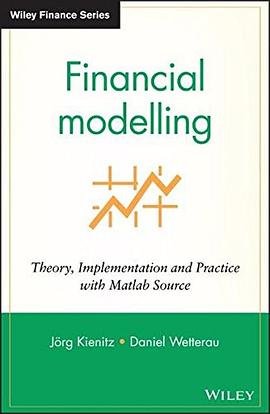
《金融中的数值方法和优化(英文)》旨在为读者介绍金融计算工具—基本数值分析和计算技巧,如期权定价、并突出了模拟和优化的重要性,用许多章讲述投资组合保险和风险估计问题。特别地,有几章用于讲述优化探索和如何将他们应用于投资组合的选择、估值的校准和期权定价模型。这些具体的例子让读者学习了解决问题的具体步骤,以及将这些步骤举一反三。同时,这些应用使得《金融中的数值方法和优化(英文)》的参考价值大大提高。
作者简介
目录信息
Acknowledgements
1.Introduction
1.1 About this book
1.2 Principles
1.3 on software
1.4 on approximations andaccuracy
1.5 Summary: the theme of the book
Part One Fundamentals
2. Numerical analysisin a nutshell
2.1 Computer arithmetic
Representation of real numbers
Machine precision
Example of limitations of floating point arithmetic
2.2 Measuringerrors
2.3 Approximating derivatives with finite differences
Approximating first-order derivatives
Approximating second-order derivatives
Partial derivatives
How to choose h
Truncation error for forward difference
2.4 Numerical instability and ill-conditioning
Example of a numerically unstable algorithm
Example of an ill-conditioned problem
2.5Condition number of a matrix
Comments and examples
2.6 A primer on algorithmic and computational complexity
2.6.1 Criteria for comparison
Order of complexity and classification
2.A Operation count for basiclinear algebra operations
3. Linear equations and Least Squares problems
Choice of method
3.1 Direct methods
3.1.1 Triangular systems
3.1.2 LU factorization
3.1.3 Cholesky factorization
3.1.4 QRdecomposition
3.1.5 Singular value decomposition
3.2 Iterative methods
3.2.1 Jacobi, Gauss-Seidel, and SOR
Successive overrelaxation
3.2.2 Convergence of niterative methods
3.2.3 General structure of algorithms for iterative methods
3.2.4 Block iterative methods
3.3 Sparse linear systems
3.3.1 Tridiagonal systems
3.3.2 Irregular sparse matrices
3.3.3 Structural properties of sparse matrices
3.4 The Least Squares problem
3.4.1 Method of normal equations
3.4.2 Least Squares via QR factorization
3.4.3 Least Squares via SVD decomposition
3.4.4 Final remarks
The backslash operator in Matlab
4. Finite difference methods
4.1 An example of a numerical solution
A first numerical approximation
A second numerical approximation
4.2 Classification of differential equations
4.3 The Black-Scholes equation
4.3.1 Explicit, implicit, and θ-methods
4.3.2 Initial and boundary conditions and definition of the grid
4.3.3 Implementation of the θ-method with Matlab
4.3.4 Stability
4.3.5 Coordinate transformation of space variables
4.4 American options
4.A A note on Matlab's function spdiags
5.Binomialtrees
5.1 Motivation
Matching moments
5.2 Growing the tree
5.2.1 Implementing a tree
5.2.2 Vectorization
5.2.3 Binomial expansion
5.3 Early exerase
5.4 Dividends
5.5 The Greeks
Greeks from the tree
Part Two Simulation
6. Generatmg random numbers
6.1 Monte Carlo methods and sampling
6.1.1 How it allbegan
6.1.2 Financialapplications
6.2 Uniform random number generators
6.2.1 Congruential generators
6.2.2 Mersenne Twister
6.3 Nonuniform distributions
6.3.1 The inversion method
6.3.2 Acceptance-rejection method
6.4 Specialized methods for selected distributions
6.4.1 Normal distribution
6.4.2 Higher order moments and the Cornish-Fisher expansion
6.4.3 Further distributions
6.5 Sampling from a discrete set
6.5.1 Discrete uniform selection
6.5.2 Roulette wheel selection
6.5.3 Random permutations and shuffling
6.6 Sampling errors-and how to reduce them
6.6.1 The basic problem
6.6.2 Quasi-Monte Carlo
6.6.3 Stratified sampling
6.6.4 Variance reduction
6.7Drawing from empirical distributions
6.7.1 Data randomization
6.7.2 Bootstrap
6.8 Controlled experiments and experimental design
6.8.1 Replicability and ceteris paribus analysis
6.8.2 Available random number generators in Matlab
6.8.3 Uniform random numbers from Matlab's rand function
6.8.4 Gaussian random numbers from Matlab's randn function
6.8.5 Remedies
7.Modelingdependenaes
7.1 Transformation methods
7.1.1 Linear correlation
7.1.2 Rank correlation
7.2 Markov chains
7.2.1 Concepts
7.2.2 The Metropolis algorithm
7.3 Copula models
7.3.1 Concepts
7.3.2 Simulation using copulas
8. A gentle introduction to financial simulation
8.1 Setting the stage
8.2 Single-period simulations
8.2.1 Terminal asset prices
8.2.2 l-over-N portfolios
8.2.3 European options
8.2.4 VaR of a covered put portfolio
8.3 Simple price processes
8.4 Processes with memoryin thelevels of returns
8.4.1 Efficient versus adaptive markets
8.4.2 Moving averages
8.4.3 Autoregressive models
8.4.4 Autoregressive moving average (ARMA) models
8.4.5 Simulating ARMA models
8.4.6 Models withlong-term memory
8.5 Time-varying volatility
8.5.1 Theconcepts
8.5.2 Autocorrelated time-varying volatility
8.5.3 Simulating GARCH processes
8.5.4 Selected further autoregressive volatility models
8.6 Adaptive expectations and patternsin price processes
8.6.1 Price-earningsmodels
8.6.2 Models with learning
8.7Historical simulation
8.7.1 Backtesting
8.7.2 Bootstrap
8.8 Agent-based models and complexity
9. Financial simulation at work: some case studies
9.1Constant proportion portfolio insurance (CPPI)
9.1.1 Basicconcepts
9.1.2 Bootstrap
9.2 VaR estimation with Extreme Value Theory
9.2.1 Basicconcepts
9.2.2 Scaling the data
9.2.3 Using Extreme Value Theory
9.3 Option pricing
9.3.1 Modeling prices
9.3.2 Pricingmodels
9.3.3 Greeks
9.3.4 Quasi-Monte Carlo
Part Three Optimization
· · · · · · (收起)
读后感
用户评价
这本书给我最大的震撼是它对“优化”一词的深度诠释。金融世界本质上就是在不确定性下做最优决策,而这本书恰恰提供了最强大的数学武器来实现这一点。它涵盖的优化技术种类之多,令人瞠目结舌——从基础的线性规划到更复杂的凸优化、二次规划,甚至还触及了非光滑优化在交易策略制定中的应用。我尤其欣赏作者在介绍对冲策略时,如何将现代组合优化理论(如均值-方差模型)与实际的约束条件相结合。这种将理论模型与现实操作的无缝衔接,使得书中的知识具备了极强的可操作性。我开始尝试用书中学到的约束优化方法来重新审视我手头的一个固定收益投资组合,结果发现比我原先依赖的启发式方法要稳健和科学得多。这本书真正教会我的,是如何用数学的严谨性来对抗金融市场中的不确定性。
对于我这种需要经常处理大规模金融数据集并进行回测分析的业余爱好者来说,这本书提供了极其宝贵的计算资源和思路。虽然书名听起来宏大,但它在“数值方法”部分的讲解细致入微,尤其是在处理离散化误差和计算稳定性时,给出了很多实用的建议。作者没有回避计算中的“脏活累活”,而是坦诚地讨论了在有限精度和有限时间下,如何权衡模型的准确性和计算的可行性。我过去在处理一些复杂的路径依赖衍生品定价时,总是陷入计算速度慢的泥潭,但书中关于加速蒙特卡洛模拟(如利用Quasi-Monte Carlo序列)的章节,简直是为我打开了一扇新的大门。读完后,我立即动手优化了几个我的模拟程序,性能提升非常显著。这本书不仅仅是理论指导,更是实战编程的秘籍,是理论与实践完美结合的典范之作。
说实话,刚翻开这本书时,我还有点担心它会过于学术化,读起来会枯燥乏味,毕竟涉及如此多的“数值方法”和“优化”。但是,出乎意料的是,作者的叙述方式非常具有引导性。他总能在一个复杂的数学概念引入之前,先用一个直观的金融场景来铺垫,让你知道我们为什么要研究这个工具。比如,在讲到如何用迭代法求解非线性方程时,作者巧妙地将其与实际利率的计算联系起来,顿时就让原本抽象的数学概念变得“活”了起来。这本书的排版和图表也做得极好,那些复杂的收敛曲线和误差分析图,清晰明了,极大地减轻了阅读负担。我感觉自己不是在看一本教材,而是在跟随一位经验丰富的导师,一步步地拆解和重构金融世界的运作机制。对于想从底层逻辑理解金融产品定价的人来说,这本书的价值无可估量。
天哪,我刚刚读完这本关于金融中数学和算法的巨著,真是感觉自己的知识体系被彻底颠覆了!这本书简直就是一本通往量化金融世界的“金钥匙”。它不仅仅是罗列公式和算法,更重要的是,它深入浅出地剖析了金融市场背后那些复杂而精妙的数学逻辑。我尤其欣赏作者在处理随机过程和偏微分方程(PDEs)时的那种清晰和条理,即便是像我这样背景不是那么扎实的读者,也能在阅读过程中逐渐建立起对复杂模型,比如布莱克-斯科尔斯模型的深刻理解。书中的例子非常贴合实际,从期权定价到风险管理,每一个章节都像是在带领我们进行一次实战演练。读完后,我感觉自己看市场的眼神都变得不一样了,那些过去模糊不清的波动和价格变动,现在似乎都有了可以量化的解释。对于任何想在金融领域深耕,尤其是从事量化分析或高频交易的人来说,这本书绝对是案头的必备参考书,它提供的工具箱比我预想的要丰富得多。
这本书简直是为那些对金融建模有着强烈求知欲的工程师和数学家量身定做的百科全书。它的深度和广度都令人咋舌,从基础的数值积分方法到高阶的蒙特卡洛模拟和有限元方法,作者几乎没有留下任何理论上的空白。我特别欣赏作者对于算法效率和收敛性的讨论,这在实际的金融计算中至关重要。很多教科书只停留在理论层面,但这本书的每一个章节后面都隐含着对“如何高效运行”的考量。书中关于高维数据处理和机器学习在金融预测中应用的探讨,也展现了作者紧跟时代前沿的视野。我花了大量时间去消化那些关于奇异期权定价的章节,它们提供的解析解和数值逼近的对比分析,让我对不同方法的优劣有了极其直观的认识。这不仅仅是一本书,更像是一个严谨的学术研讨会记录,充满了对细节的极致打磨。