
具体描述
Review
"It is veru useful, and it is very different from other student books. I think it is clearly written..." Organische- Chemie.
"a magnificent resource", Angewandte Chemie, International Edition, v. 40 no. 12, June 2001
`"It is a very modern book showing nicely the interaction between organic chemistry and daily life. It has an unusaul and exciting format".' Frank-Gerrit Klarner, Prof. Dr., Universitat Essen
`"The book gives a comprehensive overview of undergraduate-level organic chemistry and is suitable for all 3 years of a BSc degree. The writing and illustrations are very clear and easy".' Dr J G Knight, Lecturer, Newcastle University
`"The book is brilliant - we have been waiting for up to 25 years for a decent British text".' John Mann, Professor of Biol. Chemistry, Queens University Belfast
`"This is a book we have all been waiting for! It is based on sound mechanistic reasoning and contains thousands of useful examples for teaching. Its style is approachable and covers both fundamental and more advanced material".' Adam Nelson, Lecturer, University of Leeds
Product Description
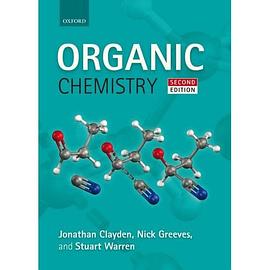
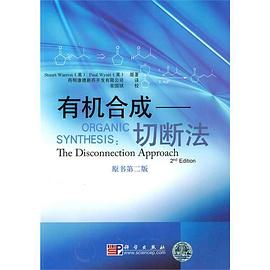
A new style of textbook, aimed principally at the European (and British in particular) student. It is needed because almost all current organic chemistry texts are written to a fixed American pattern. This text is different from these in a number of important ways: The approach is based on explanation rather than fact. The functional group approach (alkane, alkene, alkyne) has served American State College readers well but increasingly students and instructors are attracted more to an approach based on mechanism and reaction type. This approach aims at understanding rather than factual knowledge and, though slower at the start, eventually gives the student power to understand compounds and reactions never previously encountered. This is a big advantage in a science already too large for individuals to learn and which is annually expanding at an ever greater rate. The basics of the subject are explained carefully and thoroughly. How to draw molecules realistically and how to draw mechanisms to reveal the fundamental chemistry are both emphasised. Important points are revisited when they become relevant in later chapters. Examples are very important too. New examples are given each time a concept resurfaces, and examples from everyday life and medicinal chemistry are frequently used. The authors want the readers to be excited by the universality of organic chemistry rather than be overwhelmed by facts. The design of the book has features to help comprehension. Structures are drawn in red, and black is used on them for emphasis. Other colours are used flexibly to draw attention to atoms, molecules, orbitals, arrows or whatever the authors want to emphasise rather than being used in a rigid systematic way. There are four types of "box" used to separate material from the main text, ranging from extra important summaries to diversions which can be omitted at first reading. The early chemistry chapters feature carbonyl group reactions because addition to carbonyl groups is probably the easiest reaction to understand. Thereafter the chemistry develops in a logical sequence but chapters on spectroscopy, stereochemistry etc are interspersed among those dealing with chemical reactions. From time to time review chapters summarise what has been described in a particular area. A personal and honest approach is adopted. The authors write clearly and directly to the reader, sharing their enthusiasms, understandings and doubts. If they believe an explanation is imperfect or controversial, they say so. They show that organic chemistry is developing rapidly, and that new ideas continually emerge to replace the old. The authors know from experience what conceptual difficulties often overwhelm students at an early stage in their studies and they devote more space to these points, give more examples, and revisit them when they can be applied. The aim is to help the readers master these points for themselves rather than just learn them off by heart.
作者简介
目录信息
读后感
用户评价
这本书的装帧设计简直是一场视觉的盛宴,那种沉甸甸的纸质感,加上封面那种略带磨砂的触感,让人爱不释手。我拿到它的时候,第一个感觉就是“专业”。油墨的颜色非常饱满,黑色的部分深邃得仿佛能吸收光线,而那些复杂的分子结构图,线条竟然清晰到每一个键角都能被精准地捕捉。特别要提的是,书中的插图和图表,简直可以用艺术品来形容。它们不仅仅是信息的载体,更是理解抽象概念的桥梁。色彩的搭配极其考究,高亮和阴影的处理恰到好处,使得三维的立体结构跃然纸上,即使是初次接触有机化学的人,也能通过这些精美的图像,对官能团的相对位置和空间排布有一个直观的认识。而且,纸张的抗反光性能做得非常好,无论是在明亮的台灯下还是在午后的阳光下阅读,都不会有刺眼的眩光,这对于长时间学习来说,极大地减轻了眼睛的疲劳。这本书的排版也十分人性化,字体大小适中,段落间的留白处理得当,使得密集的公式和文字信息得到了很好的呼吸空间,阅读起来丝毫不会感到拥挤和压迫。这种对细节的极致追求,充分体现了出版方对知识传播的尊重,让人在捧读的过程中,油然而生一种对知识的敬畏感。我甚至愿意把它放在书架上作为一个装饰品,它散发出的那种厚重而内敛的学术气息,是对所有学习者最好的精神鼓励。
这本书带给我的最大感受,是一种对“化学家思维”的培养,而不仅仅是知识的灌输。很多教材在讲解反应时,重点在于“发生了什么”,而这本书的侧重点明显在于“为什么会这样发生,以及如何控制它”。作者在阐述每一个反应时,都会投入大量篇幅去探讨电子云的密度分布、反应位点的亲电性或亲核性、以及立体位阻的影响。这种对微观世界驱动力的深入挖掘,让人从一个被动的接受者,转变为一个主动的预测者。当我读到关于合成策略的部分时,我发现作者提供了一种“逆合成分析”的思维导图,教我们如何从目标分子出发,逐步拆解到可获得的简单原料,这不仅仅是一种解题技巧,更是一种结构化解决问题的能力训练。通过这本书,我学会了不再仅仅满足于记住“A加B等于C”,而是开始思考“在什么条件下,A和B才最可能高效地生成C,而避免产生D和E”。这种深层次的思辨训练,对于提升我对化学反应的直觉和预测能力,有着不可估量的价值,它真正地将知识转化成了工具。
我不得不提一下这本书的术语和索引系统,这是衡量一本工具书实用价值的关键指标。这本书在术语的规范性上做到了近乎苛刻的统一。从第一个章节开始,所有的化学名称、缩写、以及各种专业符号的定义都被严格界定,并且在首次出现时都有清晰的标注,这对于我们这些需要频繁查阅资料的读者来说,极大地减少了信息歧义带来的困扰。当我需要快速定位某个特定反应或中间体时,它的索引部分表现出了惊人的高效。索引条目做得非常细致,不仅包括了核心术语,连一些不那么常用但又在某些章节中被提及的次要概念也囊括其中。更让我惊喜的是,它增加了一个“结构式索引”,如果你通过一个特定的分子结构(比如某个环状化合物)来查找相关信息,这个索引也能帮你快速定位到所有讨论过该结构的章节。这种多维度、多层次的检索机制,让这本书在作为案头参考书时,其效率得到了质的飞跃,真正做到了“想要什么,立刻就能找到”的便捷性。
这本书的配例和习题设置,简直是为“实战演练”量身定做的。我通常会对教材后面的练习题感到头疼,因为很多题目要么过于简单,要么难度系数瞬间跳跃到超出当前学习范围的程度。但这本书的练习题设计得非常巧妙,它们紧密围绕着每一节的核心概念展开,难度梯度分布得极其科学。最让我欣赏的一点是,它不仅仅提供了大量的计算题和结构推导题,还穿插了大量的“情景分析题”。这些题目往往会模拟真实的研究场景,要求读者不仅要写出反应产物,还要解释为什么选择这条反应路径,或者分析在特定溶剂和温度条件下,产物分布会如何变化。这种要求深入理解而非死记硬背的考察方式,真正考验了我们对化学原理的掌握深度。更重要的是,书后附带的参考答案和解析,详尽得令人感动。解析部分不仅仅给出了最终结果,更是像一位耐心的导师,一步步带领你重走解题的思路,甚至会指出解题过程中常见的思维陷阱。这使得即便是自己独立解题遇到障碍时,也能迅速找到突破口,避免了陷入无助的自我怀疑中。
我用了大概三周的时间,尝试用这本书来系统梳理我之前学得零散的有机化学知识点,说实话,它的逻辑架构简直是教科书级别的典范。作者在构建知识体系时,表现出了极高的洞察力,他没有简单地堆砌反应和机理,而是非常巧妙地将它们编织成一个连贯的故事线。比如,当引入新的反应类型时,它总是能回溯到前一个章节已经介绍的电子效应或中间体,形成一种层层递进、相互印证的结构。这种“旧知串新知”的处理方式,让我在回顾旧知识点时,不再感到枯燥的重复,而是发现它们在更广阔的体系中扮演的新角色。尤其是在处理立体化学和反应机理的部分,作者的处理方式极其细腻,他会用一系列渐进的步骤图来分解复杂的过渡态,并辅以清晰的文字说明,解释每一步电子的流动方向和能量变化。很多我过去一直困惑的“为什么”和“如何发生”的问题,在读完相关章节后,都豁然开朗了。这本书的难点处理非常平滑,它不会一上来就抛出让你望而却步的复杂公式,而是先用最直白的语言勾勒出概念的轮廓,然后再逐步引入数学描述或更深层次的量子化学解释,这种由浅入深的教学梯度,让学习曲线保持在一个非常舒适的斜率上,极大地增强了读者的学习信心。
best organic chemistry
很经典的教科书。。。
有部分纰漏和错误
国外的书确实在一些机理的解释会更加详细,感谢自己专业课都跟着外国书走的
有部分纰漏和错误