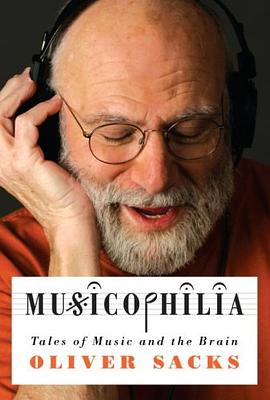

具体描述
Music can move us to the heights or depths of emotion. It can persuade us to buy something, or remind us of our first date. It can lift us out of depression when nothing else can. It can get us dancing to its beat. But the power of music goes much, much further. Indeed, music occupies more areas of our brain than language does—humans are a musical species.
Oliver Sacks’s compassionate, compelling tales of people struggling to adapt to different neurological conditions have fundamentally changed the way we think of our own brains, and of the human experience. In Musicophilia, he examines the powers of music through the individual experiences of patients, musicians, and everyday people—from a man who is struck by lightning and suddenly inspired to become a pianist at the age of forty-two, to an entire group of children with Williams syndrome, who are hypermusical from birth; from people with “amusia,” to whom a symphony sounds like the clattering of pots and pans, to a man whose memory spans only seven seconds—for everything but music.
Our exquisite sensitivity to music can sometimes go wrong: Sacks explores how catchy tunes can subject us to hours of mental replay, and how a surprising number of people acquire nonstop musical hallucinations that assault them night and day. Yet far more frequently, music goes right: Sacks describes how music can animate people with Parkinson’s disease who cannot otherwise move, give words to stroke patients who cannot otherwise speak, and calm and organize people whose memories are ravaged by Alzheimer’s or amnesia.
Music is irresistible, haunting, and unforgettable, and in Musicophilia, Oliver Sacks tells us why.
作者简介
Oliver Wolf Sacks, CBE, was a British neurologist residing in the United States, who has written popular books about his patients, the most famous of which is Awakenings, which was adapted into a film of the same name starring Robin Williams and Robert De Niro.
Sacks was the youngest of four children born to a prosperous North London Jewish couple: Sam, a physician, and Elsie, a surgeon. When he was six years old, he and his brother were evacuated from London to escape The Blitz, retreating to a boarding school in the Midlands, where he remained until 1943. During his youth, he was a keen amateur chemist, as recalled in his memoir Uncle Tungsten. He also learned to share his parents' enthusiasm for medicine and entered The Queen's College, Oxford University in 1951, from which he received a Bachelor of Arts (BA) in physiology and biology in 1954. At the same institution, he went on to earn in 1958, a Master of Arts (MA) and an MB ChB in chemistry, thereby qualifying to practice medicine.
After converting his British qualifications to American recognition (i.e., an MD as opposed to MB ChB), Sacks moved to New York, where he has lived since 1965, and taken twice weekly therapy sessions since 1966.
Sacks began consulting at chronic care facility Beth Abraham Hospital (now Beth Abraham Health Service) in 1966. At Beth Abraham, Sacks worked with a group of survivors of the 1920s sleeping sickness, encephalitis lethargica, who had been unable to move on their own for decades. These patients and his treatment of them were the basis of Sacks' book Awakenings.
His work at Beth Abraham helped provide the foundation on which the Institute for Music and Neurologic Function (IMNF), where Sacks is currently an honorary medical advisor, is built. In 2000, IMNF honored Sacks, its founder, with its first Music Has Power Award. The IMNF again bestowed a Music Has Power Award on Sacks in 2006 to commemorate "his 40 years at Beth Abraham and honor his outstanding contributions in support of music therapy and the effect of music on the human brain and mind".
Sacks was formerly employed as a clinical professor of neurology at the Albert Einstein College of Medicine and at the New York University School of Medicine, serving the latter school for 42 years. On 1 July 2007, Columbia University College of Physicians and Surgeons appointed Sacks to a position as professor of clinical neurology and clinical psychiatry, at the same time opening to him a new position as "artist", which the university hoped will help interconnect disciplines such as medicine, law, and economics. Sacks was a consultant neurologist to the Little Sisters of the Poor, and maintained a practice in New York City.
Since 1996, Sacks was a member of The American Academy of Arts and Letters (Literature). In 1999, Sacks became a Fellow of the New York Academy of Sciences. Also in 1999, he became an Honorary Fellow at The Queen's College, Oxford. In 2002, he became Fellow of the American Academy of Arts and Sciences (Class IV—Humanities and Arts, Section 4—Literature).[38] and he was awarded the 2001 Lewis Thomas Prize by Rockefeller University. Sacks was awarded honorary doctorates from the College of Staten Island (1991), Tufts University (1991), New York Medical College (1991), Georgetown University (1992), Medical College of Pennsylvania (1992), Bard College (1992), Queen's University (Ontario) (2001), Gallaudet University (2005), University of Oxford (2005), Pontificia Universidad Católica del Perú (2006). He was appointed Commander of the Order of the British Empire (CBE) in the 2008 Birthday Honours. Asteroid 84928 Oliversacks, discovered in 2003 and 2 miles (3.2 km) in diameter, has been named in his honor.
目录信息
读后感
A friend highly recommended this book so I nevertheless took a look. After reading the preface, afterward, and a few chapters, I was convinced to abandon it. The book seemed to me a mere collection of anecdotes with little scientific researches and p...
这也是萨克斯医生的著作,是他的关于神经的科普书里我最喜欢的,也许书名也可以叫《音乐、语言与大脑》。 延续作者一贯的风格,还是有很多生动的案例,很多深入的思考,还有关照个体的悲悯之心,尊重未知的敬畏之心,但跟其他的散漫悠闲的病例集不同,这本讨论的问题更集中,也...
这也是萨克斯医生的著作,是他的关于神经的科普书里我最喜欢的,也许书名也可以叫《音乐、语言与大脑》。 延续作者一贯的风格,还是有很多生动的案例,很多深入的思考,还有关照个体的悲悯之心,尊重未知的敬畏之心,但跟其他的散漫悠闲的病例集不同,这本讨论的问题更集中,也...
正如德博拉所述,当时他们不知道我那篇文章就像一面镜子,他们凝视的其实就是自己的未来。——书内摘 (本书的印象) 奥利弗∙萨克斯的书这些年也陆陆续续读了几本了,包括之前的《错把妻子当帽子》和最近的《钨舅舅》。这几本书的主题不尽相同。后者是一部基于作者自身经...
例举了大量的案例来分析音乐和大脑的关系。比如受伤后 突然对音乐感兴趣, 音乐幻听,乐感和其他感官的互通等。绝对音高指不借助和其他音对比 直接知道这个音是什么。那为什么大部分人没有呢 就如同你不能分辨颜色 需要看到红色 才知道之前看到是绿色。这不合理啊。很多有趣的...
用户评价
《Musicophilia》这本书,在我阅读过程中,始终给我一种“循循善诱”的感觉。作者就像一位睿智的长者,不急不缓地引导我,去探索音乐这个宏大而又细腻的世界。他并没有强行灌输任何观点,而是通过一个个引人入胜的故事,一个个发人深省的案例,让我自己去发现,去体会,去领悟。我记得书中有一个章节,讲述了音乐如何帮助那些失语者恢复沟通的能力,这让我感到无比的震撼。我想象着,在那个无声的世界里,是音乐,成为了连接他们与外部世界的桥梁,是旋律,唤醒了他们被遗忘的表达能力。这种力量,让我觉得不可思议,也让我对音乐的潜力有了全新的认识。作者的语言非常富有表现力,他能够用文字描绘出声音的色彩,旋律的质感,甚至情绪的起伏。我仿佛能够听见书中描述的每一段音乐,感受到其中的喜怒哀乐。他对于音乐与人类情感之间微妙联系的捕捉,精准而深刻。这本书让我不再仅仅是“听”音乐,而是开始“感受”音乐,开始“理解”音乐,甚至开始“思考”音乐。我开始意识到,音乐不仅仅是耳朵里的声音,更是心灵深处的触动。它能够唤醒我们沉睡的情感,能够安抚我们躁动的心灵,能够引领我们走向更广阔的天地。
第一次翻开《Musicophilia》,我其实并没有抱太大的期望,毕竟音乐这个领域,我虽然热爱,但总觉得那是种很玄妙的存在,用文字去解构它,总觉得有些冒险。然而,这本书的开头就牢牢抓住了我。作者以一种近乎诗意的笔触,描绘了他对音乐的最初记忆,那些模糊却充满情感的片段,瞬间将我带回了自己的童年。我仿佛看到了自己依偎在父母身边,听着收音机里飘出的旋律,那种纯粹的快乐,那种无所顾忌的陶醉,至今仍然清晰地烙印在我的脑海里。这本书并没有一开始就抛出晦涩的理论,而是从最个人、最本真的情感体验出发,让我觉得,啊,这不仅仅是一本书,更像是作者在与我进行一场心灵的对话,他在分享他的“音乐瘾”,而我,也仿佛在他的文字中找到了自己的影子,一种深埋心底的共鸣。他对于声音的捕捉,对于旋律的感知,那些细微之处的描绘,都显得格外生动。比如,他描述某个特定音符带来的身体反应,那种颤栗、那种酥麻,我读的时候,竟然也能在自己身上找到类似的感受。这种感觉非常奇妙,就像作者在用文字搭建一座桥梁,连接了他与我,连接了理性与感性,连接了科学与艺术。我开始期待,接下来他会如何继续引导我,在这片名为“Musicophilia”的奇妙大陆上,探索更多未知。这本书的语言非常有画面感,我甚至能在脑海中构建出他所描述的场景,那些关于音乐在生活中的角色,关于它如何渗透进我们日常的点点滴滴,都让我感到无比的亲切和熟悉。我意识到,音乐并非仅仅是声音的组合,它承载着我们太多的情感、记忆和体验,而这本书,似乎正致力于将这些抽象的东西,具象化,让我们可以更清晰地看见,更深刻地感受到。
我必须说,《Musicophilia》这本书,是近期读到的一本让我感到“耳目一新”的作品。它的主题虽然看似聚焦于“音乐癖”,但实际上,它探讨的范围远不止于此,而是将音乐置于人类存在的核心位置,去审视它与我们感知、情感、记忆、甚至意识之间的复杂关系。作者以一种非常独特的方式,将科学研究的严谨性,与个人经历的真挚性巧妙地融合在一起。他并没有回避那些令人感到困惑甚至不安的现象,比如音乐对大脑的成瘾性,或者某些人对音乐的异常敏感。相反,他以一种开放的态度,去呈现这些现象,并试图从中寻找可能的解释。我尤其被书中关于音乐如何影响我们的空间感知能力的章节所吸引。我曾有过在听着某一首音乐时,仿佛整个空间都随之改变的体验,那种感觉非常奇妙,仿佛声音成为了塑造我们物理环境的另一种力量。作者为我提供了关于这种体验的科学依据,让我不再觉得那仅仅是一种主观的感受,而是有着其内在的逻辑和机制。这本书让我意识到,音乐并非仅仅是一种艺术形式,它更是我们认识世界、理解自身的一种重要方式。它能够帮助我们构建属于自己的内在世界,也能够帮助我们与他人建立更深的联系。
《Musicophilia》这本书,以一种近乎百科全书式的深度,为我打开了音乐与人类大脑之间奇妙的联系。作者并没有选择一条简单的道路,去描绘那些显而易见的音乐之美,而是深入到那些更为复杂,甚至有些令人费解的领域,去探究音乐究竟是如何在我们的大脑中激起如此强烈的反应。我特别欣赏他对于音乐与记忆之间关系的论述。他不仅仅是简单地提及“音乐能够勾起回忆”,而是通过详细的案例,去剖析音乐是如何与我们的长时记忆系统交织在一起,又是如何在特定情境下,能够准确地“解锁”那些尘封的往事。这让我开始反思,为什么某些童年歌曲能够轻易地唤起我对童年时光的无限怀念,为什么某些旋律至今仍然能够让我感受到初恋时的悸动。作者的文字充满了智慧和洞察力,他能够将那些晦涩的科学概念,转化为通俗易懂的语言,让普通读者也能从中受益。我感觉自己仿佛经历了一次大脑的“体检”,通过这本书,我更加清晰地认识到,我的大脑是如何处理音乐的,又是如何被音乐所影响的。这种认识,让我对音乐有了更深的敬畏,也让我更加珍惜与音乐相处的每一刻。
《Musicophilia》这本书,与其说是在讲述“音乐癖”,不如说是在探索“音乐与人”之间一种近乎神秘的羁绊。我之所以这么说,是因为作者在文字中流露出的那种对人类情感和体验的深刻关怀,远远超出了单纯的科学分析。他仿佛一位经验丰富的心理学家,能够精准地捕捉到音乐在个体生命中所扮演的独特角色,那些在人生低谷时给予慰藉的旋律,那些在喜悦时刻放大幸福的音符,那些在回忆中定格岁月的歌曲,都仿佛被作者一一拾起,呈现在读者面前。我读到书中关于音乐如何影响记忆的章节时,深有感触。我清晰地记得,很多年前的一段感情,虽然人已经走远,但每当我听到一首特定的歌曲,那种熟悉的感觉便会瞬间涌上心头,甚至能够回忆起当时的一景一物,一颦一笑。作者用他富有洞察力的文字,解释了这种现象背后的原理,但更重要的是,他让我再次体会到,音乐是多么强大的情感载体。它能够超越时间和空间的限制,将我们带回到那些珍贵的时刻,让我们重新体验那些曾经的情感。这种体验是如此真实,以至于我甚至会因为书中的某些描写而眼眶湿润。这本书让我意识到,我们每个人都可能是“Musicophilia”的患者,只是我们患的“病”不同,有些人对古典乐情有独钟,有些人对摇滚乐爱得痴狂,有些人则沉浸在电子音乐的奇幻世界里。但无论如何,我们都无法否认,音乐已经深深地融入了我们的生命,成为我们不可或缺的一部分。它让我们在孤独时找到陪伴,在迷茫时找到方向,在痛苦时找到释放,在快乐时找到共鸣。
在阅读《Musicophilia》的过程中,我发现作者拥有一种近乎医生的敏锐洞察力,同时又兼具艺术家般的细腻笔触。他并非仅仅满足于对音乐现象的表面观察,而是深入到其背后更深层次的机制,去探究音乐对人类大脑的影响,以及这种影响如何体现在我们生活的方方面面。这本书让我开始重新审视自己与音乐的关系,我曾以为我对音乐的喜爱只是一种单纯的情感偏好,但读了这本书,我才意识到,这种喜爱背后,可能隐藏着更复杂的神经生理学基础,以及进化上的原因。作者以大量的案例和研究数据支撑他的论点,但他处理这些信息的方式却丝毫不显得枯燥乏味。他擅长将科学的严谨性与故事的感染力巧妙地结合起来,通过讲述一个个引人入胜的个人经历,让读者在不知不觉中,被带入了对音乐更深层次的理解。我特别喜欢他对于一些罕见音乐相关疾病的描述,比如失音乐症(amusia),或者那些拥有超凡音乐天赋的人,他们的大脑究竟是怎样运作的?这些故事让我感到震惊,也让我对人类大脑的复杂性和可塑性有了更深的认识。这本书让我意识到,音乐不仅仅是一种娱乐方式,它可能是一种深刻的连接,连接着我们的大脑、我们的情感、我们的记忆,甚至是我们作为人类的本质。它也让我开始思考,为什么某些旋律能够轻易触动我们最深处的情感,为什么有些音乐能够让我们产生强烈的共鸣,甚至能够改变我们的情绪和行为。这本书的深度让我感到震撼,它挑战了我原有的认知,让我以一种全新的视角去观察和体验音乐,这种体验是前所未有的。
我向来认为,真正优秀的书籍,应该是能够引发读者自我反思的,而《Musicophilia》无疑做到了这一点。作者并没有试图用一套固定的模式去定义“音乐癖”,而是通过大量的个体案例,展现了音乐在不同人身上所激发的各种奇妙反应。我尤其被书中关于音乐对儿童发展影响的章节所吸引。我曾听说过一些关于音乐能够“开发智力”的说法,但这本书为我提供了更科学、更深入的解释。它不仅仅是谈论音乐对认知能力的提升,更重要的是,它描绘了音乐如何在情感、社交以及创造力等方面,为儿童的成长注入活力。我开始思考,在我的成长过程中,音乐扮演了怎样的角色?它是否也以某种方式塑造了我?这本书让我意识到,音乐并非只是一种被动的接受,它是一种主动的互动,是一种全身心的投入。我发现,当我沉浸在一段音乐中时,我的大脑仿佛被激活了,思维变得更加活跃,情感也变得更加丰富。作者的笔触非常细腻,他能够捕捉到那些极其微小的身体反应,比如在听到某个特定的节奏时,身体会不由自主地跟着律动,或者在听到某个悠扬的旋律时,内心会产生一种难以言喻的平静。这些细节的描绘,让我觉得这本书是如此的真实,如此的贴近生活。它让我看到了音乐的“力量”,那种能够穿透心灵,触及灵魂的力量。我开始更加珍惜与音乐相处的时光,也更加愿意去探索不同类型的音乐,去发现那些能够触动我的旋律。
我一直觉得,好的书籍应该能够拓宽我们的视野,让我们以全新的角度去看待熟悉的事物,而《Musicophilia》恰恰做到了这一点。在读这本书之前,我对音乐的理解,更多地停留在“听”的层面,一种感官的愉悦。但这本书,则带领我进入了一个更深层次的领域,去探究音乐究竟是如何作用于我们的大脑,又是如何影响我们的情感和行为。作者以一种极具说服力的方式,将大量的科学研究成果,以一种通俗易懂的方式呈现出来。他并没有使用过于专业化的术语,而是通过生动形象的比喻和贴切的例子,让那些复杂的概念变得触手可及。我尤其喜欢书中关于音乐与创造力之间联系的论述。他通过描述一些艺术家和科学家在音乐的启发下,是如何产生灵感的,让我看到了音乐在激发人类潜能方面的巨大作用。我开始反思,在我的工作和生活中,我是否充分利用了音乐的这种潜能?我是否能够在音乐的陪伴下,更好地思考问题,更好地激发创意?这本书让我意识到,音乐不仅仅是一种消遣,它更是一种强大的工具,一种能够帮助我们提升自我,拓展思维的工具。它的存在,让我们的生活变得更加丰富多彩,更加富有意义。我感谢作者,能够以如此深刻的洞察力,为我们揭示了音乐的“神秘面纱”,让我们得以更清晰地认识它,更深入地体验它。
《Musicophilia》这本书,最让我印象深刻的,是它所展现出的那种对音乐与人类情感之间深层连接的探索。作者并没有止步于简单的“喜欢”或“不喜欢”,而是深入到音乐如何影响我们的情绪、思维,甚至是我们身体的生理反应。他用一种近乎神经科学家的严谨,去解构音乐的魔力,但同时又保持着诗人般的感性,让那些冰冷的数据和理论,充满了温度和人情味。我记得书中提到一个关于“音乐成瘾”的例子,那位患者因为对某种特定音乐的强烈渴望,而付出了常人难以想象的代价。这个故事让我感到震惊,但也让我开始思考,我们每个人,是不是都在某种程度上,对音乐有着“瘾”?只是我们程度不同,表现形式不同。比如,我曾经因为一段旋律而连续循环播放数小时,甚至忽略了其他重要的事务。当时我并未意识到这是“沉迷”,但读了这本书,我才明白,那可能是一种潜意识的对某种特定声音刺激的追求。作者的叙述非常引人入胜,他并没有回避那些极端的情况,反而通过这些案例,让我们看到了音乐的另一面——它既可以治愈,也可以“上瘾”。这本书让我对自己的音乐偏好有了更深的理解,我也开始更加警惕,不要让这种“音乐癖”影响到我的正常生活。然而,它同时也让我更加热爱音乐,因为我意识到,这种“癖”是如此自然,如此普遍,它证明了音乐在我们生命中扮演着多么重要的角色。
我必须承认,《Musicophilia》这本书,以一种我未曾预料到的方式,触动了我内心深处对于音乐的某种“渴望”。作者并没有将音乐仅仅描绘成一种纯粹的艺术享受,而是将其视为一种深刻的人类需求,一种与我们生存、情感、甚至意识紧密相连的存在。他通过大量的个人故事和科学研究,揭示了音乐如何渗透到我们生活的方方面面,又是如何在潜移默化中塑造着我们。我尤其被书中关于音乐如何帮助人们应对创伤和痛苦的章节所打动。我曾经经历过一段艰难的时期,而正是音乐,以一种无声的方式,陪伴我走过了那段黑暗。读到书中关于音乐的治疗作用时,我感到一种强烈的共鸣,仿佛作者在诉说着我自己的经历,又仿佛他为我找到了一个能够解释这一切的理论框架。这本书让我意识到,我们对于音乐的喜爱,并非仅仅是一种简单的个人偏好,而可能是一种深藏于我们基因深处的本能。它提醒着我,要更加积极地去拥抱音乐,去利用音乐的力量,去疗愈自己,去丰富生活。它让我看到,在这个复杂的世界里,音乐,始终是我们内心深处最忠实的伙伴,也是我们探索未知、理解自我最可靠的向导。
想起Aldous Huxley在Music at Night中讲,After silence that which comes nearest to expressing the inexpressible is music。大概能像Oliver Sacks这样,把inexpressible的东西勾勒得如此淋漓尽致细腻动人的,几乎也无神经科学家能出其右了吧。
"What an odd thing it is to see an entire species playing with, listening to, meaningless tonal patterns..."
说出音乐本能不次于语言本能很重要,不过更重要的是勾勒出了音乐对于情感、认知的复杂关系,同时叙述极具文学性,比绝大部分 Affect Theory 实在多了。
想起Aldous Huxley在Music at Night中讲,After silence that which comes nearest to expressing the inexpressible is music。大概能像Oliver Sacks这样,把inexpressible的东西勾勒得如此淋漓尽致细腻动人的,几乎也无神经科学家能出其右了吧。
Eye opener,但是里面讲到的每个case都很weird啊...