
具体描述
在线阅读本书
Book Description
"The dynamic principles that have endured through the millennia are beautifully embodied in this short yet substantial book."
-Stephen Covey, author of The Seven Habits of Highly Effective People
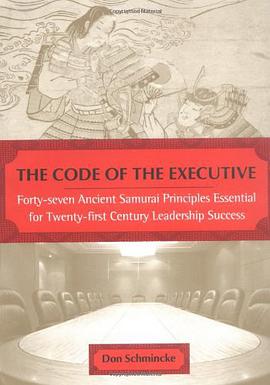
More than a thousand years ago, a group of business executives developed a set of principles for organizational leadership in a competitive market. Those executives were the samurai of ninth-century Japan, and their rigid code of ethics, known as bushido, was one of the most effective frameworks for management in history. The Code of the Executive is business adviser Don Schmincke's modern interpretation of the Code of the Samurai-ancient wisdom written for today's corporate warriors. These principles provide a dynamic system of practical and moral training for effective leadership. In addition to interactive strategies for relating to the business world, this philosophy provides at its core a guide to the inner development necessary for consistent and long-term success. A terrific gift for a friend, relative, new graduate, or business associate, The Code of the Executive is filled with relevant wisdom and offers an enlightened path to business fulfillment.
Amazon.com
Management advisor Don Schmincke believes leaders can thrive in the third millennium by utilizing principles developed during the first. They originate in a moral code known as Bushido that was followed by samurai warriors in ninth-century Japan and formalized by Daidoji Yuzan as the Code of the Samurai some seven centuries later. Now updating them as The Code of the Executive, Schmincke points out parallels between past and present and suggests this connection is a natural. In those days, he writes, the shogun was regulatory government, feudal barons the hard-driving CEOs, real estate their business, and samurai the executives hired to oversee it all. These samurai relied upon their rigid ethical guide to discharge both professional and personal responsibilities favorably, Schmincke notes, and today's corporate leaders can succeed by similarly following its teachings. Dividing fundamentals into categories such as "Personal Principles," "Roles and Responsibilities, and "Education and Development," he shows how ancient wisdom on cooperation, integrity, accountability, sacrifice, power, and so on can apply to contemporary situations. On "Respecting Personnel," for example, he suggests "reasonable argument" be used to "gain agreement" on serious infractions--while "for trivial issues" it is better to be "indulgent and patient and not sweat the insignificant."
--Howard Rothman
Book Dimension
length: (cm)17.3 width:(cm)12.7
作者简介
目录信息
读后感
用户评价
老实说,起初我并没有对这本书抱有太大的期望,想着可能又是一本“鸡汤”读物。然而,当我真正沉浸其中后,才发现我的想法大错特错。这本书最让我眼前一亮的是它对“沟通的艺术”的深刻剖析。作者并没有停留在“有效沟通”的表面,而是深入探讨了领导者如何在信息不对称、情感复杂的情况下,通过恰当的语言和非语言信号,来建立信任、化解矛盾,并最终达成目标。书中的一个案例,讲述了一位CEO如何在一场突如其来的危机中,通过真诚而富有策略的沟通,安抚了员工的恐慌情绪,并最终带领公司度过了难关。这个案例让我学到了很多实用的技巧,比如如何倾听、如何反馈、如何表达同理心等等。这本书就像是一位经验丰富的导师,在用最平实但最深刻的方式,引导我成为一个更具影响力的沟通者。每次读完,都感觉自己离成为一名优秀的领导者又近了一步。
这本书最吸引我的地方在于,它没有提供一套放之四海而皆准的管理秘籍,而是鼓励读者根据自身的情况,去探索属于自己的领导之道。作者在探讨“创新与变革”时,并没有简单地宣扬“颠覆式创新”,而是强调了在继承传统优势的基础上,如何审慎地引入新的元素,如何平衡稳定与发展之间的关系。书中一个关于老牌企业如何通过微调战略,成功适应市场变化的案例,给我留下了深刻的印象。这让我认识到,真正的领导者并非总是要剑走偏锋,而是在深刻理解事物本质的前提下,做出最适合当下的决策。这本书更像是一位智慧的朋友,它不会直接告诉你答案,而是通过启发性的提问和丰富的案例,引导你独立思考,找到属于自己的解决方案。每次翻阅,都能从中汲取新的养分,让我对领导力有了更全面、更深刻的理解。
这本书,我一开始以为会是一本严肃到让人打瞌睡的管理学教材,没想到读起来却像是在听一位经验丰富的老者在娓娓道来。书中的故事,不是那种空洞的理论堆砌,而是充满了生活气息和人情味。我尤其喜欢其中关于“团队协作”的章节,作者用了一个非常生动的例子,描述了一支业余棒球队是如何通过不断的磨合和沟通,最终战胜了那些拥有明星球员的专业队伍。这个故事让我深刻地体会到,真正的领导力并非是发号施令,而是要懂得如何激发每个团队成员的潜力,让他们心往一处想,劲往一处使。书里没有那些晦涩难懂的专业术语,更多的是一些朴素的道理,但正是这些朴素的道理,却有着直击人心的力量。读这本书,感觉就像是在参加一场高质量的分享会,你会不自觉地被作者的智慧和经验所吸引,并且会从中获得很多启发。我还会时不时地翻阅其中的一些章节,每一次都有新的感悟。
这本书的文字风格非常独特,既有西方管理学理论的严谨,又融入了东方哲学智慧的含蓄。作者在探讨“决策艺术”时,引用了大量的历史典故和军事策略,这些内容让我对领导者在面对复杂局面时如何权衡利弊、做出艰难抉择有了更深入的理解。特别是关于“风险管理”的部分,作者并没有简单地罗列风险规避的方法,而是通过分析历代名将的败因,揭示了那些看似微不足道的疏忽是如何导致巨大的灾难。这让我意识到,作为一名领导者,不仅要有宏观的视野,更要关注细节,不能因为一时的顺利而掉以轻心。书中的每一个案例都经过精心挑选,既有代表性,又充满故事性,读起来一点也不枯燥。我常常会在工作之余,带着这本书到咖啡馆,一边品味香浓的咖啡,一边沉浸在书中的智慧海洋里。这种体验,既能放松身心,又能获得宝贵的知识,简直是工作之余的最佳伴侣。
我通常对那些标题带有“武士道”、“道”之类的书籍持保留态度,总觉得它们可能过于玄乎,不接地气。但是,《领导者的武士道管理》这本书,却给了我意想不到的惊喜。它没有回避现实的残酷,反而用一种非常务实的方式,将“道”融入了日常的管理实践。我印象最深刻的是关于“自律与坚持”的章节,作者并没有用空洞的口号来鼓励读者,而是通过描述历史上那些伟大的领导者是如何克服重重困难,坚持自己的信念,最终成就一番事业的故事,来展现真正的毅力。读到这些故事,我仿佛看到了那些曾经在历史长河中闪耀的名字,他们的坚韧不拔,他们的勇于担当,都深深地触动了我。这本书让我明白了,领导力的养成并非一蹴而就,而是需要长期的修炼和不断的自我超越。它不仅仅是一本管理书籍,更是一本关于人生哲学的启迪之作,让人在阅读中不断反思自我,砥砺前行。