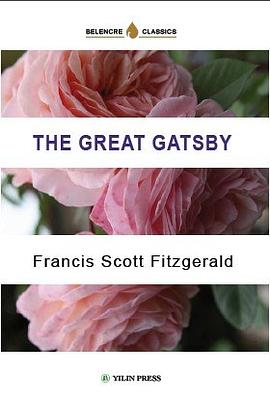

具体描述
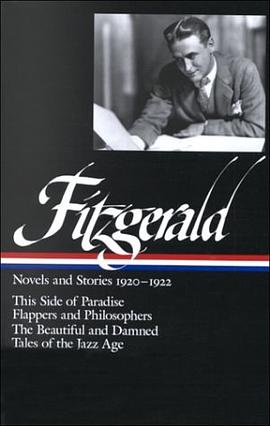
The Four Books that Defined and Chronicled the Jazz Age! Here in one eBook is the quartet of books that catapulted F. Scott Fitzgerald to literary immortality. Meet the flappers, the indolent young men, the speakeasies, the gangsters, the illegal hooch, and the easy money that characterized the Roaring Twenties. From This Side of Paradise to Flappers and Philosophers, The Beautiful and the Damned, and Tales from the Jazz Age Fitzgerald will light the way on a very special insider's tour of the Jazz Age. The age that made Fitzgerald and killed him.
作者简介
F. Scott Fitzgerald
Inseparably associated with a point in history he claimed to despise, F. Scott Fitzgerald is both the quintessential Jazz-Age writer and perhaps the era’s harshest critic. However, the complexity and sheer timelessness of classics such as The Great Gatsby has ensured that Fitzgerald’s work will never be regarded as mere period pieces.
Biography
The greatest writers often function in multifaceted ways, serving as both emblems of their age and crafters of timeless myth. F. Scott Fitzgerald surely fits this description. His work was an undeniable product of the so-called Jazz Age of the 1920s, yet it has a quality that spans time, reaching backward into gothic decadence and forward into the future of a rapidly decaying America. Through five novels, six short story collections, and one collection of autobiographical pieces, Fitzgerald chronicled a precise point in post-WWI America, yet his writing resonates just as boldly today as it did nearly a century ago.
Fitzgerald's work was chiefly driven by the disintegration of America following World War I. He believed the country to be sinking into a cynical, Godless, depraved morass. He was never reluctant to voice criticism of America's growing legions of idle rich. Recreating a heated confrontation with Ernest Hemingway in a short story called "The Rich Boy," Fitzgerald wrote, "Let me tell you about the very rich. They are different from you and me. They possess and enjoy early, and it does something to them, makes them soft where we are hard, and cynical where we are trustful, in a way that, unless you were born rich, it is very difficult to understand. They think, deep in their hearts, that they are better than we are because we had to discover the compensations and refuges of life for ourselves. Even when they enter deep into our world or sink below us, they still think that they are better than we are. They are different."
The preceding quote may sum Fitzgerald's philosophy more completely than any other, yet he also hypocritically embodied much of what he claimed to loathe. Fitzgerald spent money freely, threw lavish parties, drank beyond excess, and globe-trotted with his glamorous but deeply troubled wife Zelda. Still, in novel after novel, he sought to expose the great chasm that divided the haves from the have-nots and the hollowness of wealth. In This Side of Paradise (1920) he cynically follows opulent, handsome Amory Blaine as he bounces aimlessly from Princeton to the military to an uncertain, meaningless future. In The Beautiful and the Damned (1922) Fitzgerald paints a withering portrait of a seemingly idyllic marriage between a pair of socialites that crumbles in the face of Adam Patch's empty pursuit of profit and the fading beauty of his vane wife Gloria.
The richest example of Fitzgerald's disdain for the upper class arrived three years later. The Great Gatsby is an undoubted American classic, recounting naïve Nick Carraway's involvement with a coterie of affluent Long Islanders, and his ultimate rejection of them when their casual decadence leads only to internal back-stabbing and murder. Nick is fascinated by the mysterious Jay Gatsby, who had made the fatal mistake of stepping outside of his lower class status to pursue the lovely but self-centered Daisy Buchanan.
In The Great Gatsby, all elements of Fitzgerald's skills coalesced to create a narrative that is both highly readable and subtly complex. His prose is imbued with elegant lyricism and hard-hitting realism. "It is humor, irony, ribaldry, pathos and loveliness," Edwin C. Clark wrote of the book in the New York Times upon its 1925 publication. "A curious book, a mystical, glamorous story of today. It takes a deeper cut at life than hitherto has been essayed by Mr. Fitzgerald."
Gatsby is widely considered to be Fitzgerald's masterpiece and among the very greatest of all American literature. It is the ultimate summation of his contempt for the Jazz-Age with which he is so closely associated. Gatsby is also one of the clearest and saddest reflections of his own destructive relationship with Zelda, which would so greatly influence the mass of his work.
Fitzgerald only managed to complete one more novel -- Tender is the Night -- before his untimely death in 1940. An unfinished expose of the Hollywood studio system titled The Love of the Last Tycoon would be published a year later. Still The Great Gatsby remains his quintessential novel. It has been a fixture of essential reading lists for decades and continues to remain an influential work begging to be revisited. It has been produced for the big screen three times and was the subject of a movie for television starring Toby Stephens, Mira Sorvino, and Paul Rudd as recently as 2000. Never a mere product of a bygone age, F. Scott Fitzgerald's greatest work continues to evade time.
目录信息
读后感
用户评价
这部作品的文字简直就是流动的金色光芒,每一个词语都像是精心打磨过的钻石,折射出那个“爵士时代”的迷离与颓废。初读时,我仿佛被一股无形的力量猛地拽入了那个香槟塔倒塌、爵士乐永不休止的派对现场。作者对细节的捕捉达到了令人发指的地步——从女士们手持的流苏手袋,到男士们袖口上不易察觉的污渍,再到空气中弥漫的昂贵古龙水与廉价酒精混合的气味,一切都鲜活得如同昨日发生。更令人震撼的是,他笔下的人物,那些光鲜亮丽的“新贵”,他们的灵魂深处却隐藏着难以言喻的空虚与焦虑。那种对“美国梦”的近乎宗教般的信仰,以及最终发现那不过是一场华丽的幻影时的幻灭感,被描绘得如此深刻,让人在为那些浮华喝彩的同时,又不禁为他们那注定破碎的命运感到一丝怜悯。这不是一个简单的故事,这是一曲献给逝去光辉岁月的挽歌,旋律时而激昂,时而哀婉,让你在合上书页后,依然能听到那遥远的萨克斯风声,久久不散。
我得承认,这本书的叙事节奏像极了一场精心编排的慢镜头追逐戏,看似松散,实则每一步都精准地导向最终的悲剧高潮。初读时,我略感困惑,因为人物的动机似乎总是笼罩在一层薄雾之中,你需要不断地回头重读那些看似不经意的对话片段,才能拼凑出隐藏在表面浮华之下的真实意图。作者的高明之处在于,他很少直接告诉你角色的内心感受,而是通过环境的渲染——比如一次突如其来的暴雨,或者一场突兀的午后聚会——来侧面反映人物情感的剧烈波动。这种“展示而非告知”的叙事手法,极大地增强了故事的张力。特别是对“时间”的处理,过去的回忆如同幽灵般不时侵入当下,使得“现在”的每一个瞬间都带着沉重的历史包袱。读完后,我最大的感受是那种强烈的宿命感,好像无论角色如何挣扎,他们都已被命运的丝线牢牢捆住,只能眼睁睁看着自己的生活滑向预设的终点。这是一种极其成熟且令人不安的文学体验。
这本书的魅力在于其对“社会阶层和财富”的微妙刻画,简直是一部关于“金钱如何腐蚀灵魂”的社会学田野调查报告,只不过它披着浪漫小说的外衣。作者非常精准地捕捉到了“新钱”与“老钱”之间那种看不见却又真实存在的鸿沟。那些突然暴富的人们,他们的努力去模仿上流社会的举止,往往显得滑稽而笨拙,充满了渴望被认可的焦虑感。而那些生于财富之中的人,他们的冷漠和优越感则表现得不动声色,却更具杀伤力。这种阶层间的张力,为故事增添了无尽的戏剧冲突。我特别欣赏作者是如何通过角色的“消费行为”来定义他们的社会地位和内在价值的——一杯酒的选择,一栋房子的风格,甚至于对艺术品的品味,无不透露出其阶层属性和精神贫瘠度。这本书让我深刻理解到,在一个过度物质化的社会中,“拥有”往往比“成为”更受推崇,而这种本末倒置的价值观,最终是如何导致个体精神世界的凋敝的。
我花了很长时间才真正消化完这本书的情感内核。它远非表面上看起来那么光鲜亮丽,那股强烈的悲剧底色像墨水一样缓缓洇开,渗透到每一个明亮的场景之中。最触动我的,是关于“梦想与现实”的残酷对撞。书中描绘的那些对完美的执着,那种近乎偏执地想要抓住“某一刻的永恒”的努力,是如此的真诚,却又显得如此的徒劳。读者可以清晰地看到,当那些曾经被神化的理想对象一旦沾染上世俗的烟火气,那种崇拜崩塌时的那种心碎是多么的具有毁灭性。这种心碎不是歇斯底里的哭闹,而是一种更深层次的、关于自我身份认同的瓦解。它迫使我反思自己生活中那些“不可企及的美好”,它们是否也只是我用想象力过度包装的泡沫?这种对人性弱点和时代精神缺陷的深刻剖析,让这部作品超越了简单的时代背景故事,成为了一面映照现代人内心焦虑的镜子。
这本书的语言风格,简直就是一场文字的奢靡盛宴,充满了那个年代特有的华丽辞藻和复杂的句式结构。说实话,一开始阅读时,我需要时不时地停下来,去细细品味那些被精心雕琢的形容词和副词,有些句子长度惊人,但每一次的拉伸都似乎是为了达到一种特定的韵律感,如同古典音乐中的赋格。作者似乎并不满足于简单的陈述,他热衷于使用大量的意象和隐喻,将抽象的情感具象化。比如,他描述某种狂喜时,会将其比喻成“一个被午夜的钟声惊醒的金色喷泉”,这种叠加式的描绘,虽然偶尔会让人感到阅读的阻力稍大,但一旦跟上了他的节奏,那种被华丽辞藻包裹的阅读快感是其他作品难以给予的。这更像是在欣赏一幅文艺复兴时期的油画,需要你耐心地,一步步地走进画布,去辨认每一层颜料下的肌理和光影变化。