
具体描述
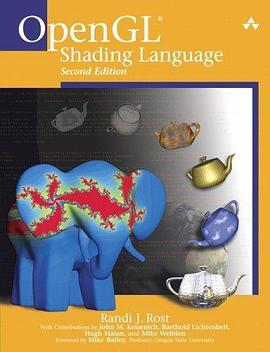
"As the 'Red Book' is known to be the gold standard for OpenGL, the 'Orange Book' is considered to be the gold standard for the OpenGL Shading Language. With Randi's extensive knowledge of OpenGL and GLSL, you can be assured you will be learning from a graphics industry veteran. Within the pages of the second edition you can find topics from beginning shader development to advanced topics such as the spherical harmonic lighting model and more." --David Tommeraasen, CEO/Programmer, Plasma Software "This will be the definitive guide for OpenGL shaders; no other book goes into this detail. Rost has done an excellent job at setting the stage for shader development, what the purpose is, how to do it, and how it all fits together. The book includes great examples and details, and good additional coverage of 2.0 changes!" --Jeffery Galinovsky, Director of Emerging Market Platform Development, Intel Corporation "The coverage in this new edition of the book is pitched just right to help many new shader-writers get started, but with enough deep information for the 'old hands.' "--Marc Olano, Assistant Professor, University of Maryland "This is a really great book on GLSL--well written and organized, very accessible, and with good real-world examples and sample code. The topics flow naturally and easily, explanatory code fragments are inserted in very logical places to illustrate concepts, and all in all, this book makes an excellent tutorial as well as a reference." --John Carey, Chief Technology Officer, C.O.R.E. Feature Animation OpenGL(R) Shading Language, Second Edition, extensively updated for OpenGL 2.0, is the experienced application programmer's guide to writing shaders. Part reference, part tutorial, this book thoroughly explains the shift from fixed-functionality graphics hardware to the new era of programmable graphics hardware and the additions to the OpenGL API that support this programmability. With OpenGL and shaders written in the OpenGL Shading Language, applications can perform better, achieving stunning graphics effects by using the capabilities of both the visual processing unit and the central processing unit.In this book, you will find a detailed introduction to the OpenGL Shading Language (GLSL) and the new OpenGL function calls that support it. The text begins by describing the syntax and semantics of this high-level programming language. Once this foundation has been established, the book explores the creation and manipulation of shaders using new OpenGL function calls. OpenGL(R) Shading Language, Second Edition, includes updated descriptions for the language and all the GLSL entry points added to OpenGL 2.0; new chapters that discuss lighting, shadows, and surface characteristics; and an under-the-hood look at the implementation of RealWorldz, the most ambitious GLSL application to date. The second edition also features 18 extensive new examples of shaders and their underlying algorithms, including *Image-based lighting*Lighting with spherical harmonics*Ambient occlusion*Shadow mapping*Volume shadows using deferred lighting*Ward's BRDF model The color plate section illustrates the power and sophistication of the OpenGL Shading Language. The API Function Reference at the end of the book is an excellent guide to the API entry points that support the OpenGL Shading Language.Also included is a convenient Quick Reference Card to GLSL.
作者简介
目录信息
读后感
我看过了 我看过了 我看过了 我看过了 我看过了 我看过了 我看过了 我看过了 我看过了 我看过了 我看过了 我看过了 我看过了 我看过了 我看过了 我看过了 我看过了 我看过了 我看过了 我看过了 我看过了 我看过了 我看过了 我看过了 我看过了 我看过了 我看过了 我看过了 我看...
我看过了 我看过了 我看过了 我看过了 我看过了 我看过了 我看过了 我看过了 我看过了 我看过了 我看过了 我看过了 我看过了 我看过了 我看过了 我看过了 我看过了 我看过了 我看过了 我看过了 我看过了 我看过了 我看过了 我看过了 我看过了 我看过了 我看过了 我看过了 我看...
感觉是用工具翻译的这本书 作者对OpenGL编程应该非常的不熟悉 买这本书的话做参考查询就可以了, 具体还是要看英文原版
感觉是用工具翻译的这本书 作者对OpenGL编程应该非常的不熟悉 买这本书的话做参考查询就可以了, 具体还是要看英文原版
感觉是用工具翻译的这本书 作者对OpenGL编程应该非常的不熟悉 买这本书的话做参考查询就可以了, 具体还是要看英文原版
用户评价
老实说,这本书的阅读体验并非一帆风顺,它对读者的主动思考能力要求很高。这不是一本能让你轻松“入门”的书,它要求你带着问题去学习,并愿意投入大量时间去调试和运行书中的案例。然而,正是这种挑战性,造就了其极高的学习价值。每一次攻克一个难点,那种豁然开朗的感觉是无与伦比的。作者在描述复杂算法时,往往会先用清晰的数学语言建立模型,然后立即过渡到如何将其转化为GPU可以理解的语言,这种理论与实践的无缝衔接,是很多其他书籍难以企及的。书中的图示虽然简洁,但恰到好处地辅助理解了抽象的概念,例如纹理坐标的插值过程,通过一幅图的展示,比长篇大论的文字描述更有效率。这本书是为那些渴望掌握图形学核心、而不是满足于表面效果的硬核开发者准备的。
这本书的排版和细节处理非常专业,可以看出出版方和作者对细节的重视。即便是面对高度技术性的内容,阅读起来的流畅度也保持得很好,公式的排布清晰易懂,没有出现那种让人眼花缭乱的混排现象。我尤其欣赏作者在讲解一些API细节时,总会附带一些最佳实践的建议,比如如何命名你的变量才能让后续的维护工作更轻松,或者在特定情况下应该优先考虑哪种计算方式。这些“软知识”往往是教科书上找不到,但对实际项目开发至关重要的。它提供的是一套完整的、经过时间检验的图形编程哲学,而不仅仅是一堆孤立的技术点。这本书是那种你会反复翻阅、每次都能发现新东西的参考书,它的价值会随着你经验的增长而不断提升。
这本书简直是图形学领域的圣经!从头到尾的叙述都充满了对底层原理的深刻洞察,作者显然不是那种只会照本宣科的理论家,而是真正动手实践过无数次的老手。阅读过程中,我感觉自己像是被一位经验丰富的导师手把手地领进了渲染流水线的复杂迷宫。它没有仅仅停留在API层面的介绍,而是深入到了为什么我们需要着色器、它们在GPU上是如何执行的这些核心问题上。尤其是关于向量运算和矩阵变换那几章,讲解得清晰且富有启发性,即便是初次接触3D数学的读者,也能通过书中的例子迅速建立起空间想象力。更让我欣赏的是,它对不同渲染技术的发展脉络进行了梳理,让我明白了现代实时渲染的一些设计决策背上的历史原因和权衡取舍。这本书的深度足以让有一定基础的开发者刷新认知,也能为新手提供一个坚实、而非浮于表面的学习起点。它真正教会了我如何去“思考”图形,而不是仅仅学会“调用”函数。
我购买这本书主要是冲着它的权威性去的,而它完全没有辜负我的期望。最让我感到惊喜的是,它对现代GPU编程范式的演变进行了深入的探讨。它没有固步自封于旧有的渲染管线理解,而是积极地引导读者思考如何在新一代的并行计算模型下,更有效地组织数据和逻辑。阅读这本书,仿佛能感受到作者在不断地与读者进行一场高质量的智力对话,他提出的每一个论点都有详实的论据支撑。书中对于内存布局、数据同步以及如何最大化利用GPU的并行性等方面都有非常独到的见解,这些都是我在其他地方学到的零散知识点,但在这里被系统地整合在一起,形成了一个完整的知识体系。对于希望从“会用”过渡到“精通”GPU编程的人来说,这本书提供了那种结构化的深度认知。
翻开这本书,最直观的感受就是它的实用性和前瞻性并重。它提供的代码示例不仅仅是教科书式的僵硬演示,而是充满了真实世界项目中的优化思路和陷阱规避技巧。我特别喜欢其中关于性能调优的部分,作者毫不避讳地指出了在不同硬件架构下,某些着色器写法可能带来的巨大性能差异,这种“内幕消息”对于追求极致渲染效果的开发者来说,简直是无价之宝。它涵盖的知识点非常广博,从基础的光照模型到更高级的延迟渲染、阴影技术都有涉猎,而且讲解的层次感做得极好,确保你不会在某一个复杂的概念上迷失方向。每次我遇到一个渲染难题,习惯性地翻阅一下这本书,总能从中找到启发性的思路或者一个全新的角度去解决问题。它更像是一本工具手册,但又比普通工具书多了灵魂和智慧的结晶。