具体描述
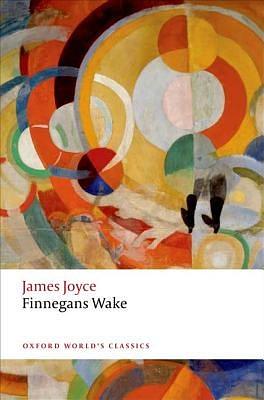
Having done the longest day in literature with his monumental Ulysses, James Joyce set himself even greater challenges for his next book -- the night. "A nocturnal state...That is what I want to convey: what goes on in a dream, during a dream." The work, which would exhaust two decades of his life and the odd resources of some sixty languages, culminated in the 1939 publication of Joyce's final and most revolutionary masterpiece, Finnegans Wake. A story with no real beginning or end (it ends in the middle of a sentence and begins in the middle of the same sentence), this "book of Doublends Jined" is as remarkable for its prose as for its circular structure. Written in a fantantic dream language, forged from polyglot puns and portmanteau words, the Wake features some of Joyce's most brilliant inventive work. Sixty years after its original publication, it remains, in Anthony Burgess's words, "a great comic vision, one of the few books of the world that can make us laugh aloud on nearly every page."
作者简介
Finnegans Wake, published in 1939, is James Joyce's final novel. Following the publication of Ulysses in 1922, Joyce began working on the "Wake" and by 1924 installments of what was then known as Work in Progress began to appear. (The final title of the work remained a secret between the writer and his wife, Nora Barnacle.)
The seventeen years spent working on Finnegans Wake were often difficult for Joyce. He underwent frequent eye surgeries, lost long-time supporters, and dealt with personal problems in the lives of his children. These problems and the perennial financial difficulties of the Joyce family are described in Richard Ellmann's biography James Joyce.
Plot summary
Spoiler warning: Plot and/or ending details follow.
Because Joyce's sentences are packed with obscure allusions and puns in dozens of different languages, it remains impossible to offer an undisputed and definitive synopsis.
The book begins with one such allusion:
riverrun, past Eve and Adam's, from swerve of shore to bend of bay, brings us by a commodius vicus of recirculation back to Howth Castle and Environs.
"Commodious vicus" refers to Giambattista Vico (1668-1744). Vico believed in a theory of cyclical history. He believed that the world was coming to the end of the last of three ages, these being the age of gods, the age of heroes, and the age of humans. This opening also contributes to the effect of Joyce's novel as a whole, since it begins and ends with "riverrun" on the lips.
More generally, the introductory chapter gives an overview of the novel's themes. First, we hear of a central character, here called Finnegan and identified as a hod carrier in Dublin (seen as representing all builders of all kinds throughout world history), falling to his death from a scaffold or tower or wall. At his wake, in keeping with the comic song "Finnegan's Wake" that provided Joyce's title, a fight breaks out, whiskey splashes on Finnegan's corpse, and he rises up again alive (Finnegan awakes).
This Finnegan is all men, and his fall is all men's fall. Subsequent vignettes in the first chapter show him as a warrior (in particular, as Wellington at Waterloo), as an explorer invading a land occupied by his aboriginal ancestors, and as the victim of a vengeful pirate queen (Grace O'Malley).
At the end of chapter one, Joyce puts Finnegan back down again ("Now be aisy, good Mr Finnimore, sir. And take your laysure like a god on pension and don't be walking abroad"). A new version of Finnegan-Everyman is sailing into Dublin Bay to take over the story: Humphrey Chimpden Earwicker, whose initials HCE ("Here Comes Everybody") lend themselves to phrase after phrase throughout the book (Note they appear as "Howth Castle and Environs" in the opening sentence).
Chapter two opens with an account of how HCE was given the name "Earwicker" by the king, who catches HCE "earwigging" when he's supposed to be manning a tollgate. Although the name begins as an insult, it helps HCE rise to prominence in Dublin society, but then he's brought down by a rumor about a sexual trespass involving two girls in Phoenix Park (close by Chapelizod).
Most of chapters two through four follow the progress of this rumor, starting with HCE's encounter with "a cad with a pipe." The cad asks the time, but HCE misunderstands it as either an accusation or a proposition, and incriminates himself by denying rumors the cad has not yet heard. Joyce expresses HCE's confusion by spelling the cad's Gaelic phonetically, making it look like a suggestive English phrase. Eventually, HCE becomes so paranoid he goes into hiding, where he'll write a book that evidently resembles Joyce's own Ulysses.
HCE is (at one level) a Scandinavian who has taken a native Irish wife, Anna Livia Plurabelle (whose initials ALP are also found in phrase after phrase). At some point these two have settled down to run a public house in Chapelizod, a suburb of Dublin named for the Irish princess Isolde. HCE personifies the city of Dublin (which was founded by Vikings), and ALP personifies the river Liffey, on whose banks the city was built. In the popular eighth chapter, hundreds of names of rivers are woven into the tale of ALP's life. Joyce universalizes his tale by making HCE and ALP stand, as well, for every city-river pair in the world. And they are, like Adam and Eve, the primeval parents of all the Irish and all humanity.
ALP and HCE have a daughter, Issy, whose personality is often split, and two sons, Shem and Shaun, eternal rivals for replacing their father and for Issy's affection (among other things). Shem and Shaun are akin to Set and Horus of the Osiris story, as well as the biblical pairs Jacob & Esau and Cain & Abel, as well as Romulus & Remus and St. Michael & the Devil (Mick & Nick).
Shaun is portrayed as a dull postman, conforming to society's expectations, while Shem is a bright artist and sinister experimenter. (As HCE retreats before the rumors, he seems to transform into Shem, the artist who writes the book.) They are sometimes accompanied by a third personality in whom their twin poles are reconciled, called Tristan or Tristram. Presumably, by synthesizing their strengths Tristan is able to win Issy and defeat/replace HCE, like Tristan in the triangle with Iseult (Issy) and King Mark (HCE).
The book also draws heavily on Irish mythology with HCE sometimes corresponding to Finn MacCool, Issy and ALP to Grania, and Shem/Shaun to Dermot (Diarmaid). This is just a small hint of the many roles that each of the main characters finds him or herself playing, often several at the same time.
The book is transformed into a letter, dictated to Shem by ALP, entrusted to Shaun for delivery, but somehow ending up in a midden heap, where it is dug up by a hen named Biddy (the diminutive form of Brighid, which is the name of both a saint and a goddess on whose feast day Joyce was born). The letter is perhaps an indictment, perhaps an exoneration of HCE, just as Finnegans Wake is a vast "comedy" that seeks to indict and simultaneously redeem human history.
If HCE can also be identified with Charles Stewart Parnell, Shem's attack mirrors the attempt of forger Richard Piggott to incriminate Parnell in the Phoenix Park Murders of 1882 by means of false letters. But Piggott is also HCE, for just as HCE betrays himself to the cad, Piggott betrayed himself at the enquiry into admitting the forgery by his spelling of the word "hesitancy" as "hesitency"; and this misspelling appears frequently in the Wake.
The progress of the book is far from simple as it draws in mythologies, theologies, mysteries, philosophies, histories, sociologies, astrologies, other fictions, alchemy, music, colour, nature, sexuality, human development, and dozens of languages to create the world drama in whose cycles we live.
The book ends with the river Liffey disappearing at dawn into the vast possibilities of the ocean. The last sentence is incomplete. As well as leaving the reader to complete it with his or her own life, it can be closed by the sentence that starts the book – another cycle. Thus, reading the final sentence of the book, and continuing on to the first sentence of the book, we have: "A way a lone a last a loved a long the / riverrun, past Eve and Adam's, from swerve of shore to bend of bay, brings us by a commodius vicus of recirculation back to Howth Castle and Environs."
目录信息
读后感
这书估计一般人都啃不动,我承认《万有引力之虹》我只是啃了三分之一,这书估计命运在我这里同《万有引力之虹》一样,但我还是要买一本回来,作者装逼到极致的写作,我也得跟着装逼读一读,不读就放在书架上显眼的位置处,来了朋友给别人死命推荐,顺便看点有关本书的八卦,胡...
想起了萧乾/文洁若版本与金隄版本的《尤利西斯》的差别:前者读起来顿生对艰苦工作的敬畏;后者的文字却有一种律动感。但人世间已经没有金隄了... 可能一个诗人风格的翻译,将不是那么诚惶诚恐,而带一点主观的取舍,但却也能激荡出新的感悟吧。 全书起始的一段,原文是: r...
看不懂的书,说什么讲什么表达什么,或许对于我本人来说并不那么重要,重要的是,它是文学界的一座丰碑。 詹姆斯乔伊斯,注定是文学界一个饱受争议却又地位稳固的大师。这,就是纯文学,不是一般蝇营狗苟者所能真正看懂的。意识流的技法,本来就是极具个性化和私人标志的天马行...
废墟 《历史哲学论纲》中对“新天使”的描绘:他的眼睛牢牢地盯在令人沮丧的过去,后退着飞入未来。他的翅膀微微张开,他的脸出神地望向过去,仿佛就要离开他所注视的一切。可是,他看到的只是一堆废墟,废墟中堆积着尸骸。天使想驻足唤醒死者,醒来修补破碎的世界。突然,从天...
好吧 本来想要买万有引力之虹的 亚马逊一直缺货 推荐又有这本 名字不错 买后 就感觉被打脸。 就译后的正文 有点不知所云。 看小字注释后还有点头绪。 那注释也太多了吧 整本书百分之70左右的页面是注释, 一字一注。 叫人怎么阅读,看不过2页就晕了。 我还...
用户评价
每次提起《芬尼根的守灵夜》,我都感觉自己的思绪会变得格外跳跃。它就像一个巨大的潘多拉魔盒,一旦打开,就释放出无数的可能性。我曾尝试过用不同的方式去阅读它,有时是带着字典,试图理解每一个晦涩的词汇;有时则是完全抛开对意义的执着,仅仅去感受它的声音和节奏。我发现,即使只是沉浸在那些奇特的韵律中,也能获得一种独特的愉悦感,仿佛在聆听一首古老而神秘的歌谣。
《芬尼根的守灵夜》是一本需要你付出极大的耐心和专注的书。我曾经因为它的晦涩而感到沮丧,但当我逐渐习惯了它的语言和节奏,并且开始从中找到一些“窍门”时,一种奇妙的成就感便油然而生。它像是在教你一种全新的语言,一种只属于它自己的语言。一旦你掌握了这门语言的某些规则,你就能从中看到那些别人看不到的东西,感受到那些别人感受不到的联系。
《芬尼根的守灵夜》就像一个不断变形的影子,你越是想抓住它,它就变得越模糊。我曾试图去记录我在阅读过程中产生的所有想法和联想,但很快就发现,这些想法和联想的数量之多、之复杂,远远超出了我的能力范围。这本书,与其说是一本读物,不如说是一种体验,一种让你重新审视语言、思想和存在本身的过程。
《芬尼根的守灵夜》给我的感觉,就像是站在一座宏伟的教堂面前,你被它那复杂的结构和精美的雕饰所震撼,但同时又感到一种深深的敬畏,不知道该如何踏入。它的语言充满了音乐性,每一次的断句和重音都仿佛经过了精心设计。我曾尝试过跟着书中的节奏朗读,那种感觉非常奇妙,仿佛自己也成为了这个语言迷宫的一部分。
对《芬尼根的守灵夜》的理解,就像是在建造一座极其复杂的雕塑,你只能一块一块地堆砌,一点一点地打磨。它不是线性的叙事,没有清晰的开头和结尾,更像是一个巨大的漩涡,将所有的故事、所有的声音、所有的历史都卷入其中。我常常觉得,这本书的意义不在于你是否完全读懂它,而在于你在这个过程中所经历的思考和感受。它挑战着我们对语言、对现实、对存在的认知,迫使我们去质疑一切我们习以为常的东西。
读《芬尼根的守灵夜》,感觉就像是站在一个巨大、无边无际的梦境边缘,你既想一探究竟,又隐隐感到一丝恐惧。这本书不是那种让你轻松翻阅的小说,它更像是一场让你沉浸其中、迷失自我的精神冒险。从一开始,我就被那独特的语言所吸引,它不是我们熟悉的英语,而是由无数个语言碎片、双关语、甚至是发明出来的词汇交织而成。读的时候,我经常需要停下来,反复揣摩一句话的含义,有时甚至能感受到它背后隐藏的千丝万缕的联系,就像在解读一个古老的谜语。
我曾遇到过一些对《芬尼根的守灵夜》持不同意见的人,有人认为它只是故弄玄虚,有人则认为它是文学的巅峰。对我而言,它更像是一种独特的艺术体验。它挑战了我们对“意义”的定义,也挑战了我们对“文学”的理解。这本书,更像是一种邀请,邀请你去参与它的创造,去发掘它隐藏的意义。
我一直认为,《芬尼根的守灵夜》是一本需要“磨”的书。你不可能一口气读完它,它需要你反复地品味,反复地咀嚼。我尝试过在不同的心情和状态下去阅读它,发现每次的体验都有很大的不同。有时,它让我感到无比的振奋,仿佛发现了某种宇宙的秘密;有时,它又让我感到一丝迷茫,仿佛置身于一个无法逃脱的迷宫。
阅读《芬尼根的守灵夜》的过程,更像是在进行一场心理探索。书中的人物和事件,仿佛都是我们内心深处各种矛盾和冲突的具象化。我常常在阅读中,将书中的片段与自己的生活经验联系起来,从中找到一些似曾相识的感受。它不是一本让你获得简单快乐的书,而是一本让你进行深刻反思的书,让你去审视自己,审视我们所处的这个世界。
我尝试过很多次进入《芬尼根的守灵夜》的世界,每一次都像是一次全新的体验。有时候,我会被那些奇特的音韵和节奏带入一种恍惚的状态,仿佛置身于一个古老的神话故事之中,听着无数声音在耳边低语。书中的人物,比如 HCE 和 ALP,他们的身份似乎在不断地变化,他们是历史人物,也是神话原型,更是我们内心深处某种难以言喻的渴望和恐惧的投射。每一次阅读,我都会发现新的细节,新的联系,仿佛这本书有着无穷的深度,永远无法完全被理解。
Such a torture yet rewarding
Such a torture yet rewarding
Such a torture yet rewarding
Such a torture yet rewarding
Such a torture yet rewarding