
具体描述
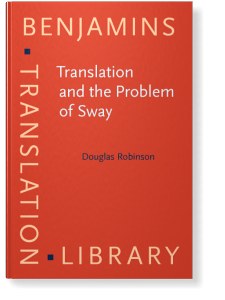
In Translation and the Problem of Sway Douglas Robinson offers the concept of "sway" to bring together discussion of two translational phenomena that have traditionally been considered in isolation, i.e. norms and errors: norms as ideological pressures to conform to the source text, and deviations from the source text as driven by ideological pressures to conform to some extratextual authority. The two theoretical constructs around which the discussion of translational sway is organized are Peirce's "interpretant" as rethought by Lawrence Venuti and "narrativity" as rethought by Mona Baker. Robinson offers a series of “friendly amendments” to both, looking closely at specific translation histories (Alex. Matson to and from Finnish, two English translations of Dostoevsky) as well as theoretical models from Aristotle to Peirce to expand the range and power of these concepts. In addition to translation and interpreting scholars this book will be of interest to scholars of communication and social interaction.
作者简介
目录信息
Acknowledgments xiii
chapter 1
Introduction: Translation and sway 1
1.1 The question of errorâ•… 2
1.2 The Brafmans on swayâ•… 7
1.3 Gideon Toury on translation normsâ•… 11
1.4 Venuti and Bakerâ•… 13
chapter 2
Lawrence Venuti on the interpretant 17
2.1 Martindale on the translator’s free playâ•… 18
2.2 Venuti’s argumentâ•… 21
2.3 Rethinking the interpretantâ•… 27
2.4 The interpretant as an impulse reticulated
through the somatic exchangeâ•… 32
2.5 Conclusionâ•… 38
chapter 3
The case of Alex. Matson 41
3.1 The backgroundâ•… 42
3.1.1 Seven Brothers â•… 42
3.1.2 The life and workâ•… 52
3.1.3 Translating Seven Brothers â•… 55
3.1.4 Being bilingualâ•… 61
3.1.5 New Critical focus on formâ•… 63
3.2 Matson’s translations â•… 68
3.2.1 From English to Finnishâ•… 68
3.2.1.1 Joyce’s Portraitâ•… 68
3.2.1.2 Faulkner’s Wild Palmsâ•… 72
3.2.1.3 Faulkner’s As I Lay Dyingâ•… 77
3.2.2 From Finnish to Englishâ•… 80
3.2.2.1 Translating Aino Kallasâ•… 80
3.2.2.2 Translating F. E. Sillanpääâ•… 82
3.2.2.2.1 Fallen Asleep While Youngâ•… 82
3.2.2.2.2 Meek Heritageâ•… 83
3.3 Matson’s interpretants â•… 85
3.3.1 Observing Matson translatingâ•… 85
3.3.2 The rhetorical interpretantâ•… 88
3.3.2.1 Bakhtin’s internal dialogismâ•… 90
3.3.2.2 Pathos, ēthos, and logosâ•… 92
3.3.2.2.1 The logical interpretantâ•… 95
3.3.2.2.2 The pathetic interpretantâ•… 96
3.3.2.2.3 The ethical interpretantâ•… 97
3.3.3 Analytical applicationsâ•… 98
3.3.3.1 Stiff narrative jointsâ•… 99
3.3.3.2 The interplay of “correctness” and “pleasure”â•… 100
3.3.3.3 Cultural belonging â•… 104
chapter 4
The spatiotemporal dynamic of foreignization 113
4.0 Introduction: The phenomenology and structuralism of foreignismâ•… 113
4.1 “Foreignism and the Phantom Limb”â•… 115
4.2 David Bohm on proprioceptionâ•… 117
4.3 Antonio Damasio on somatomimesisâ•… 120
4.4 The group proprioception of translationâ•… 121
4.4.1 The own and the alienâ•… 122
4.4.2 Estrangementâ•… 123
4.4.3 The group proprioception of foreignizing translationâ•… 127
chapter 5
Translating Dostoevsky, theorizing translation 131
5.1 Venuti on translating Dostoevskyâ•… 131
5.2 Two Dostoevsky translationsâ•… 135
5.2.1 Dostoevsky’s “bad writing” â•… 135
5.2.2 Comparison of a single paragraphâ•… 142
5.2.3 Colloquialismâ•… 143
5.2.4 Polyphonic Dostoevskyâ•… 145
5.3 Theorizing translationâ•… 149
5.3.1 The axiological interpretantâ•… 150
5.3.2 The (meta)formal interpretantâ•… 157
chapter 6
Mona Baker on narratives 161
6.0 Introductionâ•… 161
6.1 Narrativity and interpretancyâ•… 163
6.2 The somatic exchangeâ•… 168
6.3 Rhetorical situationâ•… 173
6.3.1 Walter Fisher’s narrative paradigmâ•… 175
6.3.2 The warrantâ•… 178
6.3.3 Reticulatory resonanceâ•… 182
Conclusion 189
Notes 195
Bibliography 213
Index 223
· · · · · · (收起)