
具体描述
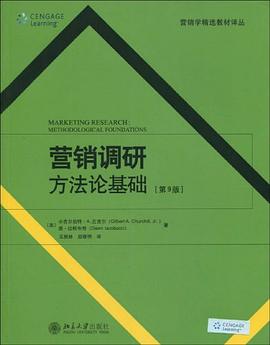
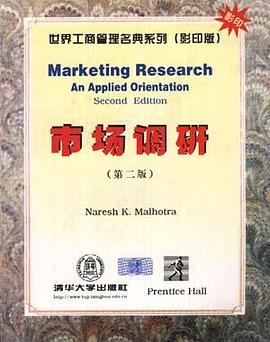
这是一部反映了现代国际市场调研领域最新趋势的书籍。作者将市场调研作为一个完整的过程,对市场调研的理论、方法、技术和策略等作了详尽的介绍。全书共分六个部分,按市场调研的基本程序展开,对调研问题的定义、调研设计、市场调研收集数据的方法、问卷设计、抽样设计、市场调研资料整理和统计分析的方法等给予介绍。
作者简介
目录信息
Chapter 1 INTRODUCTION TO MARKETING RESEARCH
Chapter 2 DEFINING THE MARKETING RESEARCH PROBLEM AND DEVELOPING AN APPROACH
PROFESSIONAL PERSPECTIVES FOR PART 1 CASES FOR PART 1
PART II: RESEARCH DESIGN FORMULATION
Chapter 3 RESEARCH DESIGN
Chapter 4 EXPLORATORY RESEARCH DESIGN: SECONDARY DATA
Chapter 5 EXPLORATORY RESEARCH DESIGN: QUALITATIVE RESEARCH
Chapter 6 DESCRIPTIVE RESEARCH DESIGN: SURVEY AND OBSERVATION
Chapter 7 CAUSAL RESEARCH DESIGN: EXPERIMENTATION
Chapter 8 MEASUREMENT AND SCALING: FUNDAMENTALS AND COMPARATIVE SCALING
Chapter 9 MEASUREMENT AND SCALING: NONCOMPARATIVE SCALING TECHNIQUES
Chapter 10 QUESTIONNAIRE AND FORM DESIGN
Chapter 11 SAMPLING: DESIGN AND PROCEDURES
Chapter 12 SAMPLING: FINAL AND INITIAL SAMPLE SIZE DETERMINATION
PROFESSIONAL PERSPECTIVES FOR PART 11 CASES FOR PART 11
PART III: DATA COLLECTION
Chapter 13 FIELD WORK
PROFESSIONAL PERSPECTIVES FOR PART III CASES FOR PART 111
PART IV: DATA PREPARATION AND ANALYSIS
Chapter 14 DATA PREPARATION
Chapter 15 FREQUENCY DISTRIBUTION, CROSS-TABULATION, AND HYPOTHESIS TESTING
Chapter 16 ANALYSIS OF VARIANCE AND COVARIANCE
Chapter 17 CORRELATION AND REGRESSION
Chapter 18 DISCRIMINANT ANALYSIS
Chapter 19 FACTOR ANALYSIS
Chapter 20 CLUSTER ANALYSIS
Chapter 21 MULTIDIMENSIONAL SCALING AND CONJOINT ANALYSIS
PROFESSIONAL PERSPECTIVES FOR PART IV CASES FOR PART IV
PART V: COMMUNICATING THE RESEARCH PROJECT
Chapter 22 REPORT PREPARATION AND PRESENTATION
PROFESSIONAL PERSPECTIVES FOR PART V CASES FOR PART V
PART VI: INTERNATIONAL AND ETHICAL DIMENSIONS
Chapter 23 INTERNATIONALMARKETINGRESEARCH
Chapter 24 ETHICS IN MARKETING RESEARCH
PROFESSIONAL PERSPECTIVES FOR PART VI CASES FOR PART VI
Preface xxviii
About the Author xxxv
PART I:INTRODUCTION AND EARLY PHASES OF MARKETING RESEARCH
CHAPTER 1 INTRODUCTION TO MARKETING RESEARCH
Objectives
Overview
What Does Marketing Research Encompass?
The Nature of Marketing Research
Definition of Marketing Research
A Classification of Marketing Research
The Role of Marketing Research in MIS and DSS
Marketing Research Suppliers and Services
Selecting a Research Supplier
Careers in Marketing Research
Marketing Research Process
The Department Store Patronage Project
International Marketing Research
Ethics in Marketing Research
Computer Applications
Summary
Acronyms
Exercises
Questions
Problems
Computer Exercises
Notes
CHAPTER 2 DEFINING THE MARKETING RESEARCH PROBLEM AND DEVELOPING
AN APPROACH
Objectives
Overview
Importance of Defining the Problem
The Process of Defining the Problem and Developing an Approach
Tasks Involved
Discussions with Decision Makers
Interviews with Industry Experts
Secondary Data Andlysis
Qwalitative Research
Environmental Context of the Problem
Past Information and Forecasts
Resources and Constraints
Objectives
Buyer Behavior
Legdl Environment
Economic Environment
Marketing cmd Technologicad Skills
Management Decision Problem and Marketing Research Problem
Defining the Marketing Research Problem
Components of the Approach
Objectwe/Theoretical Framework
Analytical Model
Research Questions
Hypotheses
Relevant Characteristics
International Marketing Research
Ethics in Marketing Research
Computer Applications
Summary
Acronyms
Exercises
Questions
Problems
Computer Exercises
Notes
PROFESSIONAL PERSPECTIVES FOR PART 1
The Profession of Marketing Research: A Strategic Assessment
The Marketing Research Problem: From the DM's Desk to Study
Execution
Defirdng the Research Problem
CASESFORPARTI
Case 1.1: Life in the Fast Lane: Fast Food Chains Race to Be
Number One
Case 1.2: Nike Sprints Ahead of the Competition
Case 1.3: Lexus: Imparting Value to Luxury or Luxury to Value?
Case 1.4: Marketing Research Lights the Way for Electric Utilities
Case 1.5: Quaker Oats: Marketing Its Way to Success
PART II: RESEARCH DESIGN FORMULATION
CHAPTER 3 RESEARCH DESIGN
Objectives
Overview
Research Design: Definition
Research Design: Classification
Exploratory Research
Descriptive Research
Cross-SectionaI Designs
Longitudinal Designs
Relative Advantages and Disadvantages of Longitudinal and Cross'
Sectional Designs
Causal Research
Relationships among Exploratory, Descriptive, and Causal Research
Potential Sources of Error
Random Sampling Error
Nonsampling Error
Budgeting and Scheduling the Project
Marketing Research Proposal
Intemational Marketing Research
Ethics in 'Marketing Research
Computer Applications
Summary
Acronyms
Exercises
Questions
Problems
Computer Exercises
Notes
CHAPTER 4 EXPLORATORY RESEARCH DESIGN: SECONDARY DATA
Objectives
Overview
Primary versus Secondary Data
Advantages and Uses of Secondary Data
Disadvantages of Secondary Data
Criteria for Evaluating Secondary Data
Specifications: Methodlology Used to Collect the Data
Error: Accuracy of the Data
Currency: When the Data Were Collected
Objective'.The Purpose for Which the Data Were Collected
Nature: The Content of the Data
Dependability: How Dependable Are the Data?
Classification of Secondary Data
Internal SecondaryData
Database Marketing
Published Extemal Secondary Sources
Qeneral Business Data
Qovemment Sources
Computerized Databases
Classification of Computerized Datdbases
Directories of Databases
Syndicated Sources of Secondary Data
Syndicated Data from Households
Surveys
Diary Panels
Electronic Scanner Services
Syndicated Data from Institutions
Retailer and Wholesaler Audits
Retail Auditing for Retailing Information
Industry Services
Combining Information from Different Sources: Single-Source Data
Applications of Secondary Data
Buying Power Index
Computer Mapping
International Marketing Research
Ethics in Marketing Research
Computer Applications
Summary
Acronyms
Exercises
Questions
Problems
Computer Exercises
Notes
Appendix 4A: Published Sources of Secondary Data
CHAPTER 5 EXPLORATORY RESEARCH DESIGN: QUALITATIVE RESEARCH
Objectives
Overview
Primary Data: Qualitative versus Quantitative Research
Rationale for Using Qualitative Research
A Classification of Qualitative Research Procedures
Focus Group Interviews
Characteristics
Planning and Conducting Focus Qroups
Other Variations in Focus Groups
Advantages and Disadvantages of Focus Groups
Applications of Focus Groups
Depth Interviews
Characteristics
Techniques
Advantages and Disadvantages af Depth Interviews
Applications of Depth Interviews
Projective Techniques
Association Techniques
Completion Techniques
Construction Techniques
Expressive Techniques
Advantages and Disadvantages of Projective Techniques
Applications of Projective Techniques
Intemational Marketing Research
Ethics in Marketing Research
Computer Applications
Summary
Acronyms
Exercises
Questions
Problems
Computer Exercises
Notes
CHAPTER 6 DESCRIPTIVE RESEARCH DESIGN: SURVEY ANDOBSERVATION
Objectives
Overview
Survey Methods
Survey Methods Classified by Mode of Administration
Telephone Methods
Traditional Telephone Interviews
Computer-Assisted Telephone Interviewirig
Personal Methods
Personal In-Home Interviews
Mall-Intercept Persbnal Interviews
Computer-Assisted Personal Intervieiwing (CAPl)
Mail Methods
Mail Interviews
Mail Panels
A Comparative Evaluatiori of Survey Methods
Flexibility of Data Collection
Diversity of Questions
Use of Physical Stimuli
Sample Control
Control of the Data Collection Environment
Control of Field Force
Quantity of Data
Response Rate
Perceived Anonymity
Socud Desirabiiity/Sensitive Infonnation
Potential for Interviewer Bias
Speed
Cost
Selection of Survey Methotd(s)
Observation Methods
Structured versns Unstructured Observation
Disguised versus Undisguised Observation
Naturol versus Contrived Observation
Observation Methods Classified by Mode of Administration
Personal Observation
Mechanical Observation
Audit
Content Analysis
Trace Arudysis
A Comparative Evaluation of Observation Methods
A Comparison of Survey and Observation Methods
Relative Advantages of Observxtion
Relative Disadvantages of Observation
Intemational Marketing Research
Selection of Survey Methods
Ethics in Marketing Research
Computer Applications
Summary
Acronyms
Exercises
Questions
Problems
Computer Exercises
Notes
CHAPTER 7 CAUSAL RESEARCH DESIGN: EXPERIMENTATION
Objectives
Overview
Concept of Causality
Conditions for Causality
Concomitant Variation
Time Order of Occurrence of Variables
Absence of Other Possible Causal Factors
Role of Evidence
Definitions and Concepts
Definition of Symbols
Validity in Experimentation
Internal Validity
Extemal Validity
Extraneous Variables
History
Maturation
Testing Effects
Instrumentation
Statisticdl Regression.
Selection Bias
Mortality
Controlling Extraneous Variables
Randomization
Matching
Statistical Control
Design Control
A Classification of Experimental Designs
Preexperimental Designs
One-Shot Case Study
One-Qroup Pretest-Posttest Design
Static Qroup Design
True Experimental Designs
Pretest-Posttest Control Qroup Design
Posttest-Only Control Qroup Design
Quasi-Experimental Designs
Time Series Design
Multiple Time Series Design
Statistical Designs
Randomized Block Design
Latin Square Design
Factorial Design
Laboratory versus Field Experiments
Experimental versus Nonexperimental Designs
Limitations of Experimentation
Time
Cost
Administration
Application: Test Marketing
Standard Market Test
Controlled Test Market
Simulated Test Market
Determining a Test Marketing Strategy
Intemational Marketing Research
Ethics in Marketing Research
Computer Applications
Summary
Acronyms
Exercises
Questions
Problems
Computer Exercises
Notes
CHAPTER 8 MEASUREMENT AND SCALING: FUNDAMENTALS AND COMPARATIVE SCALING
Objectives
Overview
Measurement and Scaling
Primary Scales of Measurement
Nominal Scale
Ordinal Scale
Interval Scale
Ratio Scale
A Comparison of Scaling Techniques
Comparative Scaling Techniques
Paired Comparison Scaling
Rank Crder Scdling
Constant Sum Scaling
Q-Sort and Other Procedures
Verbal Protocols
International Marketing Research
Ethics in Marketing Research
Computer Applications
Summary
Acronyms
Exercises
Questions
Problems
Computer Exercises
Notes
CHAPTER 9 MEASUREMENT AND SCALING: NONCOMPARATIVE SCALING TECHNIQUES
Objectives
Overview
Noncomparative Scaling Techniques
Continuous Rating Scale
Itemized Rating Scales
Likert Scdle
Semantic Differential Scale
Stapel Scale
Noncomparative Itemized Rating Scale Decisions
Number of Scale Categories
Balanced versus Unbotlanced Scale
Odd or Even Number of Categories
Forced versus Nonforced Choice
Nature and Degree of Verbal Description
Physical Form of the Scale
Multiitem Scales
Scale Evaluation
Measurement Accuracy
Reliability
Validity
Relationship between Reliability and Validity
Qeneralizability
Choosing a Scaling Technique
Mathematically Derived Scales
International Marketing Research
Ethics in Marketing Research
Computer Applications
Summary
Acronyms
Exercises
Questions
Problems
Computer Exercises
Notes
CHAPTER 10 QUESTIONNAIRE AND FORM DESIGN
Objectives
Overview
Questionnaires and Observation Forms
Questionnaire Definition
Objectives of a Questionnaire
Questionnaire Design Process
Specify the Information Needed
Type of Interviewing Method
Individual Question Content
Is the Question Necessary?
Are Several Questions Needed Instead of One?
Overcoming Inability to Answer
Is the Respondent Informed?
Can the Respondent Remember?
Can the Respondent Articulate?
Overcoming Unwillingness tq Answer
Effort Required of the Respondents
Context
Legitimate Purpose
Sensitive Information
Increasing the Willingness of Respondents
Choosing Question Structure
Unstructured Questions
Structured Questions
Choosing Question Wording
Define the Issue
Use Ordinary Words
Use Unambiguous Words
Avoid Leading or Biasing Questions
Avoid Implicit Altematives
Awid Implicit Assumptions
Avoid Qenerolizations and Estimates
Use Positive and 'Negative Statements
Determining the Order of Questibns
Opening Questions
Type of Information
Difficult Questions
Effect on Subsequent Questions
Logical Order
Form and Layout
Reproduction of the Questionnaire
Pretesting
Observational Forms
International Marketing Research
Ethics in Marketing Research
Computer Applications
Summary
Acronyms
Exercises
Questions
Problems
Computer Exercises
Notes
CHAPTER 11 SAMPLING: DESIGN AND PROCEDURES
Objectives
Overview
Sample or Census
The Sampling Design Process
Define the Target Population
Determirte the Scttnplirtg Frame
Select a Sampling Tech.nique
Determine the Sample Size
Execute the Sampling Process
A Classification of Sampling Techniques
Nonprobability Sampling Techniques
Convenience Sampling
Judgmental Sampling
Quota Sampling
Snowball Sampling
Probability Sampling Techniques
Simple Random Sampling (SRS)
Systematic Sampling
Stratified Sampling
Cluster Sampling
Other Probdbility Sampling Techniques
Choosing Nonprobability versus Probability Sampling
Uses of Nonprobability and Probability Sampling
Intemational Marketing Research
Ethics in Marketing Research
Computer Applications
Summary
Acronyms
Exercises
Questions
Problems
Computer Exercises
Notes
CHAPTER 12 SAMPLING: FINAL AND INITIAL SAMPLE SIZE DETERMINATION
Objectives
Overview
Definitions and Symbols
The Sampling Distribution
Statistical Approach to Determining Sample Size
The Confidence Interval Approach
Sample Size Determination: Means
Sample Size Determmcttion: Proportions
Multiple Characteristics and Parameters
Other Probability Sampling Techniques ,
Adjusting fhe Statistically Determined Sample Size
Nonresponse Issues in Sampling
Improving the Response Rates
Adjusting for Nonresponse
International Marketing Research
Ethics in Marketing Research
Computer Applications
Summary
Acronyms
Exercises
Questions
Problems
Computer Exercises
Notes
Appendix 12A
PROFESSIONAL PERSPECTIVES FOR PART 11 418
Focus Qroups and Qwalitative Research
Computer-Assisted Personud Interviewing
Using a Cash Incentive to Heighten Mail Survey Response
Dicding Selection Techniques: Random Digit versus Directory
An Examination of Order Bias (On Self'Administered Questionnaires)
CASESFORPARTII
Case 2.1: Unfreezing the Frozen Foods Industry
Case 2.2: Who Is the Host with the Most?
Case 2.3: Candy Is Dandy for Hershey
Case 2.4: Fragrances Are Sweet, but Competition Is Bttter
Case 2.5: Is Super Bowl Advertising Super Effective?
Case 2.6: Taste the Arby's Difference
Case 2.7: Can Independent Carriers Go the Distance?
PART III:DATACOLLECTION
CHAPTER13 FIELDWORK
Objectives
Overview
The Nature of Field Work
Field Work and Data Collection Process 445
Selecting Field Workers
Training Field Workers
Making the Initial Contact
Asking the Questions
Probing
Recording the Answers
Terminating the Interview
Supervising Field Workers
Quality Control and Editing
Sampling Control
Control of Cheating
Central Office Control
Validating Field Work
Evaluating Field Workers
Cost and Time
Response Rates
Quality of Interviewing
Quality of Data
International Marketing Research
Ethics in Marketing Research
Computer Applications
Summary
Acronyms
Exercises
Questions
Problems
Computer Exercises
Notes
PROFESSIONAL PERSPECTIVES FOR PART III
Field Work
CASESFORPARTffl
Case 3.1: Qerber Outgrows Its SIogan
Case 3.2: Revlon's Channels Open the Door to Innovation
PART IV: DATA PREPARATION AND ANALYSIS
CHAPTER14 DATAPREPARATION
Objectives
Overview
The Data Preparation Process
Questionnaire Checking
Editing
Treatment of Unsatisfactory Responses 474
Coding
Coding Questions
Codebook
Coding Questionnaires
Transcribing
Data Cleaning
Consistency Checks
Treatment of Missing Responses
Statistically Adjusting the Data
Weighting
Variable Respecification
Scale Transformation
Selecting a Data Analysis Strategy
A Classification of Statistical Techmques
International Marketing Research
Ethics in Marketing Research
Computer Applications
Summary
Acronyms
Exercises
Questions
Problems
Computer Exercises
Notes
CHAPTER 15 FREQUENCY DISTRIBUTION, CROSS.TABULATION, AND HYPOTHESIS TESTING
Objectives
Overview
Frequency Distribution
Statistics Associated with Frequency Distribution
Measures of Location
Measures of VariabiZity
Measures of Shape
Introduction to Hypothesis Testing
A General Procedure for Hypothesis Testing
Cross Tabulations
Two Variables
Three Variables
Qeneral Comments on CrossTabulation
Statistics Associated with Cross-Tabulation
Chi-Square
Phi Coefficient
Contingency Coefficient
Cramer's V
Lambda Coefficient
Other Statistics
Cross-Tabulation in Practice
Hypothesis Testing Related to Differences
Parametric Tests
One Sample
Two Independent Samples
Paired Samples
Nonparametric Tests
One Sample
Two Independent Samples
Pcdred Samples
Computer Applications
Summary
Acronyms
Exercises
Questions
Problems
Computer Exercises
Notes
CHAPTER 16 ANALYSIS OF VARIANCE AND COVARIANCE
Objectives
Overview
Relationship among Techniques
One-Way Analysis of Variance
Statistics Associated with One-Way Analysis of Variance
Conducting One-Way Analysis of Variance
Identifying the Dependent and Independent Variables
Decomposing the Total Variation
Measuring Effects
Significance Testing
Interpreting Results
Illustrative Applications of One-Way Analysis of Variance
Assumptions in Analysis of Variance
N-Way Analysis of Variance
Analysis of Covariance
Issues in Interpretation
Interactions
Relative Importance of Factors
Multiple Comparisons
Repeated Measures ANOVA
Nonmetric Analysis of Variance
Multivariate Analysis of Variance
Computer Applications
Summary
Acronyms
Exercises
Questions
Problems
Computer Exercises
Notes
CHAPTERl7 CORRELATIONANDREGRESSION
Objectives
Overview
Product Moment Correlation
Partial Correlation
Nonmetric Correlation
Regression Analysis
Bivariate Regression
Statistics Associated with Bivariate Regression Analysis
Conducting Bivariate Regression Analysis
Scatter Diagram
Bivariate Regression Model
Estimation of Parameters
Standardized Regression Coefficient
Significance Testing
Strength and Significance of Association
Prediction Accuracy
Assumptions
Multiple Regression
Statistics Associated with Multiple Regression
Conducting Multiple Regression Analysis
Partiol Regression Coefficients
Strength of Association
Significance Testing
Examination of Residudis
Stepwise Regression
Multicollinearity
Relative Importance of Predictors
Cross-Validation
Regression with Dummy Variables
Analysis of Variance and Covariance with Regression
Computer Applications
Summary
Acronyms
Exercises
Questions
Problems
Computer Exercises
Notes
CHAPTER18 DISCRIMINANTANALYSIS
Objectives
Overview
Basic Concept
Relationship to Regression and ANOVA
Discriminant Analysis Model
Statistics Associated with Discriminant Analysis
Conducting Discriminant Analysis
Fonnulation
Estimation
Determination of Significance
Interpretation
Validation
Multiple Discriminant Analysis
Fonnulation
Estimation
Determination of Significance
Interpretation
Validation
Stepwise Discriminant Analysis
Computer Applications
Summary
Acronyms
Exercises
Questions
Problems
Computer Exercises
Notes
Appendix 18A: Estimation of Discriminant Function Coefficients
CHAPTER19 FACTOR ANALYSIS
Objectives
Overview
Basic Concept
Factor Analysis Model
Statistics Associated with Factor Analysis
Conducting Factor Analysis
Problem Fonnulation
Construction of the Correlation Matrix
Method of Factor Analysis
Number of Factors
Rotation of Factors
Interpretation of Factors
Fuctor Scores
Selection of Surrogate Variables
Model Fit
Applications of Common Factor Analysis
Computer Applications
Summary
Acronyms
Exercises
Questions
Problems
Computer Exercises
Notes
Appendix l9A: Fundamental Equations of Factor Analysis
CHAPTER 20 CLUSTER ANALYSIS
Objectives
Overview
Basic Concept
Statistics Associated with Cluster Analysis
Conducting Cluster Analysis
Formulating the Problem
Selecting a Distance or Similarity Measure
Selecting a Clustering Procedare
Deciding on the Number of Clusters
Interpreting and Proflling the Clusters
Assessing Reliability and Validity
Applications of Nonhierarchical Clustering
Clustering Variables
Computer Applications
Summary
Acronyms
Exercises
Questions
Problems
Computer Exercises
Notes
CHAPTER 21 MULTIDIMENSIONAL SCALING AND CONJOINT ANALYSIS
Objectives
Overview
Basic Concepts in Multidimensional Scaling (MDS)
Statistics and Terms Associated with Multidimensional Scaling
Conducting Multidimensional Scaling
Fonnulating the Problem
Obtaining Input Data
Selecting an MDS Procedure
Deciding on the Number of Dimensions
Labeling the Dimensions and Interpreting the Configuration
Assessing Relidbility and Validity
Assumptions and Limitations of MDS
Scaling Preference Data
Correspondence Analysis
Relationship among MDS, Factor Analysis, and Discriminant Analysis
Basic Concepts in Conjoint Analysis
Statistics and Terms Associated with Conjoint Analysis
Conducting Conjoint Analysis
Formulating the Problem
Constructing the Stimuli
Deciding on the Form of Input Data
Selecting a Conjoint Ancdysis Procedure
Interpreting the Results
Assessing Reliability and Validity
Assumptions and Limitations of Conjoint Analysis
Hybrid Conjoint Analysis
Computer Applications
Summary
Acronyms
Exercises
Questions
Problems
Computer Exercises
Notes
PROFESSIONAL PERSPECTIVES FOR PART IV
The Logic of Statistical Significance Tests
Balancing Confidence and Power for Decision Making
An Altemative to the Mean
Interpretation of t Test Results
CASESFORPARTIV
Case 4.1; Dangerl Celebrity in Use
Case 4.2: The Demographic Discovery of the Decade
Case 4.3: The Magic Wand of PepsiCo
Case 4.4: Can Qleem Shine in the Toothpaste Market?
Case 4.5: Matsushita Retargets the U.S.A.
Case 4.6: Pampers DevelapsaRash, ARash afNew Products 759
Case 4.7: Chrysler Seeks a New Image
PART V: COMMUNICATING THE RESEARCH PROJECT
CHAPTER22 REPORTPREPARATIONANDPRESENTATION
Objectives
Overview
Importance of the Report and Presentation
The Report Preparation and Presentation Process 768
Report Preparation
Report Format
Report Writing
Guidelines for Tables
Quidelines for Graphs
Oral Presentation
Reading the Research Report
Addresses the Problem
Research Design
Execution of the Research Procedures
Numbers and Statistics
Interpretations and 'Conclusions
Qeneralizcibility
Disclosure
Research Follow-Up
Assisting the CIient
Evaluation of the Research Project
International Marketing Research
Ethics in Marketing Research
Computer Applications
Summary
Acronyms
Exercises
Questions
Problems
Computer Exercises
Notes
PROFESSIONAL PERSPECTIVES FOR PART V
Report Preparation and Presentation
Preparing and Presenting the Marketing Research Report
CASESFORPARTV
Case 5.1: New Coke Fiszles Out
Case 5.2: Money Can't Buy Image, but It Can Help Create It
PART Vl: INTERNATIONAL AND ETHICAL DIMENSIONS
CHAPTER23 INTERNATIONAL MARKETING RESEARCH
Objectives
Overview
Marketing Research Goes International
A Framework for Intemational Marketing Research 804
The Environment
Marketing Environment
Qovemment Environment
Legal Environment
Economic Environment
Structural Environment
Infbrmational and Technological Environment 807
Sociocultural Environment
Survey Methods
Telephone Interviewing and CATI
In-Home Personal Interviews
Mall-Intercept Interviews cnd CAPI
Mail Interviews
Mail Panels
Measurement and Scaling
Questionnaire Translation
Ethics in Marketing Research
Computer Applications
Summary
Acronyms
Exercises
Questions
Problems
Computer Exercises
Notes
CHAPTER24 ETHICS IN MARKETING RESEARCH
Objectives
Overview
Importance of Ethics in Marketing Research
Stakeholders in Marketing Research
Public
Respondent
Client
Researcher
Guidelines for Ethical Decision Making
An Ethical Framework
Teleology
Deontology
Hybrid
ObJectivism
Ethics and the Marketing Research Process
Intemational Marketing Research
Cultural Differences
Precedence of Ethicdl Standards
Political and Research Integrity Concerns
Computer Applications
Summary
Acronyms
Exercises
Questions
Problems
Computer Exercises
Notes
PROFESSIONAL PERSPECTIVES FOR PART VI
Intematwnal Marketing Research: Challenge ofthe 1990s
CASESFORPARTVI
Case 6.1: Wtll KFC Fry the Competition in China?
Case 6.2: Is Tylenol Strong Enough to Overcome Multiple Headaches
Case 6.3: Kmart and Its Problems in Eastem Europe
APPENDIX: STATISTICAL TABLES
INDEXES
Subject Index
Name Index
Company Index
· · · · · · (收起)
读后感
用户评价
这本书的结构安排,坦白说,有些令人困惑,尤其是在章节之间的逻辑过渡上。它似乎是从不同的研究领域中抽取了最精华的部分,然后并置在一起,而不是按照一个线性的、循序渐进的方式展开。例如,在讨论了“定性访谈的深度挖掘技巧”之后,紧接着就跳跃到了“大数据背景下的实时监测框架搭建”,两者之间的关联性需要读者自己去费力搭建。这种“拼图式”的知识结构,让初次接触这个领域的读者很难把握重点,也难以形成一个连贯的认知脉络。我感觉这本书更像是一本高级研究人员的知识备忘录,里面记录了作者在不同项目中最有感悟和最成熟的思考片段。如果你已经有了一定的行业经验,能够快速地将这些片段与你自身的实践经验进行对号入座,那么这本书的价值会被最大化地激发出来,因为它提供了无数个可以深入探索的“知识点”。但对于一个需要从零开始建立框架的读者来说,这本书提供的知识地图缺乏明确的路径指示,更像是一堆零散的宝藏坐标,你需要自己去绘制地图才能找到连接点。
这本书的文字风格,简直就像是把一位功力深厚的老师请到你的面前,但他说话的语速非常快,而且内容密度大到令人窒息。我记得我读到关于“定性研究与定量研究的融合路径”那一章时,感觉自己像是在攀登一座陡峭的山峰。作者在描述不同研究方法的兼容性时,引用了大量的案例和数据模型,但这些模型往往只被简略地提及,没有展开详细的步骤说明。例如,当他提到“将焦点小组访谈的结果通过回归分析进行参数校准”时,我脑海中立马冒出了无数个“怎么做”的问号:具体是用哪个软件?输入数据的格式要求是什么?校准的阈值在哪里设定最合理?这些实操层面的细节,在这本书里是找不到的。它给出的更像是地图的轮廓,而不是详细的导航指引。它假定读者已经掌握了这些工具的使用方法,并且能够理解这些复杂工具背后的统计学意义。所以,对于那些需要“手把手教学”的读者来说,这本书的价值更多体现在提供一个宏大的、理论自洽的知识体系,而不是具体的“傻瓜式操作指南”。读完之后,我感觉自己站在了理论的高地,视野开阔了,但如何落地实施,我还需要去翻阅其他工具书来弥补。
我不得不提的是,这本书的语言风格在某些章节显得过于学术化和冗长,这极大地影响了阅读的流畅性。作者似乎非常热衷于使用长难句和复杂的修饰语来表达一个相对简单的概念。比如,他可能会花上大半页的篇幅来论证一个关于“消费者购买意愿的内生性偏误”的观点,而这个观点用更简洁、更日常的语言描述起来,可能只需要两三行字。这种写作方式,虽然保证了表达的精确性,却牺牲了读者的阅读体验和信息获取效率。我发现自己常常需要在心里进行一次“语言简化”的过程,才能抓住核心信息。这使得我不得不放慢阅读速度,并且经常需要回溯阅读,以确保没有遗漏任何关键的限定条件。这本书显然不是为了迎合快节奏的商业阅读需求而设计的,它更像是一部供人沉下心来,反复研读和琢磨的经典文献。它对深度和严谨性的追求,使得它在易读性上打了折扣,也使得它在快速知识吸收的效率上远远低于那些更侧重于案例分析和流程图示的书籍。
这本书,说实话,拿到手的时候,我内心是有些忐忑的。封面设计得相当朴实,没有那些花哨的图案或者醒目的口号,给我的第一印象是“这可能是一本非常硬核的专业书”。我本来是希望找一本能快速上手、提供一些立即可用的模板和工具的书,毕竟我手头的工作堆积如山,急需找到一些捷径。翻开目录,果然,里面充斥着大量的理论名词和严谨的框架结构,什么抽样误差、信度效度检验、因子分析……看得我直冒冷汗。我花了整整一个下午,试图啃下第一章关于“市场调研的哲学基础”的部分。坦白讲,那部分内容极其晦涩,作者似乎对读者的专业背景有很高的期待,每一个论述都建立在一系列前置知识之上。我时常需要停下来,去搜索一些基础概念,才能勉强跟上作者的思路。这本书更像是一本学术专著,而不是一本面向实战人员的“操作手册”。它详尽地剖析了“为什么要做调研”和“调研的科学依据是什么”,而不是“如何快速设计一个问卷并且在三天内出报告”。如果你是初学者,抱着快速解决问题的目的而来,这本书可能会让你感到挫败和迷茫,因为它要求你先建立起一个坚固的、理论驱动的知识体系,才能真正领会到它深层的价值所在。
我非常欣赏这本书在探讨“调研伦理与社会责任”这部分所展现出的深刻洞察力。这部分内容与其他市面上强调技术和效率的书籍形成了鲜明的对比。作者并没有将受访者的隐私和数据安全仅仅视为一个法律合规问题,而是将其提升到了商业道德和长期品牌信任的高度来讨论。他用一系列历史案例,揭示了那些在信息获取上采取不正当手段的企业最终是如何在市场上遭到反噬的。这种批判性的视角非常令人耳目一新。他深入分析了“信息不对称”在市场关系中如何被滥用,以及当数据被“武器化”时对消费者心理会造成何种长期的负面影响。不过,这种深刻的哲学思辨,对于一个急需在下周提交一份关于“某新口味饮料市场接受度”报告的读者来说,或许显得有些“曲高和寡”。我需要的是如何设计一个无偏见的问卷来衡量“喜欢”的程度,而不是哲学层面上对“什么是真实偏好”的探讨。尽管如此,这本书成功地让我重新审视了自己在进行数据收集时,那些被我习惯性忽略的“边界线”。它让我意识到,每一次调研都是一次对消费者信任的申请,而不是一次单纯的资源攫取。