
具体描述
作者简介
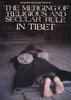
The Author
Dung-dkar blo-bzang 'phrim-las
was born in 1927 at Nying-khri-
rdzong (modern Nyingchi County)
to the east of Lhasa. When five
ycars of age, he was recognizcd as
the reincarnated Living Buddha of
the Dung-dkar Monaslcry, and he
adoptcd a Buddhisl name, Dung-
dkar blo-bzang 'phrim-las. He en-
tered the Smed grwa-tshang (Smed
Theological College) of the Se-ra
Monastery to study Buddhist texts,
and then studied at thc Lower Tan-
tric Collcgc and the Upper Tantric
College. He received the title of
Lha-ram-pa Dge-bshes (the highest
Buddhist academic degrce in Ti-
bel) in 1957. He has successively
hcld thc posts of vicc-chairman of
the Buddhisl Association of Tibet,
mcmber of the standing committee
of the Political Consultative Con-
ference of the Tibet Autonomous
Rcgion, and professor at the Cen-
tral Institute for Nationalities in
Bcijing and at Tibet University in
Lhasa.
He attendcd the 4th Internation-
al Tibctological Seminar at Mu-
nich in July 1985.
His works include Red Annals
wilh Annolations, 1981, Nationali-
tics Publishing House; and A List
of' Rare Tibetan Books, block
printing, Lhasa.
目录信息
I. The Tibetan Regime Before the Establishment of the
Politico-Religious Institution and the Rivalries Between
Bon and Buddhism in Tibet
1. Bon Religion and Tibetan Society Before the Introduction
of Buddhism into Tibet
2. The Economic and Political Situation in Tibet When Bud-
dhism Was Newly.Introduced
3. Rivalries Between Buddhism and Bon
4. The Earliest Tibetan Buddhist Monks and the Formation of
the Rnying-ma Sect
5. The Transformation of Some Tibetan Buddhist Monks
from Slave Owners into Feudal Landlords Owning Monas-
terial Estates
6. The Persecution of Buddhism by Glang-dar-ma
7. Period of Chaos in Tufan and Interior China
8. The Revival of Buddhism in Tibet
II. The Establishment of the Politico-Religious Institution
and the Struggle for Political Power Among the Elites
of Various Religious Sects
1. The Monopoly of the Sa-skya Sect of the Tibetan Local
Political Power and the War Between the Sa-skya Sect and
the Bri-gung Bka'-brgyud Sect
2. The Phag-gru Sect's Control of the Tibetan Local Regime
and the Rise of the Dge-lugs Sect
3. Intemal Wars Among the Rulers of the Phag-gru Regime
4. The War Between the Rin-spungs-pa and the Dge-lugs-pa
5 The War Between Sde-srid Gtsang-pa and the Dge-lugs-pa
6. Elimination of the Sde-srid Gtsang-pa Regime by Gu-shri
Khan, Establishment of the Original Tibetan Local Govern-
ment, and Suppression of the Rebellion of the Karma
Bka'-brgyud Sect
7. The Contradictions Between the Rnying-ma-pa and the
Dge-lugs-pa, and How the Upper Strata Elements Used
Those Contradictions to Launch Wars for Political Power
8. The Decline of the Politico-Religious System and the Inter-
nal Struggle for Power Within the Ruling Class
9. The Encroachment of Imperialists upon Tibet, and How
Reactionary Elements of the Upper Strata in Tibet Be-
trayed Their Country
10. The Launching of Armed Rebellion by Reactionary Upper
Strata Elements Under the Signboard of Religion and Na-
tion, and the Abrogation of the Polity Based on the Merging
of Religious and Secular Rule
III. Conclusion
IV. Bibliography
Appendixes
A. The Thirteen-Article Ordinance for the More Efficient Gov-
erning of Tibet
B. The Twenty-Nine-Article Ordinance for the More Efficient
Governing of Tibet
C. The Agreement of the Central People's Government and the
Local Government of Tibet on Measures for the Peaceful
Liberation of Tibet
· · · · · · (收起)
读后感
用户评价
这本书的学术视野相当开阔,它没有将研究对象孤立地看待,而是将其置于更广阔的亚洲大陆互动网络中进行考察。这一点非常难得,因为很多区域研究容易陷入“唯我独尊”的窠臼。作者巧妙地引入了周边政权和不同宗教思潮对该地区治理模式的影响,揭示了其制度的“借用性”和“适应性”。比如,它对早期政权与外部宗教势力的接触点分析,非常精妙地展示了文化输入如何被“在地化”并最终融入本土治理结构。行文间,时不时会蹦出一些对经典理论的批判性引用,显示出作者对当前学界主流观点的熟稔,并敢于提出自己的挑战性解释。这种“对话性”的写作方式,让整本书读起来像是与领域内顶尖学者进行的一场深度交流,而不是单方面的知识灌输。对于希望从比较政治和制度人类学的角度理解历史的读者来说,这本书提供了绝佳的参照系和分析工具。
与其说这是一本历史书,不如说它是一部关于“权力形态”的精细解剖学报告。作者对于“权力如何表达”、“权力如何被合法化”这两个核心问题的探讨,贯穿始终,并且呈现出极强的层次感。它不仅仅停留在对典章制度的描述层面,更深入到权力的“感知层面”——即普通民众如何体验和理解这种权力结构。书中对仪式、象征符号以及地方精英在维护制度稳定中的作用的分析,精彩绝伦。这些看似边缘的文化现象,在作者的笔下,瞬间成为了理解政治经济基础的钥匙。阅读时,我常常惊叹于细节的丰富性,仿佛透过文字的屏障,看到了一个复杂社会系统是如何在日常生活的微观层面进行自我复制和强化的。这种对制度生命力的探讨,远超出了传统政治史的范畴,更接近于一种社会权力动态学的研究。
这本书的文字给我一种“冷峻的诗意”。虽然主题严肃,逻辑缜密,但作者在构建历史场景或人物肖像时,偶尔会流露出一种克制的情感共鸣,使得严肃的学术论述没有沦为干巴巴的资料堆砌。它似乎在提醒我们,每一个制度背后,都是无数人的生命经验和艰难抉择的产物。我尤其欣赏它在处理制度转型期时所展现出的那种审慎和不带预设立场的态度。它没有急于给历史下一个断言,而是细致地展示了各种力量的拉扯、冲突与妥协。这种多角度的呈现,让读者得以自行建立起对历史复杂性的理解。读完后,我感受到的不是一个被简单概括的结论,而是一座由丰富史料构筑的知识迷宫,虽然复杂,但每条路径都指向了更深层次的洞察力。这本书无疑是近年来区域制度研究中的一座坚实里程碑,值得反复研读和思索。
这本书读下来,感觉作者在梳理历史脉络和制度演变上真是下足了功夫。它不像那种平铺直叙的教科书,而是通过大量的史料和细致的考证,将一个复杂的主题层层剥开,展现出其内在的逻辑和张力。尤其是在描述不同历史时期,地方权力结构是如何与宗教权威相互渗透、相互制约时,作者展现出的那种深邃的洞察力,让人耳目一新。我特别欣赏它在分析制度的“功能性”时,没有陷入简单的褒贬,而是努力去理解在特定的历史地理环境下,这种“合一”模式是如何被构建、维持,乃至最终走向转型的。它提供了很多关于文献源流和不同学派观点的对比,这对于理解一个制度的复杂性来说至关重要。读完后,我对许多过去模糊的概念都有了更清晰的认识,比如权力分散与中央集权的动态平衡是如何在特定的社会肌理中实现的,这其中涉及到的世俗法律与宗教戒律之间的互动关系,也展示了极高的研究水准。整体来看,这是一部对历史细节有着近乎苛刻要求的作品,能感受到作者长期的积累和深厚的研究功底,绝非泛泛之作。
这本书的叙事节奏和语言风格,用一个词来形容就是“沉稳而富有张力”。它不是那种追求通俗易懂而牺牲深度的普及读物,而是面向对区域历史和社会结构有一定了解的读者,探讨的是更高层面的组织原则。作者的文字带着一种学术的克制美,在描述重大历史事件或制度变革时,总是将情绪熔铸于严谨的逻辑推演之中。我个人印象最深的是其对社会治理细节的描摹,那些关于田亩、赋税、以及基层社区组织如何被纳入上层权力体系的论述,具体而微,充满了生活的气息。这使得宏大的制度分析不再是抽象的图表,而是与活生生的社会现实紧密相连。阅读过程中,我常常需要停下来,反复回味某些关键论断的构建过程,因为它要求读者不仅要接受结论,更要跟随作者的思路去检验前提假设。这种智力上的投入感,是阅读一部真正有价值的历史著作时才能获得的愉悦。它成功地将一个看似遥远的制度,置于一个动态的、不断自我修正的社会框架中进行考察。
你只要知道这本书是我党荣誉出品就够了
你只要知道这本书是我党荣誉出品就够了
你只要知道这本书是我党荣誉出品就够了
你只要知道这本书是我党荣誉出品就够了
你只要知道这本书是我党荣誉出品就够了