
具体描述
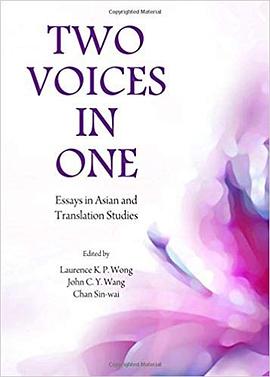
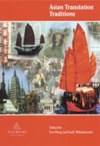
Translation Studies, one of the fastest developing fields in the humanities since the early 1980s, has so far been Euro-centric both in its theoretical explorations and in its historical grounding. One of the major reasons for this is the unavailability of reliable data and systematic analysis of translation activities in non-European cultures. While a number of scholars in the Western tradition of translation studies have become increasingly aware of this bias and its problems, practically indicates that the burden of addressing such deficiencies and imbalances should be on the shoulders of scholars who are conversant with the non-Western translation traditions and capable of engaging in much-needed basic research.
This book brings together eleven scholars with expertise in different Asian translation traditions, who highlight language and cultural environments as well as perceptions and modes of operation often different from those in the Western tradition. Their contributions enhance our understanding of the various elements that influence the transfer of knowledge across cultures and provide invaluable data for the study of translation as a force for cultural development and cultural planning.
Contributors include Eva Hung, Judy Wakabayashi, Lawrence Wong, Yoshihiro Osawa, Teresa Hyun, Keith Taylor, Rita Kothari, Doris Jedamski, Raniela Barbaza and Bill Cummings.
作者简介
Eva Hung served for nineteen years as Director of the Research Centre for Translation at the Chinese University of Hong Kong, during which time he promoted the study of Asian translation history. She left the field in mid-2005 to pursue her interests in other areas. Judy Wakabayashi is an associate professor of Japanese translation at Kent State University. Her research interests include the history of translation in Japan.
目录信息
This paper examines the historical similarities and differences that shaped translation norms in Japan, Korea and Vietnam, which all adopted Chinese characters as their written script and were greatly influenced by Chinese culture. A comparison is also made with translation in China itself. Factors considered include indigenous methods of reading Chinese texts and the subsequent availability of non-Chinese scripts, the selection of texts for translation, the status of the native vernacular in writing and the acceptance of Chinese vernacular fiction, and preferences for importing or coining translational equivalents. Other aspects examined include attitudes towards the introduction of Western ideas and towards translation as a means of national survival, the role of foreign translators, government and private sponsorship, and the professionalization of translation, as well as its theorizing and academic study.
Translation in China - An Analytical Survey: First Century B.C.E. to Early Twentieth Century, Eva Hung, pp 67-107.
This survey of Chinese translation activities, which spans two millennia, is based on an extensive study of primary sources. It begins with definitions of 'China' and 'translation' that reflect their historical contexts, and highlights special Chinese characteristics and phenomena - such as strong cultural superiority, the existence of non-Chinese dynasties, and the reliance on non-Chinese translation manpower - which had long-term impact on translation practices. The author identifies two categories into which translation activities fell: cultural translation that aimed at bringing change to the host culture, and government translation that aimed at strengthening the ruler's prestige and effectiveness. The paper delineates the major differences between cultural and career translators, ranging from linguistic ability and mode of operation to their sense of loyalty and purpose. It then gives an account of both categories of translation work done in China, as well as the drastic changes in the early twentieth centuries that have obfuscated the true historical picture.
From 'Controlling the Barbarians' to 'Wholesale Westernization': Translation and Politics in Late Imperial and Early Republican China, 1840-1919, Lawrence Wang-Chi Wong, pp 109-134.
This paper traces the development of translation activities in late Imperial and Early Republican China, focusing on the intellectuals' change of attitude towards translating Western Learning. A number of major issues are discussed: (1) How and why was translation adopted as the means to modernize and save the country? (2) What texts were selected for translation in order to fulfill this purpose? (3) What were the opposing voices and how were they dealt with? (4) What were the changes in people's attitude towards translating Western Learning? (5) What impact did such translation activities have on China socially, politically and culturally?
Amalgamation of Literariness: Translations as a Means of Introducing European Literary Techniques to Modern Japan, Ohsawa Yoshihiro, pp 135-154.
Source-oriented attitudes formed through early contacts with Classical Chinese texts led to an acceptance of 'translationese' in Japan and continued to shape translators' attitudes throughout subsequent contacts with texts in European languages. The great differences between the indigenous literary tradition and European texts newly imported in the Meiji Period (1868-1912) sparked moves for a new vernacular-based written language and a revitalization of native literary traditions by drawing on translations for inspiration. The resulting language had a foreign ring to it, but its innovative effect led to its use not only in translations, but also in original works right through to today, such that the Japanese language now represents an amalgam of European and Japanese literary elements, with foreign elements being incorporated on a selective basis. The paper concludes by contrasting the situation in Japan with the typically target-oriented English translations of Japanese literature.
The Lover's Silence, The People's Voice: Translating Nationalist Poetics in the Colonial Period in Korea, Theresa Hyun, pp 155-168.
Koreans began to formulate their sense of modern nationhood during the period when they were faced with colonial oppression by Japan. At that time translations of foreign works contributed to the creation of modern literary forms as well as to broader cultural changes. The translators of the 1920s and 30s engaged in lively debates about the role of translation in enriching Korean language and culture. Kim Ok, one of the most prominent translators of the time, emphasized the efficacy of translating the works of the Indian poets Rabindranath Tagore and Sarojini Naidu as a means of promoting Asian sentiments and philosophical outlook. Kim Ok's Tagore and Naidu translations relate to nationalist images in certain original Korean works of the period. Women writers such as Kim Myong-Sun and Mo Yun-Suk combined some of the feminist and nationalist tendencies found in translated works. An examination of literary translations in the colonial period in Korea yields insights into the relationship of translation to changes in gender and national identities.
Sino-Vietnamese Translation from Classical to Vernacular, Keith W. Taylor, pp. 169-194.
This essay offers a brief survey of translation practices among Vietnamese speakers and, as an example, analyzes a seventeenth-century translation of a Buddhist text from Classical Chinese into vernacular Vietnamese that survives in an eighteenth-century reprinting. Analyses of places in the text where a discernible divergence appears between the source text and the target text offer opportunities to examine choices made by the translator and to explore the cultural context that might have plausibly conditioned those choices.
Rethinking the Translation in Translation Studies: Questions from Makassar, Indonesia, William Cummings, pp 195-210.
The Indonesian region of Makassar has long been a crossroads for trade and a contact zone in which speakers of diverse languages interacted. Since at least the early modern era, Makassarese were extraordinarily interested in foreign languages and written manuscripts. Yet despite this cosmopolitan background, with few exceptions Makassarese translated but a handful of foreign works. The explanation lies in the assumptions behind the process we term translation. This essay uses the example of Makassar to rethink the motivations and meanings that can be attached to translation. Translation must be viewed as part of a spectrum of possible relationships to foreign languages and foreign texts, all of which are means of gaining access to another culture through language. Translation may have surrogates of its own because of how it is enmeshed in the establishment, negotiation, and perpetuation of social relationships. The initially puzzling dearth of translations into Makassarese offers a window into the complexity of the linguistic and cultural dynamics that characterize contact zones throughout the Indonesian archipelago and beyond.
Translation in the Malay World: Different Communities, Different Agendas, Doris Jedamski, pp 211-245.
For many centuries in the Malay world active and questioning use has been made of Arabic, Chinese, Indian and European source texts of all kinds. They were translated into Malay as well as into regional languages. This article outlines indigenous translation activities and colonial translation policy during the 19th and 20th centuries as they affected Malay literature. With the growing interference of the European colonial power in the educational sector and text production, the situation and tactics of the translators - among them Eurasians, Chinese, Sino-Malay, Arabs, Malay and Javanese - could not but change. Influenced also by their differing ethnic backgrounds, these translators developed diverse strategies, revealing divergent and sometimes contradictory notions of translation, translation history, and 'ownership of the word'. This paper depicts the momentum that these concepts and strategies created in the Malay world. The screening and selection of cultural knowledge from outside the Malay traditions, as well as its purposeful acquisition and incorporation into the indigenous culture, has always relied on translation, but increasingly so when indigenously-run print media emerged in the Malay archipelago. From the late 19th century onwards literary translation in the broadest sense began to play a central role in the intellectual life of the Malay world. Within the indigenous context, a translation was apparently seen only as a first step, necessary to make the foreign source accessible, assessable, and - if deemed sufficiently relevant to be incorporated into the indigenous culture - adaptable.
Translation and the Korido: Negotiating Identity in Philippine Metrical Romances, Raniela Barbaza, pp 247-262.
This paper examines the korido metrical romance as a literary product borne out of the contact between the cultures of the Philippines and Spain. It investigates how the korido, as a form of rewriting, reveals the Filipinos' response towards Spanish domination. Mainly involving Spanish themes expressed through Spanish words, the koridos show how greatly Filipino culture has been dominated by Spanish culture. Using the Tagalog concept of translation as revealed through the word pagsasalin, the paper indicates how translation was employed by the Filipinos for their own purposes even as it was used in reconstructing their culture to suit the purposes of the conquering culture. The paper focuses on the korido Historia Famosa ni Bernardo Carpio sa Reinong España na Anac ni Don Sancho at ni Doña Jimena as a specific illustration of how the Tagalog concept of translation is revealed in the rewriting of the koridos.
The Fiction of Translation, Rita Kothari, pp 263-273.
Our understanding of translation and its attendant norms such as faithfulness and accuracy are premised upon fixed textuality, a legacy of print capitalism. Even after the firm establishment of the print media in India, however, everyday practices of translation continue to escape the awareness of a fixed text - examples of uninstitutionalized, unselfconcious, unauthorized translations point to continuation of pre-colonial traditions. The denial of the text's fixity manifests itself in practices ranging from creative re-invention to blatant plagiarism. Drawing examples from translations of popular, best-selling American novels into Gujarati, this paper shows how the imperatives of a mass market defy translation norms and yet translations of bestsellers pay handsome tributes to the 'originals'. The paper argues for theoretical frameworks that accommodate a large mass of unacceptable, uninstitutionalized and yet effective translations. It also touches upon the legal context of adaptations and translations in order to evolve a historiography of translation that incorporates implicit worldviews and explicit laws governing acts of translation.
· · · · · · (收起)
读后感
用户评价
《Asian Translation Traditions》是一本让我受益匪浅的学术力作。我作为一名语言学者,一直关注语言的演变和传播,而这本书恰好为我提供了一个绝佳的案例研究。书中关于早期丝绸之路上的翻译实践,以及各种语言(如古波斯语、希腊语、阿拉伯语、汉语)之间如何相互影响和借鉴,为我提供了宝贵的研究材料。作者对翻译文本的考证,对不同译本之间差异的分析,以及对这些差异背后原因的探讨,都展现了其严谨的学术态度。我尤其对书中关于翻译在促进学术交流、知识传播方面的作用的论述印象深刻,它让我看到了翻译在推动人类文明进步中所扮演的不可或缺的角色。阅读这本书,我仿佛置身于一条繁忙的文化交流的丝绸之路上,亲眼见证着不同文明的碰撞与融合。
《Asian Translation Traditions》为我打开了一个全新的视野,让我得以窥见亚洲翻译史上那些鲜为人知的瑰宝。我一直以为翻译就是把一种语言变成另一种语言,但这本书彻底颠覆了我的认知。它揭示了在亚洲这片广袤的土地上,翻译不仅仅是语言的技艺,更是一种政治、宗教、文化甚至身份认同的塑造过程。书中对早期中日韩三国之间翻译交流的详细描绘,让我看到了汉字文化圈在翻译领域的独特地位和相互影响。例如,日本的汉文翻译如何受到中国的影响,又如何发展出自己独特的风格,以及朝鲜王朝时期翻译的《训民正音》如何促进了朝鲜本土语言的发展。作者在论述中引用的史料丰富而精确,对各种翻译文献的分析鞭辟入里,让我深刻体会到翻译在维系和促进区域文化交流中的关键作用。读完这本书,我感觉自己对亚洲历史和文化的发展脉络有了更清晰的认识,它就像一把钥匙,为我解锁了通往亚洲文化深处的大门。
《Asian Translation Traditions》为我提供了一个多角度审视亚洲翻译史的绝佳平台。我一向对艺术和文化之间的联系很感兴趣,而这本书中关于翻译在亚洲戏剧、音乐和绘画等艺术形式传播中的作用的论述,让我大开眼界。书中对中国戏曲如何通过翻译传播到东南亚,以及印度舞蹈艺术如何在亚洲其他地区落地生根的详细介绍,都让我看到了翻译在跨文化艺术交流中的独特魅力。作者对翻译在保持艺术原作精神的同时,又能够融入当地文化元素的精妙把握,都让我为之惊叹。阅读这本书,我感觉自己仿佛置身于一个色彩斑斓的艺术博览会,欣赏着不同文化碰撞出的火花,也感受着翻译在连接不同艺术形式、丰富人类精神世界方面所发挥的巨大作用。
这本书的叙述风格流畅而富有感染力,将亚洲翻译史上的许多重要事件和人物栩栩如生地展现在读者面前。《Asian Translation Traditions》让我看到了翻译在塑造亚洲文化认同和国家形象中的重要作用。我一直对近现代亚洲国家如何通过翻译来吸收西方先进的科学技术、政治思想,并在此基础上形成自己的现代化道路很感兴趣。书中对日本明治维新时期翻译政策的详细分析,以及中国晚清民国时期引进西方学术思想的翻译实践,都让我对这个转型时期的亚洲有了更深刻的理解。作者对翻译在政治宣传、意识形态传播方面的作用的论述,也让我对翻译的社会功能有了更全面的认识。这本书让我看到了翻译不仅仅是文字的转换,更是思想的传递和文化的建构。
《Asian Translation Traditions》是一本极具启发性的学术著作,它不仅提供了一个宏观的亚洲翻译史概览,更在微观层面深入探讨了许多鲜为人知的翻译实践。我一直在研究丝绸之路上的翻译问题,而这本书为我提供了大量宝贵的资料和全新的研究视角。书中关于粟特语、于阗语等在中亚地区翻译活动中的作用,以及这些语言是如何成为东西方文化交流的桥梁,让我对丝绸之路的文化交融有了更深刻的理解。作者对文献材料的细致梳理,对不同译者群体(如佛教僧侣、官府译官、民间翻译者)的分类讨论,都展现了其扎实的学术功底。读完这本书,我感觉自己的研究视野得到了极大的拓展,对丝绸之路的理解也更加全面和立体。这不仅仅是一本关于翻译的书,更是一部关于文化交流、文明互鉴的史诗。
这本书的文字如同一条蜿蜒流淌的河流,将亚洲各国翻译史上的点点滴滴汇聚在一起,形成了一幅壮丽的画卷。《Asian Translation Traditions》让我领略了翻译在亚洲历史进程中所扮演的至关重要的角色。我特别关注书中关于阿拉伯语翻译活动在伊斯兰世界的影响,以及这些翻译如何将古希腊哲学、科学知识传播到东方,并对亚洲的学术思想产生深远影响。作者对翻译过程中可能出现的误译、漏译以及译者个人的风格倾向的分析,都极具洞察力,也让我认识到翻译并非一项简单的机械劳动,而是充满智慧和创造性的活动。书中对不同历史时期翻译政策的探讨,以及翻译在巩固统治、传播意识形态方面的作用,都让我对翻译与政治的关系有了新的认识。这本书让我对亚洲知识传播的路径和机制有了更深层次的理解,也让我看到了翻译在塑造人类文明进程中的巨大力量。
《Asian Translation Traditions》是一本让我沉醉其中的学术探索。我一直对印度文化与亚洲其他文化之间的互动关系感到好奇,而这本书正好满足了我对这方面的求知欲。书中关于梵文文学,尤其是《摩诃婆罗多》和《罗摩衍那》在东南亚和东亚的传播与翻译,以及它们如何与当地的宗教、神话和文学传统相结合,形成了丰富多样的变体,让我叹为观止。作者对翻译策略的分析,比如意译、直译,以及如何根据当地文化接受程度进行调整,都为我提供了宝贵的参考。我尤其欣赏书中关于翻译在推动哲学思想、宗教信仰传播方面的作用的论述,它让我看到了翻译不仅仅是语言的搬运工,更是文化的工程师。阅读这本书,我感觉自己仿佛置身于一个跨越时空的文化对话之中,与古老的亚洲文明进行着深刻的交流。
我从《Asian Translation Traditions》中获得的不仅仅是知识,更是一种对文化多样性的深深敬意。这本书以一种非常人性化的视角,描绘了亚洲翻译史上那些鲜为人知的幕后故事。我一直对早期基督教和摩尼教在亚洲的传播很感兴趣,而这本书详细介绍了这些宗教文本是如何被翻译成各种亚洲语言,以及在翻译过程中为了适应当地的文化和宗教观念所做的调整。作者对翻译者在传播过程中所面临的挑战和付出的努力的细致刻画,让我深深感动。他们不仅要克服语言障碍,还要面对文化差异、政治压力甚至生命危险。这种坚韧不拔的精神,正是推动人类文明进步的强大动力。这本书让我对“翻译”这个词有了更深刻的理解,它是一种勇气,是一种智慧,更是一种爱。
我最近拜读了《Asian Translation Traditions》,这本书真是一次令人惊叹的文化探索之旅。我一直对语言的转化过程以及它们如何跨越文化鸿沟产生浓厚兴趣,而这本书恰恰满足了我所有的好奇心。作者深入浅出地剖析了亚洲各个地区,从古老的中国到神秘的印度,再到充满活力的东南亚,其翻译的丰富传统。我尤其被书中关于佛教文本翻译的章节所吸引,它详细阐述了梵文、巴利文等语言的佛经是如何被翻译成汉文、藏文等,并在这个过程中如何形成了独特的翻译策略和理论。这种跨文化的文本流转,不仅仅是语言的转换,更是思想、哲学和宗教信仰的传播与融合,读来令人心潮澎湃。作者对历史文献的细致考证,对不同译者风格的精妙分析,都展现了其深厚的学术功底。在阅读过程中,我仿佛置身于那些古代的译经场,与那些默默耕耘的译者们一同呼吸,一同感受智慧的光芒。这本书让我对“翻译”这个概念有了更深层次的理解,它远不止是简单的词语替换,而是一种深刻的文化对话和创造。
作为一名对文学和语言都怀有深情的人,《Asian Translation Traditions》无疑是一本让我爱不释手的杰作。作者以一种近乎诗意的笔触,描绘了亚洲翻译史上的种种波澜壮阔。我尤其沉迷于书中关于印度史诗《罗摩衍那》在东南亚各国的传播与变异的章节。这些故事,经过一代又一代的翻译、改编和本土化,最终形成了各自独具特色的版本,比如泰国版的《罗摩坚》、马来西亚版的《哈嘛》。这种跨文化的文学移植,不仅是语言的转换,更是文化基因的传播与再创造。作者对不同版本之间细微差异的敏感捕捉,以及对这些差异背后文化动因的深刻洞察,都让我为之惊叹。阅读这本书,我仿佛在品味一杯陈年的佳酿,每一口都散发着历史的醇厚和文化的芬芳。它让我看到了语言的强大生命力,以及翻译在连接不同文明、丰富人类精神世界方面所扮演的不可或缺的角色。
Eurocentric--> non-European cultures
Eurocentric--> non-European cultures
灰常灰常好的读本,尤其是Eva Hung和Lawrence Wong的两篇!!
Eurocentric--> non-European cultures
灰常灰常好的读本,尤其是Eva Hung和Lawrence Wong的两篇!!