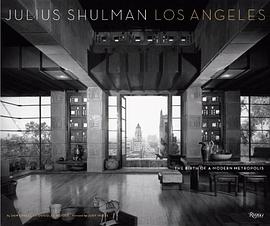
The renowned architectural photographer shares four crucial decades' worth of images of the city he loved, celebrated, and made iconic. With a life and career spanning nearly a century, Julius Shulman is credited with furthering the midcentury modernism movement through his flawless photographs of the pioneering architecture of Richard Neutra and Charles Eames, among others. While Shulman's pictures comprise the most published images of the modernist movement, this new monograph presents many never-before-seen images on a subject closest to Shulman's heart: Los Angeles and its environs--including Palm Springs and other suburbs. These affecting photographs show Los Angeles as a living organism, simultaneously vibrant and volatile depending on the neighborhood. This tension is apparent in Shulman's documentation of then-emerging areas like Century City, Wilshire Boulevard, and Echo Park, as well as his studies of landmarks like the Watts Towers and Grauman's Chinese Theatre. Many of the Los Angeles buildings and neighborhoods photographed by Shulman have since been overhauled, torn down, or otherwise altered beyond recognition, making these images some of the only lasting testaments to their existence. Selected from his personal collection as well as his official archives, the photographs included in this book represent not only lesser-known and never-before-seen material, but also some of Shulman's own personal favorites.
Julius Shulman and Los Angeles traces the profound relationship between architecture, landscape, and identity in mid-20th century Southern California. Through a luminous collection of photographs, the book reveals how Shulman’s iconic images captured not just buildings but entire atmospheres—sun-drenched modern homes nestled in sprawling desert vistas, palm-lined boulevards framing open spaces, and urban life unfolding beneath vast skies. Each frame is a meditation on light, form, and the evolving cultural spirit of Los Angeles, where mid-century modernism bloomed amid rapid expansion and artistic innovation. Shulman’s work transcends architectural documentation; it is deeply rooted in storytelling. The photographs frame everyday spaces—backyards hosting intimate gatherings, rooftop terraces overlooking the city, open-air studios where creativity thrives—infusing them with a sense of belonging and aspiration. His lens captures not only sleek glass-and-steel structures but also the subtle interactions between people and their environments: children playing in sun-diffused patios, couples sharing quiet moments on sunlit balconies, neighbors gathering beneath palm trees. Beyond its visual beauty, the book offers historical context, tracing how Shulman’s images shaped global perceptions of Los Angeles as a capital of modern design. His photographs were instrumental in defining an aesthetic that merged functionality with sensuality—where clean lines and natural materials coexist with warmth and openness. The interplay between architecture and landscape reveals layers of social transformation: from the postwar suburban dream to the integration of nature into urban life, and the evolving role of public space in a sprawling metropolis. Shulman’s compositions balance precision and spontaneity—light plays across surfaces with almost painterly grace, while everyday scenes gain an emotional resonance that elevates them beyond mere documentation. The book invites readers to experience Los Angeles not as a static backdrop but as a living entity shaped by human endeavor, artistic vision, and environmental dialogue. Through meticulous curation and rich historical insight, Julius Shulman and Los Angeles stands as both an architectural masterpiece and a cultural archive, illuminating how one photographer’s eye could capture the soul of a city in motion.