具体描述
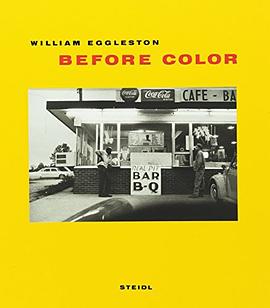
William Eggleston’s Guide is a seminal work that captures the quiet poetry of everyday Southern life through a bold, almost unapologetic embrace of color. Published in 1976 by Aperture, this book emerged during a pivotal moment in photographic history when color was still contested as a serious artistic medium. Eggleston, often credited with legitimizing color photography within fine art circles, presents a body of work that defies the documentary clichés of his predecessors. His images—taken primarily between 1973 and 1975 across Mississippi and surrounding regions—reveal a world saturated in orange skies, green lawns, and the muted tones of American suburban and rural existence. What sets Eggleston’s approach apart is his deliberate rejection of dramatic lighting or emotional manipulation. Instead, he captures moments with a precise, almost clinical clarity—gas pumps at twilight, weathered barn exteriors, the reflection of neon signs in puddles after rain. Each frame feels both intimate and detached, as if observed from a quiet distance rather than an emotional immersion. This compositional restraint gives his work a meditative quality, drawing attention not to narrative drama but to the subtle textures, contrasts, and chromatic harmonies embedded in mundane scenes. Eggleston’s technical mastery lies in his use of Kodak Ektachrome film, chosen for its rich yet natural color rendition. He often shoots during the transitional light of early morning or late afternoon—times when the sun softens into a diffuse glow that enhances rather than overwhelms. His framing emphasizes patterns and repetition: rows of mailboxes, clusters of flowering trees, reflections in asphalt. These formal elements elevate ordinary settings into visual meditations on time, place, and perception. Though not overtly political, the series carries an undercurrent of cultural observation. The South portrayed here is neither romanticized nor simplified; it is rendered with unflinching honesty—its landscapes marked by decay and resilience, its people anonymous yet vividly present. This quiet realism resonated deeply in a post-civil rights era, offering a nuanced counterpoint to idealized visions of American life. Eggleston’s Guide also played a crucial role in shifting the institutional recognition of photography. Its inclusion in major museum collections and exhibitions helped affirm color photography as a legitimate art form. Today, it remains a touchstone for understanding how photographic practice can transform the familiar into the profound, inviting viewers to see beauty and meaning in the overlooked corners of ordinary existence.