
具体描述
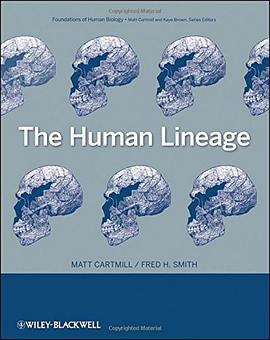
“This textbook, aimed at advanced undergraduates and postgraduates in paleoanthropology courses, tackles a rather difficult task—that of presenting the substantial body of paleontological, genetic, geological and archaeological evidence regarding human evolution, and the associated scientific history, in a logical and readable way without sacrificing either clarity or detail... the sheer quality of the writing and explanatory synthesis in this book will undoubtedly make it a valuable resource for students for many years.” – PaleoAnthropology, 2010 This book focuses on the last ten million years of human history, from the hominoid radiations to the emergence and diversification of modern humanity. It draws upon the fossil record to shed light on the key scientific issues, principles, methods, and history in paleoanthropology. The book proceeds through the fossil record of human evolution by historical stages representing the acquisition of major human features that explain the success and distinctive properties of modern Homo sapiens. Key features: Provides thorough coverage of the fossil record and sites, with data on key variables such as cranial capacity and body size estimates Offers a balanced, critical assessment of the interpretative models explaining pattern in the fossil record Each chapter incorporates a "Blind Alley" box focusing on once prevalent ideas now rejected such as the arboreal theory, seed-eating, single-species hypothesis, and Piltdown man Promotes critical thinking by students while allowing instructors flexibility in structuring their teaching Densely illustrated with informative, well-labelled anatomical drawings and photographs Includes an annotated bibliography for advanced inquiry Written by established leaders in the field, providing depth of expertise on evolutionary theory and anatomy through to functional morphology, this textbook is essential reading for all advanced undergraduate students and beginning graduate students in biological anthropology.
作者简介
Matt Cartmill is a Professor in the Department of Biological Anthropology and Anatomy at Duke University. His areas of interest include: Bipedal locomotion, Gait analysis, and Origin and differentiation of primates in addition to several other subjects.
Fred H. Smith is a biological antrhopologist with specific interests in human paleontology and functional anatomy. He teaches courses in human paleontology, human osteology, introductory biological anthropology, and the paleolithis prehistory of Europe and Africa.
目录信息
Chapter 1 The Fossil Record
Chapter 2 Analyzing Evolution
Chapter 3 People As Primates
Chapter 4 The Bipedal Ape
Chapter 5 The Migrating Ape: Homo erectus and Human Evolution
Chapter 6 The Big-Brained Ape: Regional Variation and Evolutionary Trends in the Middle Pleistocene
Chapter 7 Talking Apes: The Neandertals
Chapter 8 The Symbolic Ape: The Origin of Modern Humans
Appendix: Cranial Measurements
Bibliography
Index
· · · · · · (收起)
读后感
用户评价
这本书的语言本身就具有一种独特的韵律美,这在科学写作中是相当罕见的。它兼具了诗歌的精确性和历史学家的宏大视野。作者似乎对词汇有着近乎挑剔的选择,每一个形容词都像是经过了亿万年的打磨才最终定稿。我尤其喜欢那些充满画面感的描述,比如对早期火的使用,它不仅仅是热能的获取,更像是文明的第一缕曙光,被描绘得既神秘又具有无可抗拒的诱惑力。而且,书中对“失去”和“消亡”的描绘非常克制且令人动容。当提及那些已经灭绝的人属物种,比如“鲁道夫人”或早期的“能人”群体,作者的笔调中流露出的不是胜利者的傲慢,而是一种对生命多样性的尊重和对共同祖先的缅怀。这种情感的深度,让原本冰冷的化石记录充满了人性的温度,也使得我们的现代身份显得更加谦卑和珍贵。这本书读完后,留下的不仅仅是知识的填充,更是一种对存在本身的沉思。
这部作品的叙事节奏感是它最引人注目的特点之一。它不是那种平均用力,始终保持高昂情绪的写作方式,而是极其懂得“收放自如”。在描述漫长的、几乎没有显著变化的演化阶段时,作者会放慢语速,用几乎是冥想式的笔触,描绘出早期灵长类动物在森林中的生存日常,那种对环境的依赖和对微小变化的敏感度,令人心神宁静。然而,一旦涉及到环境剧变,比如火山爆发或者气候带的大规模迁移,叙事的张力就会骤然提升,文字变得紧凑有力,仿佛读者正和书中的主角们一同奔跑在危机四伏的平原上。这种节奏的张弛有度,使得长达数百万年的时间跨度显得不再抽象,而是被切割成了无数个可以被感知、被体验的“时刻”。我发现自己不仅在阅读,更是在“经历”着物种的兴衰沉浮。特别是关于迁徙和适应性的章节,那种信息密度和情感冲击的结合,让我几乎无法合卷,生怕错过下一个关键的基因突变或行为创新。
要说这本书有什么“缺点”,可能就是它对读者的知识储备有那么一点点挑战性,但即便如此,作者也尽力做到了通俗易懂。我指的是那种面对深层生物学机制时的震撼。书中对基因漂变、适应性辐射等概念的阐述,不是敷衍了事,而是深入到了分子层面,去探讨某些关键基因如何塑造了我们独特的认知能力和身体构造。但高明之处在于,即便在讨论复杂的遗传学原理时,作者也始终将其锚定在可感知的、生存的场景中——比如,为什么某些群体在应对特定病原体时更具优势,或者是什么样的社会结构促成了工具制造的复杂化。这种自下而上的论证方式,极大地增强了说服力。它迫使读者跳出以现代人类为中心的视角,去理解生命演化是一个充满随机性和环境筛选的复杂机器。我合上书后,对“自然选择”这四个字有了更深层次的敬畏,它不再是一个抽象的理论,而是无数次在生死存亡边缘做出的冷酷计算。
这本书真是让人爱不释手!我通常对这种跨越时间尺度的叙事持保留态度,因为它们很容易变得宏大空洞,但《The Human Lineage》成功地将宏大的进化史诗与个体生命体验巧妙地编织在一起。作者的笔触细腻得令人惊叹,每一次对古老环境的描绘,仿佛都能闻到泥土和苔藓的气息。尤其让我震撼的是,他们如何处理那些关键性的生物学转折点——比如直立行走或者语言的萌芽——这些在教科书中枯燥的知识点,在这里被赋予了强烈的戏剧张力和近乎史诗般的宿命感。我特别欣赏作者对于“不确定性”的处理,他们没有将人类的演化描绘成一条笔直、命中注定的康庄大道,而是充满了岔路、失败的尝试和偶然的机遇,这使得整个故事读起来既真实又充满张力。读到某些章节时,我甚至会停下来,凝视着窗外,思考我们现在所处的这个“瞬间”,与数百万年前祖先在稀树草原上的挣扎相比,究竟是何种程度的幸运与必然的结合。这本书远不止是关于“我们从哪里来”的科普读物,它更像是一面镜子,映照出我们作为现代智人的脆弱与韧性,那种对自身起源的深刻探寻,简直是思想上的饕餮盛宴。
我以一个对古人类学有基础了解的读者的身份来评价这本书,坦白说,我起初担心它会落入过度娱乐化或过于学术化的两个极端,但《The Human Lineage》找到了一个近乎完美的平衡点。它在保持严谨的科学基础(这一点从引用的研究深度就可以看出)的同时,叙事流畅得让人感觉不像是在阅读一部学术作品,更像是在追一部引人入胜的家族秘史。我尤其欣赏作者在描述不同人属物种之间的互动和竞争时的克制与洞察力。他们没有简单地将尼安德特人或丹尼索瓦人描绘成我们的“失败的表亲”,而是赋予了他们复杂的生活方式和文化遗产,这极大地拓宽了我对“人类”这个概念的理解边界。书中对工具制造技术演变——从莫斯特文化到旧石器晚期——的分析,简直是教科书级别的清晰。作者解释复杂的技术飞跃时所采用的类比,巧妙地绕开了生硬的术语堆砌,让即便是初次接触这些概念的读者也能迅速掌握其精髓。总而言之,这是一部既能满足老饕的求知欲,又能引导新手的杰作,那种对细节的偏执与对宏观图景的把控能力,实在令人佩服。