
具体描述
Product Description
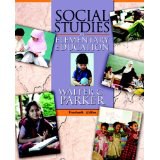
The author wrote this new edition of the most popular elementary social studies methods text on the market with the following three goals in mind: to present the most powerful social studies content and pedagogy for children in elementary school, to offer the material in simple and accessible ways, and to write in a first person active voice. The purpose of this book is to introduce new teachers to the world of social studies teaching and learning in elementary and middle schools. Geography, history, government and the other social sciences are delivered into the palm of the new teacher’s hand along with a suite of tools for bringing social studies to life in the classroom.
The book is organized into three sections—the first orients the reader to the mission of social studies education to the increasingly diverse children we teach, the second concentrates on the curriculum, and the third deals with instruction, how we plan and teach this curriculum. Three central themes continue to pervade the book—democratic citizenship, diversity, and the social sciences—to ultimately encourage teachers to excite their students about closing the gap between social realities and democratic ideals. An exceptionally strong chapter on multicultural issues (Chapter 2) helps future teachers truly understand the changing demographics of the American classroom.
Abridged NCSS standards and their classroom applications are found at www.myeducationlab.com.
From the Publisher
Comprehensive in scope, but streamlined in form, this widely-adopted exploration of social studies in elementary education is exceptionally up to date -- offering a solid foundation in both traditional and cutting-edge theory and pedagogy. It details the mission of social studies education, considers the diversity of children in today's social studies classrooms, addresses the social studies curriculum (what is taught), and explores effective instruction (how it is taught). --This text refers to an out of print or unavailable edition of this title.
作者简介
Walter C. Parker
Professor in Curriculum & Instruction
122 Miller, Box 353600
College of Education, University of Washington
Seattle, WA 98195-3600
(206) 543-1847
denver@u.washington.edu
Education Publications Courses
I am a professor of education and an adjunct professor of political science at the University of Washington. My specializations are the civic development of children and adolescents, and social studies curriculum and instruction K-12. I teach social studies curriculum and instruction courses in the Teacher Education Program and graduate seminars on curriculum controversy, global education, democratic education, and strategies for interpreting qualitative data. My books include "Renewing the Social Studies Curriculum" (1991), "Educating the Democratic Mind" (1996), "Education for Democracy: Curricula, Contexts, Assessments" (2002), "Teaching Democracy: Unity and Diversity in Public Life"(2003), and "Social Studies in Elementary Education" (2011). I am now working on two projects: One aims at creating a more rigorous form of advanced high school coursework, one that doesn't mistake coverage for learning. The other examines the so-called "international education" movement in US public schools. Is it nationalistic education, as usual, operating under an assumed name?
One project I enjoy very much is the “research and practice” column I have at the journal Social Education. These essays have now been collected in my new book, Social Studies Today: Research and Practice (Routledge, 2010).
http://education.washington.edu/areas/ci/profiles/parker.html
目录信息
读后感
用户评价
这本书的整体基调似乎更偏向于对学科本质的哲学探讨,而非服务于日常教学的“How-to”手册。我对社会科学教学中“价值判断”的引入特别感兴趣,比如在讨论资源分配问题时,我们作为教师应该如何保持中立,同时引导学生形成自己的道德罗盘。这本书在这方面着墨不少,但它提供的“中立性”建议却非常保守,倾向于规避一切有争议性的话题,这在当今这个信息爆炸、观点多元的时代,是极其不负责任的。社会科学的魅力恰恰在于它能教会孩子如何辩论、如何倾听对立的观点,并最终形成有理有据的结论。这本书似乎过于担心“教导政治观点”,以至于削弱了社会科学本应具有的思辨力量。我更期待看到一些关于如何巧妙设计“争议性问题引导卡片”的模板,或者一些处理学生课堂上激烈争论的实用技巧。很遗憾,这本书更像是一本“不要做什么”的警告手册,而不是一本“如何做得更好”的创新指南,这使得它在激发教师的教学热情方面显得力不从心。
拿到这本书的时候,我正焦急地寻找一套能够系统梳理美国历史教育在小学阶段如何分层、递进的教学框架。我的直观感受是,这本书在理论建构上花费了过多的笔墨,导致其实践价值被大大稀释了。它花了大量篇幅去梳理社会科学的学科分支——地理、历史、经济、政治,但对于这些分支如何有机地整合到小学低年级(比如一二年级)的课程设计中,却鲜有细致的描述。例如,如何用游戏化的方式引入“供需关系”的基本概念,让一个七岁的孩子能够初步理解,这本书里并没有提供令人信服的范例。我尤其希望看到一些关于“时间感”培养的有效方法,因为对于小学生来说,区分“过去”、“现在”和“未来”本身就是一个巨大的认知挑战。书中的案例讨论往往停留在高中或大学的教育层面,强行嫁接到小学场景时,显得非常生硬和不切实际。它的语言风格过于学术化,充满了晦涩的术语,使得即便是资深教师在快速阅读时也需要频繁查阅词典,这显然不符合小学教育工作者快节奏、重实效的工作特点。这本书更像是为教育学研究生准备的入门读物,而非为我们这些需要立刻站上讲台的教育实践者量身打造的工具箱。
这本书的标题让人充满了期待,然而阅读体验却像是在走一条布满迷雾的小径,每一步都充满不确定性。我原以为会看到一些扎实的教学案例,关于如何将复杂的社会概念转化为孩子们可以理解的故事和活动,结果这本书更多的是在空泛地讨论“社会科学的重要性”这个宏大命题,却很少提供具体的、可操作的教学策略。比如,当谈到如何教授“公民责任”时,作者倾向于引用一些抽象的哲学理论,而不是给出如何在日常课堂中引导孩子们进行角色扮演、模拟选举或者社区服务活动的具体步骤。这对于一线教师来说,帮助实在有限。我们需要的不是再听一遍社会科学多么重要,而是亟需知道“如何做”才能让孩子们真正参与进来,产生兴趣。书中对于多元文化教育的论述也显得有些陈旧,大多停留在“介绍不同文化习俗”的表层,缺乏深入探讨如何处理文化冲突、如何培养真正的文化敏感性,以及如何将不同族裔和背景的学生的经验融入到主流课程中的深度讨论。整体感觉,这本书更像是一篇学术论文的节选集,而非一本真正面向小学教育工作者的实用指南,留给我的是一种“知道了很多,但什么也做不了”的无力感。
读完这本书,我最大的感受是理论与实践之间横亘着一道巨大的鸿沟。作者似乎对小学阶段儿童的认知发展特点理解得不够深刻。例如,书中多次提到“培养历史同理心”,这是一个崇高的目标,但对于一个刚刚学会阅读简单句子的小学生来说,如何让他们真正代入一个遥远历史人物的处境?有效的做法应该是从他们熟悉的生活经验入手,比如讨论“如果我没有手机会怎样”,而不是直接去分析中世纪贵族的困境。书中给出的活动建议,比如组织复杂的模拟法庭或者要求学生撰写长篇的历史分析报告,对于小学中高年级来说都是过于沉重和不切实际的负担。此外,这本书对技术融入社会科学教学的讨论也显得非常滞后。它提及了使用投影仪展示图片,但完全没有触及当前教育技术的前沿应用,比如如何利用虚拟现实(VR)技术进行沉浸式历史场景体验,或者如何使用交互式地图工具进行地理探索。对于希望将课堂带入21世纪的学生们来说,这本书提供的信息更新速度太慢了,感觉像是在阅读一本十年前的教材导读。
这本书给我的印象是,它在试图涵盖“社会科学”的每一个角落,结果却像一个巨大的、杂乱无章的工具箱,里面塞满了各种你可能永远用不到的扳手和螺丝刀。我最看重的是课程设计中的“跨学科连接”,因为在真正的小学课堂里,我们几乎不可能孤立地教授一门“社会科学”课。我期待这本书能提供一些关于如何将地理知识融入到阅读课的地图分析中,或者如何利用历史人物的传记来驱动写作练习的范例。然而,这本书的章节划分非常僵硬,历史讲历史,地理归地理,缺乏那种流畅的、以项目为驱动的整合思路。更令人沮丧的是,书中对评估方式的讨论也显得非常单薄。在强调形成性评估的今天,我们迫切需要知道如何设计观察性清单、如何记录学生在小组讨论中的贡献,以及如何公正地评估一篇关于社区考察的小报告。这本书似乎还停留在传统的单元测试和标准化考试的窠臼里,对于如何衡量学生批判性思维和协作能力的发展,几乎没有提供任何实质性的指导框架。对于一个追求创新教学模式的教师来说,这本书的参考价值远低于预期。