
具体描述
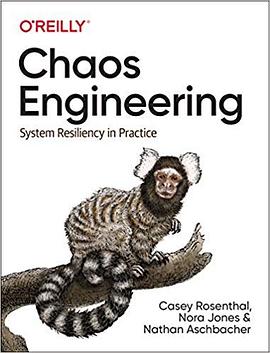
There’s more to chaos engineering than deliberately breaking stuff in production. With this book, QA engineers as well as program and product managers will examine the theory, history, and implementation of this full-fledged software engineering discipline. Chaos experts Casey Rosenthal, Nora Jones, and Nathan Aschbacher will bring you up to speed on this practice for finding failures within your application, network, and infrastructure.
As the software industry continues to move toward microservices and other complex, distributed systems, fewer people are able to hold a working picture of the entire system in their minds. Complexity can’t be removed from these systems, but new methodologies allow engineers to navigate the complexity while optimizing for business goals such as feature velocity, performance, and fault tolerance. This book guides you through chaos engineering and demonstrates how this methodology can help you optimize for availability.
作者简介
Casey Rosenthal formalized the practice of Chaos Engineering by co-writing and publishing the definition http://principlesofchaos.org/ with the Chaos Team at Netflix, which he managed for three years. He put together a conference on the topic called Chaos Community Day, the only conference dedicated to Chaos Engineering, which is now entering its fourth year. Casey also manages the Chaos Engineering Community Google Group and co-wrote the Chaos Engineering O’Reilly report. He is currently CTO at Backplane.io, a company that provides reliable and resilient infrastructure.
Nora Jones is a Senior Software Engineer on the Chaos Engineering team at Netflix where she works on ensuring that Netflix remains resilient in the face of uncertain conditions. She is also a student of Human Factors and Systems Safety at Lund University. She is passionate about resilient software, people, and the intersection of those two worlds. She recently keynoted at AWS re:Invent to an audience of ~40,000 people about the benefits and business case behind implementing Chaos Engineering. Prior to Netflix Nora founded and led the Developer Productivity team at Jet.com.
Nathan Aschbacher is currently CEO of Auxon Corporation. He began his career writing programs for CNC machines where overlooked edge cases resulted in mangled heaps of metal, broken tool bits, and lasting impressions of catastrophic failure. Over the many years since, Nathan has designed fault-tolerant, highly-available, and high-assurance systems for distributed data platforms, machine learning, and global payment processing. Nathan first applied Chaos Engineering principles to problems in the FinTech space, transferred the practice to autonomous vehicle development, and now explores the marriage of formal methods and Chaos Engineering for verifying and validating the resiliency of complex, highly-automated safety-critical systems in a number of different domains (e.g., automotive, industrial automation, and aerospace).
目录信息
读后感
用户评价
我得说,这本书的叙事节奏非常跳跃,有时候让人感觉像是在读一本散文诗集,而不是技术专著。它的语言风格非常注重意境的营造,大量的比喻和类比充斥其间,比如将微服务架构比作一个失控的蜂巢,将延迟抖动形容为宇宙背景辐射的微小波动。这种文学性的表达,对于习惯了清晰逻辑和明确定义的工程师来说,初读时可能会感到困惑,甚至有些抓狂。我花了相当长的时间去解码那些看似玄妙的段落,试图从中提取出可执行的步骤。有趣的是,当我放下对“马上就能用”的执念后,我开始欣赏作者是如何通过这种间接的方式,来描绘现代复杂系统运行的本质困境的。它没有提供标准答案,而是提供了一种全新的观察问题的“视角”。例如,它对“边界条件”的讨论,已经超越了传统软件测试的范畴,进入了一种近乎形而上的层面,探讨的是系统在熵增过程中的必然归宿。读到后面,我发现自己不再关注那些具体的命令行参数,反而开始思考我们业务流程中的那些隐性依赖链,那些我们从未将其视为“故障点”的地方。
这本书,说实话,刚拿到手的时候,我对它的期待值其实挺高的,毕竟“混沌工程”这个名字本身就带着一种扑面而来的、对系统稳定性的终极挑战意味。我本来以为会看到一套非常系统、严谨的、关于如何在生产环境中模拟各种故障场景的“行动指南”。然而,读完之后,感觉这本书更像是一本探讨“哲学思辨”的著作,而不是一本操作手册。它花了大量的篇幅去追溯“混沌”这个概念在计算机科学发展史中的地位,探讨了分布式系统固有的脆弱性是如何被我们这些架构师和工程师有意无意地放大的。书中对“预期之外的失败”的描述,尤其是在描述那些由微妙的时间差和资源竞争导致的级联崩溃时,那种笔触细腻得让人不寒而栗。它没有直接告诉你如何用某个特定的工具去运行一个测试,而是引导你去思考:你的系统在面对“不可知”时,它的内在逻辑是什么?它的假设链条有多长?这种自上而下的思考方式,对于那些已经厌倦了堆砌监控指标和告警阈值的资深从业者来说,无疑是一种醍醐灌顶。它迫使我重新审视我们团队过去采用的那些“尽人事听天命”的应急预案,发现它们在本质上依然是基于对已知错误的防御,而这本书,在讨论的却是如何主动邀请未知。
这本书在理论构建上的野心是巨大的,它试图将混沌工程从一个纯粹的运维实践,提升到一种系统设计的方法论高度。作者似乎并不满足于仅仅讨论如何注入故障,他更深入地探讨了“可观测性”的局限性——即我们能看到的,往往只是表象,而真正的系统行为,隐藏在那些我们没有埋下探针的深层交互之中。书中有一章专门讨论了“人工噪声对系统韧性的反直觉影响”,那段内容让我印象非常深刻。它阐述了一个观点:过度追求零故障率,反而可能导致系统对微小、但真实存在的扰动变得异常敏感,因为它从未被教导如何在“嘈杂”的环境中生存。这有点像心理学上的脱敏训练,但应用于代码和基础设施。虽然书中缺乏具体的代码示例或者工具的配置截图,但那种对系统演化路径的深刻洞察力,使得它在思想层面上具有极强的穿透力。对于那些负责设计下一代弹性架构的架构师来说,这本书提供的思维框架,其价值远超任何技术手册。
坦白讲,如果你的目的是寻找一本能让你明天就能在生产环境部署一个“Chaos Monkey”的实操指南,那么这本书可能会让你失望至极。它几乎没有提及任何主流的开源工具,也没有提供任何脚本模板。相反,它更像是一份给“系统思想家”的阅读材料。作者的笔触带着一种强烈的历史感和未来感交织的复杂情绪,时而回顾早期贝尔实验室的系统设计哲学,时而展望量子计算对现有容错模型的颠覆。我注意到,书中对“人机协作中的认知偏差”着墨颇多,这部分内容与其他技术书籍的处理方式截然不同。它探讨的不是机器如何出错,而是人如何因为过度自信或信息过载,而设计出无法应对真实世界复杂性的系统。阅读过程中,我常常需要停下来,反复琢磨作者对某些复杂概念的定义,比如“优雅的降级”与“可接受的错误”之间的模糊地带。它不是一本快餐式的技术读物,而是一本需要反复咀嚼、沉淀思考的文本。
这本书的排版和装帧设计本身就透露出一种反主流的姿态,这很符合它内容的内核。阅读体验上,它给我带来了一种与以往阅读技术书籍截然不同的感受——它更像是在参与一场与作者的智力对话,而不是被动地接受知识的灌输。作者非常善于设置“陷阱”式的论点,让你在不经意间接受了他对系统本质的定义。比如,它对“确定性”的质疑,几乎是对传统软件工程基石的撼动。书中并没有提供一条清晰的、从A点到B点的学习路径,相反,它抛出了许多开放性的问题,鼓励读者自行在自己的领域内进行验证和探索。对于那些工作在高度监管或追求绝对稳定性的行业(比如金融核心系统)的工程师来说,这本书可能过于“激进”或“晦涩”。但对于那些致力于构建下一代自适应、具备自我修复能力的云原生系统的人来说,它提供了一种必要的、甚至是略带危险的思维催化剂,让你敢于跳出舒适区,去拥抱系统固有的不确定性。