
具体描述
<p>Winner of the 1992 American Medical Writers' Association Book Award <br />
<br />
</p>
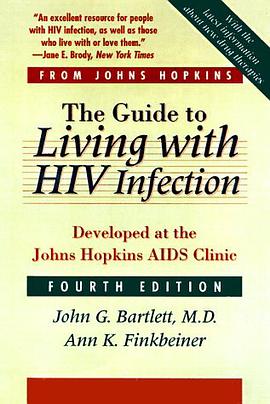
<p>When the third edition of The Guide to Living with HIV was published in 1996, the best hope for people with HIV infection or AIDS was treatment with drugs like AZT, to which HIV soon became resistant. In just three years, however, dramatic new treatments have emerged which all but eliminate HIV in the bloodstream. "In my twenty-five years of medical practice," writes Dr. John Bartlett with cautious optimism, "no other breakthrough has translated so quickly to palpable health."</p>
<p><br />
<br />
</p>
<p>In this fourth edition, Dr. Bartlett, director of the Infectious Diseases Division at the Johns Hopkins Hospital, and science writer Ann Finkbeiner update their widely acclaimed guide in light of developments that have transformed the way we think about treating HIV and AIDS. They describe the breakthrough in understanding how HIV reproduces which pointed to new strategies to track the infection and suppress the virus. They explain the importance of the "viral load" test to measure the amount of HIV in the blood and more accurately gauge a person's response to treatments. And they discuss the remarkable results of using new AZT-class drugs in combination with newly developed protease inhibitors and non-nucleoside reverse transcriptase inhibitors. The combination of these three classes of drugs virtually stops HIV, drastically reducing the virus's numbers and ability to become resistant, while allowing immune cells to rebound.</p>
<p><br />
<br />
</p>
<p>The authors emphasize the importance of receiving this good news cautiously, since no one knows what the long-term health consequences of taking these powerful drugs might be, or whether the virus will once again develop resistance. Treatment, they explain, is far from easy: most people require at least three different kinds of pills (or "triple therapy"), for a total of up to 20 pills a day. The side effects are difficult, treatment costs between $10,000 and $12,000 a year, and new stresses accompany the uncertainty about long-term effectiveness. Despite the need for caution, the fourth edition of The Guide to Living with HIV Infection explains how to help ensure the effectiveness of the new treatments and, for those for whom the treatments don't work, how to remain well as long as possible. The book remains the most complete resource of its kind for people with HIV and AIDS and for their families and friends.</p>
<p><br />
<br />
</p>
<p>New to this edition:</p>
<p><br />
<br />
</p>
<p>Detailed discussions of new drugs and how they must be administered in order to be effective</p>
<p><br />
<br />
</p>
<p>Updated information on the transmission of HIV</p>
<p><br />
<br />
</p>
<p>Information about new tests for HIV, including home kits and tests using saliva and urine</p>
<p><br />
<br />
</p>
<p>Discussion of the importance of tracking "viral load" and CD4 cell count</p>
<p><br />
<br />
</p>
<p>New tables, showing prognosis according to CD4 count, and drugs used to treat or prevent wasting</p>
<p><br />
<br />
</p>
<p>New information on opportunistic infections</p>
<p><br />
<br />
</p>
<p>Advice on how to live with uncertainty</p>
<p><br />
<br />
</p>
<p>New guidelines for choosing physicians</p>
<p><br />
<br />
</p>
<p>Updated resources, including addresses for websites</p>
作者简介
目录信息
读后感
用户评价
这本“约翰霍普金斯艾滋病诊所编写的HIV感染者生活指南”的封面设计简直是点睛之笔,那种沉稳的深蓝色调,配上简洁有力的白色字体,一下子就给人一种专业、可靠、又不失人情味的信赖感。我之所以毫不犹豫地把它加入我的书架,很大程度上是因为这个医疗机构的名字本身就带有毋庸置疑的权威性。在这个信息爆炸的时代,关于艾滋病的传闻和未经证实的消息充斥网络,让人真假难辨,心里发毛。我需要的不是那些耸人听闻的报道,而是实打实的、经过临床验证的知识。它不像那些面向大众的科普读物那样试图用夸张的标题来吸引眼球,反而选择了一种内敛而坚定的姿态,仿佛在对读者说:“我们知道你正在经历什么,我们有科学的方法来帮助你。” 这种气质对于正在努力适应新生活状态的人来说,是一种无声的支持,它传递出的信息是:这不是一个关于绝症的讨论,而是一个关于“如何有质量地活下去”的实用手册。我翻阅了目录的碎片信息,光是看到那些严谨的章节划分,就能预感到内容会是多么的系统和全面,让人心中那团对未知疾病的恐慌,仿佛被这本厚重的书页带来的踏实感缓缓安抚。
初次接触这本书时,我最欣赏的是它对于“生活质量”这个核心议题的坚持。很多早期关于HIV的书籍,重点往往聚焦于病毒学、免疫学这些冰冷的技术细节,虽然重要,但对于一个真实生活中的感染者来说,可能显得过于疏远和抽象。我期待这本书能够真正深入到日常的柴米油盐之中。比如,我特别好奇它会如何处理饮食营养这个敏感话题——不是泛泛而谈“要健康饮食”,而是针对性地给出不同治疗阶段(比如刚开始抗逆转录病毒疗法时,或者病毒载量稳定的时期)的食谱建议,甚至会涉及到如何应对药物可能引起的味觉改变或消化不适。再者,心理健康和人际关系的处理,在我看来,与药物治疗同等重要。我希望它能提供一些具体的社交场景模拟或沟通技巧,比如如何向亲密伴侣坦白,或者如何与同事和朋友保持界限,同时又不至于过度自我隔离。如果这本书能像一位经验丰富、富有同理心的临床社工那样,把那些教科书上找不到的“人情味”和“实战经验”融入进来,那么它对我的价值将无可估量,它不再仅仅是一本医疗参考,而是一份重建社会连接的路线图。
这本书给我带来的最大期望之一,是关于长期生存和未来规划的部分。随着治疗手段的进步,HIV感染者已经能够享有近乎正常的预期寿命,因此,这本书的视野必须超越“管理疾病”的阶段,迈向“积极生活”的远景。我非常期待看到它如何引导读者去思考“未来感”:比如,关于退休规划、保险获取、甚至健康老龄化议题。很多感染者,尤其是在年轻时感染的朋友,在病情稳定后,可能会面临如何平衡“公开身份”与“职业发展”的矛盾。我希望书中能提供一些基于美国法律和医疗实践的实用建议,帮助读者在不损害自身权益的前提下,做出最有利于自己长远发展的决定。如果它能提供一种积极的、面向未来的叙事框架,帮助读者将“HIV感染者”这个身份,视为自己丰富人生履历中的一个特殊篇章,而非终点,那这本书的意义就不只是医学上的,更是哲学和人生指导层面的。
从装帧和排版上看,我个人对医疗专业书籍有一个很高的要求:清晰度至上。如果信息密度很大,排版却拥挤不堪,或者图表设计得晦涩难懂,那么再好的内容也会大打折扣。我希望这本指南能够秉承约翰霍普金斯的学术严谨性,在视觉呈现上也做到极致的专业化。我想象中的排版应该是留有足够空白的页面,让读者在消化复杂信息时能够喘口气。每一个专业术语的出现,都应该有明确的脚注或在旁边进行通俗易懂的解释,避免使用只有医生才明白的行话。尤其是在讲解复杂的药物相互作用或监测指标时,精妙的流程图和对比表格是必不可少的工具。如果它能做到让一个初次接触这些概念的人,仅凭这本书就能大致掌握自己的病情走向,而不是读完后仍然需要再找一位“翻译官”来解释书本内容,那才算得上是真正的成功。这种对阅读体验的尊重,体现了作者团队对患者学习能力的信任。
我购买这本指南的动机,很大程度上是希望它能成为我与我的医疗团队之间沟通的桥梁。很多时候,在诊所里时间有限,医生需要快速完成问诊流程,而患者可能因为紧张或知识储备不足,无法提出所有关键问题。一本由权威机构出品的、系统性的指南,可以帮助我预习和复习相关知识,从而在复诊时,能提出更具针对性、更深入的问题,实现真正意义上的“共同决策”(Shared Decision Making)。例如,当医生建议更换新的二线药物方案时,我希望我可以通过这本书提前了解该方案的长期依从性挑战、潜在的罕见副作用,以及与我现有基础疾病可能存在的冲突。如果这本书能有效地赋权于患者,让我在与专业人士对话时,能够使用更准确的术语,表达更清晰的顾虑,那么它就成功地将信息不对称转化为双方平等的伙伴关系。这种赋权感,对于维护患者的自我效能感至关重要。