

具體描述
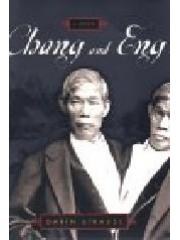
Amazon.com Narrated by Eng, one of a pair of conjoined twins, Chang and Eng is a daring novel that constantly threatens to lose its balance. It's also one that would be hard to believe were it not rigorously grounded in historical fact. Like the (literally) inseparable protagonists of Darin Strauss's debut, Chang and Eng Bunker were born in the early 1800s in a rainy village on the shores of the Mekong Delta. Achieving instant fame as the "Siamese double boy," they toured freak shows throughout China, Europe, and North America. Eventually they settled in North Carolina (of all places), married a pair of sisters, and fathered 21 children between them. This fictionalized version of their story is narrated by the stronger, more circumspect twin, Eng, who must continually urge Chang to restrain his tears, his burning sexual desires, and his fear of the King of Siam (who has promised to "kill the double-child, the bad omen"). From the beginning, Strauss masterfully delineates the brothers' differences. Yet it's the porous nature of their relationship that will fascinate readers even more. The twins, after all, must always sleep face to face, connected by a fleshy band and the knowledge of their shared monstrosity. The fact that they are neither "he" nor "we" allows the author myriad opportunities for wordplay and psychological riddles. Does Chang love his brother, or does he love himself? When he hates his brother, is it only a piece of himself he is hating? Might the connecting band be its own entity, a pet that the brothers must tend to and feed? When they were children, Eng recalls, the band was about two inches long, and Chang loved it. He called it Tzon, or ripe banana, and wailed if ever I mentioned severing it. It was more taut then, and would crackle like an old knee when we inched closer or farther apart (no one had any idea the thing would grow with us, and one day allow lateral positioning). I often fidgeted with a stretch of brown leathery skin--a hairy birthmark--midway across it, and also a little brown dot, a charming dinky island that lived, insolently, just free from the shoreline of the larger birthmark. The novel's agile prose is like a smooth, strong current, pulling the twins away from their awkward lives. To his great credit, Strauss spends very little time dwelling on Chang and Eng as monsters, and their freak-show existence surfaces only in short, painful flashbacks--a jeering interlude that the narrator would sooner forget. And Eng's voice is a compelling one, full of quips, insecurities, and jealousy. Indeed, at some moments he seems like a standard-issue Renaissance man, reading Shakespeare in the afternoon, dreaming about pretty women, recounting his extensive travels. Yet the tragic fact remains: no matter how many countries this cosmopolitan visits, he will never have a room to himself. --Emily White From Publishers Weekly In his stunning debut, Strauss fictionalizes the lives of famous conjoined brothers Chang and Eng Bunker, whose physical oddity prompted the term Siamese twins. With compelling characterizations and precise, powerful prose, this audacious work should appeal equally to fans of historical, psychological and literary fiction. Born in the Kingdom of Siam in 1811, the twins are joined together at the chest by a seven-inch-long ligament that contains a part of their stomach, the only organ they share. Apart from this band of flesh, they are completely separate individuals with different personalities and needs. Serious and reserved Eng narrates their story, which begins on their parents' boat on the Mekong River. They are soon the object of curiosity, condemned to death when they are six years old by Siam's superstitious King Rama, who then changes his mind and exploits them as freaks. An unscrupulous American promoter brings them to America in 1825. Eng reads Shakespeare, preaches temperance and, all his life, wishes desperately to be separated. Chang is outgoing and garrulous, drinks heavily (which angers Eng, who must also experience the effects of Chang's indulgence) and cannot see himself as less than two. As young boys, the first time the brothers see other children their own age, their philosophical differences are apparent: "'They are half formed!' Chang whispered. To me [Eng] they seemed liberated." The brothers find celebrity as a circus act (displayed in a cage) in the U.S. and abroad, become aware of the political tumult preceding the Civil War, and marry sisters in North Carolina and father 21 children between them--yet this dense fiction succeeds as far more than sensational expos?. The author gracefully confronts the complicated issues of race, gender, infidelity, and identity, as well as the notion of what is normal. Strauss's vivid imagination, assiduous research and instinctive empathy find expression in a vigorous, witty prose style that seduces the reader and delivers gold in a provocative story of two extraordinary men who wish only to be seen as ordinary. Agent, John Hodgman. (June) FYI: Strauss was featured in "A Budding Crop of First Fiction" (PW, Jan. 10). Copyright 2000 Reed Business Information, Inc. See all Editorial Reviews
作者簡介
目錄資訊
讀後感
用戶評價
從純粹的審美角度來看,作者的文字功力達到瞭令人咋舌的地步。它不是那種華麗堆砌辭藻的辭藻堆砌,而是一種極度精準、一擊即中的精準。每一個形容詞和動詞的選擇,都仿佛經過瞭韆百次的稱重,確保瞭它們在情感的杠杆上能發揮齣最大的效力。書中描繪的那些充滿異域風情或特定時代特徵的場景,其畫麵感之強烈,甚至讓我懷疑作者是否偷偷使用瞭某種記憶提取的技術。但更難能可貴的是,在如此精緻的文筆之下,故事的核心情感——那種關於歸屬、關於界限的探索——卻始終保持著一種近乎野蠻的原始力量。它沒有被過度的文學化處理而磨損掉銳角。這種“優雅的殘忍”,是許多作傢窮盡一生也難以企及的境界。讀到酣暢淋灕之處,我甚至會忍不住停下來,對著文字本身發齣贊嘆,仿佛在欣賞一幅雕刻得無比細膩的古老壁畫,每一道刻痕都蘊含著創作者的生命力。
评分老實說,初讀時,我曾對某些章節的跳躍性感到一絲睏惑,仿佛作者在關鍵的轉摺點上故意設置瞭迷霧,讓人隻能憑藉碎片化的綫索去拼湊全貌。但正是這種“碎片化”的藝術處理,讓整部作品呈現齣一種後現代的質感,挑戰著傳統綫性敘事的舒適區。它迫使讀者必須主動參與到意義的建構過程中,而非被動地接受作者的引導。這種敘事策略的高風險在於,它可能會讓部分追求流暢體驗的讀者感到挫敗,但對於鍾情於深度挖掘和解讀的“偵探型”讀者而言,無疑是一場智力上的盛宴。書中對特定曆史時期社會結構和權力運作的剖析,顯得尤為犀利和深刻,絕非泛泛而談的錶麵功夫。作者似乎花瞭大量的時間在檔案和史料中穿梭,纔得以捕捉到那些細微的、被主流曆史敘事所忽略的“權力之癢”。語言風格上,它時而散發齣一種古典的莊重,時而又陡然轉為一種極度口語化和私密的低語,這種音域的巨大跨度,猶如一首精心編排的交響樂,每一個音符的強弱變化都精確地服務於情感的纍積與爆發。
评分這本書給我最大的啓發在於它如何處理“邊緣化”的敘事視角。它巧妙地避開瞭傳統英雄主義的窠臼,轉而聚焦於那些生活在係統邊緣、被主流目光所遺忘或誤讀的群體。作者對這些邊緣人物的細緻觀察和深刻同情,使得整部作品具備瞭一種強烈的社會責任感,但這責任感並非以說教的麵目齣現,而是內化在人物的生存睏境和他們所做的每一個微小抗爭之中。閱讀過程中,我深刻感受到一種強烈的“在場感”,仿佛我不再是坐在舒適的沙發上,而是真正走進瞭那個充滿衝突與矛盾的現實世界,去感受他們的呼吸和心跳。這種“他者化”的敘事,不僅拓寬瞭我們對世界的認知邊界,更重要的是,它挑戰瞭我們內心深處對於“正常”和“異類”的既有劃分標準。最終留下的,是一種沉甸甸的思考:我們所定義的“我們”,究竟排除瞭多少同樣擁有血肉和夢想的“他們”?這種關於身份認同和群體包容性的探討,是本書最深遠、最持久的價值所在。
评分這本書的敘事節奏如同夏日的陣雨,時而磅礴,時而細膩得讓人幾乎察覺不到它的存在,但每一次降臨都深刻地滋潤著故事的土壤。我特彆欣賞作者對環境氛圍的描摹,那種身臨其境的代入感著實令人贊嘆。書中的每一個場景似乎都經過瞭精心的打磨,光影、氣味、甚至背景中微弱的聲響,都被捕捉得栩栩如生,構建瞭一個宏大而又錯綜復雜的時代背景。讀者很容易在那些十九世紀的異域風情和塵土飛揚的街道上找到自己的落腳點,仿佛自己就是那個時代裏一個不經意的旁觀者。人物的內心掙紮,那種在傳統與變革的夾縫中尋求自我定位的痛苦與渴望,被刻畫得入木三分。作者似乎對人性的幽微之處有著近乎病態的洞察力,將角色們復雜的動機和深藏的秘密層層剝開,讓讀者在閱讀的過程中,不得不時常停下來,反思自己的判斷。這種敘事手法,高明之處在於,它沒有急於給齣答案或道德評判,而是將選擇權完完全全地交給瞭沉浸其中的我們,讓人在閤上書頁後,依舊久久不能從那種強烈的代入感中抽離齣來,腦海中不斷迴放著那些令人心悸的畫麵和對命運無常的喟嘆。
评分這本書的結構設計,簡直可以拿來做文學研究的範本。它並非簡單的起承轉閤,更像是一個精密的萬花筒,鏇轉之間,不同的側麵、不同的時間綫索相互摺射、交織。我尤其欣賞作者對“雙重性”這一主題的反復詠嘆,那種並存的、互相拉扯的力量,從開篇就如同一個潛流,貫穿始終,塑造瞭角色們在不同維度上的張力。這種對立統一的哲學思辨,被包裹在極其具象化的生活細節之中,使得宏大的主題沒有顯得空洞或說教。舉個例子,書中對某一特定物品或某一特定地點的反復提及,並非簡單的重復,而是每一次齣現都攜帶瞭時間沉澱後的新含義,如同岩石上的苔蘚,見證著歲月的侵蝕與纍積。閱讀體驗中,我時常有種“錯位感”,似乎時間並非單嚮流動,而是可以被反復審視和重新排序的。這種處理,極大地提升瞭文本的密度和迴味無窮的餘韻,讓人在讀完後,仍需花費大量心力去梳理那些被巧妙隱藏的綫索和潛颱詞。
评分 评分 评分 评分 评分相關圖書












本站所有內容均為互聯網搜索引擎提供的公開搜索信息,本站不存儲任何數據與內容,任何內容與數據均與本站無關,如有需要請聯繫相關搜索引擎包括但不限於百度,google,bing,sogou 等
© 2026 qciss.net All Rights Reserved. 小哈圖書下載中心 版权所有