
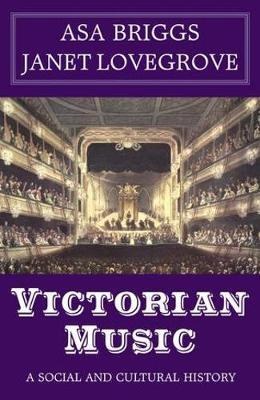

具体描述
This major new book provides a sparkling and detailed account of classical, modern, and popular music throughout Queen Victoria's long reign.
It completes the acclaimed series of classic studies by Professor Briggs, published as Victorian Cities, Victorian People, and Victorian Things. Lord Briggs has written the work with the music specialist Janet Lovegrove.
The approach is deliberately chronological. It observes the music scene - both metropolitan and provincial - at twenty-year intervals. It particularly shows how contemporaries themselves perceived music in 1837, 1857, 1877 and 1897.
These twenty-year intervals bring out the scale of change and the balance between continuities and contrasts at each point in the story. The intervening decades are more briefly explored. An Epilogue (1901) completes the picture.
The authors trace the repertory of opera, of orchestral, choral, chamber and popular music. They show the performers, theatres, halls and rooms. They provide many illuminating stories of the lives and work of the composers, writers and critics, publishers, teachers and lecturers, who were keen to bring music to the many rather the few.
London was linked to the provinces by cathedral, church or festival, and education. Key factors were the dissemination of printed music, the musical evangelism of the sight-singing movement, the national distribution achieved by the railways, and the implementation of a national educational system from 1870 onwards. An important element in this was the contribution made to 'progress' by provincial cities, most often through the proliferation of Festivals.
No less important were the efforts of English musicians, composers, performers and teachers alike, to achieve status in a country where there was a strong amateur presence.
There was also pressure from below, and a difference - often an indifference - in the role and interests of government, local and national. However, the dynamic steps taken to found modern music institutions are traced. Comparisons are made (as did the Victorians) between English and foreign performers and composers, the 'giants' of the past and present. The last chapters show the breaking away, never complete, from 'foreign domination' and the identification of an English musical 'renaissance.'
The book is well illustrated. These pictures complete the overwhelming impression of an era teeming with energy and ambition, in music as in all else. The era laid the foundations of the musical heritage and standards we enjoy today.
作者简介
Professor Lord Asa Briggs was one of the most important historians of Britain. He is world-renowned for his work in social history, culture, and communications. He has also been a national and international leader in education, and in life-long learning.
Janet Lovegrove, read music at Cambridge, and worked in general publishing, lastly as sub-editor of Vogue. She describes herself as a musical jack-of-all-trades: teaching, singing, coaching, lecturing and writing.
目录信息
读后感
用户评价
说实话,我原本以为这会是一本枯燥的学术专著,充斥着晦涩的德奥音乐术语和复杂的乐理分析,但出乎我的意料,作者的笔触是如此的优雅和富有感染力。那种英伦特有的,带着一丝讽刺和自嘲的幽默感贯穿始终,使得即便是探讨瓦格纳主义在英国引起的激烈论战,也读起来津津有味。我最喜欢的部分是关于“家庭音乐制作”的章节。在那个没有电子娱乐的时代,钢琴是如何成为维多利亚家庭的中心装饰品,以及年轻女性通过学习钢琴演奏来提升婚恋价值的社会压力,被描绘得淋漓尽致。作者巧妙地引用了大量当时的名人日记和私人信件,那些关于家庭音乐会上的小尴尬、为了练习一首新曲子而产生的争执,都鲜活地跳脱出来。读到这里,我常常会停下来,想象着那个烛光摇曳的客厅,想象着一个穿着束腰长裙的女子,在微弱的灯光下,笨拙却充满热忱地弹奏着肖邦的夜曲。这本书成功地将冰冷的音乐史料,转化成了有血有肉的、充满人情味的生活画卷。
这本书真是令人着迷,它带我穿越回了那个华丽而又充满矛盾的维多利亚时代。作者对那个时期音乐生活的描绘细腻入微,仿佛能听到那些老式留声机里传出的沙哑乐声,闻到沙龙里弥漫的淡淡雪茄和香水味。我尤其欣赏它对当时社会阶层如何影响音乐消费和创作的深入剖析。比如,它详尽地阐述了歌剧院的观众席位如何成为身份和财富的象征,那些在包厢里窃窃私语的上流社会人士,与在街角街尾为生计而演唱的流浪艺人之间的巨大鸿沟,都被作者无情而又客观地揭示出来。书中对音乐厅的建筑风格、管弦乐队的组织结构,乃至当时流行的“便士歌舞剧院”那种通俗娱乐形式的兴衰,都有着翔实的考据。我花了很长时间去查阅书中提到的几位鲜为人知但对后世影响深远的作曲家,他们的作品在今天看来或许有些过时,但在那个时代,无疑是文化脉搏的跳动。这种对历史细节的执着,使得阅读过程充满了发现的乐趣,仿佛我不是在读一本书,而是在亲手翻阅一份沉甸甸的、充满墨香的历史档案。它远超出了简单的音乐史记录,更是一部关于时代精神和文化变迁的社会学著作。
这本书的结构安排非常巧妙,它没有采取传统的编年体叙事,而是围绕着几个核心的文化主题展开辩证讨论,这让阅读体验保持了极高的张力。比如,它将“宗教音乐的世俗化倾向”与“新兴的民族主义音乐的萌芽”放在一起进行对比,展示了维多利亚时代精神内核的剧烈摇摆。作者对于音乐赞助人制度的分析尤其深刻,揭示了权力如何无形地塑造了艺术的走向。我个人对其中关于“音乐评论的诞生”那一段印象尤为深刻,看那些早期的乐评人如何用现在看来极度夸张或偏激的语言来抨击或赞美新的音乐作品,那种早期的、充满激情的批评文化,与我们今天相对理性的评论环境形成了鲜明的对比。这种深度的文本挖掘,让我对维多利亚时代的知识分子群体有了更立体的认识。它不仅仅是在讲音乐,更是在探讨一个帝国在面对工业革命和全球扩张时,其文化自信心是如何被挑战和重塑的过程。
这本书的叙事节奏有一种奇特的、仿佛老式留声机转速不稳的质感,时而缓慢沉静,详细描绘一首室内乐的结构,时而又突然加速,以一种近乎小报八卦的口吻揭露某些音乐家的私生活丑闻。这种风格上的巨大跳跃,恰恰反映了那个时代的复杂性。它成功地捕捉到了维多利亚时代那种表面的庄重和内在的骚动之间的巨大反差。我从这本书里了解到,原来当时英国的民谣和民间音乐研究也曾经历过一次蓬勃的发展,这颠覆了我过去对英国音乐史的刻板印象,以为只有正统的学院派才算数。书中对这些“非主流”声音的关注,展现了作者的批判性视角和兼容并包的研究态度。它让我们看到,即便是那个被认为相对保守的时代,其文化土壤中也孕育着无数期待突破的种子。读完后,我感觉对十九世纪的文化史有了一种全新的、去浪漫化的、更为真实和立体的理解。
我必须承认,阅读这本书对我来说是一场智力上的马拉松,但绝对是值得的。作者的学术功底深厚得令人敬畏,参考文献列表长得吓人,足见其研究的广度和深度。最让我印象深刻的是它对音乐厅声学设计的历史演变所进行的详细考察。从最初注重形式美感的装潢,到后来逐渐理解空气流动和材料对音质影响的科学认知,这一过程的转变,本身就是维多利亚时代理性主义抬头的一个缩影。书中还收录了大量的版画和建筑草图,这些视觉材料极大地增强了文本的说服力。我尤其喜欢作者将当时的技术进步,如煤气照明和新的乐器制造技术,与音乐风格的演变联系起来的论证方式,这使得音乐不再是孤立的存在,而是整个工业文明进程中的一个有机组成部分。这本书的阅读门槛略高,需要读者对历史背景有一定的了解,但回报是巨大的——你会得到一个前所未有的、多维度的时代认知框架。









![A Note on Charlotte Bronte] pdf epub mobi 电子书 下载](https://doubookpic.tinynews.org/a04ee8ba73dc851d606ad4e005ca374cc5419939b820221119066044df3af4e9/s26490975.jpg)