
具体描述
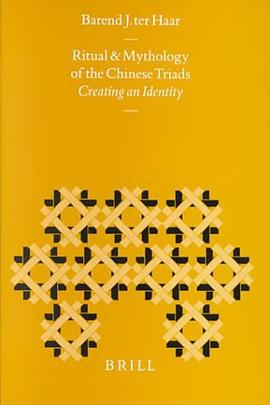
The extensive ritual and mythological lore of the Chinese Triads form the scope of this new paperback in Brill’s Scholar’s List. In it the reader will find a critical evaluation of the extant sources together with a true wealth of context.
The core of the book is formed by a close reading of the initiation ritual, including the burning of incense, the altar, the enactment of a journey of life and death, and the blood covenant. Different narrative structures are also presented. These include the messianic demonological paradigm, political legitimation, and the foundation of myth.
Triad lore is placed in its own religious and cultural context, allowing radically new conclusions about its origins, meanings and functions. This book is of special interest to social historians, anthropologists, and students of Chinese religious culture.
作者简介
Barend J. ter Haar, Doctorate (1990) in Sinology, University of Leiden. Professor of the Social and Economic History of China at the University of Heidelberg. Has published on religious culture, traditional violence, Triads and sects, including The White Lotus Teachings in Chinese Religious History (Brill, 1992).
目录信息
PART I. PARELIMINARIES
Interpreting the Triads (Heaven and Earth Gathering) 3
The study of Triad lore 7
The contextualisation of Triad lore 7
Triad ritual and narratives 11
Defining the Triad phenomenon 15
The different autonyms of the Triads 15
A brief history of Triad groups 17
Sources on Triad lore 27
Internal sources 28
External Western sources 38
External Chinese sources 43
PART II. PERFORMANCE
Introduction 51
Community and territory 55
Creating community: offering incense 55
Establishing territory: the bushel and the altar 63
The bushel and its contents 64
The Triad bushel 73
The altar and the City of Willows 80
Boundaries and passages 89
The cycle of birth, life and death 90
Grotto-worlds, gardens and cities 90
Boundaries and passageways 95
Perceiving and influencing the mythical landscape 99
The Triad initiation journey 101
The ritual atmosphere 103
The initiation journey in early confessions 107
Through the land of death 114
The attainment of rebirth 129
Ritual as theatre 136
Concluding observations 147
The blood covenant in Chinese society 151
The blood covenant 151
Early evidence 152
An ideal type of the blood covenant 156
The passage through the gate of swords 167
The use of writing 170
Concluding remarks 177
The Hong family and its moral prescriptions 180
The Triad blood covenant 181
The basic ritual 181
The maledictions 184
Divine witnesses 189
Written covenants: their format and ritual use 195
Creating the Hong family 203
The Hong family and ancestor worship 204
Moral obligations 210
Concluding remarks 216
PART III. NARRATIVES
Introduction 221
The demonological messianic paradigm 224
Saviors from demons 225
The Ma Chaozhu case 236
Appendix A mysterious document 251
Common themes of the paradigm 253
The messianic origins of Triad lore 263
The dramatis personae 264
Other messianic elements 275
The demonological structure of the Triads 284
Demonology in action 290
The Li Lingkui and Du Shiming incident 290
The incident of Li Laowu 296
Fan Qi, Lin Chongsan and Su Zhisong 299
Concluding remarks 301
The central place of Triad political ideals 306
Imperial legitimation 306
Imperial legitimation practice 307
The impact of imperial legitimation 316
The political ideals of the Triads 324
The Triad ideal of restoring the Ming 325
Foretelling the advent of the young Zhu prince 329
The authentication of Triad political claims 333
Political ideals in practice 337
Early awareness of political ideology 337
Triad political ideals in South-East Asia 344
The Small Swords Uprising 351
The Mandate of Heaven and social relationships 361
Defining the Triad mission 365
The foundation account 368
The 1810 foundation account 368
The early evolution of the foundation account 375
The foundation account from 1828 onwards 379
The nature of the Triad foundation account 388
The "fall from grace'' plot 390
Concluding remarks 400
Appendix New theories on the Shaolin Monastery 402
PART IV. CONCLUDING ANALYSIS
Introduction 419
Knowledge as an object 420
Paying for Triad lore 420
The priority of knowing over analyzing 424
The early evidence 425
Non-Chinese reports 433
Understanding Triad lore 437
Building a community 440
Triad lore revisited 443
Context and functions of Triad lore 444
Triad lore and its oral origins 451
A different history of the Triads 455
Creating natural groups 458
Bibilography 463
Character list 485
Index 505
· · · · · · (收起)
读后感
史料相对匮乏的天地会研究的新颖之作,文化人类学研究范式区别于文本考释路径与经济社会分析方法,走出了天地会研究的第三种模式。“神灵救劫范式”的提出对国内学者影响最大。天地会的仪式是入会者从生到死,又死而复生的过程,获得了新的身份。天地会的仪式与神话最终的目的...
可以将三合会的知识分为两部分。 第一部分是谜语与仪式,这些谜语为知识加上了一层神秘化色彩,看上去像是天命。三合会的仪式在某种程度上借鉴了戏剧,为的是教徒们能够行成一个共同体。 这些仪式所提供的是对于救赎范式的表达。正统不在于自己好好休修行,而在于对妖魔的抗争...
史料相对匮乏的天地会研究的新颖之作,文化人类学研究范式区别于文本考释路径与经济社会分析方法,走出了天地会研究的第三种模式。“神灵救劫范式”的提出对国内学者影响最大。天地会的仪式是入会者从生到死,又死而复生的过程,获得了新的身份。天地会的仪式与神话最终的目的...
用户评价
这本关于中国三合会的神秘学与仪式的书,读完之后,我感觉自己像是完成了一次穿越时空的旅程,深入到那个隐藏在历史深处的地下世界。作者的笔触细腻而富有洞察力,将那些原本模糊不清的仪式和符号,清晰地呈现在我们眼前。比如,他对结拜仪式中每一个手势、每一个咒语的解读,都充满了令人信服的逻辑和历史渊源。我特别欣赏作者在处理这些敏感话题时的审慎态度,他没有一味地渲染暴力或神秘,而是更侧重于揭示这些仪轨背后的社会功能和心理需求。书中对不同历史时期三合会组织结构和信仰体系演变的梳理,展现了作者深厚的学术功底,让我对这个复杂社团的内在运作有了更立体的认识。尤其是那些关于“天、地、人”三元结构的阐释,让我开始重新审视中国传统文化中对秘密社团的复杂情感——既有恐惧,也有某种程度上的认同感。
这本书的学术气场非常强大,充满了令人信服的细节和严谨的逻辑链条。我感觉作者像是带着一把精密的探照灯,照亮了三合会仪式活动中那些常人难以察觉的细微之处。那些关于入会誓词的语言学分析,以及它如何嵌入到地方民间信仰的母题之中,让我对文化的渗透力和生命力有了更深的敬畏。我尤其欣赏作者在总结部分对“现代性冲击下”仪式的存续与变异的探讨,这部分内容极具现实关怀,让古老的仪式与当下的社会现实产生了有趣的对话。总而言之,这是一部令人耳目一新的研究,它不仅满足了我们对“秘密”的好奇心,更重要的是,它教会了我们如何从人类学的角度,去解读那些被权力结构边缘化的群体的精神世界和生存智慧。
读完这本书,我脑海中浮现出一部气势磅礴的史诗。这不是一本轻松的读物,它要求读者投入百分之百的专注力去品味那些深埋在仪式之下的文化基因。作者擅长运用对比手法,将三合会的仪式活动与儒家伦理、道教信仰进行参照对比,从而揭示出这些秘密组织是如何在主流文化边缘,建构起一套自我维系的精神秩序的。书中对“忠义”概念在秘密结社中的异化和重塑的探讨,非常精彩,这让我意识到,“忠”的概念在不同社会群体中的解释是多么的灵活多变。我尤其喜欢作者对“帮规”的解读,那些看似僵硬的戒律,背后隐藏的却是对社群内部信任危机的一种集体性的心理防御机制。这本书的行文流畅,尽管主题严肃,但叙事张力十足,让人无法轻易放下。
这本书给我最大的震撼在于,它成功地将“仪式”从一种表象行为,提升到了理解一个社会群体核心价值观的透镜高度。我以前对三合会只停留在影视剧的刻板印象上,而这本书彻底颠覆了我的认知。作者没有将他们简单地标签化为犯罪组织,而是将其视为特定历史时期下,边缘人群寻求身份认同和抵抗国家权力的一种文化实践。书中对仪式中服装、道具和特定地点的象征意义的剖析,细致入微,简直就像是一份古老的密码本被成功破译。我特别留意了关于“秘密语言”的章节,那种为了维护群体封闭性而发展出来的独特话语系统,显示出人类在构建身份边界时的创造力。这本书的价值在于,它提供了一个全新的、去污名化的视角来看待这种复杂的社会现象。
坦白说,这本书的内容深度远远超出了我最初的预期。我原本以为这会是一本比较通俗的“黑帮秘史”,结果发现它更像是一部严谨的宗教人类学专著。作者在引述原始材料和口述历史时,表现出极高的批判性,使得整本书的论证过程非常扎实。我花了好大力气才跟上作者构建的那些复杂的象征体系。其中关于“水和火”在仪式中的对立统一关系的分析,尤其引人深思,它似乎触及了中国古代哲学中关于秩序与混乱的永恒辩证法。我注意到书中对一些地方性分支的差异性描述非常详尽,这表明作者进行了大量的田野调查或至少是深入的文献挖掘。唯一美中不足的是,某些章节的学术性太强,对于不熟悉中国宗族社会结构和早期帮派史的读者来说,理解门槛略高,需要反复阅读才能完全消化其中的精髓。
好赞的研究,看的我一下午都high到爆啊,,从明到清,从内陆到东南亚华人,非常全面。literature review那块可以做百科全书来学了。
好赞的研究,看的我一下午都high到爆啊,,从明到清,从内陆到东南亚华人,非常全面。literature review那块可以做百科全书来学了。
好赞的研究,看的我一下午都high到爆啊,,从明到清,从内陆到东南亚华人,非常全面。literature review那块可以做百科全书来学了。
好赞的研究,看的我一下午都high到爆啊,,从明到清,从内陆到东南亚华人,非常全面。literature review那块可以做百科全书来学了。
好赞的研究,看的我一下午都high到爆啊,,从明到清,从内陆到东南亚华人,非常全面。literature review那块可以做百科全书来学了。