
具体描述
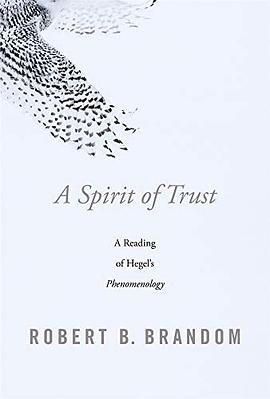
Forty years in the making, this long-awaited reinterpretation of Hegel’s The Phenomenology of Spirit is a landmark contribution to philosophy by one of the world’s best-known and most influential philosophers.
In this much-anticipated work, Robert Brandom presents a completely new retelling of the romantic rationalist adventure of ideas that is Hegel’s classic The Phenomenology of Spirit. Connecting analytic, continental, and historical traditions, Brandom shows how dominant modes of thought in contemporary philosophy are challenged by Hegel.
A Spirit of Trust is about the massive historical shift in the life of humankind that constitutes the advent of modernity. In his Critiques, Kant talks about the distinction between what things are in themselves and how they appear to us; Hegel sees Kant’s distinction as making explicit what separates the ancient and modern worlds. In the ancient world, normative statuses―judgments of what ought to be―were taken to state objective facts. In the modern world, these judgments are taken to be determined by attitudes―subjective stances. Hegel supports a view combining both of those approaches, which Brandom calls “objective idealism”: there is an objective reality, but we cannot make sense of it without first making sense of how we think about it.
According to Hegel’s approach, we become agents only when taken as such by other agents. This means that normative statuses such as commitment, responsibility, and authority are instituted by social practices of reciprocal recognition. Brandom argues that when our self-conscious recognitive attitudes take the radical form of magnanimity and trust that Hegel describes, we can overcome a troubled modernity and enter a new age of spirit.
作者简介
Robert B. Brandom is Distinguished Professor of Philosophy at the University of Pittsburgh and a Fellow of both the American Academy of Arts and Sciences and the British Academy. Numerous books have been written about him, including Jeremy Wanderer’s Robert Brandom, Ronald Loeffler’s Brandom, and Chauncey Maher’s The Pittsburgh School of Philosophy: Sellars, McDowell, Brandom. He delivered the John Locke Lectures at the University of Oxford and the Woodbridge Lectures at Columbia University. Brandom is the author of many books, including Making It Explicit, Reason in Philosophy, and From Empiricism to Expressivism.
目录信息
Introduction: A Pragmatist Semantic Reading of Hegel’s Phenomenology
I. The Focal Topic: The Content and Use of Concepts
II. The Strategy of Semantic Descent
III. The Social Dimension of Discursiveness: Normativity and Recognition
IV. The Historical Dimension of Discursiveness: Recollective Rationality
V. Cognition, Recognition, and Recollection: Semantics and Epistemology, Normative Pragmatics, and the Historicity of Geist
Part One. Semantics and Epistemology: Knowing and Representing the Objective World
1. Conceptual Realism and the Semantic Possibility of Knowledge
I. Classical Representational Epistemology
II. Genuine Knowledge and Rational Constraint
III. A Nonpsychological Conception of the Conceptual
IV. Alethic Modal and Deontic Normative Material Incompatibility
2. Representation and the Experience of Error: A Functionalist Approach to the Distinction between Appearance and Reality
I. Introduction
II. Two Dimensions of Intentionality and Two Orders of Explanation
III. Two Kantian Ideas
IV. Hegel’s Pragmatist Functionalist Idea
V. The Mode of Presentation Condition
VI. The Experience of Error
VII. The Two Sides of Conceptual Content Are Representationally Related
VIII. Conclusion
3. Following the Path of Despair to a Bacchanalian Revel: The Emergence of the New, True Object
I. The Emergence of the Second Object
II. From Skepticism to Truth through Determinate Negation
III. Recollection and the Science of the Experience of Consciousness
4. Immediacy, Generality, and Recollection: First Lessons on the Structure of Epistemic Authority
I. Sense Certainty Introduced
II. Two Senses of “Immediacy”
III. A Bad Argument
IV. First Good Argument: Classification
V. Second Good Argument: Anaphoric Recollection
5. Understanding the Object/Property Structure in Terms of Negation: An Introduction to Hegelian Logic and Metaphysics in the Perception Chapter
I. The Lessons of Sense Certainty
II. Determinateness and Exclusive Negation
III. Formal Negation and Two Orders of Explanation
IV. Properties and Objects
V. Two Metaphysical Roles of Objects
VI. Ten Kinds of Metaphysical Differences
VII. From Perception to Understanding
6. “Force” and Understanding—From Object to Concept: The Ontological Status of Theoretical Entities and the Laws That Implicitly Define Them
I. Forces as Allegorical for Theoretical Entities
II. Invidious Eddingtonian Theoretical Realism
III. Holism and the “Play of Forces”
IV. From Forces to Laws as Superfacts
V. The “Inverted World” and Possible-World Semantics
7. Objective Idealism and Modal Expressivism
I. Explanation and the Expression of Implicit Laws
II. Objective Idealism
III. “Infinity” as Holism
IV. Expressivism, Objective Idealism, and Normative Self-Consciousness
Part Two. Normative Pragmatics: Recognition and the Expressive Metaphysics of Agency
8. The Structure of Desire and Recognition: Self-Consciousness and Self-Constitution
I. The Historicity of Essentially Self-Conscious Creatures
II. Identification, Risk, and Sacrifice
III. Creatures Things Can Be Something For: Desire and the Triadic Structure of Orectic Awareness
IV. From Desire to Recognition: Two Interpretive Challenges
V. Simple Recognition: Being Something Things Can Be Something for Is Something Things Can Be for One
VI. Robust Recognition: Specific Recognition of Another as a Recognizer
VII. Self-Consciousness
VIII. Conclusion
9. The Fine Structure of Autonomy and Recognition: The Institution of Normative Statuses by Normative Attitudes
I. Normative Statuses and Normative Attitudes: A Regimented Idiom
II. The Kantian Autonomy Model of the Institution of Normative Statuses by Normative Attitudes
III. A Model of General Recognition
IV. A Model of Specific Recognition
V. The Recognitive Institution of Statuses, Subjects, and Communities
VI. The Status-Dependence of Attitudes
VII. Conclusion
10. Allegories of Mastery: The Pragmatic and Semantic Basis of the Metaphysical Incoherence of Authority without Responsibility
I. Introduction: Asymmetrical, Defective Structures of Recognition
II. The Subordination–Obedience Model
III. Identification
IV. The Practical Conception of Pure Independence
V. The Struggle
VI. The Significance of Victory
VII. The Master–Servant Relationship
VIII. The Metaphysical Irony at the Heart of Mastery
IX. From Subjects to Objects
X. Recognition and Cognition
XI. The Semantic Failures of Stoicism and Skepticism
11. Hegel’s Expressive Metaphysics of Agency: The Determination, Identity, and Development of What Is Done
I. Looking Ahead: From Conceptual Realism and Objective Idealism to Conceptual Idealism
II. Two Sides of the Concept of Action: The Unity and Disparity That Action Involves
III. Two Models of the Unity and Disparity That Action Essentially Involves
IV. Intentional and Consequential Specifications of Actions
V. Practical Success and Failure in the Vulgar Sense: The Vorsatz/Absicht Distinction
VI. Identity of Content of Deed and Intention
VII. Further Structure of the Expressive Process by Which the Intention Develops into the Deed
12. Recollection, Representation, and Agency
I. Hegelian vs. Fregean Understandings of Sense and Reference
II. Retrospective and Prospective Perspectives on the Development of Conceptual Contents
III. Intentional Agency as a Model for the Development of Senses
IV. Contraction and Expansion Strategies
Part Three. Recollecting the Ages of Spirit: From Irony to Trust
13. The History of Normative Structures: On Beyond Immediate Sittlichkeit
I. Epochs of Geist
II. Immediate Sittlichkeit
III. The Rise of Subjectivity
IV. Alienation and Culture
14. Alienation and Language
I. Introduction: Modernity, Legitimation, and Language
II. Actual and Pure Consciousness
III. Recognition in Language
IV. Authority and Responsibility in Language as a Model of Freedom
V. Pure Consciousness: Alienation as a Disparity between Cognition and Recognition
VI. Faith and Trust
VII. Morality and Conscience
15. Edelmütigkeit and Niederträchtigkeit: The Kammerdiener
I. Two Meta-attitudes
II. The Kammerdiener
III. The Authority of Normative Attitudes and Statuses
IV. Naturalism and Genealogy
V. Four Meta-meta-attitudes
VI. Looking Forward to Magnanimity
16. Confession and Forgiveness, Recollection and Trust
I. Neiderträchtig Assessment
II. Confession
III. Forgiveness
IV. Recollection
V. The Conditions of Determinate Contentfulness
VI. Trust and Magnanimous Agency
VII. Hegel’s Recollective Project
Conclusion: Semantics with an Edifying Intent: Recognition and Recollection on the Way to the Age of Trust
I. Edifying Semantics
II. Geist, Modernity, and Alienation
III. Some Contemporary Expressions of Alienation in Philosophical Theories
IV. Three Stages in the Articulation of Idealism
V. Recollection: How the Process of Experience Determines Conceptual Contents and Semantic Relations
VI. From Verstand to Vernunft: Truth and the Determinateness of Conceptual Content
VII. Normativity and Recognition
VIII. Dimensions of Holism: Identity through Difference
IX. Truth as Subject, Geist as Self-Conscious
X. The Age of Trust: Reachieving Heroic Agency
XI. Forgiveness: Recognition as Recollection
Afterword: To the Best of My Recollection
Notes
Index
· · · · · · (收起)
读后感
用户评价
精致又辽阔、荒谬却深邃,将表象主义进路从语义学拓展到认识论(与本体论),并借助“承认”而推演为解释实践理性、规范性,权威与责任的学说。就此而言,布兰顿无疑将自己的推论主义发展到更深的层次,也代表了表象主义、实用主义、表达主义和分析哲学在当代可能到达的巅峰。整体上虽然我完全不认可布兰顿的努力方向,但微观层面他对黑格尔的诸多解读突破了长久以来横亘在观念论传统进路中的难点。唯一的遗憾在于,“信任”与“承认”之间的分野并不清晰,凸显前者,并没有表达比字面意思更深层的认同与确信。
精致又辽阔、荒谬却深邃,将表象主义进路从语义学拓展到认识论(与本体论),并借助“承认”而推演为解释实践理性、规范性,权威与责任的学说。就此而言,布兰顿无疑将自己的推论主义发展到更深的层次,也代表了表象主义、实用主义、表达主义和分析哲学在当代可能到达的巅峰。整体上虽然我完全不认可布兰顿的努力方向,但微观层面他对黑格尔的诸多解读突破了长久以来横亘在观念论传统进路中的难点。唯一的遗憾在于,“信任”与“承认”之间的分野并不清晰,凸显前者,并没有表达比字面意思更深层的认同与确信。
精致又辽阔、荒谬却深邃,将表象主义进路从语义学拓展到认识论(与本体论),并借助“承认”而推演为解释实践理性、规范性,权威与责任的学说。就此而言,布兰顿无疑将自己的推论主义发展到更深的层次,也代表了表象主义、实用主义、表达主义和分析哲学在当代可能到达的巅峰。整体上虽然我完全不认可布兰顿的努力方向,但微观层面他对黑格尔的诸多解读突破了长久以来横亘在观念论传统进路中的难点。唯一的遗憾在于,“信任”与“承认”之间的分野并不清晰,凸显前者,并没有表达比字面意思更深层的认同与确信。
精致又辽阔、荒谬却深邃,将表象主义进路从语义学拓展到认识论(与本体论),并借助“承认”而推演为解释实践理性、规范性,权威与责任的学说。就此而言,布兰顿无疑将自己的推论主义发展到更深的层次,也代表了表象主义、实用主义、表达主义和分析哲学在当代可能到达的巅峰。整体上虽然我完全不认可布兰顿的努力方向,但微观层面他对黑格尔的诸多解读突破了长久以来横亘在观念论传统进路中的难点。唯一的遗憾在于,“信任”与“承认”之间的分野并不清晰,凸显前者,并没有表达比字面意思更深层的认同与确信。
精致又辽阔、荒谬却深邃,将表象主义进路从语义学拓展到认识论(与本体论),并借助“承认”而推演为解释实践理性、规范性,权威与责任的学说。就此而言,布兰顿无疑将自己的推论主义发展到更深的层次,也代表了表象主义、实用主义、表达主义和分析哲学在当代可能到达的巅峰。整体上虽然我完全不认可布兰顿的努力方向,但微观层面他对黑格尔的诸多解读突破了长久以来横亘在观念论传统进路中的难点。唯一的遗憾在于,“信任”与“承认”之间的分野并不清晰,凸显前者,并没有表达比字面意思更深层的认同与确信。