
具体描述
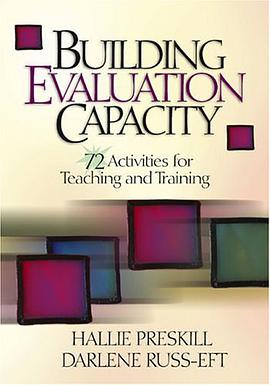
'Evaluative thinking is an acquired competence, not at all natural. This book offers the best and most comprehensive materials and exercises available for evaluation teaching and training. Students need practice to develop evaluation skills. These exercises provide opportunities to practice. Stakeholders need to learn to think evaluatively to participate meaningfully in evaluations. Every evaluation is therefore also a teaching opportunity and these materials facilitate the essential understandings needed to engage stakeholders. At the essence of all 72 activities presented by Preskill and Russ-Eft, from understanding different types of evaluation to making methods choices and analyzing data, is the challenge of thinking evaluatively. This book is a tremendous contribution to the profession' - Michael Quinn Patton, author of "Utilization-Focused Evaluation" and "Qualitative Research & Evaluation Methods". 'This book is an excellent resource for classroom and field instruction as well as professional development' - Katherine Ryan, University of Illinois, Urbana-Champaign. 'Finally, here is a book that goes beyond the theory of evaluation, or the question of what evaluation entails. Instead, it provides hundreds of practical approaches to actually do it. Beyond being all you wanted to know but were afraid to ask, this answers questions most of us have never thought about. It is a remarkable gift to our profession' - John H. Zenger, Managing Partner of Extraordinary Performance Group and CEO of Provant, Inc. "Building Evaluation Capacity" provides 72 activities for learning how to design and conduct evaluation studies. These activities address the entire evaluation process, including: an understanding of what evaluation is; the politics and ethics of evaluation; the influence of culture on evaluation; various evaluation models, approaches, and designs; data collection and analysis methods; communicating and reporting progress and findings; and, building and sustaining support for evaluation. Each activity includes an overview, instructional objectives, time estimates, materials needed, handouts, and procedures for effectively using the activity, whether there are a few participants or an unlimited number in small groups. To help the reader locate specific kinds of activities, this book includes a chart that names the activity, the time needed to implement the activity, and whether background information or knowledge is required prior to implementing the activity. This book also includes several strategies for forming groups and a glossary of instructional strategies. This book is ideal as a text for evaluation courses throughout the social sciences. Students, instructors, trainers, consultants, and managers will all find countless ideas and strategies that facilitate learning.
作者简介
目录信息
读后感
用户评价
拿到这本书,我的第一感觉是它非常厚重,这让我立刻对其内容产生了更深的联想。我猜想,如此篇幅的书籍,其内容一定非常详实,覆盖了“Building Evaluation Capacity”这个主题的方方面面。我不确定这本书会从哪个角度切入,但作为一名长期在非营利组织工作的研究员,我非常关注评估在组织发展和战略决策中的作用。我期待它能探讨如何将评估嵌入到组织的文化中,使其成为一种常态化的学习和改进机制。我希望能看到关于如何建立和培养内部评估团队的讨论,以及如何与外部评估专家合作的策略。此外,我个人非常好奇书中是否会涉及评估的不同流派和理论,比如结果导向评估、过程导向评估,亦或是更偏向于参与式评估的方法。我希望它能提供清晰的理论基础,同时又不乏实践指导,能够帮助我理解不同评估方法的优劣势,并根据实际情况做出选择。如果书中能包含一些不同行业、不同规模的组织进行能力建设的案例,那将是非常有价值的。
这本书的封面设计简约而有力,主色调是一种沉静的深蓝色,搭配着烫金的书名“Building Evaluation Capacity”,散发出一种专业而又不失深度的气息。我拿到它的时候,就觉得它仿佛是一扇通往新领域的门,带着一种期待与好奇。作为一名长期在基层工作的项目协调员,我时常会感受到一种无力感,尤其是在评估项目成效的时候。我们投入了大量的时间和资源,但最终呈现出来的评估报告,往往显得苍白无力,难以真正反映出工作的价值和影响。这本书的书名,恰恰触及了我最迫切的需求——如何构建一种更强大的、更有效的评估能力。我猜想,书中应该会提供一套系统的框架,帮助我们理解评估的本质,并指导我们如何在实践中逐步提升这项技能。我尤其期待的是,它能否提供一些具体的工具、方法和案例,让我能够立刻上手,并在日常工作中得到应用。我希望它不仅能告诉我“为什么”要进行评估,更能深入地讲解“如何”去评估,并且能够指导我如何将评估结果有效地转化为改进项目、提升效率的动力。
说实话,在翻开这本书之前,我其实对“评估能力建设”这个概念并没有一个非常清晰的认识。我通常认为,评估就是做一些数据收集和分析,然后写一份报告。但当我看到“Building Evaluation Capacity”这个书名时,我突然意识到,这可能是一个更宏大、更系统的问题。我猜想,这本书不仅仅是教我如何写报告,而是关于如何从根本上提升一个组织或个人在评估方面的整体素养。我特别好奇,书中会如何定义“评估能力”,它会包含哪些关键要素?是技术层面的数据分析能力?还是战略层面的评估设计能力?亦或是沟通与传播能力?我希望它能提供一种循序渐进的思路,让像我这样对评估理论了解不深的人,也能一步步地掌握核心概念,并将其应用到实际工作中。我期待它能有一些“从入门到精通”的引导,帮助我建立起对评估的全面认知,并找到提升自己评估能力的有效途径。
拿到《Building Evaluation Capacity》这本书,我脑海中浮现的首先是一个不断学习和成长的画面。我认为,评估能力并非一成不变,而是一个需要持续打磨和提升的动态过程。我猜测,书中很可能探讨了如何识别组织在评估方面的现有优势和不足,并据此制定个性化的能力建设方案。我非常期待它能提供一些关于如何培养批判性思维、分析能力以及沟通协调能力的具体方法。作为一名在政策研究领域工作的学者,我深切体会到,一个有力的评估能够为政策的制定和优化提供坚实的基础。我希望这本书能够提供一些能够帮助我设计出更严谨、更具影响力的评估研究的方法论,并且能够指导我如何将研究成果有效地传达给决策者和公众。如果书中能够包含一些关于如何处理复杂数据、如何应对评估中的伦理挑战,以及如何推动评估成果的应用等方面的深入探讨,那将是非常有价值的。
对于“Building Evaluation Capacity”这个主题,我一直以来都有着一种探索的冲动。在我看来,评估并不仅仅是项目结束后的“交差”,它更应该是一种持续的学习和反思过程,是驱动组织不断进步的重要引擎。因此,我非常期待这本书能够提供一些关于如何构建一个可持续的评估体系的见解。我猜想,它可能会探讨如何设计一套有效的评估框架,能够涵盖项目的各个阶段,并与组织的战略目标紧密结合。同时,我也希望这本书能够深入讨论如何让评估过程更具参与性,如何激发所有利益相关者的积极性,让他们成为评估的共同体。毕竟,一个孤立的评估团队很难真正洞察问题的全貌。如果书中能提供一些关于如何培养评估人员的长期发展计划,或者如何利用技术手段来提升评估效率和质量的建议,那将是非常宝贵的。我对它可能提供的那些能够帮助我更好地理解和利用评估数据,并将其转化为切实的行动建议的内容,充满了期待。