
具体描述
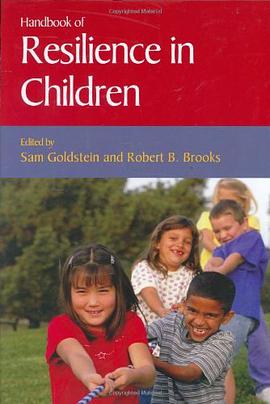
This handbook gathers into one volume the current scientific theory, clinical guidelines, and real-world interventions that can help children overcome the everyday obstacles they face. It includes a wide range of perspectives addressing the role of resilience in helping children overcome these obstacles. The book provides guidance on how to measure and evaluate resilience in clinical practice, and it emphasizes the importance of resilience -- positive psychology -- rather than pathologies. In addition, the book features contributions from leading experts from a variety of fields, such as psychology, education, and social work.
作者简介
Sam Goldstein, Ph.D., is a doctoral level psychologist with areas of study in school psychology, child development, and neuropsychology. He is licensed as a psychologist and certified as a developmental disabilities evaluator in the State of Utah. Dr. Goldstein is a Fellow in the National Academy of Neuropsychology and American Academy of Cerebral Palsy and Developmental Medicine. Dr. Goldstein is an Assistant Clinical Instructor in the Department of Psychiatry. Since 1980, Dr. Goldstein has worked in a private practice setting as the Director of a multidisciplinary team, providing evaluation, case management, and treatment services for children and adults with histories of neurological disease and trauma, learning disability, adjustment difficulties, and attention deficit disorder. Dr. Goldstein is on staff at the University Neuropsychiatric Institute. He has served as a member of the Children’s Hospital Craniofacial Team. He has also been a member of the Developmental Disabilities Clinic in the Department of Psychiatry at the University of Utah Medical School.
Dr. Goldstein has authored, co-authored or edited 36 clinical and trade publications, including 13 text books dealing with managing children's behavior in the classroom, genetics, attention disorder and adult learning disabilities. With Barbara Ingersoll, Ph.D., he has co-authored texts dealing with controversial treatments for children’s learning and attention problems and childhood depression. With Anne Teeter Ellison, he has authored Clinician’s Guide to Adult ADHD: Assessment and Intervention. With Nancy Mather, Ph.D., he has completed 3 texts for teachers and parents concerning behavioral and educational issues. With Michael Goldstein, M.D., he has completed two texts on attention deficit hyperactivity disorder. He has edited 3 texts with Cecil Reynolds, Ph.D., on neurodevelopmental and genetic disorders in children. With Robert Brooks, Ph.D., he has authored 11 texts including, Handbook of Resilience in Children, Understanding and Managing Children’s Classroom Behavior – 2nd Edition, Raising Resilient Children, Nurturing Resilience in Our Children, Seven Steps to Help Children Worry Less, Seven Steps to Anger Management, The Power of Resilience, Raising a Self-Disciplined Child and Raising Resilient Children with Autism Spectrum Disorders. With Jack Naglieri and Sally Ozonoff, Ph.D., he has authored a number of texts on autism, assessment of Intelligence and Executive Functioning. He has co-authored a parent training program and is currently completing a number of additional texts on resilience, ADHD and genetics. Dr. Goldstein is the Editor-in-Chief of the Journal of Attention Disorders and serves on 7 Editorial Boards. He is also the Co-Editor of the Encyclopedia of Child Development and Behavior.
With Jack Naglieri, Ph.D., Dr. Goldstein is the co-author of the Autism Spectrum Rating Scales, Comprehensive Executive Functioning Inventory, Rating Scales of Impairment and the Cognitive Assessment System – 2nd Edition.
Dr. Goldstein, a knowledgeable and entertaining speaker, has lectured extensively on a national and international basis to thousands of professionals and parents concerning attention disorders in children, resilience, depression, adjustment and developmental impairments, autism, and assessment of brain dysfunction.
Robert B. Brooks, Ph.D., has lectured nationally and internationally to audiences of parents, educators, mental health professionals, and business people on topics pertaining to motivation, resilience, self-esteem, family relationships, the qualities of effective leaders and executives, and balancing our personal and professional lives. He has also written extensively about these topics. He is the co-author with David Richman of The Charismatic Advisor: Becoming a Source of Strength in the Lives of Your Clients and author of The Self-Esteem Teacher. He is co-author with Dr. Sam Goldstein of the following books: Raising Resilient Children with Autism Spectrum Disorders; Raising Resilient Children; Nurturing Resilience in Our Children: Answers to the Most Important Parenting Questions; Seven Steps to Help Your Child Worry Less (with Kristy Hagar); Angry Children, Worried Parents: Seven Steps to Help Families Manage Anger (with Sharon Weiss); Seven Steps to Improve Your Child's Social Skills (with Kristy Hagar); Understanding and Managing Children’s Classroom Behavior: Creating Sustainable, Resilient Classrooms; The Power of Resilience: Achieving Balance, Confidence, and Personal Strength in Your Life (the latter focuses on resilience in adults); and Raising a Self-Disciplined Child: Help Your Child Become More Responsible, Confident, and Resilient. In addition, Dr. Brooks is co-author of a book with Drs. Mel Levine and Jack Shonkoff titled A Pediatric Approach to Learning Disorders and has written a sex education book for the young child called So That's How I Was Born! Drs. Brooks and Goldstein prepared a parenting video and curriculum about resilience and have produced a documentary "Tough Times, Resilient Kids" that was a finalist in the 23rd Telly Awards.
Dr. Brooks received his doctorate in clinical psychology from Clark University and did additional training at the University of Colorado Medical School. He is on the faculty of Harvard Medical School and has served as Director of the Department of Psychology at McLean Hospital, a private psychiatric hospital. His first position at McLean Hospital was as principal of the school in the locked door unit of the child and adolescent program. He has a part-time private practice in which he sees children, adolescents, adults, and families and has appeared regularly on television shows in the Boston area as well as on national cable television. He completed a videotape and educational guide for PBS titled “Look What You’ve Done! Stories of Hope and Resilience” that focuses on self-esteem and resilience in children with special needs and participated in the production of two videotapes by Sunburst Communications, one about parenting children with learning and attentional problems and the other about developing responsibility in children.
Dr. Brooks received a Gubernatorial Award for Distinguished Public Service for his work with the Governor's Alliance Against Drugs; as part of his contribution to the Alliance, he co-authored a pamphlet for parents about talking with children and adolescents about drugs. Dr. Brooks also received "Hall of Fame" awards from both CH.A.D.D. (Children and Adults with Attention Deficit Disorders) and the Connecticut Association for Children with Learning Disabilities for his work with special needs children and adolescents, a Special Recognition and Media Award from the Massachusetts Psychological Association, the Friends of Family Award from the Family Place, MA and the Mandy Overton Award from St. David's Child Development and Family Services, Minnetonka, MN for his work on behalf of children and families, The Lifetime Achievement Award from the Prentice School in Santa Ana, CA for his efforts on behalf of students with learning differences, the Distinguished Leadership Award from Learning Disabilities Worldwide in recognition of his contributions and commitment to the field of learning disabilities, and the Outstanding Educator Award for Mental Health Education from the New England Educational Institute, Pittsfield, MA. In addition, Dr. Brooks has served as a consultant to Sesame Street Parents Magazine.
目录信息
- Part I: Overview.
- Why Study Resilience; Sam Goldstein, Robert B. Brooks.
- Resilience Processes in Development: Four Waves of Research on Positive Adaptation in the Context of Adversity; Margaret O’Dougherty Wright, Ann S. Masten, Angela J. Narayan.
- Reconceptualizing Resilience; Howard B. Kaplan.
- Resilience in Gene-Environment Transactions; Zhe Wang, Kirby Deater-Deckard.
- Relational Resilience in Girls and Young Females; Judith V. Jordan.
- What Can We Learn About Resilience From Large-Scale Longitudinal Studies?; Emmy E. Werner.
- Part II: Environmental Issues.
- Poverty in Childhood and Adolescence: A Transactional-Ecological Approach to Understanding and Enhancing Resilience in Contexts of Disadvantage and Developmental Risk; Robert D. Felner, Melissa L. DeVries.
- Family Violence and Parent Psychopathology: Implications for Children’s Socioemotional Development and Resilience; Sara R. Jaffee.
- Understanding and Promoting the Development of Resilience in Families; Susan M. Sheridan, Tara M. Sjuts, Michael J. Coutts.
- Resiliency in Maltreated Children and Adults; Shadi Houshyar, Joan Kaufman, Melissa DeVries.
- Part III: Resilience as a Phenomenon in Childhood Disorders.- Resilience and the Disruptive Disorders of Childhood; Sam Goldstein, Richard Rider.
- From Helplessness to Optimism: The Role of Resilience in Treating and Preventing Depression in Youth; Karen Reivich, Jane E. Gillham, Tara M. Chaplin, Martin E.P. Seligman.
- Resilience and Self-Control Impairment; Wai Chen, Eric Taylor.
- Part IV: Assessment.- Measuring Resilience in Children: From Theory to Practice; Jack Naglieri, Paul A. LeBuffe, Katherine M. Ross.
- Assessment of Social Emotional Competencies Related to Resilience; Jack Naglieri, Paul A. LeBuffe, Valerie Shapiro.
- The Resiliency Scales for Children and Adolescents: Constructs, Research and Clinical Application; Sandra Prince-Embury.
- Part V: Resilience in the Clinical and School Settings.
- Resilience and Positive Youth Development: A Relational Developmental Systems Model; Richard Lerner, Jennifer P. Agans, Miriam R. Arbeit, Paul A. Chase, Michelle B. Weiner, Kristina L. Schmid, Amy Eva Alberts Warren.
- A Resilience Framework for Treating Severe Child Trauma; David A. Crenshaw.
- Resilience and the Child with Learning Disabilities; Nicole Ofiesh, Nancy Mather.
- Promoting Educational Equity in Disadvantaged Youth: The Role of Resilience and Social-Emotional Learning Building Educational Opportunity; Jazmin A. Reyes, Maurice J. Elias, Sarah J. Parker, Jennifer Rosenblatt.
- Resilience through Violence and Bullying Prevention in Schools;Jennifer Taub, Melissa Pearrow.
- Caring for the Caregiver: Promoting the Resilience of Teachers; Mary Mackrain, Jennifer L. Fleming, Paul A. LeBuffe.
- Enhancing Resilience in Classrooms; Beth Doll.- Creating a Positive School Climate: A Foundation for Resilience;Jonathan Cohen.
- Part VI: Shaping the Future of Children and Adults.
- Positive Adaptation, Resilience and the Developmental Asset Framework; Arturo Sesman, Jr., Marc Mannes, Peter C. Scales.- The Power of Parenting; Robert B. Brooks.
- Building Resilience in Children: A Public Health Approach; Emily B. Winslow, Irwin N. Sandler, Sharlene A. Wolchik, Colleen Carr.
- Enhancing the Process of Resilience Through Effective Thinking; Myrna B. Shure, Bonnie Aberson.
- Part VII: Conclusions.
- The Future of Children Today;Robert B. Brooks, Sam Goldstein.
· · · · · · (收起)
读后感
用户评价
从内容架构上来看,这本书的组织逻辑具有极强的层次感和递进性。它不是将所有内容杂乱无章地堆砌,而是遵循着从宏观到微观、从理论到实践的清晰路径。首先奠定理论基础,然后深入探讨影响韧性的关键生物学和社会学变量,接着详细展开各种干预模型,最后落脚于如何建立一个支持性的生态系统(包括学校、社区和政策层面)。我个人对其中关于“代际创伤”与“韧性传递”的探讨留下了深刻印象。作者坦诚地讨论了父母自身的未解决的创伤是如何无形中影响其育儿模式,进而挑战了儿童的复原力发展。但最关键的是,它并未让人陷入绝望,而是提出了“打破循环”的具体策略,比如父母自我关怀的重要性,以及如何通过专业支持重建健康的依恋模式。这种对复杂问题的深刻洞察和建设性的解决方案,使得这本书超越了一般的育儿指南,更像是一份深思熟虑的社会健康行动纲领。它促使读者不仅关注孩子,也要审视自己作为成人和引导者的责任边界。
阅读过程如同进行了一次系统性的心智梳理。我发现自己不断地在书中描绘的各种案例和自己过去观察到的情境之间进行对照。这本书的强大之处在于它提供的不仅仅是“是什么”,更是“怎么办”的清晰路线图。特别值得称赞的是其中关于“社会情感学习”(SEL)与韧性培养的整合部分。它没有采用那种空洞的口号式教育,而是提供了具体到可以落地执行的干预策略。例如,如何通过“情感命名游戏”帮助学龄前儿童识别和调节负面情绪,以及如何设计家庭“反思会议”来共同探讨失败的经验。这些工具箱式的建议,都是建立在扎实的神经科学和认知行为理论基础之上的,这确保了实践的有效性。更令人耳目一新的是,书中探讨了文化背景差异对韧性表达的影响,指出了在某些强调集体主义的文化中,表现出的“韧性”可能与西方强调的个体独立性有所不同。这种跨文化的审慎态度,极大地拓宽了我们对“健康成长”的定义范围,避免了“一刀切”的评估陷阱。对于寻求多元化视角的研究人员而言,这一点无疑是极具价值的补充。
这本书的叙事节奏掌控得相当到位,它避免了许多专业书籍常见的“知面不达意”的弊病。作者的笔触非常富有画面感,尤其是在描述那些关键的“转折点”时刻——比如孩子如何从一次重大挫折中恢复过来时,那种细腻的心理描写,让人仿佛能身临其境地感受到孩子内心世界的风起云涌与最终的重塑。我特别被其中关于“希望感”构建的章节所吸引。作者将希望定义为一种可习得的技能,而非单纯的乐观情绪,并详细阐述了成人如何通过言语和行动(尤其是面对不确定性时的示范)来培养儿童的“目标导向”与“路径思考”。书中插入的一些“停下来思考”的小结,像一个个精准的靶点,让你在读到复杂的概念后能立刻回归到核心的实践层面,进行自我校准。这使得整本书读起来非常流畅,知识的吸收效率极高,不会因为内容的深度而感到疲惫。它真正做到了“寓教于乐”中的“寓教”,让学习过程本身就成为一种积极的体验。
这本书的封面设计初见便给人一种既专业又温暖的感觉,那种沉稳的蓝色调仿佛在承诺着一个可以依赖的知识港湾。我本以为会是一本晦涩难懂的学术专著,毕竟“韧性”这个主题在心理学界总是伴随着复杂的理论框架。然而,翻开扉页后,那种预期的沉重感立刻消散了。作者显然花费了大量精力去平衡理论的严谨性与实践的可操作性。书中对儿童发展阶段的细致划分,以及针对每个阶段可能出现的应激源的分类,做得极为细致入微。我尤其欣赏它并没有仅仅停留在“什么是韧性”的定义上,而是深入剖析了环境、基因与家庭互动在塑造儿童复原力中的复杂作用机制。比如,关于“安全依恋”如何成为早期韧性构建的基石那一章,作者引用了大量的纵向研究数据,但叙述方式却非常平易近人,像是经验丰富的老教授在与你进行一次深入的、富有启发性的对话,而不是单纯地宣读研究报告。这种深入浅出的能力,使得这本书不仅适合一线的工作者,对于初次接触该领域的家长或教育者来说,也具有极高的入门价值。它提供了一种全新的视角来看待儿童面对挑战时的表现,不再将“挫折”视为洪水猛兽,而是将其视为成长的催化剂,这本身就是一种强大的心理赋权。
这本书最让我感到振奋的是其整体基调——一种充满信心的、面向未来的积极视角。它并不回避现实的残酷性,例如面对全球性危机或个人悲剧时儿童可能表现出的脆弱。然而,它的所有讨论都围绕着一个核心信念展开:人类(尤其是儿童)具有惊人的内在修复和成长的潜能。书中对“逆境成长”(Post-Traumatic Growth)在儿童身上的体现进行了深入分析,并提供了一系列鼓舞人心的案例,这些案例并非遥不可及的奇迹故事,而是基于日常生活中微小、持续的积极互动所积累的结果。文字中流淌出对儿童主体性的尊重,强调了倾听和赋权的重要性。它提醒我们,韧性不是教会孩子“坚强到不哭泣”,而是教会他们“跌倒后知道如何站起来,并允许自己寻求帮助”。这种对“有力量的脆弱性”的深刻理解,是这本书区别于市面上许多肤浅的“积极心理学”读物的关键所在。它提供的知识是坚实、可靠且充满人文关怀的。