
具体描述
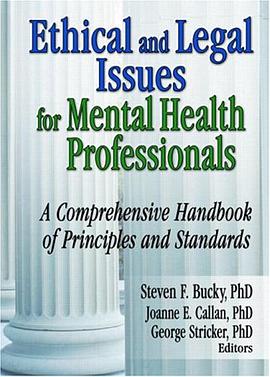
Stay up-to-date on the ethical and legal issues that affect your clinical and professional decisions! Ethical and Legal Issues for Mental Health Professionals: A Comprehensive Handbook of Principles and Standards details the ethical and legal issues that involve mental health professionals. Respected authorities with diverse backgrounds, expertise, and professional experience discuss contemporary theories emphasizing professional ethics, the ramifications of professional actions and decisions, and ethical standards on teaching, training, research, and publication. This informative handbook provides invaluable up-to-date information and guidelines vital for every mental health professional. This book is a thorough examination of ethical behavior which can be used as a reference source for the professional or a textbook for graduate students. The handbook itself is divided into five sections. The first section is a detailed introduction of ethics, law, and licensing. The second section presents general ethical principles like competence, integrity, and respect for individual rights and dignity. The third section examines confidentiality, privilege, consent, and protection. The fourth section focuses on general ethical standards in practice, including sexual contact, multiple relationships, and bartering. The fifth section presents the ethical principles and standards in teaching, training, and research. Appendices include the Ethical Principles of Psychologists and Code of Conduct (American Psychological Association, 2002) and the Code of Ethics of the National Association of Social Workers (National Association of Social Workers, 1999). Ethical and Legal Issues for Mental Health Professionals: A Comprehensive Handbook of Principles and Standards discusses: the history of basic approaches and issues in ethical philosophy five fundamental areas in the process of developing competence the necessary ingredients for the mental health professional's practice of integrity aspirational versus enforceable standards of ethics concern for the welfare of others as a core ethical principle the notion of social responsibility in the ethics codes of psychologists and social workers ethical principles, statutes, and case law protecting privacy and confidentiality issues involving the therapist-patient privilege the "duty to protect" doctrine and relevant legal issues the dynamics of multiple relationships and boundary violations sexualized dual relationships between psychologists and patients possible conflict of interest in bartering for services the requirements and implementation of maintaining patient records to avoid ethical and legal problems possible ethical dilemmas involving referrals and fees much, much more This Handbook is an essential resource for all mental health professionals, including psychologists, psychiatrists, social workers, counselors, therapists, and graduate students in mental health and the related fields. Ethical and Legal Issues for Mental Health Professionals: A Comprehensive Handbook of Principles and Standards is the first of three volumes under this title. The following volumes will focus on forensic settings and special populations/special treatment modalities.
作者简介
目录信息
读后感
用户评价
我发现这本书在处理一些新兴和前沿议题上表现得特别有前瞻性。市面上很多关于伦理的书籍在技术更新上总是滞后一步,但这本书显然投入了大量精力来研究人工智能在心理健康领域的应用潜力和随之而来的责任归属问题。比如,当一个AI辅助诊断工具提供建议时,最终的伦理责任应由谁承担?是开发者、使用工具的治疗师,还是系统本身?作者没有给出简单的答案,而是系统性地梳理了现有法律框架在面对这类“非人类主体”时的局限性。这种对未来挑战的预先准备,极大地提升了这本书的实用价值和时效性。阅读它,就像是为自己的专业执业生涯购买了一份长期有效的“前瞻性保险”,它不仅解决了当下的合规问题,更拓宽了我们对未来专业角色定位的想象空间。
这本书的学术严谨性和实践指导性的平衡把握得极其到位,几乎没有废话,每一页都充满了密度极高的信息量。我对比了市面上其他几本同类书籍,发现这本书最大的优势在于其跨学科的整合能力。它不仅仅是心理学伦理加上法条解释,而是将医疗责任法、隐私权法案的最新修正案,与精神病理学的诊断标准进行了深度的耦合分析。比如,在讨论知情同意书的有效性时,它细致地分析了不同文化背景下,患者对“理解”的定义差异,这对多元文化治疗环境下的我们至关重要。那种对细节的苛求,体现在对判例的引用上,每一个案例的背景介绍都足够支撑起一个独立的学术讨论。读完后,我感觉自己对“保护来访者权益”这句口号有了更清晰、更具体的执行路径图,而不是停留在空泛的道德高地上。对于需要进行专业督导或开设相关课程的教育者来说,这本书提供的案例素材和讨论框架简直是无价之宝。
这本书的封面设计就透着一股严肃和专业的气息,那种沉稳的蓝色和清晰的字体排版,立刻让人感觉这不是一本泛泛而谈的“心灵鸡汤”,而是真的要深入到实践操作层面的指南。我拿到它的时候,心里就期待着能找到一些能立即应用到临床工作中的实操框架,特别是关于信息保密和跨界合作的那些灰色地带。坦白说,这本书在组织结构上做得相当出色,章节间的逻辑衔接非常流畅,从基础的职业道德准则切入,逐步深入到复杂的法律诉讼风险管理。我尤其欣赏作者在引入案例分析时的那种克制和精准,没有过度渲染戏剧性,而是聚焦于从中提炼出可供借鉴的决策模型。这本书的价值,不在于提供一板一眼的“是”或“否”的答案,而在于构建一个让专业人士能够自我审视、审慎前行的思维工具箱。它迫使你去思考,在那些没有明确法律条文规定的模糊地带,你的专业判断是如何受到伦理约束和法律风险共同制约的。对于任何一个刚踏入或已经在精神健康领域深耕多年的从业者来说,它都是一本绝佳的、需要反复翻阅的“安全手册”。
我是一个偏向直觉和人本主义取向的治疗师,传统上对法规条文总有一种疏离感,总觉得那会束缚住治疗关系中流动的能量。然而,这本书完全颠覆了我的这种固有偏见。它并没有把法律和伦理描绘成阻碍治疗的枷锁,而是塑造成了保障治疗关系健康发展和维持治疗师个人安全屏障的必要结构。作者通过一些非常微妙的笔触,阐释了清晰的界限(Boundaries)如何反而能加深来访者的信任感,因为他们知道自己在一个安全、可预测的环境中。书中关于治疗师自我关怀(Self-Care)与职业倦怠(Burnout)在法律责任层面的交叉讨论尤为深刻,指出照顾好自己的心理健康,本身就是一种关键的伦理义务。这使得整本书的基调变得非常温暖,它既是“红灯警示”,也是“强心剂”,提醒我们保持专业的同时,也要善待自己。
说实话,我本来以为这会是一本枯燥的法律条文汇编,但读进去之后,发现它完全不是那种风格。作者的叙事口吻非常贴近一线工作者的日常困境,那种“你以为你知道,但实际上你可能在操作中犯错”的警醒感贯穿始终。我印象最深的是关于数字时代的伦理挑战那一部分,比如使用社交媒体、在线咨询平台,以及客户端数据存储的合规性问题。这些都是我们在日常工作中每天都在面对,但很少有系统性资源去深入探讨的领域。这本书的精彩之处在于,它没有仅仅停留在“要小心”的层面,而是提供了具体的、具有可操作性的审计清单和风险评估矩阵。阅读这本书的过程,更像是一场与自己专业良知和职业习惯的深度对话。我发现自己过去一些习以为常的操作流程,在更严格的伦理标准下是存在漏洞的。这套书提供了一种“预见性防御”的视角,教会我们如何将潜在的法律风险,转化为提升服务质量的契机。