
具体描述
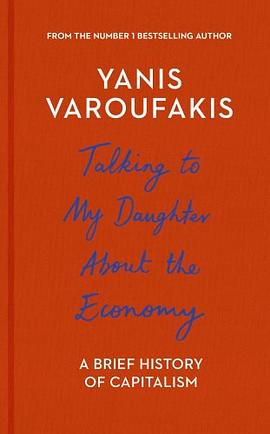
In Talking to My Daughter About the Economy, activist Yanis Varoufakis, Greece’s former finance minister and the author of the international bestseller Adults in the Room, pens a series of letters to his young daughter, educating her about the business, politics, and corruption of world economics.
Yanis Varoufakis has appeared before heads of nations, assemblies of experts, and countless students around the world. Now, he faces his most important―and difficult―audience yet. Using clear language and vivid examples, Varoufakis offers a series of letters to his young daughter about the economy: how it operates, where it came from, how it benefits some while impoverishing others. Taking bankers and politicians to task, he explains the historical origins of inequality among and within nations, questions the pervasive notion that everything has its price, and shows why economic instability is a chronic risk. Finally, he discusses the inability of market-driven policies to address the rapidly declining health of the planet his daughter’s generation stands to inherit.
Throughout, Varoufakis wears his expertise lightly. He writes as a parent whose aim is to instruct his daughter on the fundamental questions of our age―and through that knowledge, to equip her against the failures and obfuscations of our current system and point the way toward a more democratic alternative.
作者简介
Let me begin with a confession: I am a Professor of Economics who has never really trained as an economist. While I may have a PhD in Economics, I do not believe I have ever attended more than a few lectures on economics! But let's take things one at a time.
I was born in Athens back in the mists of 1961. Greece was, at the time, struggling to shed the post-civil war veil of totalitarianism. Alas, those hopes were dashed after a brief period of hope and promise. So, by the time I was six, in April of 1967, a military coup d' etat plunged us all into the depths of a hideous neo-Nazi dictatorship. Those bleak days remain with me. They endowed me with a sense of what it means to be both unfree and, at once, convinced that the possibilities for progress and improvement are endless. The dictatorship collapsed when I was at junior high school. This meant that the enthusiasm and political renaissance that followed the junta's collapse coincided with my coming of age. It was to prove a significant factor in the way that I resisted conversion to the ways of anglosaxon cynicism in the years to come.
When the time came to decide on my post-secondary education, around 1976, the prospect of another dictatorship haδ not been erased. Given that students were the first and foremost targets of the military and paramilitary forces, my parents determined that it was too risky for me to stay on in Greece and attend University there. So, off I went, in 1978, to study in Britain. My initial urge was to study physics but I soon came to the conclusion that the lingua franca of political discourse was economics. Thus, I enrolled at the University of Essex to study the dismal science. However, within weeks of lectures I was aghast at the content of my textbooks and the inane musings of my lecturers. Quite clearly economics was only interested in putting together simplistic mathematical models. Worse still, the mathematics utilised were third rate and, consequently, the economic thinking that emanated from it was atrocious. In short shrift I changed my enrolment from the economics to the mathematics school, thinking that if I am going to be reading maths I might as well read proper maths. After graduating from Essex, I moved to the University of Birmingham where I read toward an MSc in Mathematical Statistics. By that stage I was convinced that my escape from economics had been clean and irreversible. How deluded that conviction was! When looking for a thesis topic, I stumbled upon a piece of econometrics (a statistical test of some economic model of industrial disputes) that angered me so much with its methodological sloppiness that I set out to demolish it. That was the trap and I fell right into it. From that moment onwards, a series of anti-economic treatises followed, a Phd in... Economics and, naturally, a career in exclusively Economics Departments, in every one of which I enjoyed debunking that which my colleagues considered to be legitimate 'science'.
Between 1982 and 1988 I taught at the University of Essex, the University of East Anglia and the University of Cambridge. My break from Britain occurred in 1987 on the night of Mrs Thatcher's third election victory. It was too much to bear. Soon I started planning my escape. But where to? Continental Europe was closed to non-native academics, at that time, and Greece awaited with open arms - to enlist me into its conscript army. No, thanks, I thought to myself. Even Thatcherism is preferrable. My break came shortly after when, out of the blue, I was invited to take up a lectureship at the University of Sydney. And so the die was cast. From 1988 to 2000 I lived and worked in Sydney, with short stints at the University of Glasgow (and an even shorter one at the Université Catholique de Louvain). In 2000 a combination of nostalgia and abhorrence of the concervative turn of the land down under (under the government of that awful little man, John Howard) led me to return to Greece
目录信息
读后感
一本简洁的经济学入门,适合所有没有经济学基础,想简单了解经济学原理的读者。 作者Yanis Varoufakis是希腊的经济学家,前任希腊财政部长。他曾经出过好几本书关于希腊经济,欧洲经济,美国经济问题的书。在这一本小册子中,他用简单的语言,深入浅出地给他的女儿讲解了最基础...
一本简洁的经济学入门,适合所有没有经济学基础,想简单了解经济学原理的读者。 作者Yanis Varoufakis是希腊的经济学家,前任希腊财政部长。他曾经出过好几本书关于希腊经济,欧洲经济,美国经济问题的书。在这一本小册子中,他用简单的语言,深入浅出地给他的女儿讲解了最基础...
一本简洁的经济学入门,适合所有没有经济学基础,想简单了解经济学原理的读者。 作者Yanis Varoufakis是希腊的经济学家,前任希腊财政部长。他曾经出过好几本书关于希腊经济,欧洲经济,美国经济问题的书。在这一本小册子中,他用简单的语言,深入浅出地给他的女儿讲解了最基础...
一本简洁的经济学入门,适合所有没有经济学基础,想简单了解经济学原理的读者。 作者Yanis Varoufakis是希腊的经济学家,前任希腊财政部长。他曾经出过好几本书关于希腊经济,欧洲经济,美国经济问题的书。在这一本小册子中,他用简单的语言,深入浅出地给他的女儿讲解了最基础...
一本简洁的经济学入门,适合所有没有经济学基础,想简单了解经济学原理的读者。 作者Yanis Varoufakis是希腊的经济学家,前任希腊财政部长。他曾经出过好几本书关于希腊经济,欧洲经济,美国经济问题的书。在这一本小册子中,他用简单的语言,深入浅出地给他的女儿讲解了最基础...
用户评价
这本书的书名,"Talking to My Daughter About the Economy",带有一种天然的吸引力,因为它巧妙地将一个看似严肃、晦涩的学科,与一个温暖、私人的场景相结合。我一直在寻找能够帮助我理解经济运行机制的书籍,但很多时候,那些过于专业的书籍让我望而却步,而那些过于简化的读物又让我觉得不够深入。所以我对这本书充满了期待。我设想,作者一定是用一种非常独特的方式,将复杂的经济学原理,通过与女儿的对话,变得生动有趣,易于理解。也许,他会从女儿的视角出发,解释什么是供需关系,什么是通货膨胀,什么是货币政策。我希望这本书能够打破经济学“高冷”的固有印象,让我们普通人也能轻松地走进经济学的世界。我甚至可以想象,这本书不仅仅是关于经济学的知识传递,更可能是一种情感的交流,一种价值观的引导。它或许能够教会我如何更好地与孩子沟通关于金钱的话题,如何引导孩子建立健康的金钱观。这本书的出现,就像一股清流,让我想起经济学不仅仅是关于数字和图表,更是关于生活,关于我们每个人如何在这个经济社会中生存和发展。
书名《Talking to My Daughter About the Economy》的构思,让我眼前一亮。通常,“经济学”这个词往往与严谨的理论、复杂的模型、甚至是冷冰冰的市场数据联系在一起,很容易让人产生距离感。然而,这个书名却用一种非常个人化、非常温情的方式,将这个主题拉近了。我立刻就能联想到,作者一定是用一种家长与孩子之间特有的沟通方式,来阐释经济学的原理。我非常好奇,他会如何将那些抽象的概念,比如“机会成本”、“边际效用”或者“宏观调控”,用女儿能够理解的语言和生活化的例子来解释。是像在谈论玩具的购买,还是零花钱的分配?又或者是家庭的旅行预算?我期待这本书能够提供一种全新的视角,让我不再把经济学视为一个难以接近的学科,而是可以融入到日常生活中的智慧。我甚至可以想象,这本书不仅仅是知识的传递,更是一种情感的连接,让读者在理解经济学的同时,也能感受到亲子之间的温情。它或许能启发我,如何用更具启发性和趣味性的方式,与家人分享和讨论关于经济的话题,从而让经济学变得不再枯燥,而是充满了生活的智慧和温度。
这本书的封面设计就足够引人注目,简洁明亮的配色,中间是一幅温馨的父女对话场景,仿佛能感受到一股暖流。拿到这本书,我最先想到的是,经济学这个话题,听起来总是那么枯燥乏味,充斥着各种复杂的图表和冰冷的数字,对于大多数人来说,甚至是初学者,简直是望而生畏。但这本书的标题却以一种非常个人化、非常亲切的方式切入,"Talking to My Daughter About the Economy",这立刻勾起了我的好奇心。我猜想,作者一定是用一种非常接地气、非常容易理解的方式来阐述经济学原理,或许是通过生活中的例子,或许是通过父母与孩子之间特有的沟通方式,将那些抽象的概念变得生动有趣。我期待着这本书能够打破我对经济学固有的刻板印象,让我看到经济学原来也可以如此贴近生活,如此充满人情味。我甚至想象着,如果我也有一个孩子,这本书或许能成为我向她解释这个复杂世界如何运作的绝佳工具。作者是如何将宏观经济的波动与家庭的日常开支联系起来?又是如何将金融市场的起伏与孩子的零花钱管理联系起来?这些问题在我脑中萦绕,让我迫不及待地想要翻开书页,一探究竟。
作为一名对经济学充满好奇但又缺乏系统学习的人,这本书的书名立刻吸引了我。“Talking to My Daughter About the Economy”——这不仅仅是一个书名,更是一种亲切的邀请,让我感到自己是被邀请进一个温馨的家庭课堂。经济学,这个词在很多人心中可能意味着复杂的公式、晦涩的理论,甚至是冰冷的市场数据。然而,从这个书名中,我感受到的却是温度和人情味。我猜测,作者一定是用一种极其生活化的方式,将那些看似遥远的经济概念,融入到父女之间的日常对话中。比如,当女儿问“为什么冰淇淋会涨价”时,父亲是如何用经济学的角度来解答的?当女儿攒钱想买一个心仪的玩具时,父亲又会如何引导她理解储蓄和消费的意义?我期待这本书能够提供这样一些具体的、可操作的对话范例,让我能够从中学习到如何将经济学知识巧妙地融入到与家人的交流中,甚至能够启发我用更轻松有趣的方式去学习经济学。这不仅仅是一本关于经济学的书,更可能是一本关于如何沟通、如何教育的书,它将经济学从一个遥不可及的学科,变成了一个可以触及、可以感受的温暖话题。
这本书的书名本身就自带一种亲和力,让人在接触到“经济学”这个略显高冷的词汇时,不会感到一丝的压力。我一直觉得,经济学不应该只是少数专业人士的专属领域,它渗透在我们生活的方方面面,从我们每一次购物的决策,到我们为未来进行的储蓄和投资,都离不开经济学的原理。然而,市面上能够以真正通俗易懂、引人入胜的方式解读经济学的书籍并不多见。很多书籍要么过于学术化,让人难以消化;要么过于简化,失去了经济学的深度。所以我对这本书寄予了很高的期望。我希望它能像一位睿智而耐心的长者,用最朴实的语言,为我揭示经济运行的规律,让我明白为什么商品会有价格,为什么会有通货膨胀,为什么国家会出台各种经济政策。我尤其好奇,作者是如何在与女儿的对话中,将这些复杂而抽象的概念,转化为女儿能够理解的生动案例。这种视角,想必会比那些枯燥的教科书式解读更能打动人心,更能触及问题的本质。这本书的出现,或许能为我开启一扇新的大门,让我重新认识和理解我们所处的经济世界。
首先作者的立场很清楚 老老实实经济学讨论真的能脱离政治立场真空存在么 不大可能吧你总要有个自圆其说的出发点 从这个角度上来说这本书写的还是蛮真诚的吧 虽然有些神话类比也是太生硬了 让我们这种人get 一些基本概念和逻辑还是可以的 可以搭配正经教科书学着批判着看看
关于资本、市场、经济学、就业等社会要素的入门阐述;易读性非常强,调用了很多动漫影视的流行元素和希腊神话故事。尽管数学工具和数据被大量使用,作者认为经济学家仍不算科学家,就像同样使用图表的占星术士一般,而经济的作用也在于此,反复探索,在信念和真实之间找到最接近真谛的所在。
好喜欢这本!这样的科普书对没有经济学基础的人太友好了,对好多基本的微观?经济学概念有了了解。最难得的是一直在语气中透露出的正义和无私感,还有最后一张愿意承认经济学家(作者在内)的局限,把经济学家比作占星学家,并且鼓励女儿不要被现有经济理论困住,要勇敢想象更好的社会。我现在有兴趣稍微多看点经济学科普书了!侄女长大点我要买这本书给她读!
比较通俗易懂,英语不太好也可以读读看。
很容易读,文采不错,有句话说:自人类第一次仰望星空,因它的无垠而感到震撼,我们就知道在我们的内心深处,有着一种东西……