
具体描述
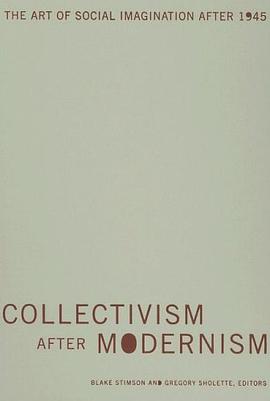
"Don't start an art collective until you read this book." --Guerrilla Girls "Ever since Web 2.0 with its wikis, blogs and social networks the art of collaboration is back on the agenda. "Collectivism after Modernism" convincingly proves that art collectives did not stop after the proclaimed death of the historical avant-gardes. Like never before technology reinvents the social and artists claim the steering wheel " --Geert Lovink, Institute of Network Cultures, Amsterdam "This examination of the succession of post-war avant-gardes and collectives is new, important, and engaged." -- Stephen F. Eisenman, author of" The Abu Ghraib Effect" ""Collectivism after Modernism" crucially helps us understand what artists and others can do in mushy, stinky times like ours. What can the seemingly powerless do in the face of mighty forces that seem to have their act really together? Here, Stimson and Sholette put forth many good answers." --Yes Men Spanning the globe from Europe, Japan, and the United States to Africa, Cuba, and Mexico, "Collectivism after Modernism" explores the ways in which collectives function within cultural norms, social conventions, and corporate or state-sanctioned art. Together, these essays demonstrate that collectivism survives as an influential artistic practice despite the art world's star system of individuality. "Collectivism after Modernism" provides the historical understanding necessary for thinking through postmodern collective practice, now and into the future. Contributors: Irina Aristarkhova, Jesse Drew, Okwui Enwezor, Ruben Gallo, Chris Gilbert, Brian Holmes, Alan Moore, Jelena Stojanovic, Reiko Tomii, Rachel Weiss. Blake Stimson is associate professor of art history at the University of California Davis, the author of "The Pivot of the World: Photography and Its Nation, " and coeditor of "Visual Worlds and Conceptual Art: A Critical Anthology. "Gregory Sholette is an artist, writer, and cofounder of collectives Political Art Documentation/Distribution and REPOhistory. He is coeditor of "The Interventionists: Users' Manual for the Creative Disruption of Everyday Life." " " "To understand the various forms of postwar collectivism as historically determined phenomena and to articulate the possibilities for contemporary collectivist art production is the aim of Collectivism after Modernism." The essays assembled in this anthology argue that to make truly collective art means to reconsider the relation between art and public; examples from the Situationist International and Group Material to Paper Tiger Television and the Congolese collective Le Groupe Amos make the point. To construct an art of shared experience means to go beyond projecting what Blake Stimson and Gregory Sholette call the "imagined community": a collective has to be more than an ideal, and more than communal craft; it has to be a truly social enterprise. Not only does it use unconventional forms and media to communicate the issues and experiences usually excluded from artistic representation, but it gives voice to a multiplicity of perspectives. At its best it relies on the participation of the audience to actively contribute to the work, carrying forth the dialogue it inspires." --BOMB" " " ""
作者简介
目录信息
读后感
用户评价
这本书的结构处理简直是一场智力上的冒险。它避开了传统的线性叙事,转而采用了一种螺旋上升或说网状交织的结构。章节之间经常出现回响和重复,但每一次重复都带着新的光泽或更深的阴影,仿佛是同一段旋律在不同的乐器上演奏,揭示出其内在的多重性和复杂性。我尤其喜欢作者在关键转折点上引入的那些看似不相干的“文献碎片”——可能是某个被遗忘的工厂操作手册的摘录,或者是某个小型宗教仪式的祷文。这些碎片没有被明确地解释,但它们像催化剂一样,激活了前面文本中潜藏的意义。这种手法,与其说是碎片化叙事,不如说是在模拟信息过载时代下,人类心智如何进行意义建构的过程。它要求读者自己去搭建桥梁,去完成作者留下的那些关键的“空白”。阅读过程因此变得高度主动和充满创造性,每一次重新阅读某个段落,都会发现基于先前知识积累而产生的全新理解,这才是真正优秀的学术或哲学文本所应具备的特质。
这本书的开篇,那种扑面而来的时代气息真是让人眼前一亮。作者似乎直接把我们拉到了一个后现代主义的废墟之上,但奇怪的是,这里没有那种常见的虚无主义的颓废感,反而有一种奇特的、近乎宗教般的虔诚在空气中弥漫。叙事视角非常独特,它不是从宏大的历史叙事切入,而是聚焦于一些极其微小、日常的场景——比如一个老旧社区的公共浴池,或者某个工厂流水线上重复的机械动作。通过这些看似不相关的碎片,作者巧妙地编织出了一种关于“共同体”如何在这种破碎的现代性语境下重新聚合的复杂图景。我尤其欣赏作者对语言的运用,那些句子常常长得出奇,充满了复杂的从句和意象的叠加,读起来像是在迷宫中穿行,但每走一步,你都能触摸到一种坚实的、非理性的信念。这并非是那种鼓吹某种单一意识形态的宣传品,更像是一份对人类在面对巨大社会变迁时,内心深处对于归属感和意义的本能追寻的细致入微的田野考察。它挑战了我们对“集体”的传统认知,把它从政治口号中解放出来,还原成一种更深层次的、生存学的需要。整体而言,它像是一篇充满哲思的散文诗,要求读者投入极大的注意力去捕捉那些转瞬即逝的洞察。
坦率地说,这本书的阅读门槛不低,它要求读者具备相当的耐心和对复杂语境的接受能力。它拒绝给出简单的答案,甚至拒绝承认存在一个统一的“后现代”问题。相反,它像是一面棱镜,将我们所处的时代碎片反射出无数个不同的、相互矛盾的光斑。我关注到作者在最后几章中,开始大量使用关于“记忆的物质性”的讨论,这似乎是作者试图为这种漂浮不定的“共同性”寻找一个最终的锚点——也许是土壤,也许是身体留下的印记。这种探索,使得整本书的基调从最初的冷静分析,逐渐导向一种近乎大地艺术般的沉思。它最终呈现的不是一个清晰的结论,而是一种邀请:邀请读者走进这种不确定性之中,并带着对人类相互依存的深刻认识,去重新体验我们所生活的这个由技术和遗忘构筑的复杂世界。这是一部需要反复咀嚼、并且会在数月后依然在你脑中回响的作品。
从文学风格的角度来看,这本书的语言具有一种近乎冷峻的诗意。它没有多余的情感宣泄,但那种克制之下涌动的力量感,比直白的控诉更有穿透力。作者对于“仪式”的捕捉异常精准。无论是现代化的工业流程,还是那些被时代边缘化的传统习俗,在作者笔下都被提升到了一种神圣的、具有形而上学意义的高度。例如,描述集体劳动时的动作,与其说是工作,不如说是一种持续不断的、对某种无形之物的献祭。这种对日常行为的“去日常化”处理,迫使读者重新审视我们习以为常的社会互动模式。它不是在哀叹传统秩序的崩塌,而是在探寻在新的“无序”中,新的、非正式的、近乎神秘的连接是如何在物质基础上自发形成的。这种对“仪式性”的关注,提供了一个强大的分析框架,来理解个体在高度同质化和高度异质化的双重压力下,如何通过反复、重复的行为来确立暂时的稳定感。
读完第一部分,我感觉自己的思维方式都被微妙地重塑了。这本书最让我震撼的地方在于其对“个体性”与“他者”之间界限的模糊处理。作者似乎对笛卡尔式的清晰主体性嗤之以鼻,转而采用一种近乎现象学的、去中心化的叙述策略。举个例子,书中描绘了某个集体农场里,人们在劳作时,声音、气味甚至肌肉的记忆是如何彼此渗透、融合,以至于你无法明确指出哪一部分的“感受”属于哪一个“人”。这种描述,与其说是社会学分析,不如说更接近于神经科学的隐喻。它探讨的“集结”不是基于共识或法律条文,而是一种纯粹的、身体层面的耦合。我发现自己不得不放慢阅读速度,去品味那些描述身体如何“共享经验”的段落。每一次呼吸、每一次跌倒,似乎都携带着身后数人的回响。这使得阅读体验本身变成了一种对自身边界的不断试探。它不像很多后现代理论著作那样停留在概念的抽象层面,而是将这些宏大的哲学问题,通过极富张力的、感官化的描写,直接植入读者的生理体验之中。