
具体描述
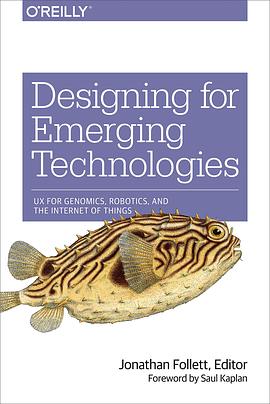
The recent digital and mobile revolutions are a minor blip compared to the next wave of technological change, as everything from robot swarms to skin-top embeddable computers and bio printable organs start appearing in coming years. In this collection of inspiring essays, designers, engineers, and researchers discuss their approaches to experience design for groundbreaking technologies.
Design not only provides the framework for how technology works and how it’s used, but also places it in a broader context that includes the total ecosystem with which it interacts and the possibility of unintended consequences. If you’re a UX designer or engineer open to complexity and dissonant ideas, this book is a revelation.
Contributors include:
Stephen Anderson, PoetPainter, LLC
Lisa Caldwell, Brazen UX
Martin Charlier, Independent Design Consultant
Jeff Faneuff, Carbonite
Andy Goodman, Fjord US
Camille Goudeseune, Beckman Institute, University of Illinois at Urbana-Champaign
Bill Hartman, Essential Design
Steven Keating, MIT Media Lab, Mediated Matter Group
Brook Kennedy, Virginia Tech
Dirk Knemeyer, Involution Studios
Barry Kudrowitz, University of Minnesota
Gershom Kutliroff, Omek Studio at Intel
Michal Levin, Google
Matt Nish-Lapidus, Normative
Erin Rae Hoffer, Autodesk
Marco Righetto, SumAll
Juhan Sonin, Involution Studios
Scott Stropkay, Essential Design
Scott Sullivan, Adaptive Path
Hunter Whitney, Hunter Whitney and Associates, Inc.
Yaron Yanai, Omek Studio at Intel
作者简介
Jonathan Follett is a founding partner and Creative Director at Hot Knife Design and Principal at Involution Studios, Boston, Massachusetts, USA
Jon FollettAt Hot Knife, Jon designs Web sites and applications for a variety of private- and public-sector clients, approaching each project with a strong focus on the use of language and clear communication of the client’s message. He has a passion for typography, its history, and its proper use in design. While Jon’s first design job was for Saul Bellow’s literary magazine, “News from the Republic of Letters,” he has also worked for various Web and multimedia firms in Boston. He was, most recently, lead designer for the Massachusetts Pension Plans Regulatory Agency. Jon co-authored two humorous non-fiction books, “Gray Highway: An American UFO Journey” and “Suburbageddon.” In another life, he plays jazz piano. Jon is a member of the American Institute of Graphic Arts (AIGA), the Interaction Design Association (IxDA), and the Usability Professionals Association (UPA), Boston Chapter.
目录信息
A Call to Arms
Design for Disruption
Eight Design Tenets for Emerging Technology
Changing Design and Designing Change
Chapter 2 Intelligent Materials: Designing Material Behavior
Bits and Atoms
Emerging Frontiers in Additive Manufacturing
Micro Manufacturing
Dynamic Structures and Programmable Matter
Connecting the Dots: What Does Intelligent Matter Mean for Designers?
Conclusion
Chapter 3 Taking Control of Gesture Interaction
Reinventing the User Experience
Analysis
Prototyping
A Case Study: Gesture Control
Trade-offs
Looking Ahead
Chapter 4 Fashion with Function: Designing for Wearables
The Next Big Wave in Technology
The Wearables Market Segments
Wearables Are Not Alone
UX (and Human) Factors to Consider
Summary
Chapter 5 Learning and Thinking with Things
Tangible Interfaces
(Near) Future Technology
Timeless Design Principles?
Farther Out, a Malleable Future
Nothing New Under the Sun
Closing
Chapter 6 Designing for Collaborative Robotics
Introduction
Designing Safety Systems for Robots
Humanlike Robots
Human-Robot Collaboration
Testing Designs by Using Robotics Platforms
Future Challenges for Robots Helping People
Conclusion
Robotics Resources
Chapter 7 Design Takes on New Dimensions: Evolving Visualization Approaches for Neuroscience and Cosmology
The Brain Is Wider Than the Sky
Section 1: An Expanding Palette for Visualization
Section 2: Visualizing Scientific Models (Some Assembly Required)
Section 3: Evolving Tools, Processes, and Interactions
Conclusion
Chapter 8 Embeddables: The Next Evolution of Wearable Tech
Technology That Gets Under Your Skin
Permeable Beings: The History of Body Modification
Decoration, Meaning, and Communication
Optimization and Repair
The Extended Human
Just Science Fiction, Right?
Key Questions to Consider
Chapter 9 Prototyping Interactive Objects
Misconceptions Surrounding Designers Learning to Code
Chapter 10 Emerging Technology and Toy Design
The Challenge of Toy Design
Toys and the S-Curve
Toys and Intellectual Property
Emerging Technologies in Toy Design
Inherently Playful Technology
Sensors and Toy Design
Emerging Technology in Production and Manufacturing
Summary
Chapter 11 Musical Instrument Design
Experience Design and Musical Instruments
The Evolution of the Musician
Conclusion
Chapter 12 Design for Life
Bloodletting to Bloodless
The Surveillance Invasion
Life First—Health a Distant Second
Stage Zero Detection
From Protein to Pixel to Policy
Final Thoughts
Chapter 13 Architecture as Interface: Advocating a Hybrid Design Approach for Interconnected Environments
The Blur of Interconnected Environments
Theorizing Digital Culture: New Models of Convergence
Hybrid Design Practice
Changing Definitions of Space
A Framework for Interconnected Environments
Spheres of Inquiry
An Exercise in Hybrid Design Practice
Architecture as Interface
Conclusion
References
Chapter 14 Design for the Networked World: A Practice for the Twenty-First Century
The Future of Design
New Environment, New Materials
New Tools for a New Craft
Chapter 15 New Responsibilities of the Design Discipline: A Critical Counterweight to the Coming Technologies?
Critiquing Emerging Technology
Emerging Technologies
New Responsibilities of the Design Discipline
Bibliography
Chapter 16 Designing Human-Robot Relationships
Me Man, You Robot: Designers Creating Powerful Tools
Me Man, You Robot? Developing Emotional Relationships with Robots
Me Robot? On Becoming Robotic
Into the Future
Your Robot: Consider Nielsen, Maslow, and Aristotle
Conclusion
Chapter 17 Tales from the Crick: Experiences and Services When Design Fiction Meets Synthetic Biology
Design Fictions as a Speculative Tool to Widen the Understanding of Technology
The Building Bricks of the Debate
Healthcare Narratives: From Scenarios to Societal Debates
Living Objects: Symbiotic Indispensable Companions
Chapter 18 Beyond 3D Printing: The New Dimensions of Additive Fabrication
MIT and the Mediated Matter Group: Previous and Current Additive Fabrication Research
The Dimensions of Additive Fabrication
Conclusion
Chapter 19 Become an Expert at Becoming an Expert
Into the Fire
Eating the Elephant
Onward
Chapter 20 The Changing Role of Design
On the Impact of Emerging Technologies
Design Complexity and Emerging Technologies
Design Trends for Emerging Technologies
User Experience: Finding Its Level
The Future for Me, the Future for You
Appendix Companies, Products, and Links
Appendix About the Authors
Appendix Designing for Emerging Technologies
· · · · · · (收起)
读后感
用户评价
这本书的叙事结构简直让人惊叹,它没有采用那种传统、线性的叙事方式,而是像一幅流动的、不断演进的挂毯,将各种看似不相关的元素巧妙地编织在一起。我尤其欣赏作者处理复杂概念时那种游刃有余的笔法,他似乎有一种魔力,能将那些晦涩难懂的理论,转化为生动具体的场景和富有洞察力的类比。阅读过程中,我几次停下来,仅仅是为了回味某些句子所蕴含的深刻哲理,它们不只是信息传递,更像是一种对思维模式的重塑。作者在构建世界观方面投入了巨大的心力,每一个细节都经过了精心的打磨,使得整个故事的基调保持了一种微妙的平衡——既有对未来图景的宏大描绘,又不失对个体体验的细腻捕捉。这本书的节奏把握得极其精准,张弛有度,高潮迭起的部分扣人心弦,而那些需要沉思的篇章则留足了呼吸的空间,让人不由自主地想去探索字里行间更深层的含义。这绝不是一本可以囫囵吞枣的书,它要求读者全身心地投入,去感受文字下涌动的暗流。
这本书给我带来的最强烈感受是那种“被挑战”的感觉,它完全颠覆了我原有的某些既定认知框架。作者在论证过程中,经常会引用一些看似不相关的历史事件或文化现象来佐证其观点,这种跨学科的引用方式,极大地拓宽了我的思维边界。读完之后,我发现自己看待周围世界的目光都变得更加审慎和多维了。它成功地做到了激发好奇心,引导我去主动搜寻更多背景知识,而不是被动接受既有的结论。它没有给出答案,而是教会了我们如何更好地提出问题。这种赋能感,远比单纯的知识灌输要宝贵得多。它像一把精巧的钥匙,开启了我对某些事物未来走向的全新理解路径,让我意识到我们所处的时代,其复杂性远超我们日常感知到的范围。
这本书在语言运用上的大胆尝试,让我耳目一新。它避开了那种教科书式的陈词滥调,转而采用了一种富有音乐性和韵律感的散文笔法,读起来简直是一种享受。我注意到作者在遣词造句上有着近乎偏执的追求,每一个词语的选择都仿佛经过了千锤百炼,精确地落在了它应该在的位置上,起到了最大的叙事效用。更有趣的是,书中偶尔出现的诗意片段,仿佛是为沉重的主题注入的一股清泉,它们不仅没有打断阅读的连贯性,反而以一种意想不到的方式深化了主题。这种对语言形式的极致探索,让原本可能枯燥的讨论变得鲜活起来,读者的感官被全面调动。那种流畅感和内在的逻辑性是如此的完美,以至于我常常忘记自己是在“阅读”一本关于复杂主题的著作,而更像是在聆听一位技艺高超的演说家,娓娓道来一个引人入胜的故事。
整本书的结构组织,简直是精密工程的典范。作者似乎是构建了一个多维度的知识迷宫,但每条路径都清晰可见,最终导向一个统一的核心论点。我被书中那种层层递进的论证逻辑所折服,它不像许多同类作品那样,在中间部分就显得疲软无力。相反,本书从开篇就设立了一个极高的智力门槛,并一路保持着这种高强度,要求读者持续跟进作者的思路跳跃和视角转换。令人称奇的是,尽管信息密度极大,但作者通过精妙的过渡段和总结性陈述,确保了读者的不迷失。这表明作者对材料的掌控已经达到了出神入化的地步,他不仅知道要讲什么,更清楚应该在何时、以何种方式抛出信息,让读者的理解产生连锁反应。这是一种罕见的、将严谨的逻辑与流畅的阅读体验完美融合的典范。
作者在本书中展现出的那种对人类局限性的深刻理解,着实令人动容。这不是一本盲目乐观的赞歌,而是充满了对技术发展所带来的伦理困境和潜在风险的严肃反思。他没有提供廉价的解决方案,也没有给出任何简单的是非判断,而是将读者置于一个充满灰色地带的思考空间。我尤其欣赏其中关于“选择的重负”那一章的论述,它精准地捕捉到了个体在面对指数级变革时的那种无力感和责任感。这种对人性的洞察力,使得全书的论点不仅仅停留在技术层面,而是上升到了哲学和社会学的层面。每一次阅读,我都能从中发现新的层次,发现自己先前忽略了的那些微妙的警示。这种深度和广度兼备的探讨,让这本书超越了一般性的评论作品,成为了一部值得反复咀嚼的思辨之作。
M一记
M一记
It's up to the people who are full-stack designers with programming skill.
It's up to the people who are full-stack designers with programming skill.
It's up to the people who are full-stack designers with programming skill.