
具体描述
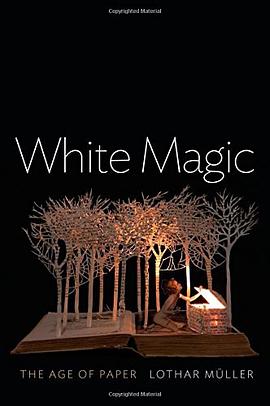
Paper is older than the printing press, and even in its unprinted state it was the great network medium behind the emergence of modern civilization. In the shape of bills, banknotes and accounting books it was indispensible to the economy. As forms and files it was essential to bureaucracy. As letters it became the setting for the invention of the modern soul, and as newsprint it became a stage for politics.
In this brilliant new book Lothar Müller describes how paper made its way from China through the Arab world to Europe, where it permeated everyday life in a variety of formats from the thirteenth century onwards, and how the paper technology revolution of the nineteenth century paved the way for the creation of the modern daily press. His key witnesses are the works of Rabelais and Grimmelshausen, Balzac and Herman Melville, James Joyce and Paul Valéry.
Müller writes not only about books, however: he also writes about pamphlets, playing cards, papercutting and legal pads. We think we understand the ?Gutenberg era?, but we can understand it better when we explore the world that underpinned it: the paper age.
Today, with the proliferation of digital devices, paper may seem to be a residue of the past, but Müller shows that the humble technology of paper is in many ways the most fundamental medium of the modern world.
作者简介
Lothar Müller is editor of the features section of the Süddeutsche Zeitung. He taught general and comparative literature at Berlin Free University and, since 2010, he has been an Honorary Professor at the Humboldt University in Berlin. In 2013 he was awarded the Berlin Prize for Literary Criticism.
目录信息
PROLOGUE The Microbe Experiment ix
PART ONE The Diffusion of Paper in Europe 1
CHAPTER 1 Leaves from Samarkand 3
1.1 The Arab Intermediate Realm 3
1.2 Calligraphy and the Cairo Wastepaper Basket 10
1.3 In Scheherazade’s World 13
1.4 Timur and Suleika 17
CHAPTER 2 The Rustling Grows Louder 22
2.1 The European Paper Mill Boom 22
2.2 Paper, Scholars, and Playing Cards 26
2.3 The Rise of the File: Paper Kings, Chanceries, and Secretaries 31
2.4 The Merchant of Genoa and His Silent Partner 37
2.5 Ragpickers, Writers, and the Pulpit 46
CHAPTER 3 The Universal Substance 52
3.1 Marshall McLuhan and the Pantagruelion of Rabelais 52
3.2 Harold Innis, the Postal System, and Mephisto’s Scrap 61
3.3 The World in a Page: Watermarks, Formats, Colors 70
PART TWO Behind the Type Area 79
CHAPTER 1 The Printed and the Unprinted 81
1.1 The Pitfalls of a Formula: “From Script to Print” 81
1.2 The White Page 85
1.3 “Found among the Papers ...” 89
CHAPTER 2 Adventurers and Paper 94
2.1 Don Quixote, the Print Shop, and the Pen 94
2.2 Picaresque Paper: Simplicius Simplicissimus and the Schermesser 99
2.3 Robinson’s Journal, Ink, and Time 104
CHAPTER 3 Transparent Typography 108
3.1 The Epistolary Novel’s Mimicry of Letter Paper 108
3.2 Laurence Sterne, the Straight Line, and the Marbled Page 115
3.3 The Fragmentation of the Printed Page: Jean Paul, Lichtenberg, and Excerpts 119
PART THREE The Great Expansion 127
CHAPTER 1 The Demons of the Paper Machine 129
1.1 The Mechanization of Sheet-Making 129
1.2 The Loom of Time, the French Revolution, and Credit 140
1.3 Balzac, Journalism, and the Paper Scheme in Lost Illusions 152
1.4 The Secrets of the Scriveners: Charles Dickens and Mr. Nemo 163
1.5 Foolscap and Factory Workers: Herman Melville and the Paper Machine 168
CHAPTER 2 Newsprint and the Emergence of the Popular Press 180
2.1 The Boundless Resource Base 180
2.2 The Newspaper, the Price of Paper, and the Patrioteer 189
2.3 Émile Zola, the Petit Journal, and the Dreyfus Affair 196
CHAPTER 3 Illuminated Inner Worlds 201
3.1 Wilhelm Dilthey, Historism, and Literary Estates 201
3.2 Henry James, Edith Wharton, and the Autograph Hunt 207
3.3 Laterna Magica: Paper and Interiors 215
CHAPTER 4 The Inventory of Modernity 226
4.1 Typewriter Paper, Deckle Edges, and White Space 226
4.2 James Joyce, Newsprint, and Shears 236
4.3 William Gaddis, the Paperwork Crisis, and Punch Cards 242
4.4 Rainald Goetz, the Mystic Writing Pad, and the Smell of Paper 249
EPILOGUE
The Analog and the Digital 253
Notes 265
Bibliography 274
Image Credits 292
Index of Names 293
· · · · · · (收起)
读后感
用户评价
这本书的封面就有一种难以言喻的吸引力,纯白的设计,隐约可见的银色纹路,仿佛暗藏着某种神秘的力量。我拿到这本书的时候,心里就已经对它充满了好奇。我一直对那些能够触及心灵深处,带来慰藉和启迪的书籍情有独钟,而《White Magic》这个名字,恰好勾勒出了我内心深处渴望的那种宁静与力量。我开始阅读,试图去理解它所蕴含的意义,寻找那种能够涤荡灵魂的“魔法”。随着文字的展开,我发现这本书并没有我一开始设想的那种直接的、符咒般的“魔法”,而是一种更加深沉、更加内敛的力量,它不是外在的施予,而是内在的唤醒。它像是一面镜子,照见了我们内心深处那些被遗忘的角落,那些被尘埃覆盖的光芒。每一次翻页,都像是在与自己的灵魂进行一次深入的对话,每一次思考,都像是在一点点地剥离掉那些无谓的束缚。我迫不及待地想知道,这本书究竟是如何实现这种“魔法”的,它又是如何引导我们去发现自身潜藏的力量的。那种期待感,就像是在等待一个古老秘密的揭晓,又像是等待一场黎明的到来。
我一直认为,“魔法”是一种遥不可及的存在,是只属于神话故事里的东西。然而,《White Magic》彻底颠覆了我固有的认知。它以一种非常细腻、非常深刻的方式,展现了“魔法”是如何融入我们的生活,并且悄无声息地影响着我们。书中对于“意图”的解读,让我豁然开朗。我们所做的一切,都源于我们的意图,而一个清晰、纯粹的意图,本身就蕴含着巨大的力量。它不是那些复杂的仪式,也不是神秘的符号,而是我们内心最真挚的愿望。我开始反思自己的意图,我是否真的清楚我想要什么?我的行为是否与我的真实愿望相符?这种内省,让我更加清晰地认识到自己的人生方向。同时,书中也强调了“行动”的重要性。再美好的意图,如果只是停留在脑海里,也无法转化为现实。它鼓励我去勇敢地迈出第一步,去付诸实践,去创造属于自己的“White Magic”。这本书让我感受到,每个人身上都蕴藏着创造奇迹的能力,而这种能力,就藏在我们最纯粹的意图和最勇敢的行动之中。
《White Magic》的阅读体验,与其说是在“读书”,不如说是在进行一场内心的探索之旅。书中的每一个章节,都像是一个个精心设计的节点,引导我深入自己的内心世界。我被书中对于“自我接纳”的阐述深深吸引。我们总是习惯性地去评判自己,去放大自己的缺点,而这本书却温柔地提醒我,所有的不完美,都是构成我们独特性的组成部分。它鼓励我拥抱真实的自己,包括那些不那么光鲜亮丽的部分。这种接纳,并非纵容,而是一种力量的源泉。当我不再与自己对抗,而是与自己和谐相处时,我发现,我可以释放出更多的创造力和能量。书中还提到了“感恩”的力量,这并非简单的口头感谢,而是一种发自内心的对生活给予的珍惜。我开始在每天睡前,列举出值得感恩的人和事,即使是很微小的事情,也让我感受到生活的美好和丰盛。这种积极的心态,如同为我的生活注入了“White Magic”。
读完《White Magic》的第一部分,我的脑海中涌现出无数的画面和感受,仿佛置身于一个宁静而又充满生机的花园。这本书并没有提供直接的解决方案,也没有给出明确的“操作指南”,但它却以一种润物细无声的方式,悄然地改变着我看待事物的方式。它引导我去关注那些微小的细节,去感受那些被忽略的美好。就像书中描述的,有些“魔法”并非惊天动地,而是蕴藏在日常的点滴之中。我开始更加留意清晨第一缕阳光洒下的温度,路边不知名小花的芬芳,以及朋友一句真诚的问候。这些看似平凡的瞬间,在书的引导下,却变得熠熠生辉,充满了生命的活力。我意识到,所谓的“White Magic”,或许并非是超自然的力量,而是我们内心深处对生活的热爱和对美好的感知能力。它是一种积极的态度,一种拥抱生活,接纳不完美的智慧。这本书让我重新审视了“魔法”的定义,它不再是遥不可及的奇迹,而是触手可及的生活艺术。我感觉自己的内心变得更加柔软,也更加坚韧,能够更从容地面对生活中的挑战。
这本书带给我的震撼,如同平静湖面被投入一颗石子,激起了层层涟漪,久久不能平息。我原以为“White Magic”会讲述一些关于灵性觉醒、能量疗愈的故事,或者是一些神秘的仪式和咒语。然而,它所呈现的,却是一种更加接地气、更加贴近我们生活的智慧。它不是要我们去“修炼”什么,而是要我们去“看见”什么。看见我们内心的渴望,看见我们被忽略的潜能,看见我们与世界连接的方式。书中关于“臣服”的论述,对我触动很大。我们常常在生活中挣扎,试图控制一切,但这本书却告诉我们,有时候,适当地放手,顺应自然的流动,反而能解锁更大的力量。这种“放手”并非消极的放弃,而是一种智慧的策略,一种对宇宙规律的尊重。我开始尝试在生活中实践这种“臣服”,在遇到困境时,不再一味地对抗,而是尝试去理解其背后的意义,去寻找其中的机会。这种转变,让我感到前所未有的轻松和自由。