
具体描述
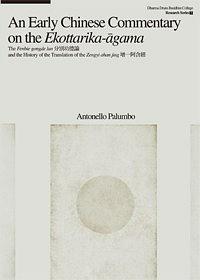
This study reassesses an old problem in the history of Chinese Buddhism, the origins and nature of the Zengyi ahan jing 增一阿含經 (Taishō 125). It does so by a close investigation of the Chinese translation of the Ekottarika-āgama at the end of the fourth century and of its most important witness, the Fenbie gongde lun 分別功德論 (Taishō 1507). It is argued that the latter document, whose original title was Zengyi ahan jing shu 增一阿含經疏, should be seen as an unfinished commentary to the newly translated collection, produced within the original translation team (including Dao’an 道安, Zhu Fonian 竺佛念 and the Indo-Bactrian master Dharmananda) during the tumultuous end of the Qin秦 empire of Fu Jian苻堅in A.D. 385. This reconstruction yields further insights into the cultural origins of the Chinese Ekottarika-āgama, and its broader significance for the history of Buddhism.
作者简介
Antonello Palumbo is Lecturer in Chinese Religions at the School of Oriental and African Studies, University of London
目录信息
Series preface ix
Foreword xi
Acknowledgments xiii
Introduction 1
PART I. The Zengyi ahan jing 增一阿含經 (T.125)
CHAPTER ONE The translation of the Ekottarika-āgama 9
I. The initial redactions of the Zengyi ahan jing增一阿含經 (T.125), A.D. 384–385 9
I.1 The context: Dao’an 道安 and the translation group at Chang’an, A.D. 382–385 9
I.2 The translation of the Ekottarika-āgama and the different redactions of the Zengyi ahan jing 增一阿含經 (T.125), A.D. 384–385 36
II. The aftermath of the translation 49
II.1 The death of Dao’an 道安 and the dispersal of the Chang’an group 49
II.2 Saṃghadeva’s revision 65
II.3 Zhu Fonian 竺佛念 82
III. Four redactions, how many translations? 94
CHAPTER TWO Witnesses to the context and early re¬cep¬¬tion of the Zengyi ahan jing 增一阿含經 (T.125) 97
I. Before the translation 97
I.1 The narrative on the origin of the āgamas in the Parinirvāṇa sūtra (T.6) 99
I.2 Kumārajīva and the Ekottarika-āgama 105
II. Around the translation 108
II.1 The Zhuanji sanzang ji zazang zhuan 撰集三藏及雜藏傳 (T.2026) 108
II.2 The Fenbie gongde lun 分別功德論 (T.1507) 124
II.3 The manuscript S.797 (A.D. 406) 124
II.4 The miniature stūpas of Turfan and Liangzhou 涼州 (A.D. 426–435) 128
III. Early witnesses to the Zengyi ahan jing 增一阿含經 129
III.1 The Shijia pu 釋迦譜 (ca. A.D. 479–502) 129
III.2 The Fan fanyu 翻梵語 (ca. A.D. 502–512) 130
III.3 The Zengyi ahan jing 增一阿含經 parallels in the Taishō canon and the excerpts in the Jinglu yi¬xiang 經律異相 (ca. A.D. 517) 131
IV. The catalogues 145
V. Preliminary conclusions 154
PART II. The Fenbie gongde lun 分別功德論 (T.1507)
CHAPTER THREE The book in the catalogues 163
I. The Chu sanzang ji ji 出三藏記集 (ca. A.D. 515) 164
II. The Lidai sanbao ji 歷代三寶紀 (A.D. 598) 168
III. The Kaiyuan Shijiao lu 開元釋教錄 (A.D. 730) 169
CHAPTER FOUR Modern scholars 171
I. Jean Przyluski 171
II. Mochizuki Shinkō 望月信亨 172
III. Mori Sodō 森祖道 174
IV. Mizuno Kōgen 水野弘元 177
V. Other scholars 176
CHAPTER FIVE Internal evidence on the date and au¬thor¬-ship of the Fenbie gongde lun 分別功德論 (T.1507) 179
I. General features and contents of the commentary 180
II. The ‘foreign master/s’ (waiguo shi 外國師) and ‘that man’ (qi ren 其人) 185
III. The description of the Tripiṭaka and the hierarchy of the four āgamas 190
IV. The view of the vinaya 195
V. The authors’ notion of the origin of the Abhi¬dhar¬ma and the identification of Kātyāyanīputra with Mahā--Kātyāyana 205
VI. The relationship with the Zhuanji sanzang ji za¬zang zhuan 撰集三藏及雜藏傳 and the Mahāyānist layer 214
VII. The “small” ‘Greater Version’ (Dapin 大品) of the Prajnāpāramitā 230
VIII. Scriptural quotations 232
VIII.1 Da ai jing 大哀經 (Tathāgatamahākaruṇānirdeśa) 232
VIII.2 Weimojie jing 維摩詰經 (Vimalakīrtinirdeśa) 233
VIII.3 Zhude futian jing 諸德福田經 234
IX. The Aśokan narratives 235
X. A pericope rhyming in Chinese 248
XI. Distinctive terms and expressions in the Fenbie gongde lun 分別功德論 (T.1507) 250
XI.1 Da fa 大法 (Great Law) = Abhidharma 250
XI.2 Shenzi 身子 = Śāriputra 251
XI.3 “… has not yet fallen to the ground” (wei zhui yu di 未墜於地) 251
XI.4 Shishi 石室 = Takṣaśilā 252
XI.5 Zhenjing 真淨 = Śuddhodana 253
XI.6 Huoman tongzi 火鬘童子 = *Jyotipāla (< Jyoti-māla) māṇava 254
CHAPTER SIX The authorship, date and nature of the document 257
CHAPTER SEVEN The Chinese translation of the Ekotta-rika-āgama reconsidered 269
EPILOGUE The cultural origins of the Chinese Ekotta-rika-āgama and the rise of Greater Serindia in the his¬tory of Buddhism 285
APPENDIX A synopsis of T.1507 and the correspond¬ing passages in T.125 327
Abbreviations and references 365
General index 391
· · · · · · (收起)
读后感
用户评价
翻开这本书,扑面而来的是一种沉静而有力的学术气息。作者对于原始资料的掌握达到了炉火纯青的地步,引用的古籍篇幅之广、考证之细,令人叹服。它不是那种为了哗众取宠而故意设置的“颠覆性”论断,而是基于扎实基础的、循序渐进的知识建构。在阅读过程中,我多次被作者对某个关键术语或典故的细致辨析所吸引,那种拨开迷雾、直抵核心的阅读体验,是其他通俗读物无法比拟的。这本书需要读者投入时间和专注力,但回报是丰厚的——你将获得一个更清晰、更深邃的早期汉传佛教历史图景。
这部作品的视角独特,深入剖析了佛经翻译史中一个长期被忽略的角落。作者没有停留在宏观的叙事层面,而是通过对具体文本的细致考察,构建起一个关于早期佛教经典传播与本土化过程的微观图景。阅读过程中,我仿佛置身于那个不同文化和思想激烈碰撞的时代,亲眼见证了学者们如何殚精竭虑地在梵语的精妙与汉语的表达之间架设桥梁。特别是对“增一阿含经”与“分別功德論”这两个文本的比较研究,不仅揭示了两者之间微妙的文本联系和差异,更触及了早期译者在面对不同教义体系时的选择与取舍。这种精微的考证工作,对于任何想要超越表面、探究佛学思想流变脉络的人来说,都是一次不可多得的学术盛宴。它不仅是历史的还原,更是一次思想的重构,引人深思。
这本书最大的魅力在于它的“重构”能力。它不是简单地复述已知信息,而是通过对比、参照、校勘等一系列精细的学术操作,将原本零散的史料碎片重新拼接成了一个逻辑自洽、细节丰富的历史叙事。我特别欣赏作者在处理文本差异时所展现出的审慎态度,既不轻易否定任何一方的价值,又能清晰指出其局限性所在。读完之后,我对于早期佛教经典的“面貌”有了更立体的认识,不再认为它们是铁板一块的教义集合,而是充满着历史张力和人为选择的产物。这本书的价值,在于它提供了一把解剖历史文本的精良手术刀。
对于长期关注佛教文献学的朋友来说,这本书无疑提供了极具价值的新鲜视角。它巧妙地将文献文本分析与历史语境的考察融为一体,展现了译者个人背景、时代思潮对译文风格和内容取舍的决定性影响。我个人最受启发的是作者对于“本土化”过程的探讨,即外来思想是如何被接纳、改造,最终融入本土文化的话语体系的。这种跨学科的综合分析能力,使得本书的学术价值远远超出了单纯的佛经版本学范畴。它促使我们重新审视“权威文本”的形成过程,认识到文本的生命力恰恰在于其流变和被诠释的动态性。
这本书的文字驾驭能力令人印象深刻,作者的行文流畅自然,逻辑推演层层递进,使得原本晦涩的佛经文本考据变得生动有趣。我尤其欣赏作者在论证过程中所展现出的严谨态度,每一个观点都有坚实的文献依据作为支撑,绝非空泛的臆测。读来感觉非常扎实,仿佛作者是一位经验丰富的向导,带领我在浩如烟海的古代文献中穿梭自如,而无需担心迷失方向。其中关于不同译本之间的细微语词差异所蕴含的深层义理分析,更是精妙绝伦,让我对“翻译即创造”这句话有了更深一层的理解。这不仅仅是一本学术专著,更像是一部引人入胜的侦探小说,只不过它的目标是揭开历史的真相。